

In an era increasingly defined by digital fragmentation and transient connections, the literary landscape of late 2026 has witnessed a profound return to the most primal of human structures: the family. The latest curated selection of essential reading highlights a diverse array of narratives that interrogate what it means to belong, how history is inherited, and the ways in which the ghosts of our ancestors—both literal and metaphorical—shape our contemporary reality.
From the atmospheric horror of 1970s Lahore to the high-stakes tension of psychological thrillers and the poignant solitude of the modern literary circuit, these five works represent a cross-section of global storytelling. They suggest that while the world may feel increasingly foreign, the domestic sphere remains the crucible where our most profound truths are forged.
Main Facts: A Curated Overview of the August 2026 Literary Selection
The current month’s reading list is anchored by five pivotal titles that span the spectrum of literary and historical fiction, thrillers, and horror. These works are characterized by their focus on intimacy and the "feeling of belonging," even when that belonging is fraught with trauma or supernatural interference.
- The Haunting of Dr. Shamsi by Ayesha Muzaffar (PanMacmillan India): A collection of unsettling tales rooted in the superstitions and family lore of Pakistan.
- For Whose Dear Sake Our Fathers Died by Priya Hajela (Speaking Tiger Books): A multi-generational epic that reclaims Indian history through the oral traditions of a single family.
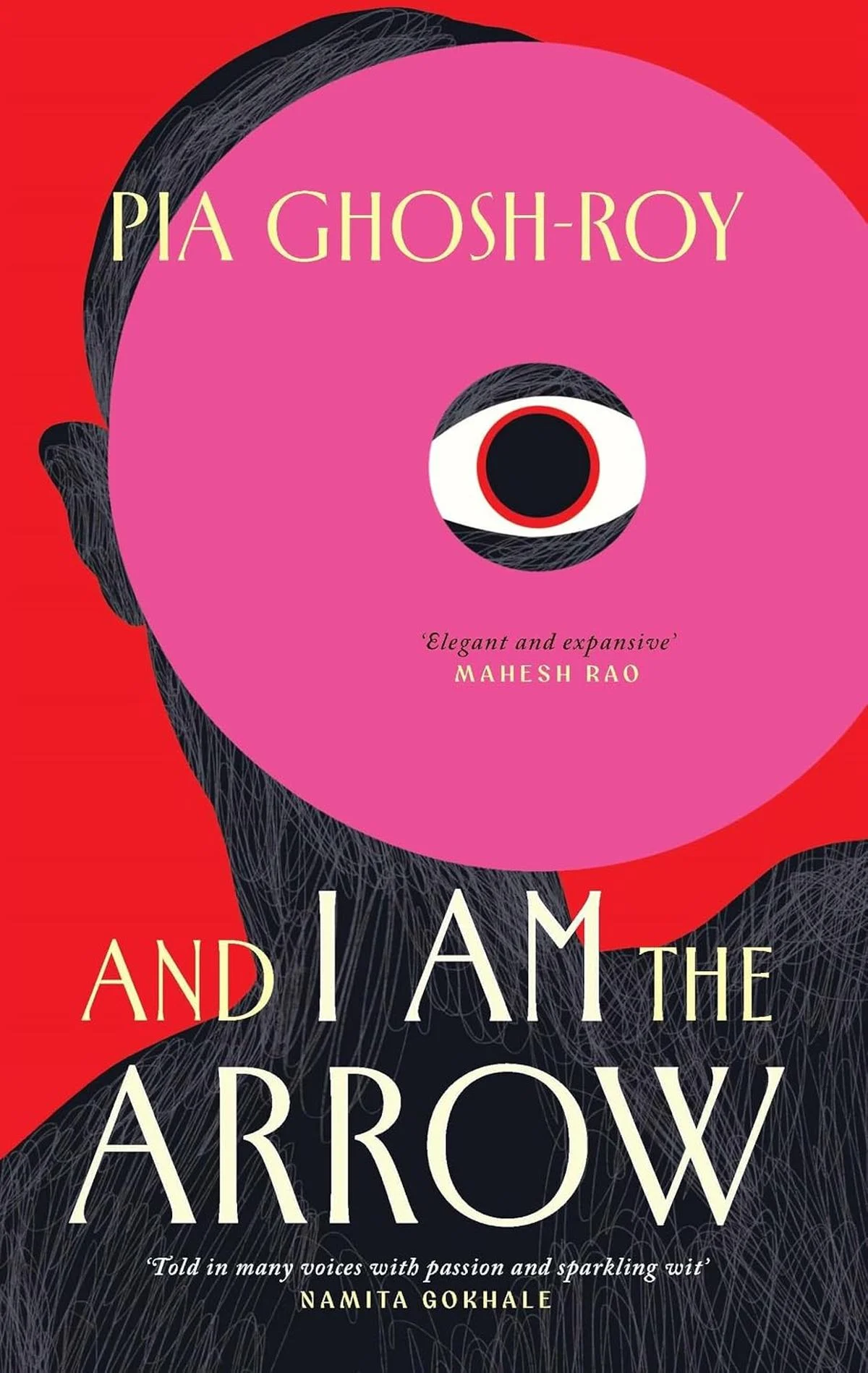
- And I Am the Arrow by Pia Ghosh-Roy (Picador India): A debut novel exploring the fractured lives of three generations of women across Calcutta, London, and New York.
- It Could Have Been Her by Lisa Jewell (Century): A briskly paced thriller that uses a chance encounter to excavate a buried past and unresolved trauma.
- Sophie, Standing There by Meg Mason (Bloomsbury India): A tragicomic exploration of loneliness and the "invisible" workers behind the glamour of the literary world.
These titles, released by major imprints such as PanMacmillan, Bloomsbury, and Picador, signify a robust period for South Asian literature and international fiction, bridging the gap between historical reckoning and modern-day psychological exploration.

Chronology: The Evolution of the 2026 Narrative Arc
To understand the significance of these works, one must look at the chronological trajectory of the themes they inhabit. The literature of 2026 has moved away from the "pandemic-centric" narratives of the early 2020s, opting instead for a "long-view" of history and personal development.
The Historical Anchor (1840s – 1914)
Priya Hajela’s For Whose Dear Sake Our Fathers Died sets the chronological foundation. By tracing a family back to the Anglo-Sikh wars and the Komagata Maru incident of 1914, Hajela positions the family as the primary record-keeper of national identity. This reflects a broader trend in 2026 fiction where authors are bypassing traditional textbooks to find "truth" in the domestic archives of the marginalized.
The Mid-Century Transition (1970s)
Ayesha Muzaffar’s The Haunting of Dr. Shamsi utilizes the 1970s as a backdrop for atmospheric horror. This period, marked by political shifts in South Asia, serves as a fertile ground for "family lore" and "superstition." The 1970s are increasingly viewed by modern writers as a "liminal space"—a time when the old world’s myths still held sway over the encroaching modernity.
The Contemporary Reckoning (1990s – Present)
Both Lisa Jewell and Pia Ghosh-Roy utilize the late 20th century as a point of origin for modern crises. Jewell’s protagonist, Jane, flees a house in 2001 (25 years prior to the novel’s 2026 setting), while Ghosh-Roy’s characters navigate the diasporic shifts between the East and West. These timelines converge in the present day, suggesting that the "past is never dead; it’s not even past," to quote Faulkner.

Supporting Data: A Deep Dive into the Literary Analysis
1. The Supernatural as a Manifestation of Trauma
In The Haunting of Dr. Shamsi, Ayesha Muzaffar introduces a baby born with six fingers in Lahore. The horror here is not "startling" in the cinematic sense; rather, it is "slow and atmospheric." Literary critics note that this style of "folk horror" is gaining traction because it mirrors the internal anxieties of the modern reader. The "extra finger" becomes a metaphor for the parts of our history we cannot prune away, no matter how much they "scratch" at our conscience.
2. The Orality of History
Priya Hajela’s work challenges the sanctity of the museum. By having the matriarch, Beant Kaur, narrate the family’s survival through the upheaval of 1857, the book provides "supporting data" for the argument that history is a living organism. The "conversational" tone of the book is a deliberate stylistic choice to make the weight of the Anglo-Sikh wars feel as immediate as a dinner-table conversation.
3. The Geometry of the Diaspora
Pia Ghosh-Roy’s And I Am the Arrow provides a geographical study of the modern woman. By moving between Calcutta, London, and New York, the novel maps the "triangulation" of identity. The inclusion of a "chorus of the dead" who refuse to be called ghosts suggests a new direction in literary fiction—one where the spiritual and the secular coexist without the need for "tidy resolutions."
4. The Mechanics of the Thriller
Lisa Jewell’s It Could Have Been Her relies on the "breadcrumb" technique. In an analysis of the thriller genre in 2026, experts point out that readers are increasingly looking for "circularity"—plots where a mundane event (like a lost dog) triggers a massive psychological collapse. This reflects a societal anxiety regarding how easily our "safe" present-day lives can be upended by unresolved history.

5. The Sociology of the "Invisible"
Meg Mason’s Sophie, Standing There offers a meta-commentary on the publishing industry itself. Sophie, a technician at literary festivals, represents the "invisible" labor force. Mason’s "claustrophobic" narrative style provides a psychological profile of loneliness in a hyper-connected world. The relationship between the technician and the novelist Lilac Dunne serves as a critique of how we value—or fail to value—those who facilitate our cultural consumption.
Official Responses and Critical Reception
The publishing houses involved have signaled a shift in their editorial mandates. PanMacmillan India and Picador India have both emphasized a commitment to "voice-driven" narratives that prioritize cultural specificity over generic universalism.
- Editorial Perspective: Independent literary curators have noted that the August 2026 list is particularly strong in its "resistance to expected arcs." There is a growing critical consensus that readers are tired of formulaic "happily ever afters." Instead, there is a demand for what the writer of the original column calls "the intimate, the fleeting, and the foreign."
- Market Trends: According to industry reports, "slow-burn horror" (as seen in Muzaffar’s work) and "historical domesticity" (as seen in Hajela’s work) are the two fastest-growing sub-genres in the South Asian market. This suggests a shift in consumer behavior toward books that require more emotional investment and provide a deeper sense of historical grounding.
- Author Statements: While the authors come from varied backgrounds, a common thread in their recent interviews is the concept of "unbelonging." Pia Ghosh-Roy has stated in promotional circuits that her work aims to "give a voice to the dead who aren’t quite ghosts, but aren’t quite gone either," reflecting a broader literary movement toward "hauntology"—the study of the persistent influence of the past.
Implications: What This Means for the Future of Fiction
The themes explored in these five books have significant implications for the future of the novel as an art form.
The Death of the "Global" Novel?
For years, the "global novel" was expected to be easily digestible for a Western audience. However, the success of Muzaffar and Hajela suggests a move toward "radical specificity." These books do not pause to explain every cultural nuance or historical footnote; they immerse the reader in the world of Lahore or the Punjab, demanding that the reader catch up. This implies a future where literature is a tool for genuine cultural exchange rather than mere "touristic" reading.

The Rise of Multi-Generational Trauma as a Genre
As psychological science becomes more integrated into our daily lives, fiction is following suit. The focus on "family secrets" and "inherited stories" across these titles suggests that the "family saga" is being rebranded as a "trauma study." This shift allows for a more nuanced exploration of why characters act the way they do, moving beyond simple plot points to complex psychological motivations.
The Integration of Genres
Perhaps the most striking implication is the blurring of lines between "high" literary fiction and "genre" fiction (horror, thriller). When a literary debut like And I Am the Arrow uses a chorus of the dead, or a thriller like It Could Have Been Her focuses on deep-seated trauma, it signals that the rigid boundaries of the past are dissolving. In the future, the "feeling of belonging" will be explored through whatever lens—supernatural, historical, or psychological—best fits the story.
Conclusion
The August 2026 reading list serves as a reminder that the home is not always a sanctuary; it can be a site of haunting, a repository of forgotten history, or a cage from which one must escape. Yet, in each of these works, there is a persistent search for "togetherness." Whether it is through the stories told by a formidable grandmother in Calcutta or the unexpected connection between a technician and a novelist, these books suggest that we are all, in some way, trying to find our way back to a house we once knew—or to build a new one from the fragments of the past.
