When the news of Dolly Parton’s passing resonated across the globe, the mourning was not merely for a country music titan or a cultural icon of the stage and screen. While the world hummed the melodies of "Jolene" and "I Will Always Love You," a deeper, more personal grief emerged on social media and in local communities. This collective sense of loss was rooted in a quiet, decades-long revolution of the heart: Parton’s tireless commitment to childhood literacy.
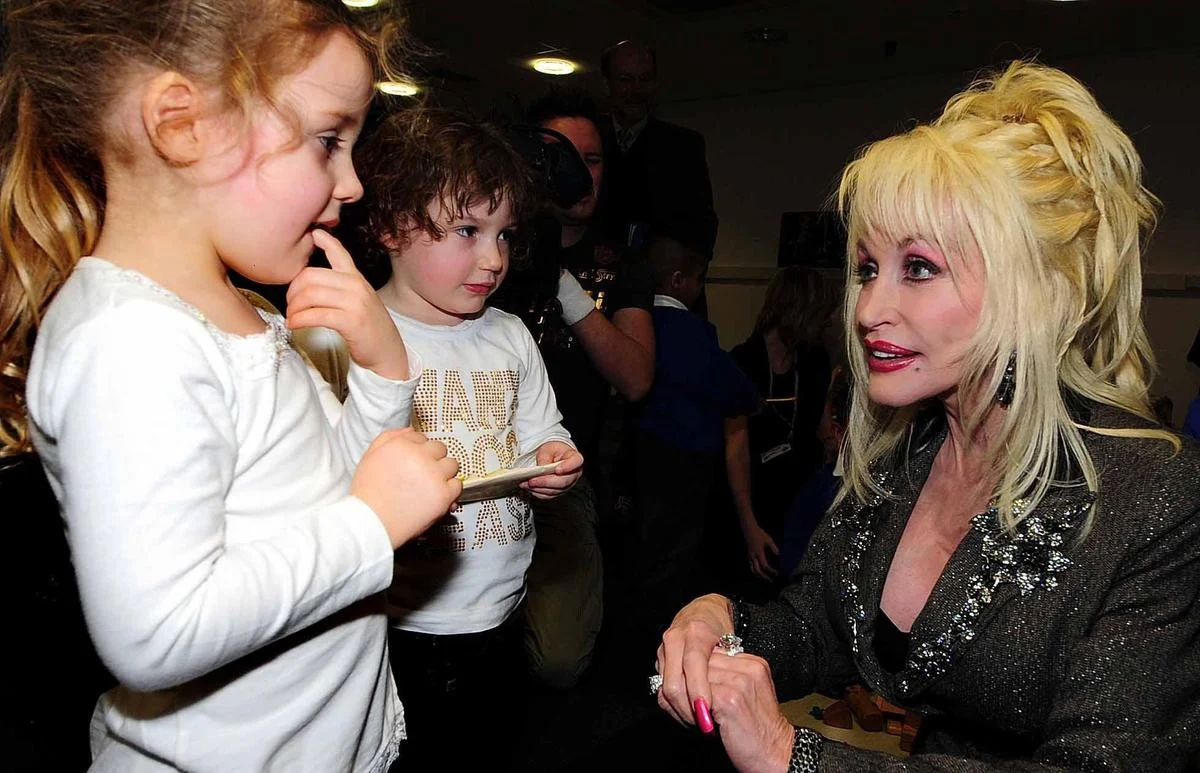
Among the millions of tributes, one story stood out—a father recounting his young daughter’s tears upon hearing the news. When asked why she was so upset about a singer she had never met, the child replied simply, “She sent me books.”
Parton, known as the "Iron Butterfly," leaves behind a legacy that transcends the Grammys and the charts. It is a legacy built on the belief that the ability to read is the ultimate "superpower," a tool for liberation that she championed with the same grit and grace that defined her rise from the hollows of the Smoky Mountains to global superstardom.
Main Facts: The Architecture of a Literacy Empire
Dolly Parton’s philanthropic portfolio was vast, covering everything from pediatric healthcare and wildlife conservation to the funding of critical medical research. However, the crown jewel of her altruism was the Dolly Parton’s Imagination Library (DPIL). Founded in 1995, the program was designed with a breathtakingly simple premise: provide children with high-quality, age-appropriate books regardless of their family’s income.
The program’s impact is staggering. As of 2024, the Imagination Library has gifted over 300 million books to children across five countries: the United States, Canada, the United Kingdom, Australia, and the Republic of Ireland. The initiative currently mails more than 2 million books every month.
Unlike many charitable endeavors that involve complex applications or "means-testing" to determine eligibility, Parton’s model was radical in its inclusivity. It was a universal program. If a child lived in a participating community, they were eligible, period. By removing the stigma of "charity" and the red tape of bureaucracy, Parton ensured that the arrival of a book in the mail was a source of pure joy and dignity for every family involved.
Chronology: From Sevierville to the World
To understand the scale of Parton’s mission, one must look at the soil from which it grew. Her philanthropy was not a tax-mitigation strategy or a PR exercise; it was a direct response to the hardships of her youth.
1946–1960: The Roots of Want
Dolly Rebecca Parton was born in 1946 in a one-room cabin on the banks of the Little Pigeon River in Pittman Center, Tennessee. She was the fourth of 12 children. Her family lived in what she termed "dirt poor" conditions—no electricity, no indoor plumbing, and very little cash. When she was born, her father, Robert Lee Parton, paid the doctor who delivered her with a sack of cornmeal because there was no money for a medical fee.
1995: A Promise to a Father
Despite his lack of formal education, Parton described her father as the smartest man she ever knew. However, Robert Lee Parton never had the opportunity to learn to read or write—a secret he carried with a sense of quiet shame. In 1995, Dolly launched the Imagination Library in her home county of Sevier, Tennessee, as a tribute to him. She wanted to ensure that every child in her community, no matter how poor, would have books to call their own. Before he passed away in 2000, Robert Lee told his daughter that the library was the most important thing she had ever done.

2000–2024: Global Expansion
What began as a local effort soon caught the attention of governors and international NGOs. By 2000, the program was available for national replication. By the mid-2000s, it had crossed borders into Canada and the UK. Parton’s team built a sophisticated logistics network, partnering with local nonprofits and state governments to share the costs of books and postage, while the Dollywood Foundation managed the selection and procurement of titles.
Supporting Data: The Mechanics of Change
The success of the Imagination Library was not accidental; it was based on a sophisticated understanding of early childhood development.
The "Blue Ribbon" Selection Process
Every book sent out by the program is selected by a panel of early childhood literacy experts. These "Blue Ribbon" committees ensure that the books are developmentally appropriate.
- Infancy: Books focus on sensory experiences, bright colors, and simple rhymes.
- Ages 2–3: Books introduce social-emotional themes, like sharing and managing feelings.
- Ages 4–5: Books prepare children for the transition to school, focusing on more complex narratives and vocabulary.
Breaking the "Book Desert"
Research shows that the presence of books in the home is one of the single greatest predictors of future academic success. In many low-income "book deserts," there may be only one age-appropriate book for every 300 children. Parton’s program addressed this by delivering books directly to the child’s home, addressed to them by name. This created a sense of ownership and excitement that traditional libraries—while vital—cannot always replicate for a three-year-old.
The "Buddy" Initiative and Graduation Rates
Beyond early literacy, Parton addressed the "middle school slump." In the late 1980s, Sevier County faced high dropout rates. Parton launched the "Buddy" initiative for 7th and 8th graders. Students were encouraged to pair up; if both "buddies" graduated high school, they were each given $500. This program saw the local dropout rate plummet from 35% to 6%, proving that Parton understood the social pressures of adolescence as well as she understood the needs of toddlers.
Official Responses: A Global Outpouring
The news of her passing drew responses from the highest levels of government and the international education community, highlighting her role as a non-partisan bridge-builder.
The White House Statement:
"Dolly Parton was an American treasure who used her voice not just to sing, but to speak for those who felt unheard. Her commitment to literacy transformed the lives of millions, ensuring that the next generation of Americans had the tools to dream as big as she did."
The United Nations Education Envoy:
"Parton’s model for the Imagination Library is a blueprint for global literacy. By removing barriers of cost and geography, she proved that the private sector and celebrity influence can be harnessed for systemic, generational change."
Local Impact:
In Tennessee, Governor Bill Lee noted, "Dolly didn’t just put Tennessee on the map with her music; she put a book in the hands of every child in this state. She was our greatest ambassador of hope."

Educational psychologists have also weighed in, noting that Parton’s books did more than teach reading; they fostered "emotional literacy." By providing stories that helped children recognize and name their feelings, she contributed to a more empathetic and resilient generation.
Implications: A Blueprint for Modern Philanthropy
Dolly Parton’s approach to giving offers several vital lessons for the future of global philanthropy and social policy.
1. The Power of Simplicity and Dignity
Parton’s insistence on a universal, "no-questions-asked" enrollment model is a masterclass in dignified service. By making the program available to everyone, she avoided the "poverty trap" where families just above the poverty line are excluded from help. This universality also built broad public support, making it easier for state governments to justify partnering with the foundation.
2. Literacy as a Foundation for Public Health
Parton’s philanthropy was holistic. She understood that a child who can read is a child who can eventually navigate health systems, understand civic duties, and escape the cycle of poverty. Her $1 million donation to Vanderbilt University for COVID-19 vaccine research (which helped fund the Moderna vaccine) was a continuation of this logic: protecting the community so that children could continue to learn and grow.
3. The "Book Lady" vs. The Icon
For millions of children, Parton was not a country singer in sequins; she was "The Book Lady." This personal connection—exemplified by the letter she sent to every child upon their fifth birthday—created a lifelong bond between the benefactor and the recipient. It humanized philanthropy, making it feel like a gift from a grandmother rather than a grant from a faceless institution.
4. Planting Trees for Future Shade
Parton’s legacy is defined by her willingness to "plant trees in whose shade she would never sit." The children receiving books today will be the leaders, doctors, and teachers of the 2050s. She understood that the ROI (Return on Investment) for literacy is measured in decades, not fiscal quarters.
Conclusion
Dolly Parton’s life was a testament to the idea that one’s origins do not have to define one’s destination, but they should absolutely inform one’s journey. She never forgot the girl in the Smoky Mountains who had no books, and she spent the latter half of her life ensuring that no other child would have to feel that particular kind of poverty.
Her songs will undoubtedly play on for centuries, echoing through the hollers of Tennessee and the concert halls of Europe. But her most enduring melody is the sound of a parent reading to a child at bedtime, the turning of a page, and the quiet spark of an imagination taking flight. Dolly Parton didn’t just give the world music; she gave millions of children the ability to write their own stories. In the end, that remains her most radical act of goodness.