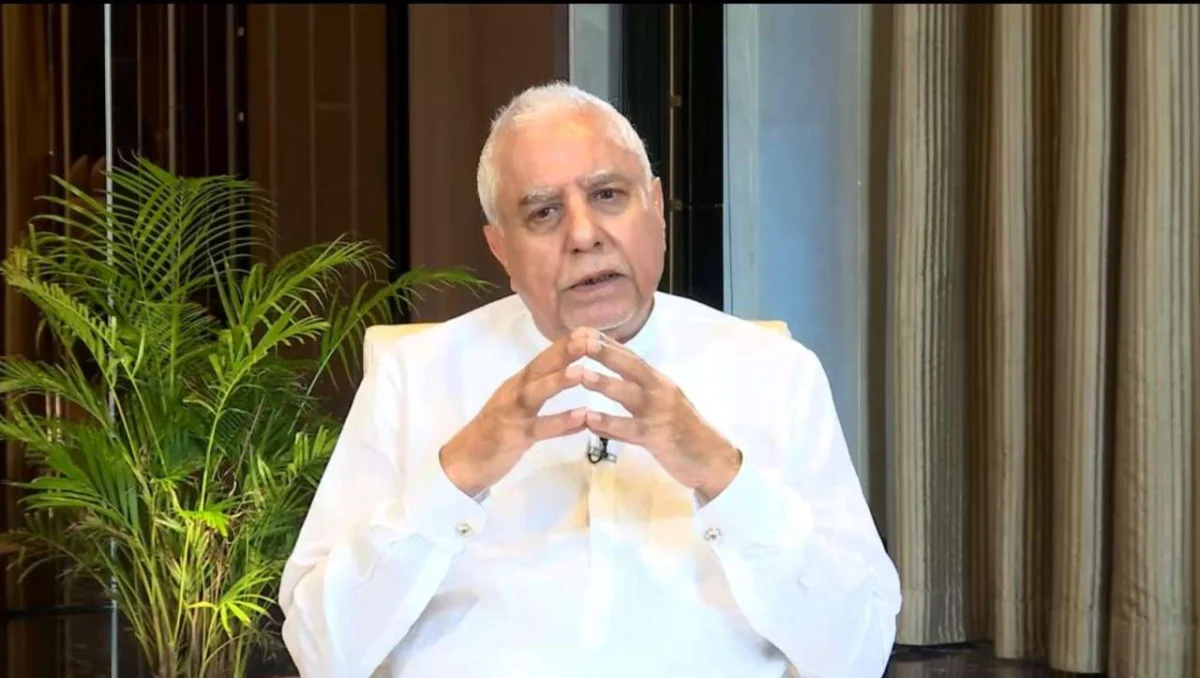
Mumbai, India – In an unprecedented and direct confrontation, Essel Group Chairman Dr. Subhash Chandra has publicly addressed Reliance Industries Chairman Mukesh Ambani and his media conglomerate, Network18, accusing them of propagating "wrong propaganda" and "witch hunting" through inaccurate reporting on National Company Law Tribunal (NCLT) proceedings concerning the Essel Group. Dr. Chandra emphatically rubbished claims of a Rs 22,000 crore debt figure, asserting that such reporting misrepresents the legal nature of personal guarantees and overlooks the Essel Group’s extensive efforts in repaying a staggering Rs 43,000 crore in liabilities.
The dramatic statement, delivered on Friday, saw Dr. Chandra appeal directly to the public and to Mukesh Ambani himself, highlighting his frustration with what he described as a misleading narrative that continues despite his attempts to communicate privately with the Reliance chairman. This public appeal underscores a significant escalation in what appears to be a deeply personal and professional dispute between two of India’s most influential business titans.
Main Facts of the Public Dispute
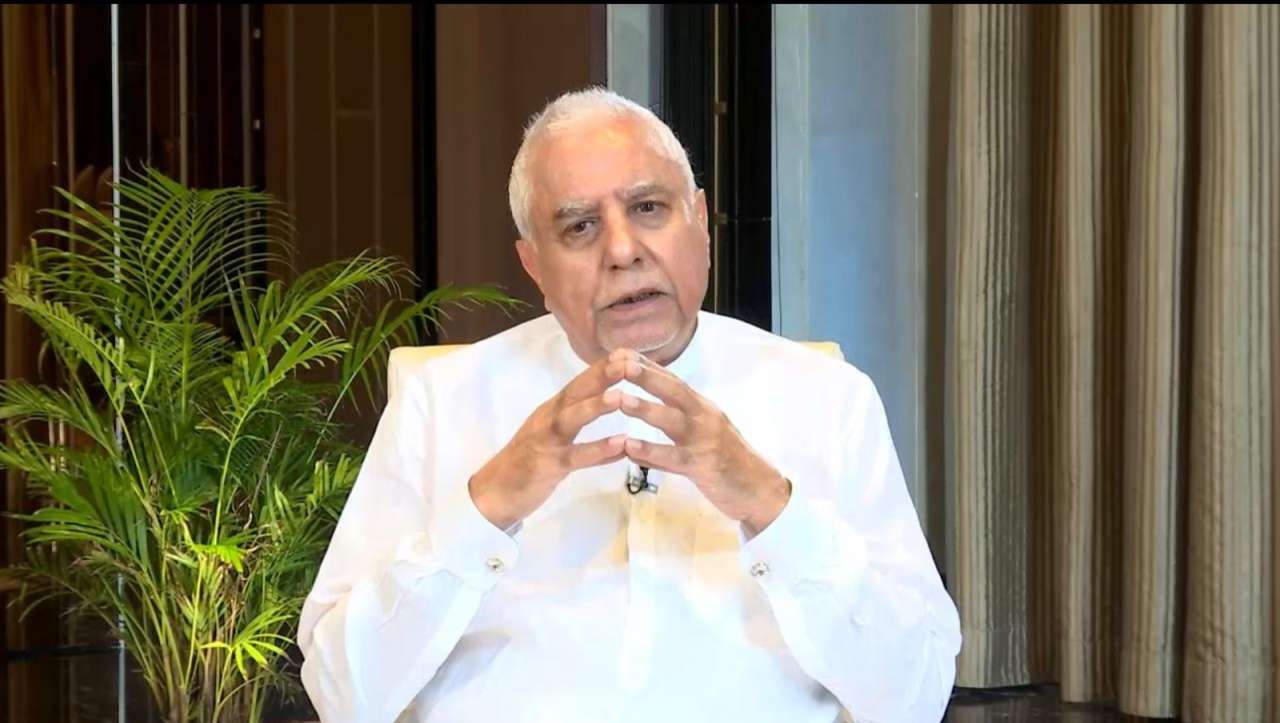
Essel Group Chairman Dr. Subhash Chandra’s public address marked a significant moment in the ongoing financial and legal challenges faced by his conglomerate. At the heart of his statement was a categorical denial of media reports, particularly those from Mukesh Ambani’s Network18, that cited a Rs 22,000 crore debt figure in relation to NCLT proceedings. Dr. Chandra clarified that these proceedings pertain to personal guarantees extended for borrowings by Essel Group entities, not to personal borrowing by him directly. He vehemently argued that equating the two was a deliberate misrepresentation designed to create a false narrative.
In his impassioned appeal, Dr. Chandra asserted that the Essel Group had, under extraordinary circumstances, repaid approximately Rs 43,000 crore out of an initial Rs 45,000 crore in liabilities that emerged in January 2019. This massive debt reduction, he explained, was achieved through the liquidation of both group and personal family assets, including the strategic sale of significant stakes in core businesses like Zee Entertainment Enterprises Ltd (ZEEL). He painted a picture of a businessman who has "nothing left to lose" after fulfilling his commitments, contrasting this with "large corporate houses that have substantial exposure and reputation at stake."
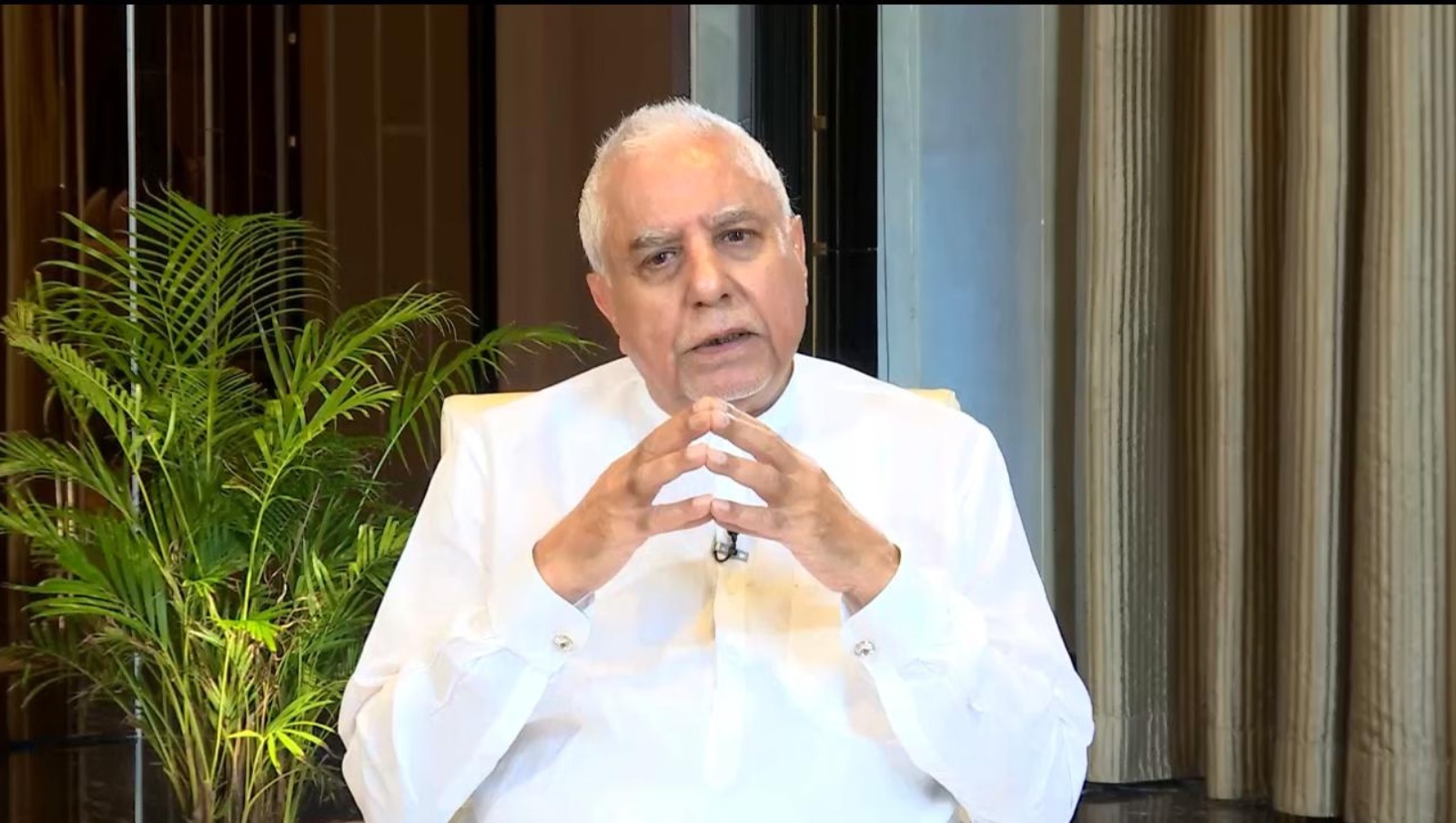)
The Essel Group founder did not mince words, accusing Ambani’s media network of engaging in "wrong propaganda" and "witch hunting" concerning his personal guarantees. He revealed his unsuccessful attempts to contact Mukesh Ambani directly, and further alleged that an editor associated with Network18 had indicated that the contentious coverage was being carried out under "instructions from above." Dr. Chandra’s public statement, aired prominently on Zee News, was framed as an effort to present his side of the story to the "court of the public" in response to what he perceived as a sustained campaign of misinformation. He emphasized that the NCLT proceedings involved aggregate claims of about Rs 22,006 crore, but critically, lenders objecting to the proposed repayment plan accounted for claims of only Rs 3,992 crore – a stark difference from the widely reported figure.
Chronology of Essel Group’s Financial Journey and the Current Conflict
The current public spat between Dr. Subhash Chandra and Mukesh Ambani is rooted in a series of financial challenges and subsequent recovery efforts by the Essel Group, culminating in the contentious media reporting that prompted Dr. Chandra’s strong rebuke.

The Genesis of Financial Stress (Early 2019)
The Essel Group, a diversified Indian conglomerate with interests spanning media, infrastructure, and packaging, first publicly acknowledged significant financial stress in January 2019. This period coincided with a broader liquidity crunch in India, exacerbated by the IL&FS crisis, which sent ripples through various sectors, making it difficult for many companies to refinance their debts. For Essel Group, which had aggressively expanded into infrastructure projects, the confluence of high debt, slower-than-expected project monetization, and a tightening credit market led to a precarious situation. The group’s listed entities, including Zee Entertainment Enterprises Ltd (ZEEL) and Dish TV, saw their stock prices plunge amidst concerns over promoter debt and pledged shares. This marked the beginning of a challenging period that necessitated drastic measures to restore financial stability.
Debt Resolution Efforts and Asset Sales (2019 Onwards)
In response to the escalating crisis, Dr. Subhash Chandra and the Essel Group embarked on an ambitious and largely successful debt reduction exercise. Their primary strategy involved the strategic divestment of non-core and even core assets to generate liquidity. The most prominent of these was the decision to sell a significant stake in Zee Entertainment Enterprises Ltd (ZEEL), a jewel in the Essel crown. While initial plans for a complete sale or merger with Sony Pictures Networks India faced various hurdles, the intent and subsequent partial sales of shares were crucial in paring down liabilities. Beyond ZEEL, the group also liquidated other assets, including infrastructure projects and personal family holdings. Dr. Chandra has consistently maintained that these were "extraordinary steps" taken to honor commitments to lenders. His recent statement reiterated that out of an initial liability of approximately Rs 45,000 crore, the group had managed to repay a substantial Rs 43,000 crore, demonstrating a strong commitment to its creditors.
)
The NCLT Proceedings Emerge (Ongoing)
Against this backdrop of intense debt repayment, various legal and regulatory proceedings, particularly those under the National Company Law Tribunal (NCLT), became a critical component of the Essel Group’s restructuring efforts. The NCLT, established under the Companies Act, 2013, serves as a quasi-judicial body in India that adjudicates issues relating to Indian companies, including corporate insolvency and restructuring. The proceedings that form the crux of the current dispute involve "personal guarantees" extended by Dr. Subhash Chandra for loans taken by Essel Group entities. In corporate finance, a personal guarantee binds an individual, typically a promoter or director, to repay a company’s debt if the company defaults. This mechanism provides comfort to lenders but can expose individuals to significant personal liability. The NCLT process for personal guarantors allows for a structured repayment plan, subject to creditor approval.
The Contested Reporting (Recent Weeks/Months)
The trigger for Dr. Chandra’s public outburst was the persistent media coverage, specifically by Mukesh Ambani’s Network18, which he claims inaccurately reported a "Rs 22,000 crore debt figure" in the context of these NCLT personal guarantee proceedings. This figure, according to Dr. Chandra, was presented in a manner that implied personal borrowing or an outstanding debt of that magnitude, creating a misleading perception among the public and the financial community. He alleges that this reporting failed to distinguish between the aggregate claims in the personal guarantee proceedings and the actual outstanding claims from lenders who were objecting to the proposed repayment plan.
)
Dr. Chandra’s Initial Attempts to Communicate
Before taking his grievances public, Dr. Chandra indicated that he had attempted to resolve the issue through private channels. He stated that he tried to contact Mukesh Ambani directly, but his calls did not connect, and he did not receive a return call. Furthermore, he revealed that a mutual acquaintance had reached out to an editor associated with Network18 to convey concerns about the accuracy and nature of the reporting. This attempt, however, reportedly yielded an unsettling response, suggesting that the coverage was being driven by instructions "from above."
The Public Statement (Friday)
Frustrated by the perceived lack of progress through private channels and the continued "false narrative," Dr. Chandra decided to make his stand public. On Friday, he issued a formal written statement from his office, followed by a powerful video message aired on Zee News. In both formats, he directly named Mukesh Ambani and Network18, laying bare his accusations of "wrong propaganda" and "witch hunting." His public appeal was a clear signal that he would not passively accept what he viewed as a misrepresentation of his financial position and the Essel Group’s strenuous efforts to honor its commitments.
)
Supporting Data and Contextual Details
The core of Dr. Subhash Chandra’s grievance lies in the interpretation and dissemination of financial figures related to Essel Group’s liabilities and his personal guarantees. A closer examination of these figures and the financial mechanisms involved provides critical context to his strong assertions.
Dissecting the Debt Figures: Clarifying Rs 22,000 Crore vs. Rs 43,000 Crore
The widely reported figure of "Rs 22,000 crore debt" became a flashpoint for Dr. Chandra. He clarified that this figure represents the aggregate claims in the personal-guarantee proceedings initiated against him. It does not signify a direct personal debt of that amount that is currently outstanding and unpaid by him. More critically, he highlighted a significant distinction: while the aggregate claims stood at approximately Rs 22,006 crore, the claims of lenders who were objecting to the proposed repayment plan submitted under the NCLT framework amounted to a much smaller sum of Rs 3,992 crore. This distinction is paramount in legal and financial contexts. The larger figure represents the total potential exposure under personal guarantees, while the smaller figure reflects the actual contested amount from specific creditors within the ongoing NCLT process.
)
This contested Rs 22,000 crore figure stands in stark contrast to the Rs 45,000 crore total liability that the Essel Group faced in early 2019. Dr. Chandra proudly reiterated that his group and family had successfully repaid approximately Rs 43,000 crore of this initial debt, leaving only a fraction outstanding. This repayment, he stressed, was achieved through the liquidation of assets, underscoring a proactive and responsible approach to debt resolution. The implication is clear: to report the Rs 22,000 crore figure without this crucial context, or to portray it as a newly accrued or unpaid personal debt, is to fundamentally misrepresent the Essel Group’s financial journey and Dr. Chandra’s personal commitment.
The Role of Personal Guarantees: A Crucial Distinction
A central pillar of Dr. Chandra’s argument is the misunderstanding, or alleged deliberate misrepresentation, of "personal guarantees." In corporate finance, a personal guarantee is a legally binding commitment made by an individual (often a company director or promoter) to repay a company’s debt if the company defaults. It acts as additional security for lenders, making them more willing to extend credit to the company. However, a personal guarantee is distinct from personal borrowing. When a company defaults, the personal guarantor becomes liable, but the debt itself originated with the company. The NCLT framework allows for a resolution process for personal guarantors, including the submission of repayment plans. Dr. Chandra emphasized that the proceedings against him related solely to these guarantees for corporate borrowings, not to money he personally borrowed. This nuance is often lost in sensationalized media reports, which can lead the public to believe that the individual has personally misappropriated funds or accumulated massive personal debt.
)
Essel Group’s Track Record of Repayment
Dr. Chandra meticulously detailed the Essel Group’s extensive efforts to clear its debt mountain. The sale of assets, including the strategic divestment of stakes in Zee Entertainment Enterprises Ltd (ZEEL) – a cornerstone of his media empire – and other significant business interests, along with personal and family assets, demonstrates a profound commitment to financial responsibility. These actions, undertaken during a period of considerable market volatility and financial stress, showcased a resolve to honor commitments to lenders. By highlighting the Rs 43,000 crore repaid, Dr. Chandra sought to establish a track record of integrity and proactive debt resolution, contrasting it with the perceived unfairness of the current media narrative. He stated that only "two accounts remained," and the banks and institutions involved held "sufficient assets" to ensure they would not suffer losses.
Media Landscape and Rivalry: A Battle Beyond Business
The backdrop to this conflict is India’s highly competitive media landscape, where major conglomerates often own significant media assets. Reliance Industries, through Network18, has a substantial presence across news, entertainment, and digital platforms, directly competing with Essel Group’s Zee Media Corporation and Zee Entertainment. Such cross-ownership of media houses by business groups can sometimes lead to perceived or actual conflicts of interest in reporting, particularly when disputes involve rival conglomerates. Dr. Chandra’s accusation of "wrong propaganda" and "witch hunting" implicitly points to this underlying rivalry, suggesting that the reporting is not merely journalistic but potentially driven by competitive or strategic motives emanating from Mukesh Ambani’s business empire. This context adds another layer of complexity to the dispute, transforming it from a mere financial reporting issue into a potential corporate battle waged through media channels.
)
Official Responses and Allegations
The public confrontation initiated by Dr. Subhash Chandra has brought to the forefront serious allegations regarding media ethics and corporate conduct. His direct appeals and accusations demand a clear examination of the responses, or lack thereof, from the implicated parties.
Dr. Chandra’s Direct Allegations Against Network18 and Mukesh Ambani
Dr. Chandra’s statements were unequivocal: he accused Network18 of engaging in "wrong propaganda" and "witch hunting" against him personally and the Essel Group. These are strong words in journalistic parlance, implying a deliberate campaign to defame or discredit rather than objective reporting. He specifically cited the persistent reporting of the Rs 22,000 crore figure without the necessary context, which he views as a distortion of facts.
)
A particularly damning allegation was his claim that an editor associated with Mukesh Ambani’s media network, when approached by a mutual acquaintance, suggested that the coverage was being carried out under "instructions from above" that were "bound to be followed." If true, this allegation raises serious questions about editorial independence and journalistic integrity within Network18, implying that business interests of the owner might be dictating news coverage, rather than journalistic principles. Such a practice would constitute a significant ethical breach in professional journalism, eroding public trust in the media outlet.
Furthermore, Dr. Chandra detailed his unsuccessful attempts to contact Mukesh Ambani directly to discuss the matter. He stated that his calls did not connect, and he had not received a return call, despite writing a letter to Ambani on the morning of his public statement. This inability to secure a direct conversation with the Reliance chairman, coupled with the alleged remarks from Network18’s editor, seemingly pushed Dr. Chandra to take his grievances to the public domain, making his appeal to Ambani to "stop your people from doing all this."
)
Mukesh Ambani/Network18’s Stance (or lack thereof)
As of the immediate aftermath of Dr. Subhash Chandra’s public statement, there has been no official response from Reliance Industries, Mukesh Ambani, or Network18 regarding these specific allegations. The absence of a rebuttal or clarification from the implicated parties, particularly concerning the serious accusation of editorial interference, is notable. In high-profile disputes involving media houses, a swift response or clarification is often expected to address allegations of bias or misconduct. The silence, in this context, leaves Dr. Chandra’s claims unchallenged in the public discourse, at least for the time being.
Journalistic ethics dictate that media organizations should maintain independence from their owners’ business interests. Allegations of "instructions from above" are profoundly damaging to a news organization’s credibility. If substantiated, such practices undermine the very foundation of fair and unbiased reporting. The media industry and public will likely watch closely for any official statement or clarification from Network18 or Reliance Industries in response to Dr. Chandra’s accusations.
)
Government Intervention Denial
An important aspect of Dr. Chandra’s statement was his explicit denial of seeking any government intervention during the Essel Group’s period of financial distress. This denial was significant given Zee News’s historical support for Prime Minister Narendra Modi in the run-up to the 2014 elections, where it provided a platform for what Dr. Chandra described as "the voice of the public." He emphasized that despite his troubles, he "never asked anything from him or from that government," suggesting a commitment to resolving his group’s issues independently, without leveraging political connections. He even mused that had he asked, "perhaps they could have helped," but reiterated his decision not to seek such assistance. This denial aims to preempt any speculation that his debt resolution efforts or the NCLT matter might be influenced by government support, thereby reinforcing his narrative of self-reliance and ethical conduct in business.
Broader Implications and Future Outlook
The public spat between Dr. Subhash Chandra and Mukesh Ambani transcends a mere corporate dispute; it carries significant implications for business reputation, media ethics, and the dynamics of India’s corporate landscape.
)
Impact on Business Reputation and Investor Confidence
For Dr. Subhash Chandra and the Essel Group, the ongoing NCLT proceedings, coupled with what he perceives as a malicious media campaign, could have a tangible impact on their business reputation. Despite the group’s commendable track record of repaying Rs 43,000 crore in liabilities, sensationalized reporting of a Rs 22,000 crore figure, especially if misinterpreted as an outstanding personal debt, can damage public perception and erode trust among potential investors and business partners. In a market where perception often dictates valuation, such negative narratives can complicate future fundraising, asset sales, or strategic partnerships for the remaining Essel Group entities. Dr. Chandra’s statement of having "nothing left to lose" could be seen as both a defiant declaration and a lament on the personal toll of these financial battles.
Conversely, the allegations of "wrong propaganda" and "witch hunting" against Mukesh Ambani’s Network18, if not adequately addressed, could cast a shadow over the journalistic credibility of the media conglomerate. In an era where media trust is constantly scrutinized, accusations of using media assets for corporate warfare can tarnish the reputation of the entire Reliance empire, especially among discerning audiences and ethical media practitioners.
)
The Role of Media in Corporate Disputes
This episode starkly highlights the immense power and significant responsibility of media houses, particularly those owned by large business conglomerates. When media outlets report on disputes involving rival business groups, the line between objective journalism and perceived corporate warfare can become blurred. Dr. Chandra’s allegations underscore the critical need for editorial independence and transparent reporting, especially when the owner’s business interests are directly or indirectly involved. The incident serves as a stark reminder of the ethical dilemmas inherent in cross-media ownership and the potential for media platforms to be leveraged as tools in broader corporate battles, rather than solely as purveyors of unbiased news. It prompts a deeper conversation within the Indian media fraternity about accountability and the safeguarding of journalistic principles.
Legal Ramifications and NCLT Proceedings
From a legal perspective, Dr. Chandra’s public statement might have several ramifications. While his primary aim was to appeal to the "court of the public," his detailed accusations against Network18 could potentially form the basis for defamation proceedings, should he choose to pursue them. Such a move would further escalate the conflict into a legal battle beyond the NCLT. Within the NCLT framework, Dr. Chandra’s efforts to clarify the nature of the personal guarantee claims and the actual outstanding amounts from objecting lenders are crucial. His public declaration could influence public and even judicial perception of the fairness of the proceedings and the proposed repayment plan, especially as it seeks to distinguish between aggregate claims and actual contested liabilities. The NCLT’s final decisions on his repayment plan will be keenly watched, as they will set precedents for how personal guarantee cases are handled for prominent business figures.
)
Industry Dynamics and Future Relations
The public spat could significantly strain the relationship between the Essel and Reliance groups, two of India’s most influential business families. While Dr. Chandra ended his statement on a conciliatory note, expressing respect for Dhirubhai Ambani and wishing Mukesh Ambani success, his core message was a plea to cease what he considered a harmful campaign. This public appeal may complicate future business dealings or collaborations, even indirectly, within the media and entertainment sector, where both groups have substantial interests. The incident also sends a message across the Indian business community about the challenges faced by promoters during debt resolution and the potential for media narratives to influence these processes.
Dr. Chandra’s Personal Plea and Outlook
Dr. Chandra’s statement of having "nothing left to lose" is a poignant reflection of the personal cost of navigating immense financial pressure and public scrutiny. It positions him as a figure who, having divested extensively to repay debt, now seeks only to clear his name and protect his legacy from what he perceives as unfair attacks. His appeal to Mukesh Ambani, asking him to "stop doing all this in India," while wishing him global financial success, is a complex blend of personal hurt, business ethics, and national pride. It underscores his belief that corporate rivalry should not descend into what he describes as "wrong propaganda," especially when an individual has already made significant sacrifices to honor financial commitments. The public, now fully aware of his grievances, will ultimately serve as the ultimate arbiter of this high-stakes corporate drama.