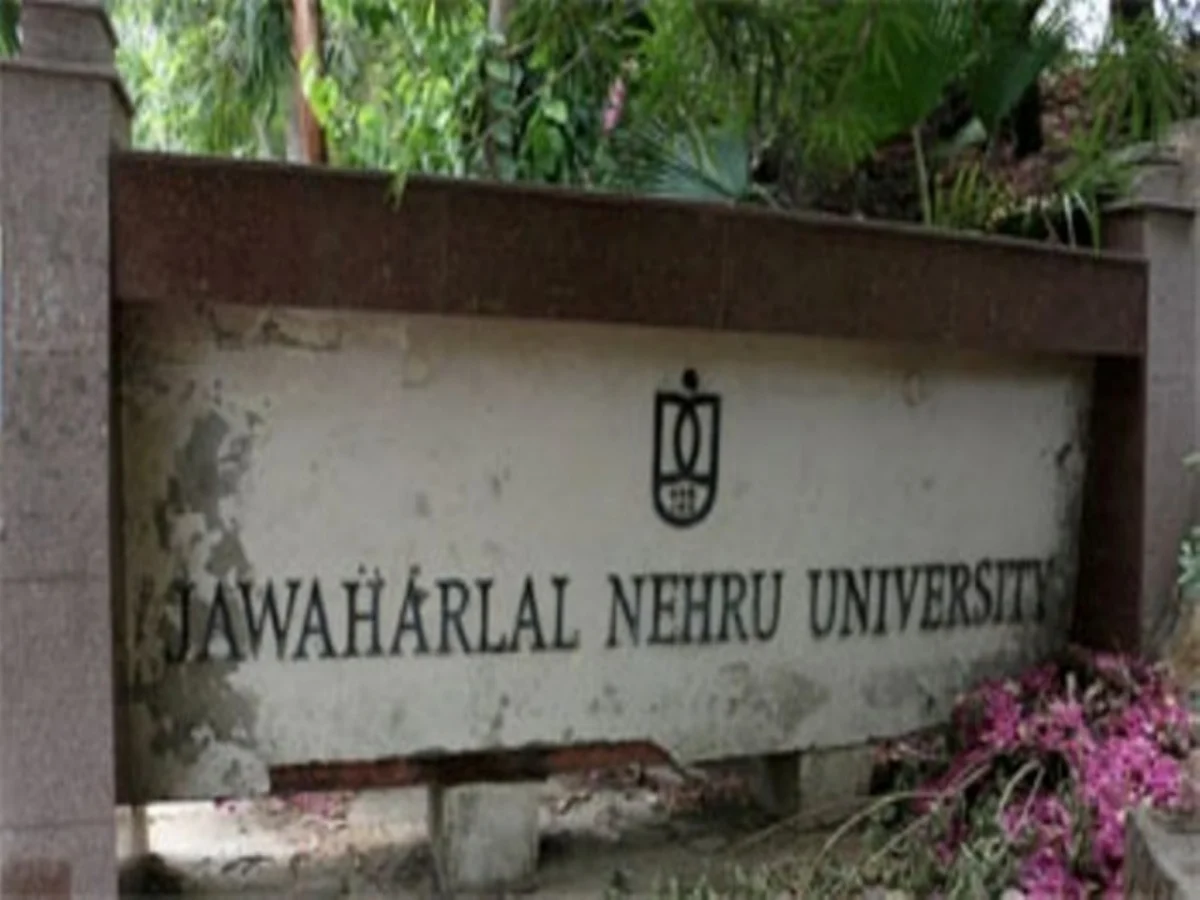
New Delhi: The Jawaharlal Nehru University Students’ Union (JNUSU) has launched a scathing attack on Vice-Chancellor Santishree Dhulipudi Pandit, alleging a deep-seated pattern of "administrative corruption" and "academic malpractice" within the prestigious institution. The union claims that recruitment processes have been systematically manipulated, mandatory University Grants Commission (UGC) regulations bypassed, and dissent from elected Executive Council members deliberately ignored. These accusations, bolstered by an investigative report from The Reporters’ Collective, strike at the "very foundation of academic integrity and institutional autonomy," JNUSU stated.
The student body has called for the "immediate removal" of Vice-Chancellor Pandit, along with the IQAC director and a halt to all ongoing recruitments under his tenure. Furthermore, JNUSU demands a time-bound judicial or court-monitored independent inquiry into all faculty recruitments conducted during Pandit’s leadership, a comprehensive audit of the Internal Quality Assurance Cell (IQAC) and Executive Council’s roles in recruitment and promotion decisions, and full public disclosure of all recruitment-related documents. The union insists on accountability and legal action against all officials found responsible for violating UGC norms and manipulating the hiring processes.
)
The Unveiling of a "Recruitment Scam"
The core of JNUSU’s allegations is centered around a recent investigation titled "Recruitment Scam at JNU Unearthed," published by The Reporters’ Collective. This report, according to JNUSU, provides documentary evidence that candidates initially deemed ineligible by subject experts for failing to meet mandatory UGC eligibility criteria were subsequently reinstated and appointed through the intervention of the university administration and its Internal Quality Assurance Cell (IQAC).
)
JNUSU asserts that this is not an isolated incident but a continuation of a trend that has plagued the university. "For years, students and teachers have been raising concerns that appointments in JNU were increasingly being driven by political patronage, ideological affiliation, and administrative manipulation rather than academic merit," the union’s statement read. The student body claims that corruption under the current Vice-Chancellor is "all-round," extending from non-teaching staff recruitment to security guard contracts, with "opacity and favouritism" becoming the "defining features of governance."

Allegations of Systemic Irregularities and Bypassed Regulations
The Jawaharlal Nehru University Students’ Union has pointed fingers at the alleged deliberate circumvention of established academic norms and regulations. A key accusation is the bypassing of mandatory UGC regulations, which are the bedrock of higher education standards in India. The union claims that these regulations are being disregarded to facilitate "favoured appointments."
)
Furthermore, JNUSU highlights a disturbing trend of elected Executive Council members’ dissent notes being ignored. This, they argue, undermines the democratic functioning of the university and silences legitimate concerns raised by those entrusted with institutional governance. "When mandatory UGC regulations are allegedly bypassed, when recruitment processes are rendered opaque, and when those tasked with safeguarding academic quality become instruments of administrative interference, the credibility of the university is fundamentally undermined," the statement elaborated.
)
The union also pointed out a stark contrast in the treatment of faculty members. While allegedly "favoured appointments" are being made, eligible faculty members are reportedly subjected to "prolonged denial of promotions." This alleged pattern of "arbitrariness and favouritism" is seen as damaging to the academic environment, impacting teaching, research, and the future prospects of students.
)
A Pattern of Alleged Misconduct by the Vice-Chancellor
The JNUSU has explicitly named Vice-Chancellor Santishree Dhulipudi Pandit as the central figure in these alleged corrupt practices, labeling her a "repeat offender." The union has brought to light a past inquiry report by Justice J.A. Patil (Retd.) from the University of Pune. This report, according to JNUSU, allegedly found Dr. Pandit guilty of "misconduct and moral turpitude" during her tenure there.
)
Specifically, the union claims that the Justice Patil report found that Dr. Pandit "deliberately given/recommended admissions of some students for seats in the 15% supernumerary quota even though she was aware of the fact that they were ineligible and therefore not entitled to be given admissions." This conduct, the report allegedly concluded, "clearly suggests moral turpitude on her part." The JNUSU statement further alleges that the Vice-Chancellor at that time had "used seats meant for Persons of Indian Origin (PIO) for individuals who were not entitled to them."
)
Adding to these accusations, JNUSU claims that vigilance checks have revealed a history of penalties against Dr. Pandit, including the "permanent withholding of five increments in 2011 and two increments in 2017." These findings, according to the union, expose a pattern of "deliberate" irregularities and "moral turpitude" that casts a long shadow over her leadership at JNU.
)
Demands for Accountability and Restoration of Academic Standards
In light of these serious allegations, the JNUSU has put forth a clear set of demands aimed at rectifying the situation and ensuring the sanctity of JNU as a premier public institution. The union’s core demands include:
)
- Immediate Removal of Vice-Chancellor Santishree Dhulipudi Pandit: The union believes her continued leadership is detrimental to the university’s integrity.
- Immediate Removal of IQAC Director PR Kumaraswamy and Halt to Ongoing Recruitments: The union seeks to stop any further potentially corrupt appointments under his supervision.
- Time-Bound Judicial or Court-Monitored Independent Inquiry: A thorough investigation into all faculty recruitments conducted during Vice-Chancellor Pandit’s tenure is demanded to unearth the full extent of irregularities.
- Comprehensive Audit of IQAC and Executive Council Roles: The union calls for an examination of the processes and decision-making within these bodies concerning recruitment and promotion.
- Full Public Disclosure of Recruitment Records: Transparency is paramount, and JNUSU demands access to all recruitment-related documents, including screening committee proceedings and appointment letters.
- Accountability and Legal Action: The union insists that all individuals found responsible for violating UGC regulations and manipulating recruitment processes must face legal consequences.
JNUSU emphasizes that JNU "belongs to its students, teachers, workers, and the people of this country—not to any political network seeking to capture public institutions." The union has appealed to the Ministry of Education, the UGC, democratic organizations, and the wider academic community to ensure accountability and restore the principles of transparency, social justice, and academic excellence at the university.
)
Implications for Higher Education in India
The accusations leveled by JNUSU against JNU and its Vice-Chancellor carry significant implications for the broader landscape of higher education in India. JNU, as one of the country’s premier public universities, is often seen as a benchmark for academic excellence and institutional autonomy. When allegations of corruption and manipulation of recruitment processes surface within such an institution, it raises serious questions about the governance and integrity of public universities across the nation.
)
The purported bypassing of UGC regulations is particularly concerning, as these regulations are designed to ensure quality and standardization in higher education. If these are indeed being disregarded with impunity, it could signal a weakening of regulatory oversight and a compromise on academic standards. The alleged politicization of appointments, driven by "political patronage, ideological affiliation, and administrative manipulation," could further erode the meritocratic principles that should underpin academic institutions.
)
The call for transparency and accountability from JNUSU is a crucial reminder of the public trust vested in these institutions. As publicly funded bodies, universities are expected to operate with the utmost integrity and serve the public good. The union’s demand for access to recruitment records and legal action against those found guilty aims to establish a precedent for robust governance and deter future misconduct.
)
The situation at JNU highlights a potential conflict between administrative directives and the preservation of academic freedom and institutional autonomy. The alleged disregard for dissent from elected bodies and the purported favouritism in promotions underscore the challenges faced by institutions in maintaining a balanced and democratic governance structure.
)
The response from the Ministry of Education and the UGC to these allegations will be closely watched, as it will indicate the government’s commitment to upholding academic integrity and ensuring accountability within the higher education sector. The outcome of this situation could set a significant precedent for how such allegations are handled in other public universities, ultimately shaping the future of higher education in India.