

In the bustling marketplaces of urban India and the quiet, dusty lanes of its rural heartlands, a financial revolution has been unfolding for decades. At its center is the microloan—a small, often collateral-free injection of capital intended to spark entrepreneurship and provide a buffer against the vagaries of poverty. Yet, for as long as these programs have existed, a fierce debate has raged among economists, sociologists, and policymakers: Does microcredit truly provide a ladder out of destitution, or does it merely offer a temporary reprieve that risks trapping the vulnerable in a cycle of debt?
New, comprehensive research from the Indian Institute of Technology (IIT) Bombay, published in the prestigious journal Economic Modelling, provides a definitive answer to this long-standing question. Conducted by researchers Rasmita Maharana and Tara Shankar Shaw, the study moves beyond traditional, one-dimensional financial metrics to reveal that microcredit acts as a powerful "double-barreled" tool. It not only reduces immediate poverty but, perhaps more importantly, builds long-term resilience against future economic shocks.
Main Facts: Redefining Poverty through a Multidimensional Lens
The core of the IIT Bombay study lies in its rejection of "income-only" metrics. Traditionally, poverty has been measured by daily spending or wage levels. However, the researchers argue that this fails to capture the lived reality of the poor. Instead, they utilized the "Multidimensional Poverty" framework, which evaluates deprivations across three critical pillars:
- Education: School attendance and years of schooling.
- Health: Evaluated through self-rated health status and insurance coverage.
- Standard of Living: Access to essential infrastructure, including clean drinking water, proper sanitation, electricity, and durable housing.
By tracking over 130,000 households using data from the Consumer Pyramids Household Survey (CPHS) between 2016 and 2019, the study provides one of the most robust analyses of microfinance ever conducted in South Asia. The findings are clear: microcredit significantly lowers the "vulnerability" of a household—the statistical likelihood that they will fall back into poverty in the future—while simultaneously alleviating current deprivations.
The study also highlights a crucial distinction between rural and urban impacts. While urban households see an almost immediate improvement in their standard of living through microcredit, rural households benefit from a "structural safeguard." In villages, loans are often invested in livestock or agriculture, which takes time to yield profit but creates a resilient asset base that protects the family from future crises.
Chronology: The Evolution of the Study and the Microfinance Debate
The journey toward these findings began against a backdrop of skepticism. In the early 2010s, several high-profile studies suggested that microcredit had a "null" effect on poverty, leading to a cooling of global enthusiasm for the sector. Critics argued that the high interest rates and the pressure of weekly repayments were counterproductive.
2016–2019: The Data Collection Phase
The IIT Bombay researchers chose this specific window to analyze the impact of microcredit. This period was particularly significant in the Indian economic context, as it followed major policy shifts like the 2016 demonetization and the subsequent push for digital financial inclusion. By utilizing the CPHS dataset, the team was able to track the same households over multiple years, providing a "panel" view that cross-sectional studies lack.
2020–2023: Methodological Refinement
Recognizing that earlier studies often suffered from "selection bias"—the idea that people who take loans are naturally more entrepreneurial or risk-tolerant than those who don’t—the researchers spent years refining their econometric models. They employed advanced tools like Propensity Score Matching (PSM) and Instrumental Variable (IV-2SLS) strategies to ensure that the positive outcomes observed were actually caused by the loans, rather than pre-existing traits of the borrowers.
2024: Publication and Global Recognition
The publication of the findings in Economic Modelling marks a pivotal moment. It validates the "social safety net" theory of microfinance, proving that even when loans are used for "non-productive" purposes—like paying for a child’s education or a medical emergency—they prevent the "distress sale" of assets, thereby stopping the downward spiral into extreme poverty.
Supporting Data: A Deep Dive into the Numbers
The scale of the research allowed for a granular look at how different types of credit affect different types of households.
The Power of Group-Based Lending
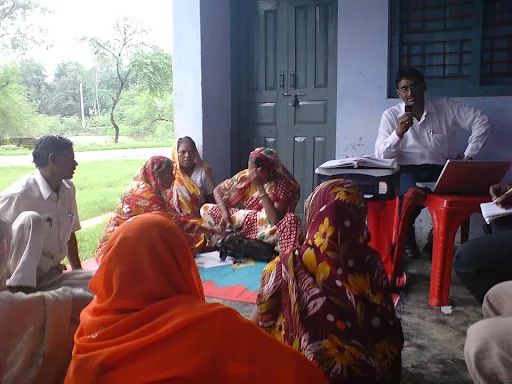
One of the most striking pieces of data involves the efficacy of Self-Help Groups (SHGs). The study found that loans routed through SHGs had a statistically stronger impact on reducing vulnerability than individual micro-loans.
- Social Capital: SHGs provide a support network that individual lenders do not.
- Peer Discipline: The collective responsibility of the group ensures higher repayment rates and better financial planning.
- Empowerment: SHGs often serve as platforms for women to discuss health, hygiene, and local governance, multiplying the "non-financial" benefits of the loan.
Rural vs. Urban Dynamics
The data revealed a fascinating divergence in how credit is utilized:
- Urban Impact: In cities, 12% of the impact was felt through an immediate reduction in current poverty metrics. With better market access, urban borrowers can turn a small loan into a trading or service business almost overnight.
- Rural Impact: In the countryside, the impact on immediate poverty was more subtle, but the reduction in future vulnerability was profound. By investing in "slow-yield" assets like milch cattle or irrigation, rural families created a buffer that reduced their risk of falling into poverty by nearly 15% over the study period.
The Role of Infrastructure and Politics
The researchers also cross-referenced their findings with regional data. They discovered that microfinance works best in an "ecosystem."
- Banking Density: In districts with a higher density of formal bank branches, the "spillover" effect of microcredit was 20% higher.
- Female Representation: Interestingly, states with higher female political representation in State Legislative Assemblies showed more effective microcredit outcomes. This suggests that when women have a political voice, the infrastructure supporting women’s financial groups (like SHGs) is better maintained.
Official Responses and Policy Alignment
While the study is an independent academic work, its findings align closely with the strategic goals of the Government of India and international development bodies.
Alignment with National Missions:
The research provides academic "proof of concept" for the Deendayal Antyodaya Yojana-National Rural Livelihoods Mission (DAY-NRLM). The Indian government has invested billions into this mission, which aims to reach 100 million rural households through SHGs. The IIT Bombay study validates this expenditure, suggesting that the mission is not just a welfare program but a structural economic stabilizer.
The RBI Perspective:
The Reserve Bank of India (RBI) has recently moved toward a more "nuanced" regulatory framework for Microfinance Institutions (MFIs), removing interest rate caps but insisting on "household income-based" lending limits. This study supports the RBI’s shift toward looking at the "household" as the economic unit rather than just the individual borrower.
The Global SDG Agenda:
On a global stage, the research offers a roadmap for achieving United Nations Sustainable Development Goal 1 (No Poverty) and Goal 5 (Gender Equality). By demonstrating that microcredit reduces "multidimensional" deprivation, the study positions financial inclusion as a prerequisite for health and education goals, rather than just a financial target.
Implications: A New Roadmap for Sustainable Development
The implications of the IIT Bombay study are far-reaching, offering a new perspective for lenders, donors, and governments alike.
1. Moving Beyond the "Business-Only" Myth
For years, there was a stigma against using microcredit for "consumption"—buying groceries, paying hospital bills, or fixing a leaking roof. The IIT Bombay research deconstructs this. It shows that using credit for consumption is often a "defensive" investment. By preventing a family from borrowing from a high-interest local moneylender or selling their only plow to pay a doctor, microcredit preserves the family’s long-term economic viability.
2. The Necessity of the "Ecosystem" Approach
The study makes it clear that microcredit cannot work in a vacuum. To maximize the impact of a 30,000-rupee loan, a village needs a road to get products to market, a bank branch to deposit savings, and a school to ensure the next generation is literate. Policymakers must therefore view microfinance as one component of a broader "infrastructure-plus" strategy.
3. Strengthening the SHG-Bank Linkage
Given the superior performance of group-based lending in reducing vulnerability, there is a clear mandate to strengthen the SHG-Bank Linkage Programme (SHG-BLP). This involves not just providing credit, but investing in the "soft skills" of group members—financial literacy, digital payment training, and leadership development.
4. Resilience in the Face of Climate Change
As India faces increasing climate volatility, the "vulnerability reduction" aspect of microcredit becomes a matter of national security. Rural households that have used microcredit to diversify their income—moving from purely crop-based income to a mix of livestock and small-scale manufacturing—are much better equipped to survive a failed monsoon or a flood.
Conclusion
The IIT Bombay study marks a transition in the narrative of microfinance in India. It moves the conversation away from the simplistic "is it good or bad?" and toward a sophisticated understanding of how and where it works best. By proving that microcredit is a shield against future hardship as much as it is a tool for current gain, Maharana and Shaw have provided a powerful argument for the continued expansion of inclusive finance. In the quest to eliminate poverty in all its forms, the small loan, it seems, remains one of the most potent weapons in the arsenal of development.
