

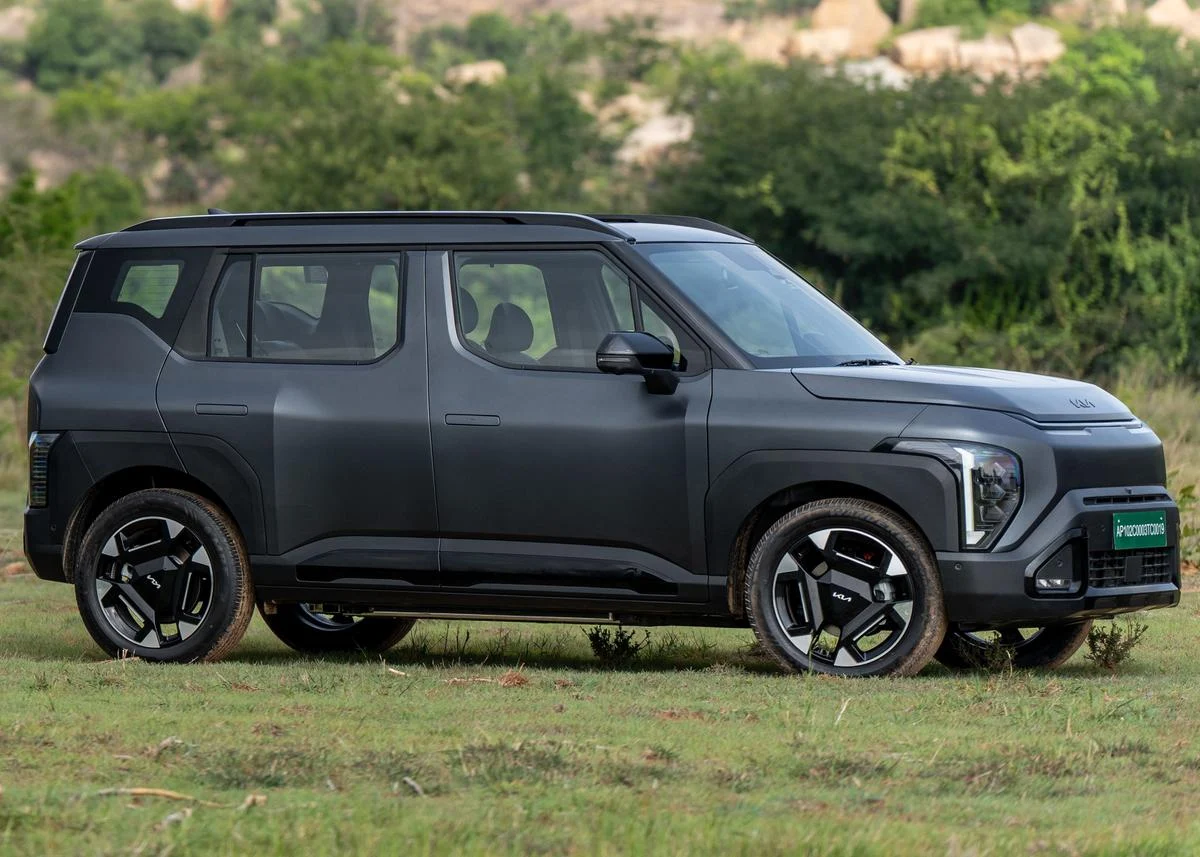
The Indian automotive landscape is currently witnessing a pivotal shift as the transition to electric mobility moves from early adoption to mainstream consideration. At the heart of this transformation is the compact SUV segment, a category that balances urban agility with the aspirational value of a high-seated vehicle. Kia India, a brand that has consistently punched above its weight in terms of design and feature-loading, has now introduced the Syros EV.
Priced between ₹13.50 lakh and ₹20.00 lakh (ex-showroom), the Syros EV is not merely an electric version of a combustion-engine vehicle; it is a calculated attempt to redefine what a sub-four-metre vehicle can offer. By prioritizing interior packaging, high-output performance, and sophisticated technology, Kia is positioning the Syros EV as a formidable challenger to larger rivals, most notably the upcoming Maruti Suzuki e Vitara.
1. Main Facts: The Syros EV at a Glance
The Kia Syros EV enters the market with a clear set of specifications designed to alleviate common consumer concerns regarding range, performance, and utility.

- Dimensions: At 3,995 mm in length, it remains within the tax-efficient sub-four-metre category. However, its 2,550 mm wheelbase and tall-boy architecture allow for a cabin volume that rivals mid-size SUVs.
- Powertrain Options: Kia offers two battery variants—a 42 kWh unit for city-centric users and a 51.4 kWh "Long Range" pack for those requiring interstate capability.
- Performance: The 51.4 kWh variant produces a robust 171 PS and 255 Nm of torque, enabling a 0–100 km/h sprint in just 8.1 seconds.
- Range: The certified MIDC (Modified Indian Driving Cycle) range is 526 km for the larger battery and 443 km for the base battery.
- Charging: Support for 100 kW DC fast charging allows a 10% to 80% state-of-charge (SoC) in approximately 39 minutes.
- Practicality: A class-leading 465-litre boot space is achieved through a unique sliding and reclining rear seat mechanism.
2. Chronology: From Concept to the Electric Frontier
The development of the Syros platform represents Kia’s evolving strategy for emerging markets. Originally conceived to bridge the gap between the entry-level Sonet and the mid-size Seltos, the Syros was designed from the outset to accommodate multiple powertrains.
The ICE (Internal Combustion Engine) version of the Syros laid the groundwork, establishing a design language characterized by verticality and "boxy" modernism. However, the EV iteration was developed with specific focus on "Electric-First" ergonomics. Throughout its testing phase, Kia’s engineers focused on managing the weight distribution of the floor-mounted battery packs without compromising the high ground clearance that Indian buyers demand.
The official launch marks a significant milestone in Kia’s "Plan S" strategy, which aims to electrify its lineup globally. In India, the Syros EV serves as the "volume driver" in the premium electric space, sitting below the flagship EV6 but offering many of its technological sensibilities.

3. Supporting Data: A Deep Dive into Engineering and Design
Exterior Design: Functional Aesthetics
The Syros EV retains the upright, substantial stance of its ICE sibling but introduces several EV-specific refinements. The most prominent change is the closed-off front grille, which reduces aerodynamic drag. Revised bumpers and aerodynamically optimized alloy wheels further distinguish the electric variant.
The vehicle’s 2,550 mm wheelbase is particularly significant. By pushing the wheels to the corners of the chassis, Kia has maximized the "footprint" of the cabin. This design choice serves two purposes: it provides a stable platform for the heavy battery pack and creates a "roomy" interior that defies the car’s 3.99-metre length.
Interior Versatility: The Sliding Seat Advantage
Perhaps the most innovative feature of the Syros EV is its rear-seat packaging. In many compact SUVs, the second row is a compromise. Kia has addressed this by installing a rear bench that can slide forward and backward, as well as recline.

- Passenger Mode: When slid back, the rear legroom is comparable to vehicles in a segment above.
- Cargo Mode: When slid forward, the boot expands to a massive 465 litres, allowing for full-sized suitcases—a rarity in this category.
Technology and Human-Machine Interface (HMI)
The cabin is dominated by a dual 12.3-inch screen setup—one for the digital instrument cluster and one for the infotainment system. Unlike some competitors that have moved all controls to the touchscreen, Kia has retained a separate, dedicated interface for climate control. This decision enhances safety by allowing drivers to make adjustments without taking their eyes off the road.
Higher variants come equipped with:
- Ventilated front seats (essential for the Indian climate).
- A panoramic sunroof.
- 360-degree camera systems with blind-view monitoring.
- Wireless smartphone integration and connected car suites.
4. Driving Dynamics and Battery Performance
The Power of 171 PS
The 171 PS electric motor is the star of the driving experience. In an urban environment, the immediate availability of 255 Nm of torque makes the Syros EV feel exceptionally agile. Overtaking maneuvers that would require a downshift and turbo-spooling in an ICE car are performed here with a simple flex of the right foot.

Ride and Handling
The inclusion of a heavy battery pack at the base of the vehicle lowers the center of gravity, which helps the Syros EV feel more "planted" on the highway than its tall stance might suggest. However, the added mass is noticeable during quick direction changes. To counter this, Kia has tuned the suspension to be slightly firmer, ensuring that body roll is kept in check without making the ride overly harsh on broken city roads.
Range Reality
While the 526 km MIDC figure is a strong marketing tool, real-world range will vary. During initial test cycles, the car showed impressive efficiency, suggesting that a 350-400 km real-world range is achievable with the 51.4 kWh battery. The inclusion of steering-mounted paddles to adjust regenerative braking—including an "i-Pedal" mode for one-pedal driving—allows drivers to maximize energy recovery in stop-and-go traffic.
5. Official Responses and Market Positioning
Kia’s official stance on the Syros EV is that it represents a "no-compromise" approach to the compact segment. Company representatives have highlighted that the vehicle is aimed at "tech-savvy urban families" who want the benefits of an EV without sacrificing the premium features they are accustomed to in larger SUVs.

The Maruti Suzuki e Vitara Factor
The elephant in the room is the Maruti Suzuki e Vitara. While the e Vitara is a larger vehicle on paper, Kia’s strategy is to win on "perceived value" and "interior intelligence." By offering a more powerful motor (171 PS vs. the typical 130-140 PS in rivals) and a more versatile interior, Kia is betting that buyers will prioritize the Syros EV’s clever packaging and premium feel over the e Vitara’s slightly larger exterior dimensions.
6. Implications for the Indian Market
The launch of the Syros EV has several broader implications for the automotive industry in India:
- Democratization of Performance: By offering 171 PS in a sub-₹20 lakh car, Kia is moving the needle on what "affordable performance" looks like. This will likely force competitors to upgrade their motor specifications.
- The Death of the "Small Car" Feel: The Syros EV proves that a sub-four-metre footprint does not have to result in a cramped cabin. This could lead to a new trend of "tall-boy" EVs that prioritize vertical space and sliding components.
- Infrastructure Pressure: With more EVs capable of 100 kW fast charging entering the market, there will be increased pressure on charging providers to move beyond the standard 25 kW and 50 kW chargers currently found on most Indian highways.
- Safety as Standard: With Level 2 ADAS (Advanced Driver Assistance Systems) being offered in the higher trims, Kia is pushing for higher safety standards. Features like Forward Collision Avoidance and Lane Keeping Assist are becoming expected rather than optional in this price bracket.
7. Verdict: A Compelling Case for the Modern Family
The Kia Syros EV is a remarkably well-rounded product. It addresses the fundamental requirements of the Indian buyer—space, features, and road presence—while leveraging the inherent advantages of electric propulsion.

While the upright shape may lead to some wind noise at high speeds and the price point for the top-end variant touches the territory of larger SUVs, the Syros EV makes a compelling argument for itself through sheer utility. It is a car that doesn’t ask you to choose between being eco-friendly and being comfortable.
For the buyer who spends 90% of their time in the city but wants the freedom to occasionally head out on a road trip, the 51.4 kWh Syros EV stands out as perhaps the most sensible and sophisticated choice in the current compact EV market. Kia has not just built an electric car; they have built a smarter version of the SUV that India already loves.
The Kia Syros EV is priced from ₹13.50 lakh to ₹20.00 lakh, ex-showroom. For more information on charging networks and ownership programs, contact your local Kia dealership.
