

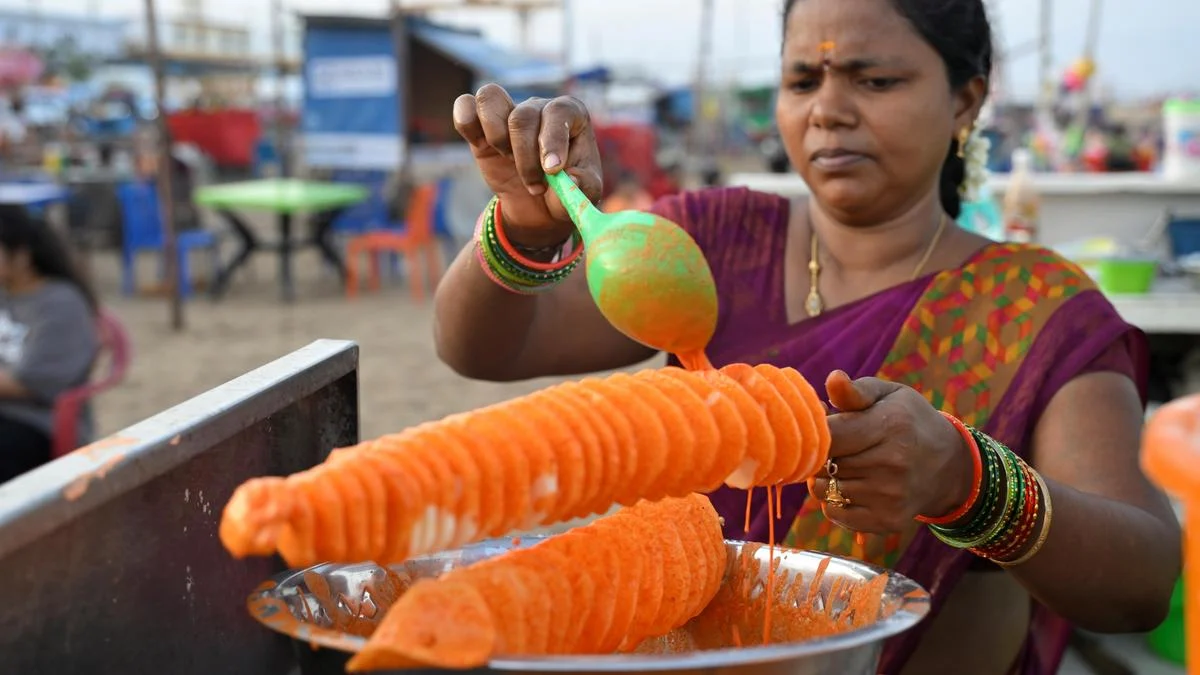
Main Facts: The Gastronomic Identity of Chennai’s Coastline
For the residents of Chennai, the city’s vast coastline—stretching from the historic dunes of the Marina to the upscale sands of Besant Nagar and the rugged fishing hubs of Kasimedu—is far more than a geographical boundary. It is a living, breathing social ecosystem where food serves as the primary currency of connection. While Chennai’s identity is often tied to its classical music, ancient temples, and booming IT sectors, its true, unpretentious heart beats on the shores of the Bay of Bengal, fueled by the scent of frying fish and the tang of raw mango.
The beach food of Chennai is a sensory phenomenon. It is defined by a specific repertoire of flavors: the maanga pattani sundal (dried peas tossed with shredded raw mango and spices), piping hot bajjis (fritters), an array of pan-fried seafood, smoky roasted corn on the cob, and the whimsical, neon-pink wisps of cotton candy. This culinary landscape is not merely about sustenance; it is a ritualistic experience that transcends age, class, and background.
From the northern reaches of Pazhaverkadu, famous for its prawns and crabs, to the "organized chaos" of the Kasimedu fish market, and further south to the rows of meen saapadu (fish meal) messes at Pattinapakkam, the coast offers a spread for every appetite. In recent years, this traditional fare has been joined by modern food trucks in Besant Nagar, offering a fusion of old and new. Yet, despite the evolution, the core remains the same: a visit to the beach is incomplete without a salty, spicy, or sweet treat in hand.
Chronology: From Humble Sundal to Gourmet Food Trucks
The evolution of Chennai’s beach food mirrors the city’s own growth from a colonial outpost to a modern metropolis.
The Early Decades (1950s–1980s): The Era of Simplicity
In the mid-20th century, a visit to the Marina was a simple affair. The food offerings were limited but iconic. The sundal vendor, carrying a large aluminum pot balanced on a wicker stand, was the king of the sands. This era was characterized by the "beach outing" as a rare, disciplined family event. Parents, like the father of 56-year-old Jayashree, often viewed beach food with a skeptical eye toward hygiene, preferring to buy their children toys rather than the street fare. The focus was on the breeze and the vastness of the sea, with food being a secondary, albeit coveted, accompaniment.
The Expansion (1990s–2010s): The Rise of the Bajji and Fish Fry
As the city’s population boomed and the middle class expanded, the variety of food on the beach grew exponentially. The 1990s saw the proliferation of permanent and semi-permanent stalls. The bajji stall became a staple, with its colorful display of long green chilies (milagai), sliced potatoes, and raw bananas hanging like decorative thoranams. Simultaneously, the seafood culture moved from the fishing hamlets directly onto the promenade. The "fish fry" ritual took hold, turning the beach into an open-air seafood restaurant where the catch of the day was marinated in bright red spices and fried to order.
The Modern Era (2010s–Present): Diversification and Professionalization
Today, the shoreline is a sophisticated culinary map. Besant Nagar (affectionately called "Bessy") has become a hub for experimental food trucks, serving everything from peri-peri fries to momos. Meanwhile, Pattinapakkam has gained legendary status among foodies for its "messes" that serve authentic, spicy seafood meals that draw crowds from across the state. The beach is no longer just a place to snack; it is a destination for full-scale lunch and dinner expeditions.

Supporting Data: The Ingredients and Economics of the Shore
The enduring appeal of beach food lies in its specific, often inimitable, flavor profiles. To understand why these dishes cannot be replicated at home, one must look at the components and the people behind them.
The Anatomy of the ‘Secret’ Spice
At the Alli Muthu fish stall at the Marina, the air is thick with the smell of searing oil and spices. Ganesh, a vendor with 30 years of experience, represents the generational knowledge that powers this industry. He started as a child, helping his mother run the stall. According to Ganesh, the secret isn’t just the marinade, but the podi (powder) sprinkled over the fish after it leaves the pan.
This blend often includes:
- Base Masalas: A mix of chicken masala, fish fry masala, and garam masala.
- The Heat: A specific ratio of Kashmiri chili powder for color and local hot chilies for bite.
- The Secret Ingredients: Nearly ten different spices, including fennel, pepper, and cumin, blended in proportions that are closely guarded trade secrets.
The Seafood Variety
The diversity of the catch available at beach stalls is staggering. Common offerings include:
- Vanjaram (Seer Fish): The premium choice, known for its meaty texture.
- Nethili (Anchovies): Deep-fried until crunchy, eaten whole.
- Kanava (Squid): Often rubbery if mistreated, but buttery and tender at the best beach stalls.
- Paarai (Trevally) and Kelathi (Catfish): Staples that offer different flavor profiles and price points.
The Social Shared Experience
For many families, like 31-year-old Nisha from Kodungaiyur, the beach provides a unique social setting. In the privacy of a home, meals are often individualized. On the sand, however, the "sharing economy" takes over. A single large plate of prawns or a massive fried fish becomes a communal centerpiece. This shared consumption is a vital part of the "beach taste"—the psychological satisfaction of eating together in a relaxed, open environment.
Official Responses: Regulation, Hygiene, and Urban Planning
As the popularity of beach food has grown, so too has the need for formal oversight. The Greater Chennai Corporation (GCC) and the Food Safety and Standards Authority of India (FSSAI) have increasingly stepped in to manage the shoreline’s culinary output.
The "Clean Street Food Hub" Initiative
In recent years, the FSSAI has worked to designate parts of the Marina and Besant Nagar as "Clean Street Food Hubs." This involves training vendors in basic hygiene practices, such as using gloves, potable water, and proper waste disposal. While the "unhygienic" stigma mentioned by older generations like Jayashree’s father still lingers in some minds, official certifications have helped boost the confidence of younger consumers and tourists.

Vendor Licensing and Zoning
The GCC has faced the monumental task of balancing the livelihoods of thousands of vendors with the need for public space and environmental protection. Periodic "eviction drives" and subsequent rehabilitations have sought to organize the stalls into neat rows, particularly at the Marina. The goal is to prevent the "organized chaos" from turning into a logistical nightmare, ensuring that emergency vehicles can pass and that the beach remains accessible to all.
Environmental Concerns
Official responses have also focused on the environmental impact of beach food. The ban on single-use plastics has forced vendors to return to traditional materials: dried leaf plates (mandharai ilai), wooden spoons, and paper cones for sundal. While enforcement is ongoing, there is a clear official push toward making the beach food experience more sustainable.
Implications: The Psychological and Cultural Umami
The implications of Chennai’s beach food culture extend far beyond the plate. It is a vital component of the city’s "soft power" and a crucial element of its social fabric.
The Equalizing Effect of the Sand
The beach is one of the few places in a rapidly stratifying city where socioeconomic boundaries blur. A tech CEO and a daily wage laborer might stand side-by-side at a bajji stall, both waiting for their turn to get a plate of hot fritters and that specific, watery, spicy coconut chutney. This "democratization of flavor" is essential for the city’s social harmony, providing a common ground (or sand) where everyone shares the same sensory joys.
The "Beach Vibe" as a Flavor Profile
Perhaps the most significant implication of this study is the realization that "beach food" is as much about the environment as it is about the recipe. The "secret sauce" isn’t just Ganesh’s spice blend; it is the "umami" of the ocean. The salt-heavy air, the humidity that makes the batter stick just right, the sound of the waves providing a rhythmic backdrop to the crunch of a sundal, and the feeling of sand between one’s toes—all these factors contribute to the taste.
This is why "beach-style chutney" recipes found on the internet often fail to satisfy when prepared at home. The missing ingredient is the atmosphere of easy abandon. When people arrive at the beach, they leave behind the stressors of traffic, work, and domesticity. They arrive simply to have fun, and that psychological state enhances the perception of flavor.
Future Outlook
As Chennai continues to modernize, the challenge will be to preserve the soul of its beach food while adapting to higher standards of hygiene and environmental care. The transition to food trucks and more organized stalls is inevitable, but the heart of the experience—the spicy, salty, shared joy of eating by the sea—remains an unshakeable pillar of Chennai’s identity. For generations to come, the call of the maanga pattani sundal and the sizzle of the fish fry will continue to draw people to the water’s edge, creating new memories on the foundations of the old.
