

Kolkata, West Bengal – Forty-six years may have passed since his untimely demise, yet for the discerning and often opinionated populace of West Bengal, there remains a rare, near-unanimous consensus: Uttam Kumar reigns supreme as the greatest Bengali cine star in history. Revered affectionately as "Mahanayak" (the Mega Star), Kumar’s legacy continues to captify generations. It is this enduring, unifying power that the Bharatiya Janata Party (BJP) government in West Bengal is now strategically harnessing as part of an ambitious cultural outreach, aiming to solidify its influence over the state’s vibrant film industry, affectionately known as Tollywood, centered in Kolkata’s Tollygunge neighborhood.
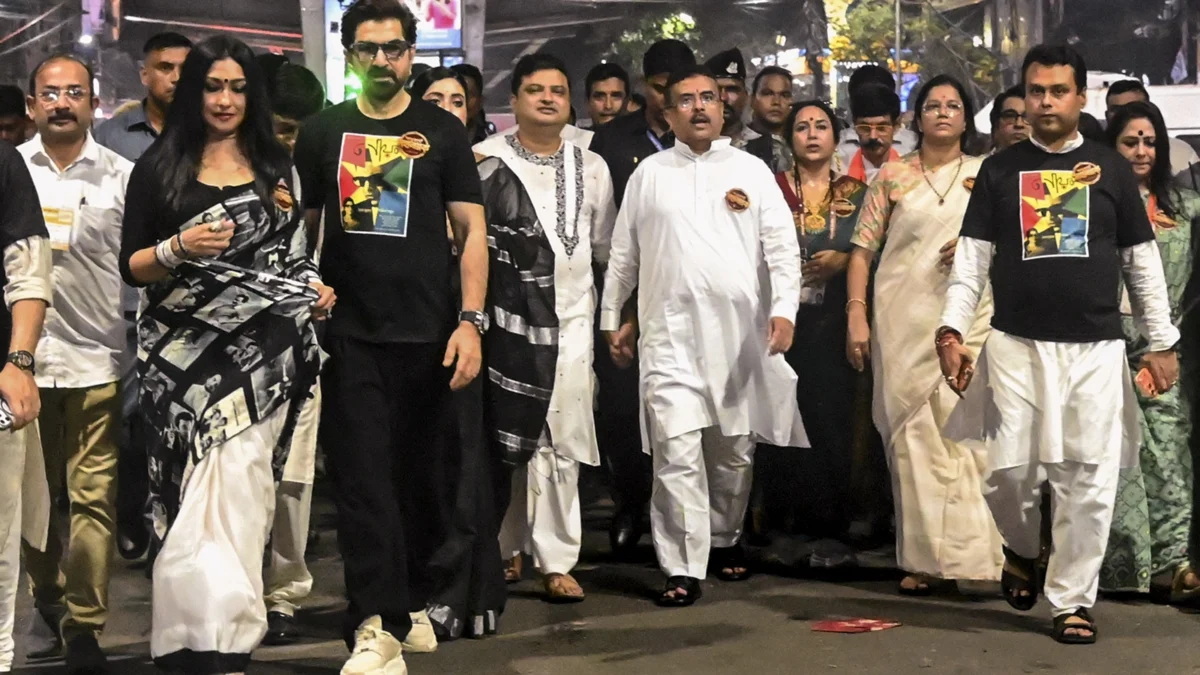
On Thursday morning, September 4, 2026, the birth centenary of Uttam Kumar became the stage for a significant display of political and cultural alignment. While Prime Minister Narendra Modi released a commemorative video statement from Delhi, paying tribute to the Bengali film icon, the BJP-led state government orchestrated a grand tribute ceremony in Kolkata. The event, marked by a public walk and solemn observations at the Mahanayak’s statue near the Tollygunge metro station, drew an impressive roster of industry stalwarts and political figures, signaling a deliberate effort by the ruling party to weave itself into the cultural fabric of Bengal.
Leading the procession was West Bengal Chief Minister Suvendu Adhikari, flanked by an eclectic mix of Tollywood’s finest. Among them were prominent film stars such as Jeet and Rituparna Sengupta, veteran actor Prosenjit Chatterjee, revered elder statesman Ranjit Mallick, acclaimed director Gautam Ghosh, and, notably, rebel Trinamool Congress (TMC) MP and film star Deepak Adhikari, better known as Dev, who has since aligned himself with the newly formed Nationalist Citizens Party of India. The presence of BJP MLAs Rudranil Ghosh and Papiya Adhikari further underscored the political undercurrents of the day. This confluence of cinema and statecraft painted a vivid picture of a calculated cultural diplomacy at play, seeking to appropriate and celebrate Bengal’s most cherished icon under the saffron banner.
The Unifying Power of the Mahanayak: A Legacy Beyond Politics
Uttam Kumar (born Arun Kumar Chatterjee) transcends mere celebrity in Bengal; he embodies a cultural phenomenon. His career, spanning over three decades from the late 1940s to his death in 1980, saw him star in over 200 films, mastering a range of genres from romantic dramas to thrillers, comedies, and social commentaries. His expressive eyes, charming smile, and unparalleled ability to portray the everyday Bengali man with dignity and pathos made him an instant connect with audiences. Films like Harano Sur, Saptapadi, Nayak, Jatugriha, and Antony Firingee are not just cinematic milestones but integral parts of Bengali collective memory.
His collaboration with Suchitra Sen created an iconic on-screen pair, often considered the greatest in Indian cinema history, whose chemistry defined an era of Bengali romanticism. Beyond his acting prowess, Kumar was also a gifted director and producer, further cementing his comprehensive contribution to Tollywood. He was the recipient of the inaugural National Film Award for Best Actor in 1967 for his performances in Antony Firingee and Chiriyakhana, a testament to his critical acclaim alongside his immense popular appeal.
The sobriquet "Mahanayak" was bestowed upon him by Prime Minister Indira Gandhi, recognizing his unparalleled stature. Even decades after his passing, his films continue to be broadcast, his songs sung, and his persona invoked in discussions about Bengali identity and culture. This deep, almost spiritual connection Bengalis feel towards Uttam Kumar makes him an invaluable cultural asset, a rare figure who commands universal respect across all social strata and, crucially, political divides. For the BJP, tapping into this reservoir of affection offers a powerful avenue to connect with the Bengali populace, circumventing existing political narratives and forging new cultural bonds.
A Strategic Centenary: BJP’s Cultural Diplomacy in Bengal
The tribute to Uttam Kumar is far more than a simple act of remembrance; it is a meticulously orchestrated move within the BJP’s broader strategy to establish a deeper foothold in West Bengal. Historically, the cultural landscape of Bengal, including Tollywood, has been largely dominated by regional parties, particularly the Trinamool Congress, which has skillfully leveraged Bengali identity and cultural icons to maintain its political sway. The BJP, often perceived as an "outsider" party in Bengal, has faced the challenge of integrating itself into the state’s rich cultural narrative.
The party’s strategy involves identifying universally revered Bengali figures – be it Rabindranath Tagore, Swami Vivekananda, Netaji Subhas Chandra Bose, or now Uttam Kumar – and celebrating them, often with a subtle emphasis on their connection to a broader national identity. This approach seeks to counter the regionalist narrative and present the BJP as a custodian of both Bengali heritage and national pride.
Tollywood, in particular, holds immense significance. As a major cultural industry, it not only provides employment but also shapes public opinion, influences trends, and acts as a powerful medium for storytelling and identity formation. Gaining influence in Tollywood translates into control over a significant soft power tool. In the past, many prominent actors and directors were openly affiliated with the TMC, often serving as MPs or MLAs, or participating in party campaigns. This created a perception of Tollywood being largely aligned with the ruling regional party. The BJP’s current outreach aims to disrupt this established order, encouraging defections and fostering new alliances.
The choice of Uttam Kumar’s centenary is particularly astute. Unlike some historical figures who might be associated with specific political ideologies or periods, Kumar’s appeal is largely apolitical in its essence, rooted purely in his artistic genius. This allows the BJP to participate in his celebration without immediately triggering accusations of political appropriation, at least from a broad public perspective. By honouring the Mahanayak, the BJP positions itself as a patron of Bengali art and culture, a role traditionally held by the ruling regional party.
Chronology of the Tribute and Shifting Political Alignments
The day’s events unfolded with a clear intention to maximize both public visibility and political messaging.
Morning of September 4, 2026:
The tribute began with a significant national endorsement. From the nation’s capital, Prime Minister Narendra Modi released a video statement commemorating Uttam Kumar’s birth centenary. While the exact content of his message was not fully disclosed, sources indicated it emphasized Kumar’s contribution to Indian cinema, his role in promoting cultural values, and his ability to transcend regional boundaries, implicitly linking Bengali artistic excellence to a broader national narrative. This simultaneous top-down and grassroots approach is characteristic of BJP’s outreach campaigns.
Kolkata’s Tollygunge, The Heart of Tollywood:
Concurrently, the epicenter of the state-level celebrations was the Tollygunge neighborhood of Kolkata, home to the Bengali film industry. The choice of location – Uttam Kumar’s statue near the Tollygunge Metro Station – was symbolic, placing the event squarely at the heart of the industry he so profoundly shaped. The area, bustling with film studios and production houses, served as a natural backdrop for an event designed to resonate with the film fraternity and the general public alike.
The event commenced with a "tribute walk," where Chief Minister Suvendu Adhikari led a procession of film personalities and political figures. The atmosphere was a mix of solemn respect for the Mahanayak and a discernible political buzz, with cameras flashing and crowds gathering to witness the unusual convergence of power and glamour.
Key Attendees and Their Significance:
The roster of attendees offered crucial insights into the evolving political landscape of Tollywood:
- Chief Minister Suvendu Adhikari: As the state’s top BJP leader, his presence signified the government’s direct involvement and endorsement of the event. His speeches likely focused on the BJP’s commitment to preserving Bengali culture and supporting the arts, positioning the party as a champion of local heritage.
- Film Star Prosenjit Chatterjee: Often regarded as the contemporary "Bumba Da" (elder brother) of Tollywood, Prosenjit Chatterjee holds immense respect and influence within the industry. While often perceived as apolitical, his presence at a BJP-led event is a significant endorsement, lending credibility and gravitas to the proceedings. His participation suggests a pragmatic alignment, perhaps seeking to ensure industry welfare under the current political dispensation.
- Veteran Actor Ranjit Mallick: A highly respected figure, Mallick’s presence was particularly noteworthy. His daughter, Koel Mallick, a popular actress herself, had previously been appointed a Trinamool Congress (TMC) Rajya Sabha MP, though she later resigned. Ranjit Mallick’s participation in a BJP-organized event, despite his family’s past TMC ties, signals a potential shift in loyalties or at least a willingness to engage with the ruling party, highlighting the fluid nature of political affiliations in Tollywood.
- Rebel Trinamool MP Deepak Adhikari (Dev): Perhaps the most politically charged presence was that of Dev. A hugely popular film star, Dev had been a Trinamool Congress MP but had evidently distanced himself from the party, now identifying with the "Nationalist Citizens Party of India." His participation is a clear indicator of the fragmentation within TMC’s cultural wing and the BJP’s success in attracting disaffected members. Dev’s move represents a significant symbolic victory for the BJP, demonstrating their ability to draw away key cultural figures from the opposition. The emergence of the "Nationalist Citizens Party of India" itself suggests a new, perhaps ideologically aligned, political platform aiming to appeal to nationalist sentiments within Bengal.
- Director Gautam Ghosh: An internationally acclaimed filmmaker known for his thought-provoking and often socially conscious cinema, Gautam Ghosh’s presence added an intellectual and artistic weight to the event. His participation, from a director often associated with a more independent or left-leaning intellectual space, indicates a broad appeal of the Uttam Kumar centenary, perhaps transcending direct party affiliation but acknowledging the importance of the cultural celebration itself.
- BJP MLAs Rudranil Ghosh and Papiya Adhikari: These figures, already aligned with the BJP, served as visible representatives of the party’s presence within the film industry, having themselves transitioned from acting to active politics under the BJP banner. Their role was to reinforce the party’s commitment to Tollywood and cultural outreach.
- Actor Rituparna Sengupta: A leading lady of Bengali cinema for decades, Rituparna Sengupta’s consistent presence across various political and cultural events showcases her stature and willingness to engage with different stakeholders. Her participation in the BJP-led tribute further normalized the event within the industry.
The event featured brief speeches, floral tributes, and perhaps cultural performances, all designed to honour Uttam Kumar while subtly projecting the BJP’s vision for Bengal’s cultural future.
Tollywood’s Shifting Sands: Defections and New Alliances
The Uttam Kumar centenary celebration served as a public barometer of the ongoing political realignment within Tollywood. For decades, the Bengali film industry has been closely intertwined with state politics, with ruling parties often acting as key patrons. Under the Trinamool Congress, many actors, directors, and cultural figures were incentivized to align with the party, through Rajya Sabha nominations, positions in state-sponsored cultural bodies, or direct financial support for film projects.
However, the event on September 4, 2026, highlighted a clear erosion of this established order. The presence of figures like Ranjit Mallick and, more significantly, Dev, who were once associated with or even directly represented the TMC, speaks volumes. Dev’s move to the "Nationalist Citizens Party of India" – a party whose very name suggests an ideological bent that aligns with the BJP’s broader nationalistic platform – is a powerful symbol of actors seeking new political homes. This could be motivated by various factors: genuine ideological alignment, frustration with the previous political dispensation, career considerations, or the desire to remain relevant and in favour with the current ruling party.
This shift has profound implications for Tollywood. It suggests that the industry, once largely perceived as a TMC stronghold, is becoming increasingly diversified in its political affiliations. This could lead to:
- Increased Competition for Patronage: Actors and filmmakers might find themselves navigating a more competitive landscape for government funding, film festival participation, and other forms of state support, with political alignment potentially playing a more overt role.
- Polarization within the Industry: While some welcome the new avenues, others might feel pressured or express discomfort with the overt politicization of cultural events, potentially leading to internal divisions within Tollywood.
- New Narratives: With different political forces influencing the industry, there could be a shift in the types of stories being told, with a potential emphasis on themes that resonate with the ruling party’s agenda.
- Economic Impact: Government policies, funding for infrastructure (studios, equipment), and ease of doing business are heavily influenced by the ruling party. Aligning with the current government could offer advantages, while opposition could lead to marginalization.
The BJP’s strategy seems to be twofold: first, to attract established names, leveraging their star power and influence; and second, to foster new talent and production houses that are sympathetic to their ideology, gradually building a parallel cultural ecosystem.
Official Responses and Counter-Narratives
The BJP’s narrative surrounding the Uttam Kumar centenary was consistently framed around cultural revival, national pride, and the celebration of Bengal’s rich heritage. Chief Minister Suvendu Adhikari, in his address, likely emphasized the government’s commitment to honouring legends like Uttam Kumar, ensuring that their contributions are remembered and inspiring future generations. The party’s spokespersons would highlight the broad participation from Tollywood as evidence of their inclusive approach and genuine respect for the arts, contrasting it with what they might term the previous government’s "politicization" of culture. They would underscore the Prime Minister’s personal tribute as a testament to the national importance of Bengali cultural figures.
The Trinamool Congress, however, would almost certainly present a counter-narrative. While unlikely to directly criticize the tribute to Uttam Kumar himself, their response would likely focus on accusing the BJP of cultural appropriation and superficial gestures. TMC leaders might argue that the BJP, a party they often accuse of being culturally alien to Bengal, is merely using Bengali icons for political mileage without a genuine understanding or commitment to the state’s cultural ethos. They would likely point to their own historical support for Tollywood, the establishment of various cultural academies, and their efforts to promote Bengali language and identity.
A TMC spokesperson might retort that while the BJP orchestrates grand events, the real challenges faced by artists, technicians, and daily wage earners in Tollywood are being ignored. They could also highlight the "defections" as opportunistic, rather than genuine shifts in ideology, accusing the BJP of using pressure tactics or promises of patronage. The ongoing battle for Bengal’s cultural soul is thus fought not just on political platforms, but also through competing narratives surrounding its most beloved figures.
Broader Implications for Bengal’s Political Landscape
The Uttam Kumar centenary event, while seemingly a cultural affair, carries significant political implications for West Bengal. It is a microcosm of the larger battle between the BJP and the TMC for the hearts and minds of Bengali voters.
- Soft Power Consolidation: The BJP’s engagement with Tollywood is a classic example of using soft power – cultural influence and appeal – to consolidate its political gains. By aligning itself with revered cultural figures, the party aims to soften its image, appearing less as an "outsider" and more as a protector of Bengali identity. This is crucial for a party that has struggled to shed the perception of being alien to Bengali culture.
- Shaping Bengali Identity: The BJP’s emphasis on figures like Uttam Kumar, alongside national figures, is part of a broader strategy to redefine Bengali identity. While the TMC often champions a more regionalist, language-centric Bengali identity, the BJP seeks to integrate this regional identity within a larger nationalistic framework. By celebrating Uttam Kumar as a "Mahanayak of India" (as implied by PM Modi’s involvement), they attempt to bridge regional pride with national pride.
- Electoral Impact: While one cultural event may not swing an election, a sustained campaign of cultural outreach, coupled with the visible alignment of popular cultural figures, can gradually influence public opinion. It can help the BJP make inroads into segments of the population that might otherwise be resistant to its political messaging. The visible support from film stars can lend an aura of popularity and acceptance to the party, especially among younger voters.
- Challenges for the Opposition: The TMC faces the challenge of responding to this cultural offensive. Simply dismissing it as appropriation might not be enough. They need to articulate their own vision for Bengal’s cultural future and demonstrate their continued commitment to the arts, perhaps by highlighting concrete initiatives and engaging with artists who remain loyal to their cause. The fragmentation within their cultural wing, as evidenced by Dev’s shift, presents a significant concern.
- Future of Cultural Patronage: The event signals a potential new era for cultural patronage in Bengal. The BJP, now in power, will likely exert its influence over state-sponsored cultural bodies, film funding, and artistic institutions. This could lead to a shift in priorities, themes, and even the individuals who receive state support, fundamentally altering the dynamics of the state’s cultural ecosystem.
Conclusion
The birth centenary of Uttam Kumar, the eternal Mahanayak of Bengali cinema, became a poignant stage for a significant political maneuver in West Bengal. What appeared on the surface as a heartfelt tribute was, beneath the layers of veneration, a calculated strategic move by the BJP government. By drawing prominent Tollywood figures, including those with past ties to the opposition, into a state-sponsored celebration of Bengal’s most beloved cultural icon, Chief Minister Suvendu Adhikari and the BJP have signaled their intent to assert cultural dominance alongside political power.
This event underscores the enduring relevance of Uttam Kumar, a figure whose legacy continues to unite Bengalis across generations and ideological divides. It also highlights the intensifying battle for cultural influence in West Bengal, where the BJP is actively seeking to redefine its image and solidify its presence by embracing and celebrating the state’s rich heritage. As Tollywood navigates these shifting sands of political allegiance, the cultural landscape of Bengal is poised for a dynamic and often contentious evolution, with the Mahanayak’s centenary serving as a powerful testament to the intricate dance between art, identity, and power.
