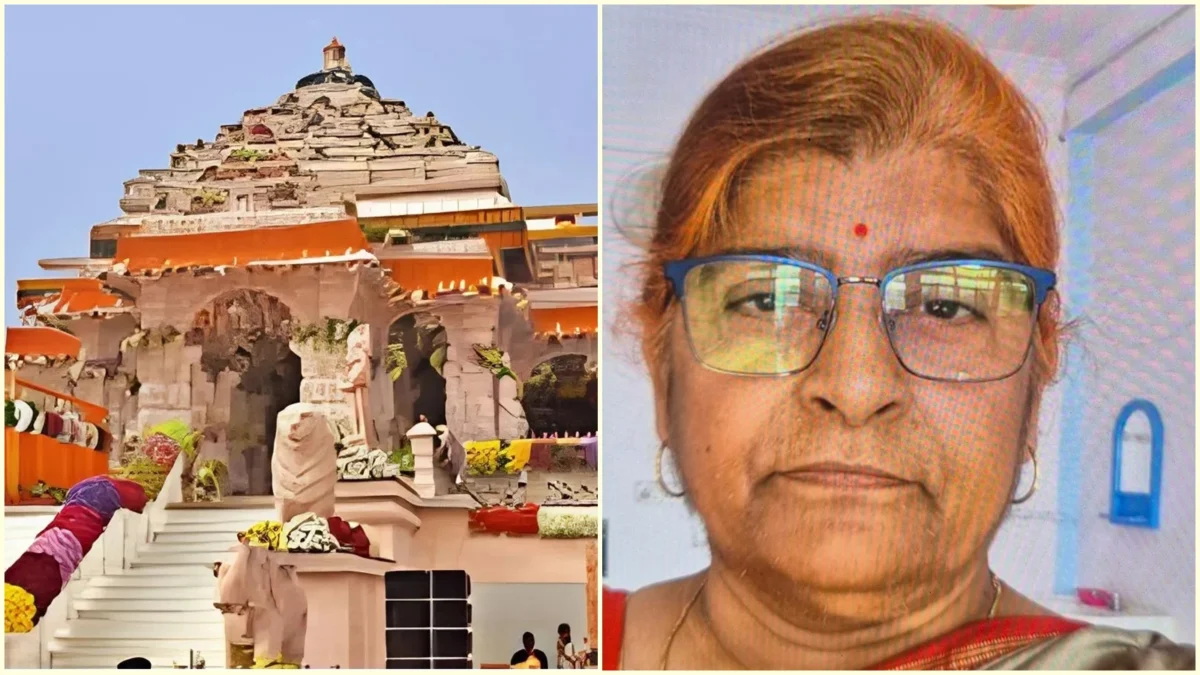
Ayodhya, Uttar Pradesh – In a significant move that underscores evolving dynamics within India’s religious and cultural institutions, Dr. Nirmala Yadav, a distinguished educationist and long-time associate of the Rashtriya Swayamsevak Sangh (RSS), has been appointed as the first woman trustee of the Shri Ram Janmabhoomi Teerth Kshetra Trust. The announcement, made on September 2, 2026, has been met with both surprise and widespread appreciation, marking a new chapter in the governance of the revered Ram Temple in Ayodhya.
The 66-year-old retired principal, with a PhD in Hindi and a robust background in academic administration, received the momentous invitation via a WhatsApp message, a modern twist to a historically significant appointment. Her inclusion is not merely a recognition of her extensive service and administrative acumen but also carries profound symbolic weight, particularly in the context of women’s representation and political outreach in a region deeply entrenched in traditional power structures.
The Trust, tasked with the monumental responsibility of overseeing the construction and management of the Ram Temple, simultaneously announced other key appointments. Retired Air Marshal Jeetendra Mishra was named its first Chief Executive Officer (CEO), a role critical for streamlining operations and ensuring efficient project execution. Additionally, advocate Madan Mohan Pandey and businessman-social worker Mahesh Bhagchandka were inducted as new trustees, filling crucial vacancies and bringing diverse expertise to the esteemed body. These appointments follow the demise of Bimlendra Mohan Mishra last year and the resignations of former general secretary Champat Rai and member Anil Mishra amidst a controversy surrounding alleged donation theft, highlighting the Trust’s commitment to reinforce its leadership and maintain public confidence.
The Unexpected Call: A Journey from Academia to Ayodhya
Dr. Nirmala Yadav’s entry into the revered Shri Ram Janmabhoomi Teerth Kshetra Trust unfolded with a blend of modern communication and profound tradition, leaving the veteran educationist momentarily stunned. On September 2, 2026, a simple WhatsApp message from the Trust landed on her phone, carrying an invitation that would redefine her life’s trajectory. The message, requiring an immediate confirmation of her willingness to accept the position of trustee, was a stark departure from the conventional, often protracted, processes of such high-profile appointments.
“I froze for a moment,” Yadav recounted to The Indian Express, reflecting on the initial shock of the message. A retired teacher and former principal from Shikohabad, in Firozabad district, she had received prior indications that she might be considered for a role within the Trust, but the direct invitation to become a trustee was an elevation she had never anticipated. “I’d been given an indication that I could be given a role in the Trust, but I never expected to become a trustee. I received a message on WhatsApp asking me to confirm whether I would accept the responsibility and was asked to respond quickly.”
Later that very evening, the official announcement confirmed her inclusion, cementing her place in history as the first and only woman member of the Shri Ram Janmabhoomi Teerth Kshetra Trust. For Dr. Yadav, who believed she had fulfilled most of her life’s roles, this appointment arrived as an unexpected divine benediction. “I had never dreamt of it. I thought I had already played almost all the roles I had to in life. Then this came as a blessing from Lord Ram,” she articulated, her words imbued with a deep sense of humility and gratitude.
This modern method of communication for such a sacred appointment not only highlights the Trust’s embrace of contemporary tools but also perhaps underscores the urgency and directness with which it sought to fill crucial leadership roles. Her swift acceptance paved the way for a new chapter in the Trust’s governance, one that promises to bring a fresh perspective and a voice for half of the population to the table.
Chronology of a Dedicated Life and a Divine Calling
Dr. Nirmala Yadav’s journey to becoming a trustee of the Ram Temple is a testament to decades of dedication, both in the educational sphere and within the broader Sangh Parivar ecosystem. Her life story offers a compelling narrative of consistent service, culminating in an unexpected but deeply meaningful appointment.
A. The Unexpected Call and Official Announcement:
The pivotal moment arrived on September 2, 2026. Dr. Yadav, in the quiet of her post-retirement life, received the WhatsApp message from the Shri Ram Janmabhoomi Teerth Kshetra Trust. The message, direct and urgent, sought her immediate confirmation for a trustee position. Her initial disbelief quickly gave way to acceptance, acknowledging the immense honour and responsibility. Within hours, the Trust officially announced her name, along with Air Marshal Jeetendra Mishra as the new CEO, and two other trustees, Madan Mohan Pandey and Mahesh Bhagchandka. This swift process underscored the Trust’s efficiency in filling key positions.
B. The Trust’s Recent History and Mandate:
The Shri Ram Janmabhoomi Teerth Kshetra Trust was constituted by the Government of India in February 2020, following the landmark Supreme Court verdict on the Ayodhya dispute. Its primary mandate has been to oversee the construction of the grand Ram Temple and manage its affairs. The Trust has been at the forefront of one of India’s most significant cultural and religious projects in recent history.
The recent appointments, including Dr. Yadav’s, were necessitated by crucial vacancies. The passing of Bimlendra Mohan Mishra, a respected member, created one such void. More significantly, the resignations of former general secretary Champat Rai and member Anil Mishra in the wake of an alleged donation theft controversy had left the Trust in need of fresh leadership to restore public confidence and ensure transparent governance. These developments added a layer of urgency and importance to the selection of new trustees, making Dr. Yadav’s induction particularly impactful.
C. Dr. Yadav’s Professional Timeline:
Dr. Yadav’s professional life has been marked by a relentless pursuit of academic excellence and administrative leadership.
- 1999: Began her career as a lecturer at BDA Kanya Mahavidyalaya, Shikohabad.
- 1999-2006: Served as the principal of BDA Kanya Mahavidyalaya, showcasing her early administrative capabilities.
- 2006-2022: Assumed the principalship of Mahatma Gandhi PG College in Firozabad, a position she held for 16 years, further solidifying her reputation as a capable and dedicated educational administrator.
- 2022: Retired from her long and distinguished career in academia.
- Post-retirement: Her commitment to public service continued as she was elected to the council of Dr. Bhim Rao Ambedkar University, Agra, as the Governor’s nominee, a testament to her enduring influence and expertise.
D. Her Sangh Association Timeline:
Parallel to her academic career, Dr. Yadav maintained a strong and active association with the Rashtriya Swayamsevak Sangh (RSS) and its affiliated organizations, reflecting a deep ideological commitment.
- 1999: Her engagement with the Akhil Bharatiya Rashtriya Shaikshik Mahasangh (ABRSM), an RSS-affiliated teachers’ organization, began when she became the vice-president of its Uttar Pradesh unit.
- Subsequent Years: She rose through the ranks, serving as vice-president of ABRSM’s national women’s wing, a critical role in promoting women’s participation and issues within the Sangh’s educational outreach.
- Higher Education Focus: She also served as vice-president for higher education within the ABRSM, demonstrating her expertise and influence in shaping educational policies and discourse from a Sangh perspective.
- Past Two Years (pre-appointment): She held the significant position of Akhil Bharatiya “Sampark Pramukh” for the ABRSM, a role focused on outreach and coordination across the national organization, requiring extensive networking and leadership skills.
This meticulously built chronology reveals a life consistently dedicated to education, administration, and ideological service, providing a robust foundation for her unexpected but well-deserved appointment to the Ram Temple Trust.
Supporting Data: A Legacy of Service and Sangh Ties
Dr. Nirmala Yadav’s profile is characterized by a rich tapestry of academic excellence, administrative prowess, and deep-rooted ideological commitment, all of which converge to make her a fitting choice for the Ram Temple Trust.
A. Academic and Administrative Pedigree:
With a PhD in Hindi, Dr. Yadav possesses a profound understanding of Indian language, literature, and culture – a critical asset for a trust overseeing a monument of immense cultural and religious significance. Her academic foundation suggests not just intellectual rigor but also a connection to the classical roots of Indian heritage.
Her career as an educationist spanned over two decades as a college principal, a role demanding exceptional leadership, organizational skills, and a commitment to student welfare. She served at BDA Kanya Mahavidyalaya, Shikohabad, and later for 16 years at Mahatma Gandhi PG College in Firozabad. Managing educational institutions, especially women’s colleges, requires a nuanced approach to administration, curriculum development, faculty management, and student mentorship. Her stated belief that her “administrative experience in management” would be valuable to the Trust is well-founded. She has navigated complex institutional environments, handled diverse stakeholders, and ensured transparent operations – qualities directly transferable to the governance of a major religious institution. Her post-retirement role as the Governor’s nominee to the Dr. Bhim Rao Ambedkar University, Agra, council further underscores her continued relevance and trusted standing in the educational community.
B. Family Legacy and Connections:
Dr. Yadav’s deep ties to the Rashtriya Swayamsevak Sangh (RSS) and the broader Sangh ecosystem are not just personal but also generational. Her father-in-law was associated with the RSS, and her late husband, an advocate, was actively involved with both the RSS and the Bharatiya Janata Party (BJP). This family history paints a picture of a household deeply imbued with the nationalist and cultural ethos of the Sangh Parivar, suggesting a natural alignment with the ideological underpinnings of the Ram Temple movement.
Furthermore, her family holds significant historical roots in Shikohabad. According to sources, her husband’s family is associated with the Urawar (Zamindar) Estate, which played a pivotal role in establishing a college in Shikohabad in 1916. This institution, popularly known as “Ahir College,” was later renamed Adarsha Krishna PG College. This college even boasts a notable alumnus in former Uttar Pradesh chief minister and Samajwadi Party founder Mulayam Singh Yadav, who briefly studied there. Dr. Yadav proudly states that her great-grandfather-in-law established this college, linking her directly to a legacy of community development and educational philanthropy in the region. These deep local roots and historical connections not only provide her with an understanding of the region’s socio-political fabric but also lend her considerable credibility and influence within the community. Her daughter’s marriage to a Deputy Commandant in the Border Security Force further illustrates a family ethos of service to the nation.
C. The Symbolism of Women’s Empowerment:
Dr. Yadav’s appointment as the first woman trustee is a potent symbol of women’s empowerment, particularly within a domain traditionally dominated by men. She herself articulated this significance, stating, “My selection also reflects women’s empowerment; I’ll ensure that the suggestions and concerns of women are appropriately placed before the Trust during important decisions.” This commitment is crucial. In a country where women constitute nearly half the population and are devout followers of religious traditions, their direct representation in the highest decision-making body of such a pivotal religious institution is a progressive step. It sends a powerful message about inclusivity and the recognition of women’s capabilities beyond conventional roles. Her presence can ensure that the Trust’s future endeavors, from managing facilities to organizing religious events, are sensitive to the needs and perspectives of women devotees.
D. The Ram Temple Trust’s Composition:
The Shri Ram Janmabhoomi Teerth Kshetra Trust, since its inception, has comprised eminent spiritual leaders, legal experts, and administrators. The new appointments, particularly Dr. Yadav’s, diversify this composition significantly. The induction of Air Marshal Jeetendra Mishra as CEO brings in high-level administrative and strategic planning expertise from a military background. Advocate Madan Mohan Pandey adds legal acumen, while businessman-social worker Mahesh Bhagchandka brings philanthropic and community engagement experience.
Against this backdrop, Dr. Yadav’s unique blend of academic leadership, experience with an RSS-affiliated teachers’ organization, and strong community and family ties positions her as a multifaceted contributor. Her appointment is not merely about filling a vacancy but about strategically broadening the Trust’s appeal, operational capacity, and representativeness, ensuring a more holistic approach to the management of the Ram Temple.
Official Responses and Interpretations
The appointment of Dr. Nirmala Yadav to the Shri Ram Janmabhoomi Teerth Kshetra Trust has elicited a range of responses, primarily characterized by a sense of honour and strategic approval from various quarters. While formal statements from the Trust itself outlining the precise rationale for her selection are often understated, Dr. Yadav’s personal reflections and the implied endorsements from the Sangh Parivar paint a clear picture.
A. Dr. Yadav’s Personal Reflection:
For Dr. Nirmala Yadav, the appointment is deeply personal and spiritual. Her initial shock gave way to profound gratitude, viewing the responsibility as a “blessing from Lord Ram.” This sentiment underscores the spiritual weight she attaches to the role, transcending mere administrative duty. Her commitment to her new responsibilities is rooted in her long-standing professional ethos. “I’ve always maintained transparency in my administration,” she stated, highlighting a core principle she intends to bring to the Trust. “I believe I’ve been given this responsibility considering my previous experience and struggles, and I will fulfil it with the same sincerity.” This reflects a pragmatic yet reverent approach, promising diligent and ethical service in her new capacity. Her emphasis on transparency and sincerity is particularly pertinent given the controversies that necessitated some of the recent changes in the Trust’s composition.
B. Trust’s Rationale (Implied):
While the Trust did not issue a detailed press release elaborating on each new trustee’s specific selection criteria, the collective profile of the new appointees, and especially Dr. Yadav’s, strongly implies a strategic rationale. Her selection appears to be a deliberate move to:
- Enhance Administrative Competence: Her 25 years as a principal, overseeing educational institutions, directly addresses the need for strong administrative and management skills within the Trust, particularly with the ongoing construction and future operational challenges of a large temple complex.
- Reinforce Ideological Alignment: Her deep and long-standing association with the Akhil Bharatiya Rashtriya Shaikshik Mahasangh (ABRSM), an RSS-affiliated organization, signals a clear alignment with the core ideology and objectives of the Ram Janmabhoomi movement, ensuring continuity of vision.
- Promote Inclusivity and Representation: The appointment of the first woman trustee is a significant step towards modernizing the Trust’s image and ensuring broader representation. It reflects an understanding of the importance of women’s voices in religious and cultural governance, aligning with contemporary calls for gender equality.
- Leverage Community Roots: Her strong family ties in Shikohabad, a historically significant region, and her family’s legacy in education and local philanthropy, bring a valuable connection to the grassroots, fostering better community engagement.
C. Reactions from Sangh Parivar/Political Circles:
Though direct quotes from high-ranking RSS or BJP leaders were not provided in the original dispatch, such an appointment is likely viewed within the Sangh Parivar as a strategic triumph and a recognition of loyal service. For the RSS, it validates their extensive network and the contributions of their affiliated organizations. For the BJP, it is a significant political statement, reinforcing their commitment to women’s empowerment, particularly within a traditional context, and furthering their outreach to key demographic groups like the Yadav community. It can be interpreted as a move to broaden the appeal of the Ram Mandir project beyond its core support base, signaling inclusivity and acknowledging diverse forms of service to the nation and culture.
D. Local Community Reactions:
In Shikohabad and Firozabad districts, Dr. Yadav’s appointment would undoubtedly be a source of immense pride. Her long tenure as an educationist in the region means she is a well-known and respected figure. Her elevation to such a prestigious national role would be celebrated as a recognition of local talent and dedication, inspiring many within her community and beyond. It would likely bolster local support for the Ram Temple project and the Trust, demonstrating a tangible connection between national-level religious initiatives and grassroots representation.
In essence, Dr. Yadav’s appointment is more than just filling a vacancy; it is a carefully considered decision that resonates on multiple levels—personal, administrative, ideological, and political—reflecting a forward-looking approach by the Shri Ram Janmabhoomi Teerth Kshetra Trust.
Implications: Beyond the Appointment
Dr. Nirmala Yadav’s appointment as the first woman trustee of the Shri Ram Janmabhoomi Teerth Kshetra Trust carries profound implications, extending far beyond the immediate act of filling a vacancy. It touches upon critical aspects of political strategy, social representation, and the future direction of religious governance in India.
A. Political Significance:
The political ramifications of Dr. Yadav’s induction are particularly noteworthy, especially given the socio-political landscape of Uttar Pradesh.
- Yadav Woman in Ram Mandir: The appointment of a Yadav woman is a strategic masterstroke by the BJP, which has historically faced challenges in winning over the Yadav community, a traditional vote bank of the Samajwadi Party (SP). The Ram Mandir project is central to the BJP’s ideological and electoral narrative, representing a culmination of decades of political struggle. By including a Yadav woman in its highest decision-making body, the Trust, and by extension the BJP, sends a powerful message of inclusivity and outreach to a critical Other Backward Class (OBC) community. It aims to chip away at the SP’s dominance and project the BJP as a party that respects and incorporates diverse sections of society, even those traditionally not aligned with its core voter base.
- Shikohabad – A Political Battleground: Dr. Yadav hails from Shikohabad in Firozabad district, a region infamous for its "decades-long political tug-of-war" between the Samajwadi Party and the BJP. This area is considered a key Yadav stronghold. Her appointment could significantly influence local political dynamics, giving the BJP a credible local face from the Yadav community connected to a project of immense national pride. This could potentially sway public opinion and electoral outcomes in future local and state elections, demonstrating the BJP’s ability to penetrate traditionally difficult territories through strategic appointments and ideological messaging.
- BJP’s Ideological Achievement: The Ram Mandir is arguably the biggest ideological achievement for the BJP and the Sangh Parivar. Appointing someone with deep RSS roots and impeccable academic credentials, combined with her gender and caste identity, further solidifies the narrative that the project is for all, inclusive and representative of a modernizing Hindu society. It allows the BJP to showcase the broad appeal and acceptance of the Ram Temple movement.
B. Social and Religious Implications:
- Women’s Representation in Religious Bodies: Dr. Yadav’s appointment sets a powerful precedent for women’s representation in traditionally male-dominated religious and cultural institutions. Her explicit commitment to ensuring “the suggestions and concerns of women are appropriately placed before the Trust during important decisions” is a crucial promise. This could pave the way for more women to be included in similar roles, challenging entrenched patriarchal norms and reflecting a more progressive outlook within religious governance. It signals a recognition that half of the devotee base—women—deserves a direct voice in the administration of sacred spaces.
- Modernization of Religious Institutions: This appointment can be seen as part of a broader trend towards the modernization of religious institutions in India. By bringing in individuals with strong administrative backgrounds, academic credentials, and a commitment to transparency, these bodies can shed archaic images and operate with greater efficiency and accountability. Dr. Yadav’s experience in managing complex educational institutions will be invaluable in the Trust’s administrative functions, which extend beyond ritualistic duties to include significant financial management, infrastructure development, and public relations.
C. Future Role of Dr. Yadav:
Dr. Yadav’s administrative skills, honed over 25 years as a principal, will be crucial in managing the ongoing construction, future development, and daily operations of the Ram Temple complex. Her ability to handle diverse stakeholders, manage budgets, and foster a collaborative environment will be invaluable. Her long association with ABRSM also provides her with an understanding of organizational dynamics and outreach, which can be leveraged for various Trust initiatives. Her promise to be a voice for women indicates a proactive approach to her role, suggesting she will actively champion issues relevant to women devotees and their participation in temple activities.
D. Challenges Ahead:
While her appointment is celebrated, Dr. Yadav will also face challenges. Integrating her vision for women’s concerns within a largely conservative religious body will require diplomacy and strategic advocacy. Managing public expectations, ensuring transparency, and contributing to the efficient completion and management of a project under constant national scrutiny will be demanding. However, her background, characterized by resilience, administrative integrity, and deep ideological conviction, equips her well to navigate these complexities and make a lasting contribution to the Shri Ram Janmabhoomi Teerth Kshetra Trust. Her journey from a WhatsApp message to a seat on the Trust is a compelling narrative of evolving traditions and strategic foresight.