

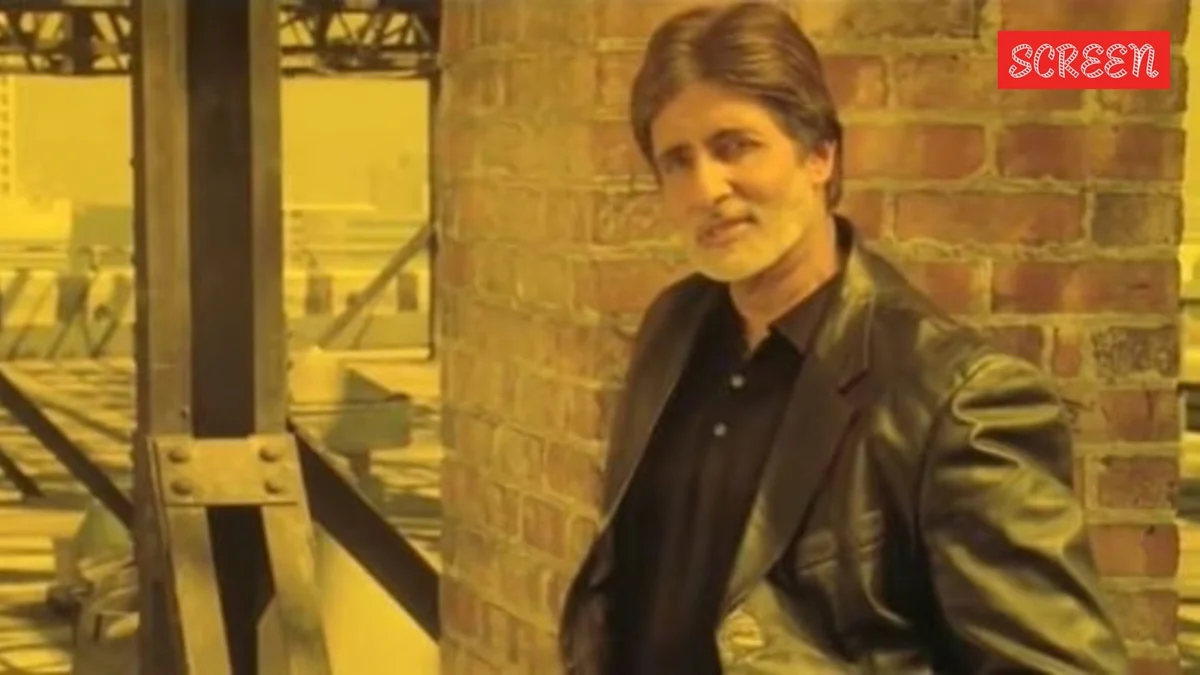
New Delhi, September 5, 2026 – Decades after its electrifying release, Sanjay Gupta’s 2002 action-thriller "Kaante" continues to spark conversations, not just for its high-octane action and ensemble cast, but also for the nuanced creative decisions that shaped its narrative. In a recent candid discussion with crime writer Hussain Zaidi, director Sanjay Gupta shed light on a fascinating behind-the-scenes detail: the deliberate omission of abusive language from the dialogues spoken by none other than Bollywood legend Amitabh Bachchan. This revelation offers a glimpse into the meticulous control and artistic integrity that define Bachchan’s legendary career and the collaborative process that birthed the cult classic "Kaante."
The film, a stylized heist thriller set against the backdrop of Los Angeles, featured a formidable cast including Sanjay Dutt, Suniel Shetty, Lucky Ali, Mahesh Manjrekar, and Kumar Gaurav alongside Amitabh Bachchan. While "Kaante" is widely acknowledged for its gritty action and memorable dialogues, Gupta’s recent comments reveal that the initial script was considerably more raw, featuring a significant amount of profanity that was ultimately toned down, particularly concerning Bachchan’s character.
The Unspoken Clause: Bachchan’s Dialogue Condition
Sanjay Gupta recounted that in the initial stages of "Kaante’s" production, the script was replete with strong language, intended to enhance the gritty realism of the characters and their underworld milieu. However, during a pivotal conversation, Amitabh Bachchan, known for his impeccable screen persona and adherence to a certain decorum, laid down a clear condition. He informed Gupta that his character would not engage in or be subjected to abusive language.
"Abuses were written in the script but then we didn’t use them," Gupta stated in his conversation with Zaidi. "Amitji said that nobody would abuse me, so I said, ‘Okay, sir. That doesn’t mean the others won’t abuse each other.’" This exchange underscores Bachchan’s conscious effort to maintain a distinct boundary for his on-screen presence, even within the context of a film that embraced a darker, more volatile theme.
Gupta’s willingness to accommodate Bachchan’s request highlights a key aspect of filmmaking: the respect for an actor’s comfort and artistic choices, especially when they come from a performer of Bachchan’s stature and experience. The director’s response, "That doesn’t mean the others won’t abuse each other," reveals a pragmatic approach, ensuring that the film’s overall tone and the authenticity of other characters’ dialogues were not compromised. This allowed for a balanced portrayal, where Bachchan’s character could retain his gravitas while the film still offered a sense of the harsh realities its characters inhabited.
A Pre-emptive Stance: Bachchan’s Consistent Ethos
This revelation isn’t entirely surprising, given Amitabh Bachchan’s long-standing professional conduct. The legendary actor has, throughout his career, maintained a commitment to portraying characters with a certain dignity, even when delving into morally ambiguous territories. His aversion to using or being subjected to vulgar language on screen is a testament to his personal values and his understanding of his vast and diverse audience.
In an earlier conversation with SCREEN, Gupta had elaborated on this particular directive from Bachchan. He recalled the superstar pulling him aside during the making of "Kaante" and explicitly stating his stance: "’Sanjay I won’t abuse, that’s one thing I’ve never done, so I won’t do it. If someone else is abusing, then I’ve no problem.’" This earlier anecdote reinforces the consistency of Bachchan’s approach and his clear communication with the director. It demonstrates his proactive engagement with the script and his character, ensuring that his on-screen persona aligned with his personal principles.
This principled stand by Bachchan was not a late imposition but a clear communication of his artistic boundaries. It allowed the filmmakers to integrate his character seamlessly into the narrative without sacrificing the film’s intended atmosphere. The implicit understanding was that while Bachchan’s character would be a bastion of a certain linguistic decorum, the film could still effectively convey the rough-and-tumble world its characters inhabited through the dialogues of others.
The Censor Board’s Cut and Original Intentions
The mention of "tweaked during the censor process" by Gupta adds another layer to the narrative surrounding "Kaante’s" dialogues. The original script, as Gupta acknowledged in a 2002 interview with Rediff, contained "a lot of profanities." This was before the film had undergone the scrutiny of the censor board. The action-thriller genre, by its very nature, often pushes boundaries and can incorporate language that reflects the harsh realities of its settings.
The fact that the film underwent changes during the censor process suggests that even with Bachchan’s stipulations, some of the other characters’ dialogues might have been deemed too explicit. This is a common occurrence in Indian cinema, where the censor board plays a significant role in shaping the final cut of a film. The adjustments made during this stage would have further refined the linguistic landscape of "Kaante," ensuring it met the required guidelines while still aiming to retain its impact.
Gupta’s candid admission about the original script’s profanity and the subsequent censorship process paints a picture of a film that was conceived with a certain edge, but was also subject to the regulatory framework and the creative adjustments that are integral to filmmaking. The success of "Kaante" in becoming a cult classic despite these modifications speaks to the strength of its core narrative, its stylish execution, and the powerful performances of its cast.
The Nerve-Racking Narration: A First Encounter with the Legend
Beyond the dialogue specifics, Sanjay Gupta also shared a poignant memory of his initial interaction with Amitabh Bachchan for "Kaante." The director recalled the immense nervousness he felt while narrating the script to the legendary actor. This encounter was particularly significant as it was one of the first times Gupta was directly engaging with a star of Bachchan’s magnitude for a project he was deeply invested in.
Gupta recounted to Cyrus Broacha how Sanjay Dutt had initially agreed to present the film. However, upon hearing the story, Dutt was so impressed that he not only decided to act in it but also strongly recommended Amitabh Bachchan for a role. This pivotal suggestion set the stage for Gupta’s intimidating yet ultimately rewarding meeting with Bachchan.
The director vividly remembered the atmosphere of Bachchan’s home, filled with photographs of the superstar, which amplified his sense of intimidation. During the narration itself, Bachchan maintained a stoic, poker face, offering no discernible reaction. This lack of outward response left Gupta convinced that the meeting had been unsuccessful. "I thought some day, I’ll tell my grandchildren ke maine Amitabh Bachchan ko subject sunaya tha," Gupta recalled, reflecting the magnitude of the moment and his apprehension about its outcome.
After what felt like an eternity of silence, Bachchan finally broke his quietude. When Gupta, on the verge of despair, asked for his thoughts on the story, Bachchan simply stated that he liked it. This single sentence brought immense relief to Gupta, who described the entire experience as "extremely nerve-racking." This anecdote not only highlights Bachchan’s composed demeanor but also Gupta’s deep respect and awe for the actor, a sentiment shared by many who have had the privilege of working with him.
"Kaante": A Cult Classic’s Enduring Legacy
Released on December 20, 2002, "Kaante" quickly carved out a niche for itself in Bollywood cinema. The film’s premise revolved around six criminals who come together to execute a daring bank robbery in Los Angeles. Its unique blend of slick action, stylish presentation, memorable dialogues, and a compelling soundtrack, all wrapped in a narrative often compared to Quentin Tarantino’s "Reservoir Dogs," contributed to its enduring appeal.
The ensemble cast delivered powerful performances, each actor bringing their unique charisma to the screen. Amitabh Bachchan, in particular, as the patriarch-like figure of the group, exuded a commanding presence that resonated with audiences. His adherence to his principles regarding dialogue, while perhaps subtle to the casual viewer, added another layer to the character’s persona and the film’s overall integrity.
The film’s success and its subsequent cult following can be attributed to a multitude of factors, including its ambitious storytelling, its visually striking aesthetic, and the sheer star power of its cast. The behind-the-scenes details, like the specific condition set by Amitabh Bachchan regarding his dialogues, offer a deeper appreciation for the meticulous craft and collaborative spirit that went into making "Kaante" a memorable cinematic experience. It serves as a reminder that even in the realm of high-octane thrillers, artistic integrity and personal conviction play a crucial role in shaping the final product. The legacy of "Kaante" is not just in its action and style, but also in the subtle yet significant creative decisions that defined its characters and narrative.
