

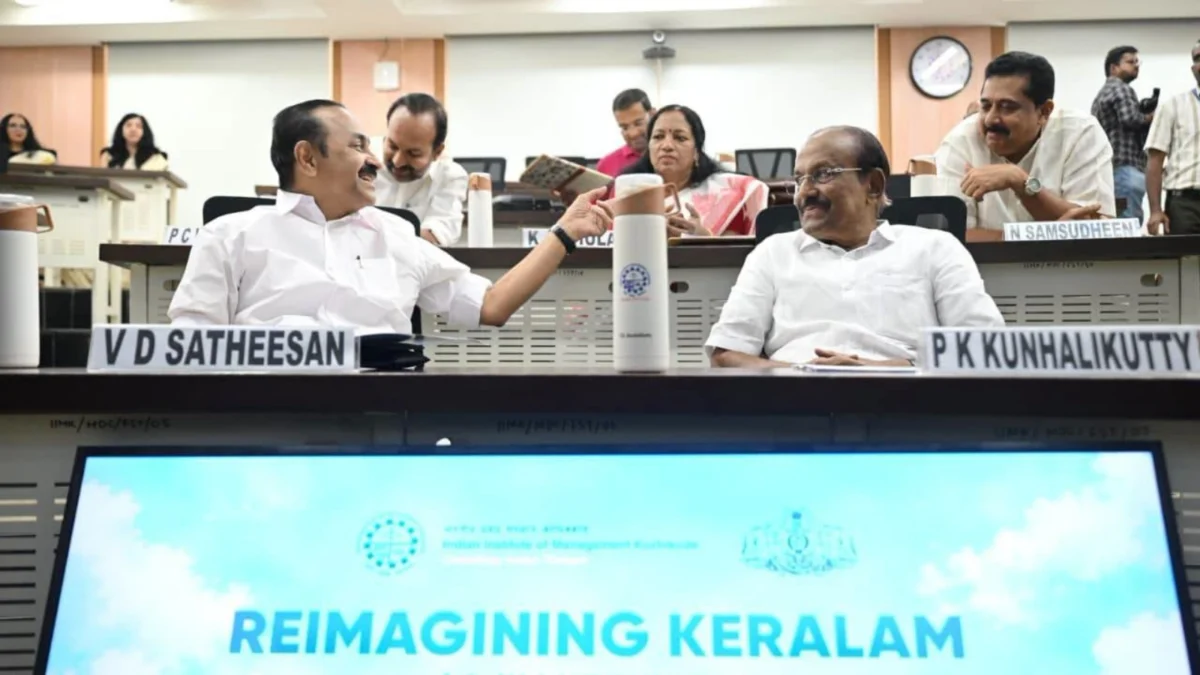
Thiruvananthapuram, Keralam – In a move signalling a proactive and forward-thinking approach to governance, the entire 21-member Keralam Cabinet, led by Chief Minister V D Satheesan, embarked on an intensive two-day strategic leadership workshop at the prestigious Indian Institute of Management (IIM)-Kozhikode. Breaking from the conventional demands of a 24/7 political vocation, ministers traded their official desks for lecture halls, engaging with management experts and academic luminaries to sharpen their administrative acumen and formulate a renewed vision for the state.
This unprecedented initiative, titled "Reimagining Keralam," commenced on Friday, September 5, 2026, marking a significant stride towards integrating cutting-edge management principles and technological advancements into public administration. The retreat is designed to foster a collective thought process among the state’s leadership, aiming to sculpt Keralam’s developmental trajectory into one that is more "people-centred, sustainable, knowledge-driven, and technology-enabled," as articulated by government insiders. Beyond immediate policy interventions, the workshop seeks to cement a robust collaborative framework between the academic sector and governmental machinery, ensuring that state strategies are informed by both theoretical rigor and practical insights.
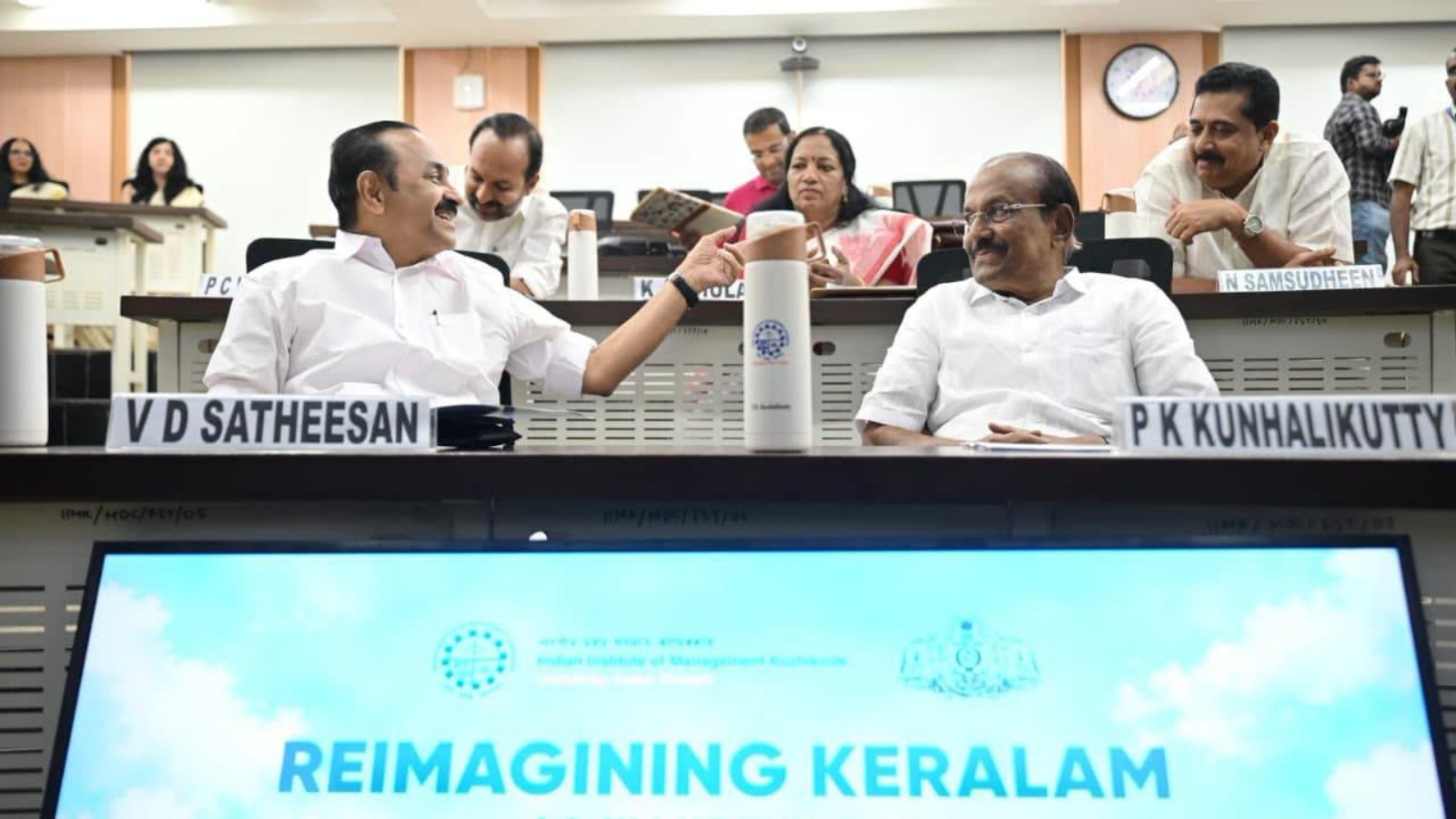
The sight of the Chief Minister and his cabinet colleagues, pens in hand and notebooks open, in a lecture room at IIM-Kozhikode underscored a palpable commitment to continuous learning and adaptation. This departure from routine political engagements has garnered considerable attention, highlighting a growing recognition among India’s political class of the complex challenges and opportunities presented by a rapidly evolving global landscape.
A Return to the Classroom: An Unprecedented Initiative
The decision for the entire Keralam Cabinet to step back into an academic setting, albeit for a brief two-day period, is a testament to the intricate demands of modern governance. In an era where public expectations are soaring and challenges range from climate change to digital transformation, leaders are increasingly compelled to embrace new tools, methodologies, and perspectives. The "Reimagining Keralam" workshop at IIM-Kozhikode represents a deliberate effort by the state government to equip its leadership with the strategic foresight and innovative frameworks necessary to navigate these complexities.
The IIM-Kozhikode, renowned for its excellence in management education and research, provides an ideal environment for such an initiative. Its faculty, comprising experts in various fields, offers a blend of theoretical knowledge and practical application, crucial for leaders grappling with real-world policy dilemmas. The choice of a residential retreat further emphasizes the intent to create an immersive learning experience, allowing for focused discussions, interactive sessions, and informal exchanges that can foster greater synergy within the cabinet.
"Reimagining Keralam": A Strategic Vision
Chief Minister V D Satheesan, a vocal proponent of administrative reform and technological integration, encapsulated the essence of the workshop in a post on X (formerly Twitter) on Friday. He articulated, "Good governance requires both responsive delivery today and strategic foresight for tomorrow. Keralam State Council of Ministers will convene at @IIMKozhikode for Reimagining Keralam, a dedicated two-day residential leadership retreat." His statement underscored the dual imperative facing contemporary governments: to effectively address immediate public needs while simultaneously preparing for future contingencies.
CM Satheesan’s Vision for a Future-Ready State
The Chief Minister elaborated on the diverse curriculum, highlighting key areas of focus. "From mastering transformational leadership in the era of AI to institutionalising community-level climate resilience, disaster management and structural fiscal renewals, we are equipping our administration with cutting-edge, data-driven frameworks." This comprehensive agenda reflects Keralam’s unique challenges and aspirations. As a coastal state highly vulnerable to climate change, the emphasis on climate resilience and disaster management is particularly pertinent. Similarly, in a global economy increasingly driven by artificial intelligence, understanding its implications for governance, public service delivery, and economic growth is critical. The mention of "structural fiscal renewals" also points to a strategic intent to address the state’s financial health, ensuring sustainable development.
The workshop’s broader objectives align with Keralam’s long-standing commitment to human development and social progress. By focusing on making the state’s development journey "people-centred," the government aims to ensure that growth benefits all segments of society. The push for "sustainable" development underscores environmental responsibility, while "knowledge-driven" and "technology-enabled" aspects signal an ambition to transform Keralam into a leading knowledge economy, leveraging its high literacy rates and skilled workforce.
Day One: Deep Dive into Transformational Leadership and Key Challenges
The inaugural day of the "Reimagining Keralam" workshop featured a rigorous schedule of sessions, each designed to provoke thought and facilitate a deeper understanding of contemporary governance challenges. The curriculum was meticulously crafted, bringing together international experts and IIM-Kozhikode’s own faculty to deliver insights across critical domains.
Leading in the Age of AI
The workshop formally commenced with a pivotal session chaired by IIM-Kozhikode’s Director, Professor Debashis Chatterjee. His address, titled "Transformational Leadership in the Age of AI: Engaging People with Purpose and Impact," set the tone for the retreat. This session explored how leaders can harness the power of artificial intelligence not merely as a technological tool, but as a catalyst for profound societal change. Discussions likely revolved around ethical AI implementation, leveraging AI for efficient public service delivery, data-driven policy formulation, and preparing the workforce for an AI-driven future, all while ensuring that technological advancements serve human purpose and foster greater public engagement.
Climate Resilience and Disaster Preparedness: Global Perspectives
Given Keralam’s geographical vulnerabilities, a significant portion of Day One was dedicated to climate adaptation and disaster preparedness. Professor Rajib Shaw of the Graduate School of Media and Governance at Japan’s Keio University, a renowned expert in disaster risk reduction, co-chaired a session with Professor Anupam Das of IIM Kozhikode. This session provided international perspectives, drawing on global best practices and scientific evidence to discuss strategies for building community-level climate resilience. The focus was likely on integrated approaches to disaster management, early warning systems, sustainable infrastructure development, and community participation in resilience-building efforts, vital for a state that has experienced the devastating impacts of extreme weather events in recent years.
The Science of Effective Governance: Bridging Policy and Practice
Another crucial session, "From Policy to Behaviour: The Science of Making Governance Work," delved into the intricacies of translating policy intent into tangible, sustainable change at the grassroots level. Chaired by Dr. Sanchayan Banerjee of King’s College London and Professor Siddhart Padhi from IIM Kozhikode, this session explored the behavioral economics of policy implementation. It examined how governments can design policies that encourage desired public behaviour, overcome resistance, and ensure effective uptake by communities, drawing on evidence-based approaches and global case studies to illustrate successful transitions from policy to practice.
Embracing the Silver Economy: Opportunities and Challenges
Recognizing Keralam’s unique demographic profile, which includes a significant and growing elderly population, a specialized session titled "Adding Life to Years: Keralam’s Silver Economy Mission" was conducted. Led by Professor Deepa Sethi and Professor Priya Nair Rajeev, this session explored the burgeoning opportunities and inherent challenges arising from demographic ageing. Discussions likely focused on developing services, products, and policies tailored for senior citizens, fostering active ageing, leveraging their experience, and creating an inclusive economic ecosystem that caters to and benefits from the "silver economy"—a sector poised for substantial growth.
Keralam as a Healthcare and Wellness Hub
The state’s potential as a global destination for healthcare and wellness was also a key discussion point. Dr. Aravind Srinivasan, Chief Medical Officer at Chennai’s globally acclaimed Aravind Eye Hospital, led a special session on "Positioning Keralam as a Healthcare and Wellness Destination." This session likely explored strategies for enhancing Keralam’s healthcare infrastructure, promoting medical tourism, integrating traditional healing practices like Ayurveda, and developing high-quality wellness services, leveraging the state’s natural beauty and established healthcare reputation.
Ministers Reflect: Insights from the Interactive Sessions
The interactive nature of the workshop was a recurring theme in the ministers’ feedback, highlighting its efficacy in fostering open dialogue and collaborative learning. Ministers actively participated, raising questions and engaging in discussions that bridged their practical governance experiences with the theoretical frameworks presented by the experts.
Fostering Public Engagement and Teamwork
Tourism Minister P C Vishnunadh articulated the interactive spirit of the lectures, emphasizing that "governance and policy formulation were the major areas of discussion." He revealed a critical shift in approach being advocated: "In the new age, it is important to hear people before a policy is framed. In Keralam, hitherto the practice was to announce a policy and go ahead with a project for implementation. That approach would lead to protests. Today’s sessions highlighted the need for hearing people before a policy is framed." This insight underscores a move towards more participatory and inclusive governance models, recognizing that public consultation is vital for successful policy implementation and minimizing public dissent. Vishnunadh also noted the focus on "how to nurture a team and make the team members work," indicating an emphasis on internal cabinet cohesion and administrative efficiency.
Navigating New-Age Governance with AI
State Minister for Labour, Women and Child Welfare, Bindu Krishna, echoed the sentiment of engagement, praising the sessions for their dynamic nature. She shared that "Ministers have their doubts on many issues and we all raised questions. We had also filled out questionnaires." Her comments highlighted the practical application of the training: "Developing leadership in this modern era with new tools like Artificial Intelligence (AI) were discussed. On governance, we were told to bring changes in many areas. The perspective on governance was presented with different models from the world as well as the country. We were told about how to popularise a new idea or project." This suggests that the workshop is not merely about theoretical exposure but about equipping ministers with actionable strategies for innovation, adapting to technological shifts, and effectively communicating government initiatives to the populace.
Synergy Through Shared Experience and Technology Integration
Industries Minister P K Kunhalikutty, a veteran legislator, noted this was his second such programme, recalling a similar initiative during the Oommen Chandy government in 2011. This continuity suggests a historical precedent for such capacity-building efforts, reinforcing their perceived value. Kunhalikutty emphasized the workshop’s role in improving coordination and facilitating knowledge exchange: "Our agenda here today is that of sharing knowledge and sharing experience. Everyone here has a decent amount of experience themselves. It is meant for mutual sharing. That is how the agenda has been set as well."
He further detailed the focus on leveraging technology for public benefit. "The ministers would also learn management skills and explore the use of AI and advanced technology in governance. How can technology be used to bring a change in people’s lives? That is the subject. They will give us more theoretical knowledge, and we will share practical insights with them. By sharing mutually, that will be used to bring forth a new vision and new beginnings." Kunhalikutty’s remarks underscore the symbiotic relationship between academic theory and practical governmental experience, aiming to forge a new paradigm of technology-enabled, people-centric governance.
Several other prominent ministers, including Home Minister Ramesh Chennithala, Health Minister K Muraleedharan, Higher Education Minister Roji M John, Excise Minister M Liju, and Transport Minister C P John, also shared glimpses of the workshop through photographs and videos, indicating widespread participation and enthusiasm.
Day Two: Charting Keralam’s Economic and Global Trajectory
The second day of the "Reimagining Keralam" retreat is poised to build upon the foundational discussions of Day One, with a sharper focus on Keralam’s economic future, human capital development, and global positioning.
Focus on Economy, Skills, and Higher Education
According to IIM-Kozhikode, the sessions on Saturday will delve into critical economic strategies, exploring avenues for sustainable growth, diversification, and investment attraction. A significant emphasis will be placed on skills development, aligning Keralam’s workforce with emerging industry demands and fostering an ecosystem of innovation and entrepreneurship. The role of higher education will also be a key discussion point, examining how the state’s educational institutions can be transformed into centres of excellence, producing talent relevant for the knowledge economy and driving research and development. This includes discussions on curriculum reform, international collaborations, and promoting a culture of lifelong learning.
Global Positioning and Future Endeavors
The final day will also tackle Keralam’s ambitions on the global stage. Sessions are expected to explore how the state can enhance its international profile, attract foreign investment, promote its unique cultural heritage, and leverage its diaspora for socio-economic development. This involves strategic branding, fostering international partnerships, and positioning Keralam as a leader in specific sectors such as responsible tourism, sustainable development, and advanced healthcare. The retreat will culminate in a valedictory ceremony, where the ministers will be presented with IIM-Kozhikode certificates, marking their successful completion of this strategic leadership program.
Implications and The Road Ahead
The "Reimagining Keralam" workshop at IIM-Kozhikode carries significant implications for the future of governance in the state and potentially serves as a model for other administrative bodies.
Redefining Policy-Making and Public Service
By emphasizing "hearing people before a policy is framed" and integrating data-driven frameworks, the workshop is set to redefine the policy-making process in Keralam. It signifies a shift from a top-down approach to one that is more inclusive, evidence-based, and responsive to public needs. The focus on AI and advanced technology promises more efficient service delivery, enhanced transparency, and targeted interventions, ultimately improving the quality of life for Keralam’s citizens. The emphasis on team nurturing and coordination within the cabinet is also crucial for streamlined administration and effective execution of government programs.
Strengthening Academia-Government Nexus
The collaboration between the Keralam Cabinet and IIM-Kozhikode exemplifies a growing trend towards strengthening the nexus between academia and government. Such partnerships are vital for bridging the gap between theoretical research and practical policy implementation. Academic institutions can provide governments with cutting-edge insights, analytical tools, and unbiased perspectives, while governments offer real-world data and challenges for research. This symbiotic relationship can lead to more informed, innovative, and impactful governance.
A Model for Proactive Governance?
Keralam’s initiative could serve as a pioneering model for other states and even the national government. In a political landscape often criticized for its resistance to change, this proactive engagement with modern management principles and technological advancements sends a powerful message. It demonstrates a commitment to continuous improvement, adaptability, and a willingness to invest in the intellectual capital of its leaders. Such initiatives are crucial for building resilient, future-ready administrations capable of addressing the multifaceted challenges of the 21st century.
The "Reimagining Keralam" workshop is more than just a training program; it is a strategic investment in the future of the state. By equipping its leaders with advanced knowledge, fostering a culture of innovation, and strengthening collaborative frameworks, the Keralam government is laying the groundwork for a truly people-centred, sustainable, and technologically advanced era of governance. The outcomes of this two-day retreat, though immediately theoretical, are expected to translate into tangible policy shifts and administrative reforms that will shape Keralam’s trajectory for years to come.
