

Main Facts
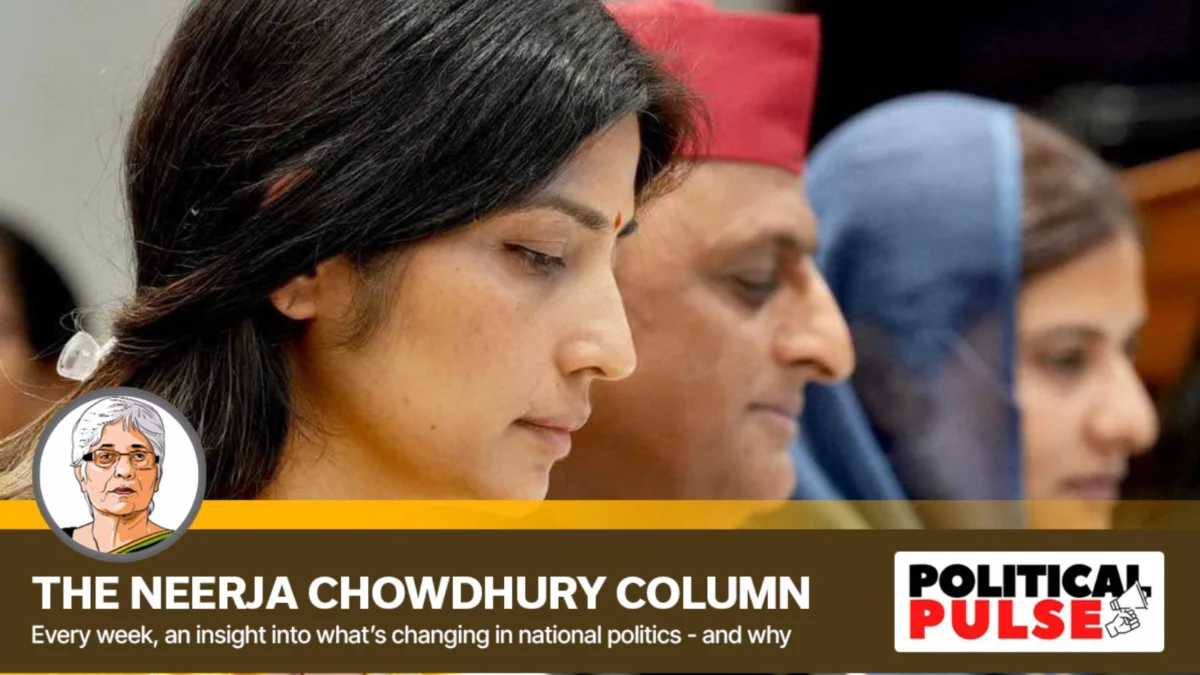
The political landscape of Uttar Pradesh, a crucible of Indian electoral fortunes, is witnessing a significant recalibration within the Samajwadi Party (SP), spearheaded by its president, Akhilesh Yadav. Central to this evolving narrative is the conspicuous emergence of Dimple Yadav, SP MP and wife of Akhilesh Yadav, from her traditionally low-profile role. Once perceived primarily as her husband’s silent confidante and an informal conduit for feedback, Dimple Yadav is now actively embracing a more visible and vocal political persona, positioning herself as a crucial asset in the party’s ambitious quest to reclaim power in the pivotal 2027 UP Assembly elections. Her increased engagement, ranging from direct interaction with protesters to persuasive parliamentary interventions and a more prominent presence at party events, signals a deliberate strategy to soften the SP’s image and broaden its appeal beyond its traditional electoral strongholds.
Simultaneously, Akhilesh Yadav, keenly aware of the high stakes, is embarking on a comprehensive overhaul of the party’s electoral strategy. Having successfully expanded the SP’s base beyond its entrenched Muslim-Yadav (MY) moorings with his "Pichda, Dalit, Alpasankhyak" (PDA) formula in the 2024 Lok Sabha polls, he is now strategically adding "Pandits" (Brahmins) to this coalition, creating a "PDA+P" vision. This multi-pronged approach involves embracing Hindu symbolism while steadfastly championing social justice and minority rights, aiming to forge a new rainbow coalition capable of challenging the Bharatiya Janata Party’s (BJP) formidable dominance in the state. The confluence of Dimple Yadav’s growing prominence and Akhilesh’s tactical realignment marks a defining moment for the Samajwadi Party as it prepares for a battle critical not only for its own future but also for the broader political trajectory of Uttar Pradesh and, by extension, national politics.
Chronology: Dimple Yadav’s Political Evolution and Akhilesh’s Strategic Shifts
Dimple Yadav’s journey in public life has been marked by a gradual but significant evolution. For nearly 14 years, across four terms as an MP since 2012 (first from Kannauj and currently from Mainpuri), she cultivated an image of quiet efficiency. She was often seen in the Lok Sabha seated directly behind Akhilesh Yadav, her expressions often inscrutable, giving little away about her thoughts or intentions. During this period, she functioned as an invaluable, albeit informal, intelligence gatherer for her husband. Political observers and party insiders frequently noted her penchant for seeking feedback on political developments in Delhi, listening intently to diverse perspectives – a testament to a smart leader augmenting official channels with informal modes of information. This role, while crucial for Akhilesh, kept her largely out of the media spotlight and away from direct political confrontations.
However, a discernible shift in her public engagement began to manifest recently. Shedding her characteristic reticence, Dimple Yadav has consciously stepped into a more active and vocal role. A notable instance of this was her visit to Jantar Mantar, where she met with protesters from the Cockroach Janata Party (CJP) and the fasting Ladakh leader Sonam Wangchuk, publicly expressing solidarity. This move, undertaken by her rather than Akhilesh, signaled a new willingness to engage directly with contentious issues and visible dissent.
Her increased visibility is now undeniable. Social media platforms, particularly Instagram and Facebook, are replete with reels showcasing Dimple Yadav interacting with media persons outside Parliament’s Makar Dwar. Inside the Lok Sabha, she has become a more persuasive voice for the Samajwadi Party, articulating the party’s stance on diverse subjects. Her interventions have ranged from raising serious allegations of "chanda chori" (donation theft) concerning the Ayodhya Ram Temple – a politically sensitive issue that momentarily dented the Sangh Parivar’s image – to expressing solidarity with Gen Z protests against exam paper leaks, a matter resonating deeply with the youth electorate. Furthermore, she now consistently sits alongside Akhilesh Yadav at press conferences in Lucknow when significant party announcements are made. This was prominently observed when Akhilesh unveiled the "Stree Samman Samriddhi Yojana," a pledge of Rs 40,000 annually to every eligible woman should the SP win the 2027 UP elections, underscoring her endorsement of the party’s women-centric initiatives.
This strategic elevation of Dimple Yadav coincides with a broader recalibration of Akhilesh Yadav’s own political strategy. Historically, the Samajwadi Party’s electoral success in Uttar Pradesh has largely been predicated on its formidable Muslim-Yadav (MY) vote bank. However, the political landscape has undergone profound changes, necessitating a more inclusive approach. After facing significant setbacks, particularly in the 2017 and 2022 Assembly elections, Akhilesh began to consciously expand the party’s base. His "Pichda, Dalit, Alpasankhyak" (PDA) strategy, focusing on backward castes, Dalits, and minorities beyond the traditional Yadav stronghold, proved remarkably effective in the 2024 Lok Sabha polls. This strategy saw the party fielding only five Yadav candidates (all from the SP’s first family), with the majority of tickets allocated to candidates from non-Yadav Other Backward Classes (OBCs). The narrative that the BJP, if it achieved "400 paar" seats, might alter the Constitution and dismantle the reservation regime also resonated strongly with Dalit voters, further consolidating their support for the Opposition.
Building on this success, Akhilesh Yadav has now added another crucial "P" to his PDA framework, announcing that it now encompasses "Pandits" (Brahmins) alongside Pichda, Dalit, and Alpasankhyak communities. This significant declaration was made at the birth anniversary celebration of the late socialist leader Janeshwar Mishra in Lucknow in early August. The event itself was highly symbolic: Akhilesh, visibly carrying a trishul, spoke reverently of "Chote Lohia" (Janeshwar Mishra), amidst the recitation of Shiv Tandav Stotram. This calculated display of Hindu symbolism marks a deliberate outreach to the Brahmin community, signaling Akhilesh’s intent to construct a broader, more inclusive "rainbow coalition." This shift indicates a pragmatic embrace of Hindu identity, a departure from the more secular-leaning politics often associated with his father, Mulayam Singh Yadav, reflecting a strategic response to the prevailing political climate.
Supporting Data and Political Context
The strategic pivot of the Samajwadi Party is underpinned by a nuanced understanding of Uttar Pradesh’s complex demographic and political realities.
- The "M" (Mahila) Mantra: The rising emphasis on women voters is not unique to the SP; it’s a nationwide electoral trend. Political parties across the spectrum have recognized the "Mahila" mantra as crucial for electoral success. Dimple Yadav’s active role in promoting the SP’s women-centric policies, such as the proposed "Stree Samman Samriddhi Yojana," is a direct response to this. Her presence lends credibility and a softer touch to these initiatives, which are vital for attracting a significant and increasingly aware female electorate.
- The Image Softener: The Samajwadi Party has historically grappled with an image problem, frequently accused by rivals, particularly the BJP, of being "aggressive and rough" when in power. The BJP has consistently leveraged allegations of "lawlessness and hooliganism" against previous SP regimes. Dimple Yadav’s calm demeanor and dignified approach offer a stark contrast to these perceptions. Her public engagements and measured interventions are calculated to project a more refined and responsible image for the party, appealing to a broader section of the electorate that might be wary of the SP’s historical reputation. At 48, the Mainpuri MP is steadily coming into her own, providing Akhilesh Yadav with a potent tool for image rehabilitation.
- The Battle for UP – A High-Stakes Contest: The upcoming UP Assembly elections in February 2027 are nothing short of existential for all major political players. For the BJP, the RSS, Prime Minister Narendra Modi, Union Home Minister Amit Shah, and Chief Minister Yogi Adityanath, retaining Uttar Pradesh is paramount. The state is not only the traditional turf of the Nehru-Gandhi family but also the adopted "karmabhoomi" (land of action) of PM Modi, who chose to retain Varanasi after winning from Vadodara in 2014. The recent "chanda chori" allegations surrounding the Ayodhya Ram Temple, though somewhat overshadowed by the Jantar Mantar protests, have undeniably caused a rare dent in the Sangh Parivar’s carefully cultivated image.
- Akhilesh Yadav’s Personal Stakes: For Akhilesh Yadav, 53, the 2027 polls represent a critical juncture. Another defeat would mean an extended period in opposition, potentially 15 years out of power – a debilitating prospect for any leader, even a relatively young one. His current strategies are aimed at preventing such a prolonged political wilderness.
- The Decline of BSP and Dalit Dynamics: A significant opportunity for the SP arises from the perceptible wane of Mayawati’s Bahujan Samaj Party (BSP). With the BSP losing ground, discontent is brewing among a segment of Dalit voters, particularly non-Jatav Dalits who have often sought alternative political homes. Even a section of Jatavs, Mayawati’s core base, reportedly voted for the SP in 2024, indicating a potential shift. Akhilesh’s PDA strategy, particularly its emphasis on Dalits, aims to capitalize on this vacuum and consolidate a broader Dalit vote bank.
- The Brahmin Factor: Brahmins, constituting approximately 10% of UP’s population, have historically wielded influence disproportionate to their numbers. Their alignment has been crucial in past elections.
- In 2012, when Akhilesh first became CM, the SP won over 50 of the roughly 100 Brahmin-significant seats.
- In 2007, Mayawati’s historic solo victory was largely attributed to her successful "Dalit-Brahmin axis."
- Post-2014, Brahmins largely rallied behind the BJP, becoming a critical component of its social coalition.
- However, recent signs suggest a degree of dissatisfaction among sections of upper castes with the BJP. Issues such as the UGC norms, the push for a caste census (both perceived as pro-OBC), and the widespread NEET paper leak followed by the anti-quota debate have stirred disquiet within this community. Akhilesh’s overtures to Brahmins, therefore, are strategically timed to exploit this potential vulnerability in the BJP’s support base.
- Hindu Symbolism and Soft Hindutva: Akhilesh’s willingness to adopt Hindu symbols, contrasting sharply with his father Mulayam Singh’s more overtly secular approach, is a significant shift. His statements on Sanatan Dharma "uniting people," public recitation of the "Hanuman Chalisa" (akin to AAP chief Arvind Kejriwal), organization of Brahmin sammelans, and the ongoing construction of the Kedareshwar Mahadev temple in Etawah (the Mulayam family’s home turf, slated for completion before 2027) are all calculated moves. These actions are designed to counter the BJP’s narrative that labels the SP as "anti-Hindu" and "pro-Muslim," thereby mainstreaming the party’s appeal and neutralizing a potent attack line.
Official Responses and Strategic Articulation
While the article doesn’t detail direct "official responses" in the form of quoted statements from party spokespersons, the actions and policy announcements of Akhilesh Yadav and the Samajwadi Party serve as their official strategic articulation.
- SP’s Official Stance on Women Empowerment: The "Stree Samman Samriddhi Yojana" pledging Rs 40,000 annually to eligible women is a formal declaration of the party’s commitment to women’s empowerment. Dimple Yadav’s presence and endorsement at its announcement underscore its official importance within the party’s manifesto for 2027.
- SP’s Critique of BJP on Corruption: Dimple Yadav’s forceful speeches in the Lok Sabha regarding alleged "chanda chori" at the Ayodhya Ram Temple and the exam paper leaks represent the party’s official stance on issues of corruption and governance. By raising these concerns, the SP seeks to hold the ruling party accountable and resonate with public grievances.
- Akhilesh’s Caste Coalition Strategy: Akhilesh Yadav’s explicit declaration of the "PDA+P" strategy (Pichda, Dalit, Alpasankhyak, Pandit) at the Janeshwar Mishra birth anniversary event in Lucknow is the formal unveiling of his party’s expanded social engineering blueprint. His public display of Hindu symbols, such as carrying a trishul and the Shiv Tandav Stotram recitation, are official gestures to signal the party’s new approach to religious identity politics.
- BJP’s Official Accusations: The consistent accusations by the BJP against previous SP regimes of "lawlessness and hooliganism" are their official narrative used to paint the SP in a negative light, which in turn necessitates the SP’s image-softening efforts.
These actions and pronouncements, rather than formal press releases, embody the strategic positions and responses of the respective parties in the ongoing political contest.
Implications: Challenges and Opportunities for the Road Ahead
Akhilesh Yadav’s ambitious strategy, augmented by Dimple Yadav’s enhanced public role, is a high-stakes gamble with profound implications for the 2027 UP elections and beyond.
- The Delicate Balance: The core challenge for Akhilesh lies in successfully navigating the delicate balance between his newfound embrace of Hindu identity politics and the party’s foundational commitment to social justice and minority rights. While wooing Brahmins and adopting Hindu symbols might counter the "anti-Hindu" label, he must ensure this doesn’t alienate the Muslim and Dalit communities, who have historically formed the bedrock of the SP’s support. The task is to mainstream the party without diluting its core ideological tenets.
- Alliance Dynamics and Rahul Gandhi: The success of Akhilesh’s plans is not solely dependent on his own actions but also on the strategies of his allies, particularly Rahul Gandhi and the Congress. The article highlights a potential point of friction: if Akhilesh makes concerted efforts to woo upper castes while Rahul Gandhi pursues a contrasting strategy focusing on OBCs-Dalits-minorities, potentially involving controversial statements like "tearing into Manusmriti," it could inadvertently lead to a consolidation of upper caste votes for the BJP. Managing these alliance dynamics and ensuring a coherent, unified narrative will be crucial, especially within the broader INDIA bloc.
- Sustaining the Image Makeover: Dimple Yadav’s role as an "image-softener" is vital, but the party must sustain this reformed image across all levels. Shedding the historical perception of "goonda raj" requires consistent effort, not just from the top leadership but also from local cadres and elected representatives. Any lapse could quickly undo the carefully crafted transformation.
- Consolidating the "PDA+P" Coalition: The "PDA" strategy yielded dividends in 2024, but extending it to "PDA+P" requires meticulous execution. The party needs to develop specific policies and outreach programs that resonate with Brahmin concerns while simultaneously solidifying the support of Pichda, Dalit, and Alpasankhyak communities. This involves addressing diverse socio-economic grievances and offering tangible solutions.
- The BJP’s Counter-Strategy: The ruling BJP will undoubtedly monitor these shifts closely and devise counter-strategies. They might intensify their focus on Hindu consolidation, accuse the SP of opportunistic politics, or highlight any perceived inconsistencies in Akhilesh’s approach. The "chanda chori" allegations, though initially damaging, were largely relegated to the background by other events; the BJP will likely seek to deflect such criticisms by emphasizing its governance record and Hindutva credentials.
- Long-Term Leadership: For Akhilesh, success in 2027 would firmly establish him as a formidable regional leader capable of challenging national heavyweights. A defeat, however, could lead to questions about his leadership and the party’s future trajectory. His ability to project a credible alternative vision for Uttar Pradesh, one that balances tradition with modernity, and identity politics with developmental aspirations, will determine his long-term political viability.
In conclusion, the Samajwadi Party under Akhilesh Yadav is undergoing a profound strategic metamorphosis. Dimple Yadav’s emergence as a more vocal and visible political figure is not merely incidental but a deliberate component of this larger plan to refine the party’s image and broaden its appeal. By expanding his "PDA" strategy to include "Pandits" and strategically embracing Hindu symbolism while maintaining his commitment to social justice, Akhilesh is attempting a high-wire act in the complex arena of Uttar Pradesh politics. The coming years will reveal whether this ambitious, multi-pronged strategy can successfully challenge the entrenched power of the BJP and usher in a new era for the Samajwadi Party. The stakes are undeniably high, and the battle for Uttar Pradesh in 2027 promises to be one of India’s most keenly watched electoral contests.
(Neerja Chowdhury, Contributing Editor, The Indian Express, has covered the last 11 Lok Sabha elections. She is the author of How Prime Ministers Decide.)
