

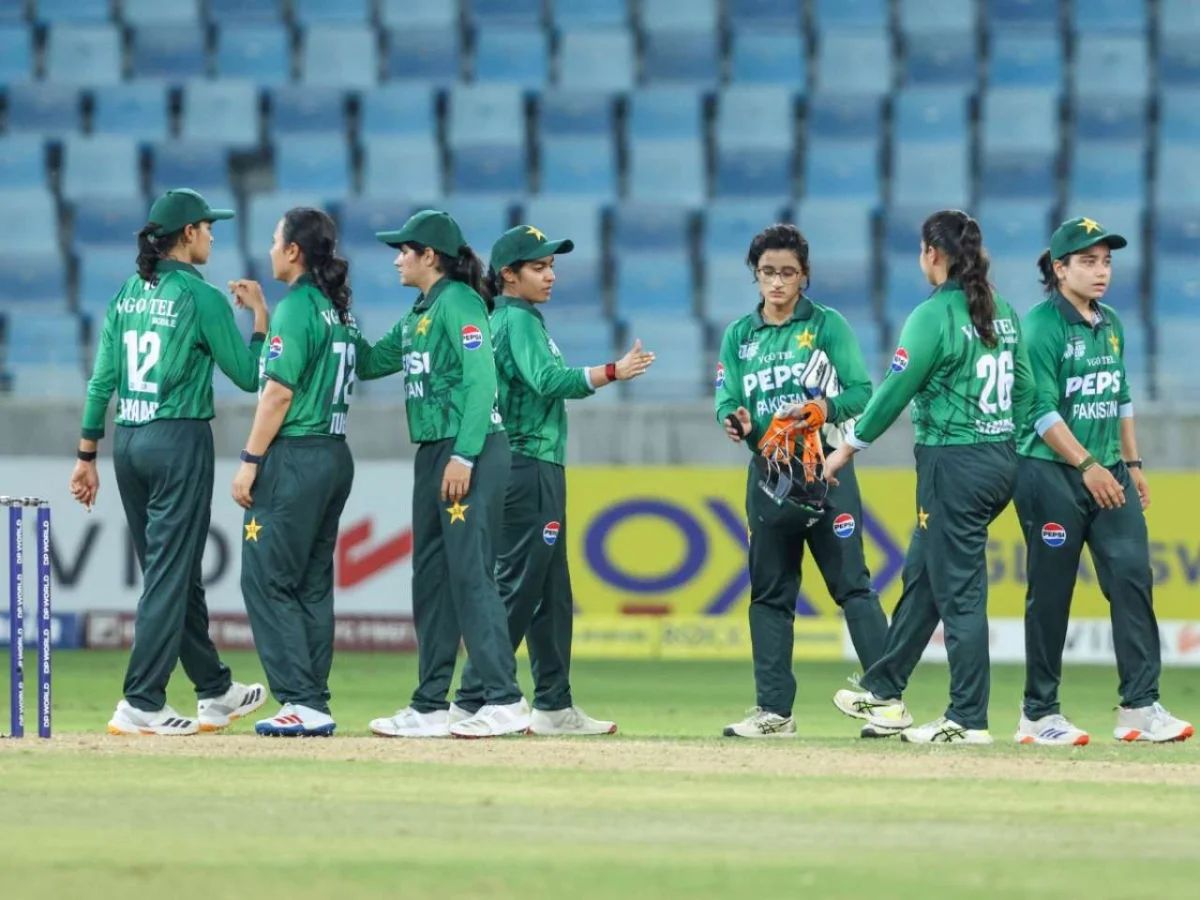
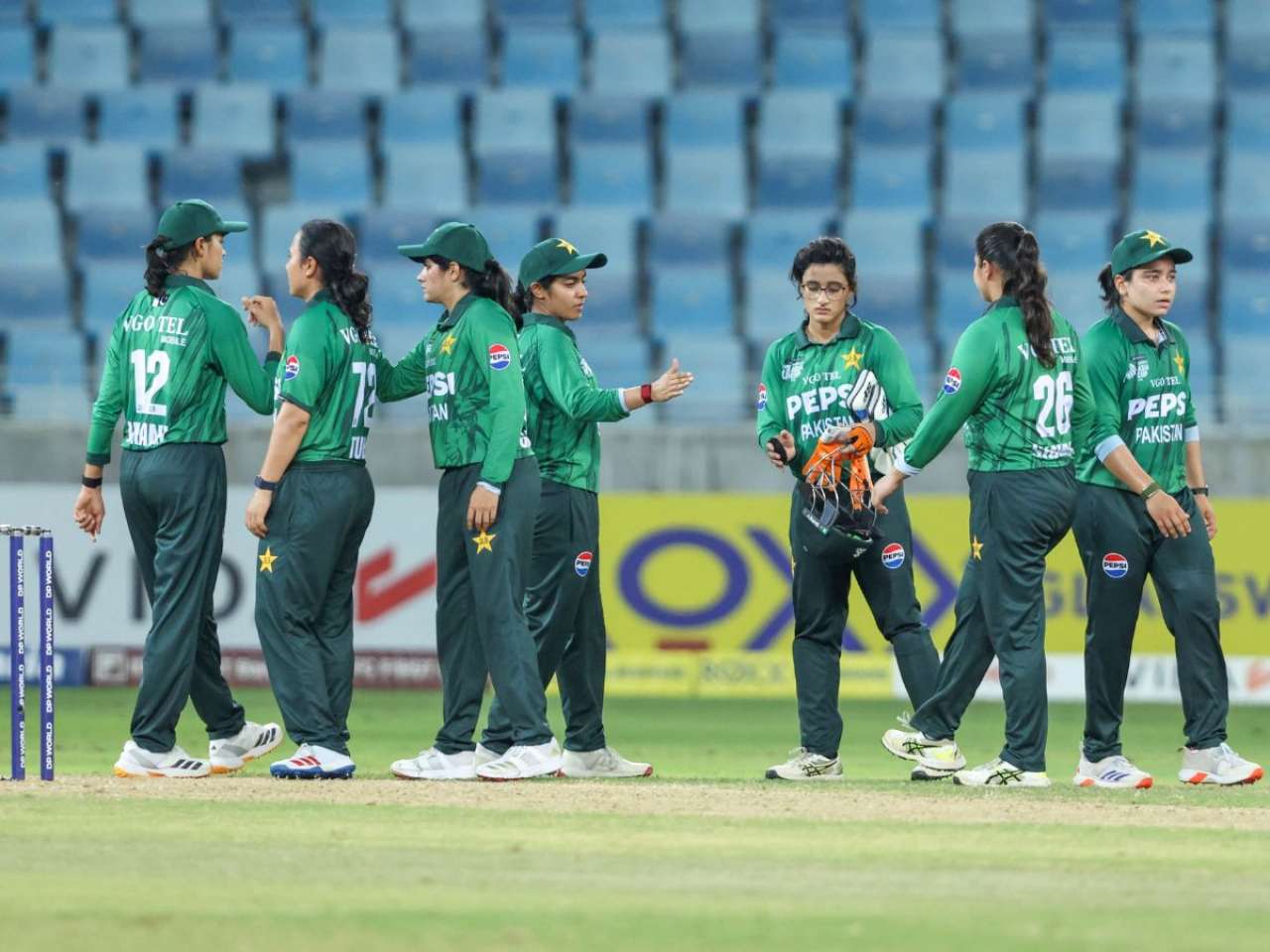
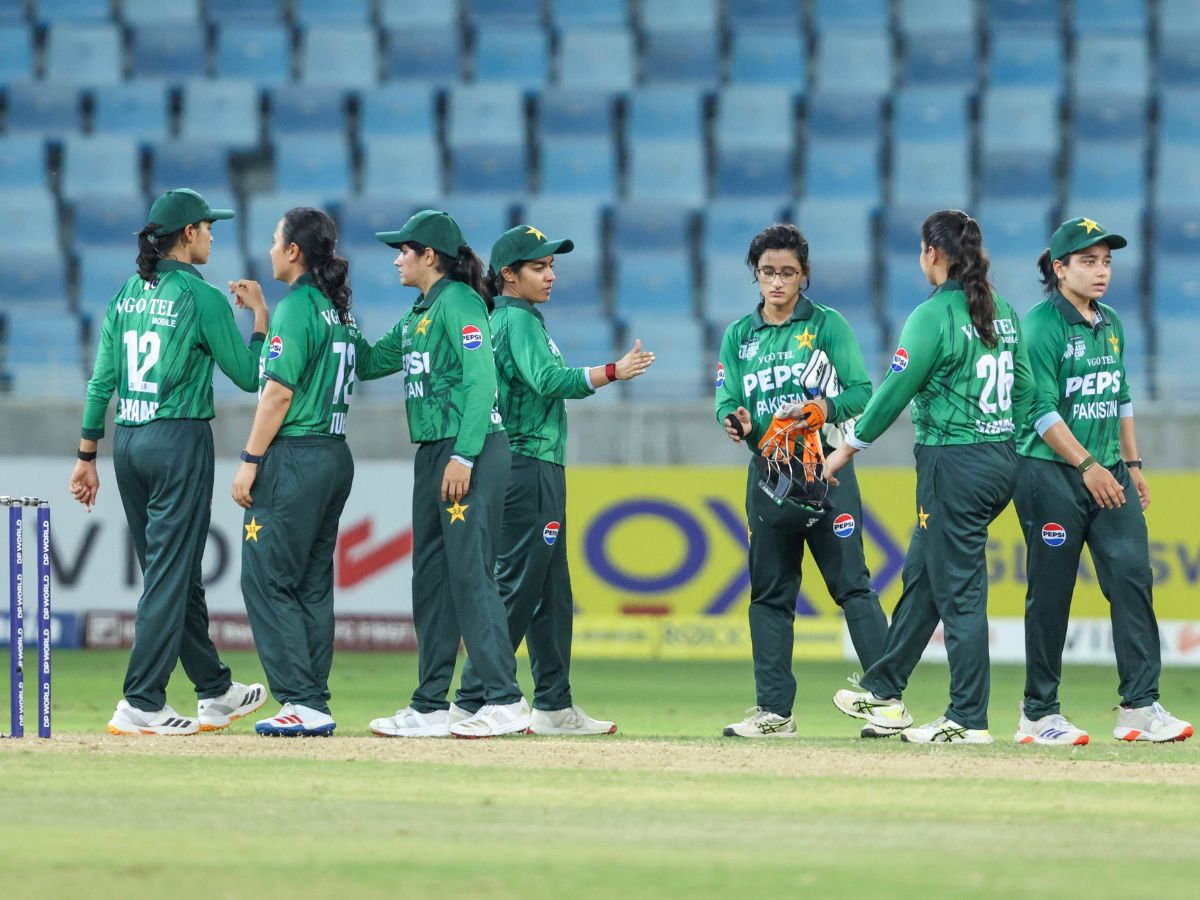
DUBAI, UAE – September 6, 2026 – In a defiant stance following a shocking and record-low performance against arch-rivals India, Pakistan Women’s team mentor Wahab Riaz has emphatically declared his squad the "best team" in the ongoing Women’s Asia Cup 2026. Riaz’s extraordinary vote of confidence comes in the wake of Pakistan being bundled out for a paltry 55 runs – their lowest ever total against India – leading to a humiliating seven-wicket defeat in a match that once again failed to live up to its billing.
The heavy loss at the Dubai International Stadium on Saturday night has cast a significant shadow over Pakistan’s campaign, placing their semi-final aspirations in jeopardy. Despite the widespread disappointment and the stark reality of the scoreboard, Riaz remains resolute, urging his players to find self-belief and bounce back stronger, particularly with a crucial group stage encounter against Hong Kong, China, looming.
The Unfolding Disaster in Dubai
The much-anticipated clash between India and Pakistan, a fixture that traditionally electrifies the cricketing world, proved to be a one-sided affair, showcasing India’s formidable prowess and exposing Pakistan’s significant vulnerabilities.
Pre-Match Hype and Expectations
The India-Pakistan rivalry, regardless of the format or gender, always arrives laden with immense anticipation. Fans from both nations eagerly await these contests, often hoping for a nail-biting finish and a showcase of high-quality cricket. For the Women’s Asia Cup, this fixture was slated as a potential litmus test for both teams, especially for Pakistan, who aimed to assert their presence against the tournament favorites. Pundits and fans alike had hoped for a competitive display, a tight contest that would elevate the profile of women’s cricket in the region. However, what transpired was far from the expected spectacle, leaving many to wonder if the rivalry on the women’s circuit is destined to remain a largely one-sided affair.
)
Pakistan’s Batting Implosion
Winning the toss and electing to bat first, Pakistan, led by captain Fatima Sana, aimed to set a challenging total on what is generally considered a fair batting surface in Dubai. What followed, however, was a catastrophic batting collapse that saw the entire team dismissed for just 55 runs in a mere 14.2 overs, failing to even utilize their full quota of 20 overs. From the outset, the Pakistani batters struggled to find rhythm, timing, or indeed, any meaningful partnerships.
The Indian bowlers, spearheaded by their experienced attack, exploited the conditions expertly, delivering tight lines and lengths that offered little room for scoring. The pressure mounted quickly, leading to a procession of wickets. Shot selection appeared questionable at times, with batters either falling to indecisive strokes or succumbing to the sheer accuracy and discipline of the Indian attack. The middle order failed to provide any stability, crumbling under the weight of early dismissals. The lack of application and inability to rotate the strike effectively meant that boundaries were scarce, and the scoreboard barely ticked over, painting a grim picture for the Pakistani dugout and their supporters. This abject display marked not only a record low against India but also highlighted a deeper malaise within the team’s batting unit.

India’s Clinical Chase
Chasing a meager target of 56 runs, India, the tournament favorites, approached the task with professional efficiency. While the chase wasn’t entirely without a few hiccups, it was ultimately a comfortable affair. Pakistan’s captain, Fatima Sana, did manage to provide some moments of individual brilliance with the ball, picking up the crucial wickets of Shafali Verma, Pratika Rawal, and the prolific Smriti Mandhana. These breakthroughs offered a fleeting glimmer of hope, suggesting that perhaps a spirited bowling performance could still salvage some pride.
However, the target was simply too low to defend, even against a slight wobble. India’s deep batting lineup ensured there were always batters capable of seeing them through. They cruised to victory with seven wickets in hand and a staggering 68 balls to spare, underlining the comprehensive nature of their dominance. The ease with which India secured the win further amplified the concerns surrounding Pakistan’s performance, leaving them with much to ponder ahead of their critical upcoming fixtures.
)
A Mentor’s Defiance: Wahab Riaz’s Post-Match Assessment
In the immediate aftermath of the crushing defeat, Wahab Riaz, known for his aggressive cricketing persona during his playing days, adopted a remarkably optimistic and defiant tone. His comments to reporters aimed to instill confidence rather than dwell on the severity of the loss.
Unwavering Faith in Talent
"I believe all our players are talented—they just need to believe in themselves," Riaz asserted after the match, a statement that might strike many as contradictory given the team’s performance. His emphasis was not on the technical shortcomings evident on the field but on the psychological aspect, suggesting that a lack of self-belief rather than skill was the primary impediment. This approach might be a deliberate tactic to shield his young squad from the harsh glare of criticism and foster a positive mindset crucial for recovery. For Riaz, the raw talent is undeniably present; the challenge lies in unlocking it under pressure.
)
Addressing the Performance Deficit
Acknowledging the need for introspection, Riaz outlined the immediate plan: "Next, we play Hong Kong. We’ll sit down and talk about what went wrong against India and try not to repeat those mistakes." This suggests a commitment to a thorough post-mortem, focusing on tangible improvements rather than simply sweeping the issues under the rug. The mentor’s role here becomes critical – to dissect the failure without demoralizing the team further, to identify specific areas for improvement, and to implement corrective strategies effectively. The "what went wrong" list is likely extensive, encompassing everything from batting technique against spin and pace to game awareness and strategic execution.
The Crucial Hong Kong Encounter
Despite the dismal showing, Riaz reiterated his bold claim: "I still think Pakistan is the top team in this Asia Cup because the conditions work in our favor." This statement, while perhaps aimed at boosting team morale, also places immense pressure on the team’s upcoming match against Hong Kong, China. A victory against Hong Kong is not merely desirable but absolutely essential for Pakistan to keep their semi-final hopes alive. The "conditions work in our favor" argument suggests Riaz believes the team possesses the inherent ability to adapt to the Dubai pitches, implying that the failure against India was an anomaly rather than a fundamental flaw. The Hong Kong match will be a true test of this resilience and the team’s ability to translate their mentor’s belief into on-field performance.
)
Strategic Overhaul: Defending the Squad Changes
Beyond the immediate match performance, Wahab Riaz also addressed a simmering controversy surrounding the team selection, specifically responding to criticism from former captain Sana Mir regarding the dropping of seven players from the squad for the tournament.
Sana Mir’s Critique and Riaz’s Counter
Sana Mir, a revered figure in Pakistan women’s cricket and a former captain, had publicly voiced her displeasure over the extensive changes made to the squad. Her criticism likely stemmed from concerns about continuity, experience, and the potential disruption caused by such a large overhaul ahead of a major tournament. Her perspective would naturally lean towards stability and rewarding consistent performers.
)
Riaz, however, firmly defended the decisions, framing them as forward-looking and necessary. "Sana Mir’s got her opinion, but that’s her view. We made these changes looking ahead," he explained. This indicates a clear strategic divergence, where the current management prioritizes future development over immediate past performance or established reputations. The mentor’s stance suggests that while respecting Mir’s perspective, the decision-making process was guided by a different philosophy.
The Vision for the Future: New Faces, New Hope
Riaz elaborated on the rationale behind the changes, emphasizing a long-term vision. "The ones who played before—they’ve been to a lot of World Cups and Asia Cups, but we weren’t seeing results. It was time to bring in new players and fresh faces to build for the future," he stated. This justification points to a desire for a fresh start, a recognition that the previous cohort, despite their experience, had plateaued in terms of performance and results. The "building for the future" narrative is a common one in sports when teams undergo significant transitions. It implies a strategic investment in youth and potential, even if it means sacrificing immediate stability or results in the short term. The challenge, of course, is to ensure these new faces are adequately supported and groomed to succeed on the international stage.
)
The Inevitability of Tough Decisions
The mentor was unequivocal in his assertion that the changes were performance-based. "It’s not about who we left out. We have to face the facts—the players who were dropped weren’t performing. Bringing in new girls was the right decision," Riaz affirmed. This direct statement underscores the tough decisions that coaching staff and selectors often have to make. It suggests that the seven dropped players, despite their past contributions, had not been meeting the required performance standards for a sustained period. Such decisions are rarely popular, especially when involving established players, but Riaz’s resolute defense indicates a firm belief in the meritocracy of selection and a commitment to injecting new energy and talent into the squad. The success of this strategy, however, will ultimately be judged by the team’s future performances.
Contextualizing the Collapse
To fully appreciate the gravity of Pakistan’s situation and the boldness of Riaz’s claims, it’s essential to place the recent events within a broader cricketing context.
)
A Rivalry That Rarely Delivers
While the India-Pakistan rivalry is iconic in men’s cricket, often delivering pulsating contests, the women’s equivalent has historically been more one-sided. India has largely dominated these encounters, a trend that was starkly reinforced by Saturday’s match. This consistent disparity often leaves fans yearning for a more competitive fixture, one where both teams are genuinely vying for supremacy. The latest result further widens this gap, putting pressure on Pakistan to elevate their game significantly to make the rivalry a more compelling spectacle.
Historical Lows and Performance Trends
The score of 55 all-out is not just a defeat; it’s a significant historical marker. Such low totals are rare in international T20 cricket, especially in a major tournament like the Asia Cup. This figure represents Pakistan’s lowest-ever T20I score against India, signaling a concerning dip in their batting standards. Analyzing broader trends, Pakistan Women’s team has often shown flashes of brilliance but has struggled with consistency, particularly in high-pressure situations against top-tier teams. Their batting unit, in particular, has frequently been identified as an area needing significant improvement, often failing to convert starts or accelerate effectively in the middle and death overs. This latest collapse only serves to underscore these perennial issues.
)
The Dynamics of the Dubai Pitch
The Dubai International Stadium is generally known for its balanced pitches, offering something for both batters and bowlers. While it can sometimes be slow and turn-friendly, it’s rarely a minefield where 55 all-out would be considered a reasonable score. The fact that India chased the total with such ease suggests that while the pitch might have offered some assistance to the bowlers, it was primarily Pakistan’s inability to adapt, build partnerships, and apply themselves that led to their downfall. Conditions, while a factor, cannot solely account for such a comprehensive batting failure.
India’s Dominance: A Formidable Challenge
India’s women’s team has consistently been one of the strongest forces in international cricket. They boast a deep talent pool, with a blend of experienced campaigners and exciting young prospects. Their batting lineup is formidable, capable of aggressive power-hitting and astute rotation of strike. Their bowling attack is versatile, featuring quality pace and spin options that can trouble any opposition. Being the tournament favorites, their performance against Pakistan only solidified their credentials, showcasing their readiness to compete for the title. For Pakistan, facing such a well-drilled and confident unit immediately after a squad overhaul presents an even steeper challenge.
)
Implications and The Road Ahead
The repercussions of this heavy defeat and Wahab Riaz’s subsequent statements extend far beyond the immediate match result, touching upon Pakistan’s tournament hopes, team psychology, and the broader trajectory of women’s cricket in the country.
Pakistan’s Precarious Semi-Final Path
With the loss to India, Pakistan’s path to the semi-finals has become significantly more challenging. While the exact permutations depend on other group results, a victory against Hong Kong, China, is now non-negotiable. Not only must they win, but they might also need to do so convincingly to boost their net run rate, which could be a deciding factor in a tightly contested group. The pressure on the team to perform in this crucial match will be immense, testing their mental fortitude and their ability to execute under duress. Any slip-up against Hong Kong would likely spell an early exit from the tournament, rendering Riaz’s optimistic claims moot.
)
The Psychological Impact and Team Morale
A defeat of this magnitude, particularly against a bitter rival, can have a profound psychological impact on a team. The public nature of the collapse, coupled with the record-low score, could easily lead to a crisis of confidence. Wahab Riaz’s defiant positivity, therefore, can be seen as a deliberate attempt to counteract this potential psychological fallout. His challenge now is to translate that verbal confidence into tangible improvements in team morale and self-belief. The players need to internalize his message, shake off the disappointment, and focus on the task at hand without letting the previous performance dictate their future actions.
Broader Concerns for Pakistan Women’s Cricket
Beyond the immediate tournament, the performance against India raises broader concerns for Pakistan women’s cricket. Investment in infrastructure, development pathways for young talent, and sustained high-performance programs are critical for closing the gap with top cricketing nations. The team’s struggles highlight the need for a holistic approach to player development, ensuring that new recruits are not just talented but also adequately prepared for the rigors of international cricket, both technically and mentally. The PCB (Pakistan Cricket Board) will face scrutiny regarding its long-term strategy for women’s cricket, especially if the team fails to progress in the Asia Cup.
)
The Mentor’s Challenge: Translating Belief into Performance
Wahab Riaz’s role as team mentor is now under intense spotlight. His confident pronouncements have set a high bar, and the expectation will be for the team to justify that faith. His challenge is multifaceted: to provide clear tactical guidance, to foster a winning mentality, to manage player anxieties, and to ensure that the "talent" he speaks of translates into consistent, match-winning performances. The next few matches will be a significant test of his mentorship and leadership skills.
Looking Beyond the Asia Cup
Regardless of the outcome of the Asia Cup, the Pakistan Women’s team will need to undertake a comprehensive review of their performance and strategy. The squad changes were made "looking ahead," implying a long-term vision. This vision must be clearly articulated and consistently implemented. Identifying core players, nurturing young talent, improving batting consistency, and developing a robust team strategy will be crucial for Pakistan to become a more competitive force on the international stage. The Asia Cup 2026, despite its current challenges, must serve as a learning experience, providing valuable insights into what needs to be done to build a truly "best side."
)
Conclusion
Wahab Riaz’s bold declaration that Pakistan is the "best team" in the Women’s Asia Cup, despite the ignominious defeat to India, stands as a testament to his unwavering faith in his squad. It is a statement of defiance, optimism, and perhaps, a strategic attempt to shield his players from the intense criticism. However, the stark reality of the 55 all-out score, the historical context of the rivalry, and the challenging semi-final qualification scenario present a formidable test for the team. The coming days will reveal whether Riaz’s words can inspire a turnaround, or if the challenges facing Pakistan Women’s cricket run deeper than mere self-belief. The road ahead is steep, and the pressure is squarely on the team to perform and justify their mentor’s audacious confidence.
