


The Unprecedented Ascent: Yagiz Kaan Erdogmus, Chess Prodigy Redefining Records and Inspiring a Nation
Sep 5, 2026 11:10 PM IST
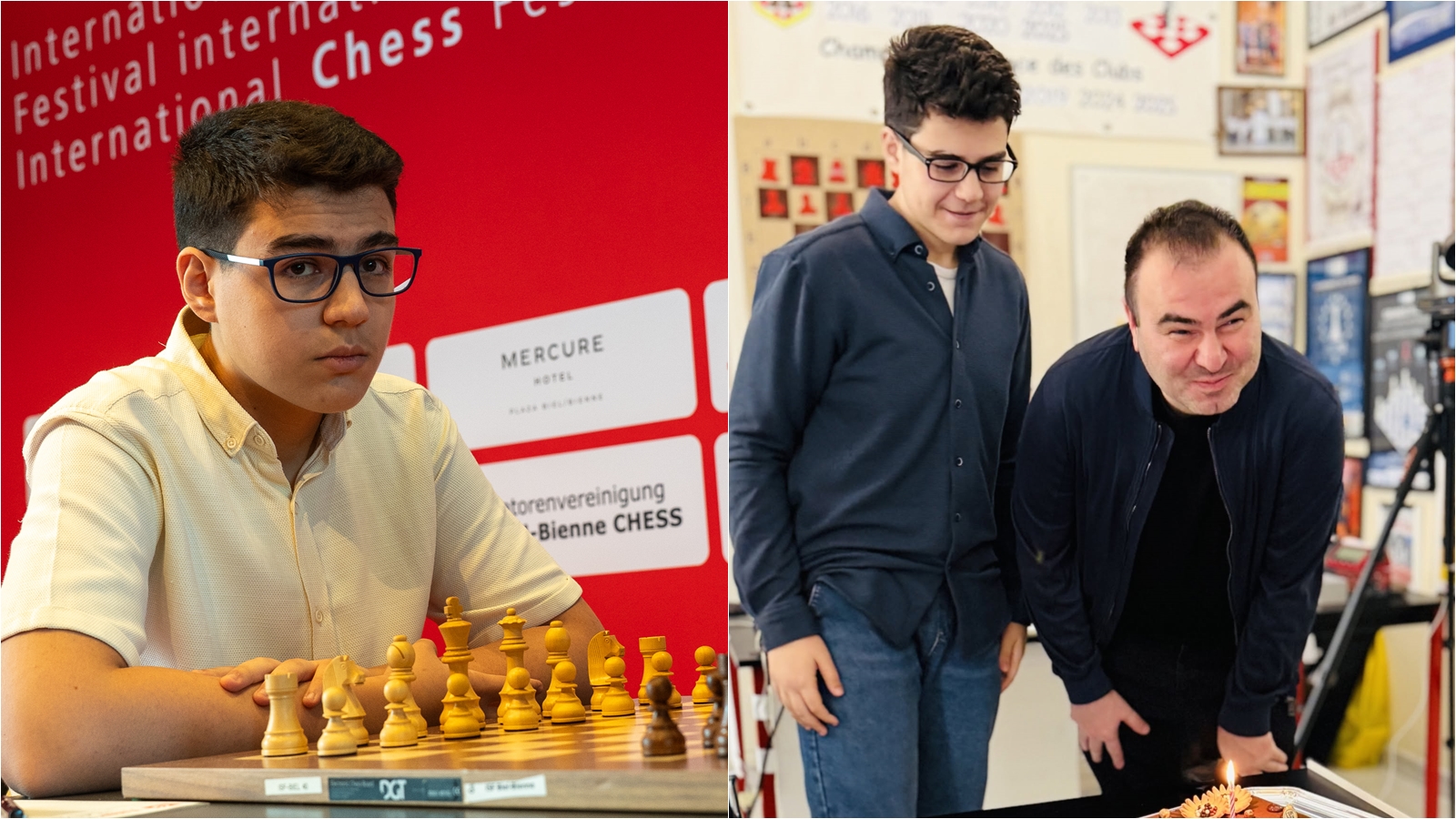
In the dynamic and intellectually demanding world of professional chess, where grandmasters often spend decades honing their craft to reach the sport’s highest echelons, a new phenomenon has emerged from Turkey. Yagiz Kaan Erdogmus, a prodigious talent, is not merely breaking records; he is shattering them with a speed and consistency that has left the chess world in awe. At just 14 years old, Erdogmus has rewritten the history books, becoming the youngest player ever to breach the coveted 2700 live rating barrier, a feat that firmly places him among the elite, and signals the dawn of a new era in chess.
This extraordinary achievement, which saw him eclipse the previous record held by China’s celebrated grandmaster Wei Yi, is but one chapter in Erdogmus’s rapidly unfolding legend. His trajectory has been nothing short of meteoric, marking him as a once-in-a-generation talent. The global chess community, including legends like Magnus Carlsen and his dedicated coach Shakhriyar Mamedyarov, watches with bated breath as Erdogmus embarks on a journey that could redefine the very limits of human chess prowess.
Main Facts: A Prodigy’s Unrivaled Ascent
Yagiz Kaan Erdogmus is the youngest player in history to cross a live rating of 2700. This milestone, achieved at a mere 14 years of age, snatched the record from Chinese prodigy Wei Yi, who himself was an early achiever. Erdogmus’s journey to the summit began much earlier, as he first broke the 2600 barrier at 13 years, 2 months, and 15 days, a record in itself. His dominance in his age group has been absolute, consistently holding the highest rating ever recorded for players before they turned 12, 13, and 14.
Beyond individual rating milestones, Erdogmus has also demonstrated an unprecedented ability to rapidly climb the global rankings. He became the youngest player to enter the world’s top 100, then the top 50, and most recently, the top 20. Currently, Erdogmus stands at World No. 26 with a FIDE live rating of 2716, a testament to his consistent performance against the world’s best. These achievements are not just statistical anomalies; they are indicators of a profound talent and an exceptional work ethic that promise to shape the future of chess.
His astounding progress has not gone unnoticed by the sport’s most decorated figures. Magnus Carlsen, widely regarded as the greatest chess player of all time, offered rare and unequivocal praise for the young Turk. "He’s an incredible player. The best 14-year-old that the world has ever seen," Carlsen stated, a commendation that carries immense weight given Carlsen’s discerning eye for talent.
Driving Erdogmus’s ambitious journey is his coach, Shakhriyar Mamedyarov, the Azerbaijani grandmaster who ranks as the sixth highest-rated player in history, having once touched a stratospheric 2820 and held the World No. 2 position. Mamedyarov’s vision for his protégé is audacious: he believes Erdogmus can reach a 2900 FIDE rating, a mark that no player, not even Magnus Carlsen, has ever achieved. This monumental target underscores the immense faith Mamedyarov places in Erdogmus’s potential, a belief so strong that it led him to put aspects of his own illustrious playing career on hold to nurture this burgeoning talent.
Chronology: A Record-Breaking Timeline
Yagiz Kaan Erdogmus’s journey into the chess world began, as it often does for prodigies, with an early spark of curiosity and innate aptitude.
- Early Childhood: The initial encounter with chess occurred during a kindergarten lesson. "I looked at the pieces and liked the game, so I decided to play," Erdogmus recalls. This seemingly simple decision ignited a passion that would soon consume his young life. He quickly enrolled in a chess course, where his talent became immediately apparent. "I was beating everyone, and that motivated me. Chess makes me very happy," he says, encapsulating the joy and drive that underpin his rapid development.
- Pre-Teen Years (Before 12): Even before turning 12, Erdogmus began accumulating age-related rating records, showcasing an unusual level of maturity and understanding of the game for his years. His FIDE rating climbed steadily, consistently outperforming peers and setting new benchmarks for his age group globally.
- The 2600 Barrier: At the age of 13 years, 2 months, and 15 days, Erdogmus achieved his first major historical milestone, crossing the 2600 live rating mark. This accomplishment placed him in an exclusive club, typically reserved for seasoned grandmasters, demonstrating a clear trajectory towards the elite.
- Rapid Ascent in Global Rankings: Following his 2600 breakthrough, Erdogmus’s rise in the FIDE world rankings was unprecedented. He became:
- The youngest player to enter the world’s top 100.
- The youngest player to break into the world’s top 50.
- The youngest player to reach the world’s top 20.
Each of these steps further solidified his status as a generational talent, consistently outperforming the timelines set by previous prodigies.
- The 2700 Milestone (2026): In a pivotal moment, Erdogmus achieved the 2700 live rating, officially becoming the youngest player in history to do so, surpassing Wei Yi’s previous record. This achievement marked his definitive entry into the super-grandmaster category, a level where only a select few truly compete for the highest honors in chess.
- Current Status (September 2026): As of this report, Erdogmus holds the World No. 26 ranking with a FIDE live rating of 2716. His journey continues as he competes in prestigious events like the Global Chess League, where he seeks further growth and experience.
This chronological progression highlights not just his raw talent, but also his remarkable consistency and adaptability, key traits that define true chess champions.
Supporting Data: The Metrics of Greatness
The claims of Erdogmus’s exceptional talent are not anecdotal; they are firmly supported by objective chess metrics and historical comparisons.
- FIDE Rating System: The Elo rating system, administered by FIDE (Fédération Internationale des Échecs), is the universally accepted measure of a chess player’s strength. A rating of 2700+ signifies a "super-grandmaster," a player capable of challenging for the World Championship title. Historically, achieving this level at such a young age is exceedingly rare.
- Erdogmus’s Current Rating: 2716 (World No. 26).
- Record-Breaking 2700: Achieved at 14 years old, breaking Wei Yi’s record.
- Record-Breaking 2600: Achieved at 13 years, 2 months, 15 days.
- Historical Context of Prodigies: To understand the magnitude of Erdogmus’s achievements, it’s essential to compare his trajectory with other historical prodigies:
- Bobby Fischer: Became a Grandmaster at 15 years, 6 months.
- Garry Kasparov: Reached World No. 1 at 20.
- Magnus Carlsen: Became a Grandmaster at 13 years, 4 months, 27 days. Reached 2700 at 16 years, 7 months.
- Wei Yi: Held the record for youngest to 2700 before Erdogmus.
- Gukesh D: Reached 2700 at 17 years, 1 month.
- Praggnanandhaa R: Reached 2700 at 17 years, 8 months.
Erdogmus’s significantly earlier attainment of the 2700 mark places him in an unprecedented category among these luminaries.
- Mamedyarov’s Pedigree: Shakhriyar Mamedyarov, Erdogmus’s coach, is a formidable figure in chess history.
- Peak Rating: 2820, making him the sixth highest-rated player of all time.
- World Ranking: Reached World No. 2.
His personal experience at the very top of chess provides invaluable guidance and a deep understanding of what it takes to achieve elite status. His belief in Erdogmus’s potential to reach 2900 is therefore not mere hyperbole but an assessment from one of the game’s most insightful minds.
- The 2900 Target: This figure is not just ambitious; it is historically unprecedented. No player in the history of chess has ever reached a 2900 FIDE rating. Magnus Carlsen, with his peak of 2882, came closest. The target set by Mamedyarov highlights the extraordinary potential he sees in Erdogmus, implying a level of chess mastery beyond anything previously witnessed. Achieving this would require not just beating, but consistently outperforming, a deep pool of 2800-rated opponents over an extended period.
These data points collectively paint a picture of a player whose achievements at such a young age are statistically extraordinary, setting new benchmarks for prodigy development in chess.
Official Responses: Voices of Praise and Ambition
The rapid ascent of Yagiz Kaan Erdogmus has elicited significant commentary from within the chess world, offering insights into his character, potential, and the lofty ambitions that surround him.
Magnus Carlsen’s Endorsement:
Perhaps the most powerful testament to Erdogmus’s talent comes from Magnus Carlsen, the reigning World Champion and arguably the greatest player in history. Carlsen, known for his reserved and measured assessments, delivered an unequivocal commendation: “He’s an incredible player. The best 14-year-old that the world has ever seen.” This statement, coming from a player who himself was a child prodigy and has witnessed countless talents emerge, carries immense weight. It suggests that Carlsen sees in Erdogmus not just raw talent, but a unique blend of attributes—perhaps a combination of deep strategic understanding, razor-sharp tactical vision, and an uncommon maturity—that sets him apart from even the most gifted youngsters of previous generations.
Erdogmus on His Vision for Turkish Chess:
Despite his individual accolades, Erdogmus harbors a broader ambition for his home country. He acknowledges the growing prominence of chess in other nations, particularly India, and aims to replicate that success in Turkey. “Ediz and I are trying to make chess more popular in Turkey,” he states, referring to his compatriot, 17-year-old Ediz Gürel, who is also part of Turkey’s new generation of chess stars. “It’s not as popular as in India, so we are trying to change that. I hope Turkey becomes one of the best countries in chess.” This reveals a maturity beyond his years, a recognition that his personal success can serve as a catalyst for a wider chess movement in Turkey, fostering new talent and inspiring greater participation.
Mamedyarov’s Audacious 2900 Target:
Shakhriyar Mamedyarov, Erdogmus’s coach and mentor, has publicly articulated an incredibly ambitious goal for his protégé: a 2900 FIDE rating. This target, unprecedented in chess history, speaks volumes about Mamedyarov’s belief in Erdogmus. Mamedyarov, who himself reached 2820 and was World No. 2, has put his own active playing career on hold to dedicate himself to Erdogmus’s development. This level of commitment from an elite player to a young student is rare and underscores the extraordinary potential Mamedyarov perceives.
Erdogmus on the 2900 Challenge:
Erdogmus, while acknowledging the immense difficulty, faces this challenge with a blend of youthful optimism and grounded realism. “2900 is very tough,” he concedes. “Magnus is the greatest in history, and he couldn’t reach 2900. I can do that, but it’s going to be very tough. I’m not feeling the pressure now because it’s early. First, I have to reach 2750, and I have other goals. But 2900 is very tough. I will give my best. I hope it can happen.” His response demonstrates a pragmatic approach, focusing on intermediate goals like 2750, while still embracing the ultimate aspiration. It also highlights his ability to manage the immense pressure that comes with such high expectations.
The Coach-Player Dynamic:
Even as Mamedyarov plays for a rival team in the Global Chess League, the coaching relationship remains strong. Erdogmus describes their bond: “We have a good relationship. He prepares for all my games. We always talk with each other. He always sends me some lines when I need them. He’s helping me a lot, and he also plays competitive chess at this age, which is impressive. He will also be my opponent here, so it’s going to be interesting games.” This reveals a unique mentorship, where Mamedyarov’s competitive drive fuels his coaching, even when facing his student across the board.
Erdogmus on His Playing Style:
When asked to describe his approach to the game, Erdogmus offers a self-aware assessment: “Strategic and tactical,” he calls himself. “My calculation is also very good, but I like to do sacrifices as well. Then I realised it actually makes me more of a positional player.” This description suggests a complex and evolving style, capable of both deep strategic planning and sharp tactical fireworks. The interplay between sacrifices and positional play indicates a player who is willing to take calculated risks to achieve long-term advantages, a hallmark of truly creative and effective chess players.
These official responses collectively paint a picture of a prodigy who is not only exceptionally talented but also thoughtful, ambitious, and well-supported, both personally and professionally.
Implications: Shaping the Future of Chess and Turkish Ambitions
The rise of Yagiz Kaan Erdogmus carries profound implications, not just for his individual career but for the landscape of global chess and the aspirations of Turkish chess.
Redefining Prodigy Development: Erdogmus’s record-breaking journey to 2700 at 14 years old recalibrates the expectations for young chess talents. It suggests that with modern training methods, access to vast databases, and perhaps a unique cognitive predisposition, the traditional timelines for grandmaster development can be significantly compressed. His success will undoubtedly inspire a new generation of chess players and coaches to push boundaries even further, potentially leading to an even younger crop of elite players in the coming decades. This trend also raises questions about sustainability, burnout, and the psychological demands placed on such young athletes.
The Pursuit of 2900: A Historical Quest: The audacious target of 2900 set by Mamedyarov is more than just a number; it is a challenge to the historical limits of chess performance. If Erdogmus were to even approach this rating, it would necessitate an unparalleled level of consistent dominance against the world’s best. It would require finding and exploiting weaknesses in players who are themselves at the pinnacle of their game, repeatedly. This quest will be intensely scrutinized, and its outcome, whether successful or not, will provide invaluable insights into the upper limits of human chess capability. It represents a theoretical frontier in chess that could be breached by a player with the right combination of talent, dedication, and perhaps, a unique revolutionary approach to the game.
Transforming Turkish Chess: Erdogmus, alongside Ediz Gürel, is poised to become the face of a chess revolution in Turkey. Their collective ambition to elevate chess’s popularity in their homeland is a significant undertaking. Currently, Turkey has had "good players" like Mustafa Yılmaz, Emre Can, and Vahap Şanal, who have achieved national and some international success. However, none have reached the global elite status that Erdogmus now commands. His visibility and success provide an unparalleled platform to:
- Inspire Grassroots Development: More children will likely be drawn to chess, seeing Erdogmus as a role model.
- Attract Investment: His success could encourage greater government and private sector funding for chess programs, academies, and tournaments in Turkey.
- Elevate National Prestige: A World Champion or consistent top-ranked player from Turkey would significantly boost the country’s profile on the international sporting stage.
The comparison to India, where chess enjoys immense popularity and has produced a plethora of grandmasters following Viswanathan Anand’s pioneering efforts, serves as a clear blueprint for what Erdogmus hopes to achieve for Turkey.
Mentorship and Cross-Generational Learning: Erdogmus’s participation in the Global Chess League (GCL) offers invaluable opportunities for growth. Playing alongside a legend like Viswanathan Anand and a rising star like Arjun Erigaisi provides a unique learning environment. His eagerness to delve into Anand’s World Championship training methods highlights a keen desire to learn from the best, bridging generational gaps in chess knowledge. This exposure to diverse playing styles and elite preparation strategies will be crucial for his continued development. The GCL format, where coaches like Mamedyarov can also be opponents, adds another layer of intriguing complexity to his learning curve, forcing him to adapt and strategize against even his closest confidantes.
Navigating Pressure and Longevity: The immense pressure that accompanies such early success is a significant implication. Managing expectations, maintaining peak performance, and avoiding burnout will be critical challenges. Erdogmus’s current approach, focusing on intermediate goals and expressing genuine enjoyment for the game ("Chess makes me very happy"), bodes well for his longevity. However, the path to 2900 is a marathon, not a sprint, demanding sustained psychological resilience and a relentless pursuit of improvement.
In essence, Yagiz Kaan Erdogmus is not just a chess player; he is a symbol of unprecedented potential, a national inspiration, and a central figure in a fascinating new chapter of chess history. The wheels are indeed turning, and the world awaits to see how far this remarkable young talent can push the boundaries of the royal game.
© The Indian Express Pvt Ltd
