

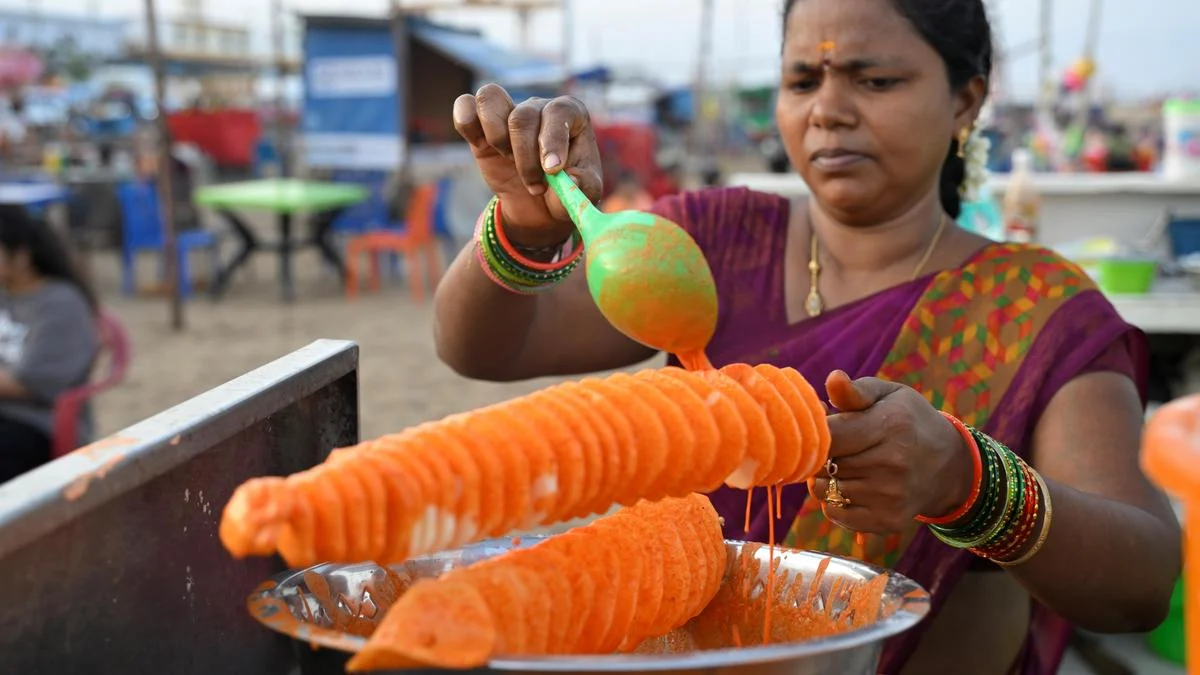
For the residents of Chennai, the Bay of Bengal is more than a geographical boundary; it is the city’s communal backyard, its most frequented therapist, and, perhaps most importantly, its largest open-air dining room. To visit the Marina, Besant Nagar, or Pattinapakkam beaches without indulging in the local street food is to leave the experience incomplete. From the tangy crunch of maanga pattani sundal to the searing heat of a freshly fried vanjaram (seer fish) slice, the food of the coast is an intrinsic thread in the fabric of Chennai’s identity.
As the city evolves into a modern metropolis of glass-and-steel IT parks and high-rise apartments, the shoreline remains a timeless sanctuary. Here, the culinary offerings have created a unique micro-economy and a sensory language that speaks to every generation of "Chennaite."
Main Facts: A Coastal Gastronomic Ecosystem
Chennai’s coastline, stretching from the northern fishing hubs of Pazhaverkadu and Kasimedu to the southern reaches of the ECR (East Coast Road), offers a diverse culinary map. While the city is famous for its filter coffee and idlis, the "beach food" category occupies a distinct niche.
The primary staples of this coastal diet include:
- Maanga Pattani Sundal: A tempered salad of dried white peas, tossed with grated raw mango, coconut, and a specific blend of spices.
- Seafood Delicacies: Fresh catches—prawns, crabs, and various fish like nethili (anchovies) and vanjaram—marinated in fiery red masalas and shallow-fried on large iron tawas.
- The Bajji Platter: Thick slices of potato, raw banana (vazhakkai), and long green chilies (milagai) dipped in gram flour batter and deep-fried until golden.
- The Classics: Smoky roasted corn on the cob rubbed with lime and chili, and the ethereal, neon-colored "Delhi" cotton candy.
This food culture is not merely about sustenance; it is about the "ritual of the visit." For thousands of families, the beach is a monthly or weekly pilgrimage where the shared experience of eating together on the sand transcends the food itself.
Chronology: From Humble Baskets to Organized Food Rows
The evolution of Chennai’s beach food mirrors the city’s own growth. In the mid-20th century, the offerings were modest. Vendors, often women from nearby fishing hamlets, would walk the sands carrying baskets of boiled peanuts or sundal on their heads.
By the 1980s and 90s, the "Bajji Stall" became a permanent fixture. These stalls introduced a theatrical element to beach-going—the sight of long green chilies hanging like thoranams (festive garlands) and the rhythmic sound of the spatula against the frying pan.
Jayashree, a 56-year-old resident who has frequented the Marina for decades, recalls a time when the beach was less crowded and the food was viewed with a degree of skepticism. "When I was a child, my father was very strict. He worried about the hygiene of the open stalls and would refuse to buy us snacks," she reminisces. "To compensate, he would buy us toys—little wooden whistles or plastic fans. But today, the hygiene standards have improved, and even my father, now in his 80s, can’t resist a packet of pattani sundal."

In the last decade, the scene has shifted again. The "organized chaos" of the Kasimedu fish market has spilled over into the sophisticated food trucks of Besant Nagar. While the Marina remains the bastion of tradition, Pattinapakkam has emerged as a "seafood destination," where rows of meen saapadu (fish meal) messes serve gourmet-quality fresh catches in a rustic, beachside setting.
Supporting Data: The Anatomy of the "Beach Taste"
What makes beach food taste different from the same dishes prepared at home? This is a question that haunts both home cooks and professional chefs.
The Secret of the Marinade
At the Alli Muthu fish stall on the Marina, Ganesh, a second-generation vendor with 30 years of experience, reveals that the secret lies in the podi (powder). "It’s not just chili and salt," Ganesh explains while gesturing to a tray of kilangan and paarai fish. "We use a blend of nearly ten ingredients, including chicken masala, fish fry masala, garam masala, and some secret ratios my mother taught me."
The "Mystery" Chutney
The bajji is only as good as the chutney served with it. Beach-side chutney is typically a watery, spicy, and tangy concoction that defies the standard coconut chutney recipes found in cookbooks. Despite countless "beach-style chutney" tutorials on YouTube, enthusiasts claim that the missing ingredient is the environment. The high humidity and salt content in the air affect how our taste buds perceive spices, making the fiery heat of the chutney feel perfectly balanced against the sea breeze.
Social Dynamics
The beach serves as the "Great Equalizer." According to local surveys and footfall data, the Marina attracts between 30,000 to 50,000 visitors on a typical weekday, with numbers swelling to over 150,000 on weekends. Within this crowd, the CEO of a tech firm and a daily wage laborer might be seen standing at the same stall, both waiting for their turn to get a plate of nethili fry.
Official Responses and Regulatory Framework
The sprawling nature of beach vending has not been without its challenges. The Greater Chennai Corporation (GCC) and the Madras High Court have been involved in a long-running effort to balance the livelihoods of vendors with the need for beach preservation and hygiene.
The Street Vending Act
In recent years, the GCC has moved toward a more regulated "vending zone" model. Under the Street Vendors (Protection of Livelihood and Regulation of Street Vending) Act, 2014, the city has conducted surveys to issue ID cards to legitimate beach vendors. This move aims to prevent the encroachment of the shoreline while ensuring that the traditional food culture remains intact.
Hygiene Initiatives
"We have been working with the Food Safety and Standards Authority of India (FSSAI) to conduct workshops for beach vendors," a GCC official stated in a recent briefing. "The goal is to educate them on oil reuse limits, water quality, and waste management. We recognize that these stalls are a major tourist draw, and maintaining their reputation for safety is a priority."

Furthermore, the "Smart City" initiative has introduced standardized, colorful carts for vendors on the Marina to provide a more aesthetic and organized look, though some critics argue this detracts from the "raw, authentic" feel of the traditional stalls.
Implications: More Than Just a Meal
The significance of Chennai’s coastal food culture extends into the realms of sociology and psychology. For many, the beach is a repository of "food memories."
The Psychology of Sharing
Nisha, a 31-year-old mother from Kodungaiyur, highlights the social shift that occurs at the shoreline. "At home, we are all busy. We eat from separate plates, often in front of the TV. But at the beach, we buy one big plate of prawns or one large fish, and everyone shares. There is a sense of closeness that only happens here," she says. This "communal eating" is a vital part of the city’s social fabric, fostering a sense of community in an increasingly isolated digital age.
Economic Livelihoods
The coastal food industry supports thousands of families. From the fishermen at Kasimedu who provide the raw material to the spice grinders in local markets and the vendors on the sand, the "beach economy" is a complex supply chain. Any disruption to this ecosystem—whether through natural disasters like cyclones or administrative changes—has a profound impact on the city’s informal economy.
The "Un-recreatable" Factor
Ultimately, the enduring appeal of Chennai’s beach food lies in its intangibles. It is a multisensory experience: the grit of sand between the toes, the rhythmic roar of the waves, the sticky humidity that makes a cold drink taste like nectar, and the smell of woodsmoke and frying oil.
As the city continues to grow, these culinary traditions act as an anchor. They remind residents of a simpler time while adapting to the tastes of a new generation. Whether it is a college student like Rajeeth Nisha discovering the joy of a shared fish fry or a veteran vendor like Ganesh carrying on his mother’s legacy, the food of Chennai’s beaches remains a testament to the city’s resilient and vibrant spirit.
The "secret sauce" isn’t just in the masala; it is in the salt air, the shared laughter, and the timeless invitation of the Bay of Bengal. In Chennai, you don’t just go to the beach to see the sea—you go to taste it.
