

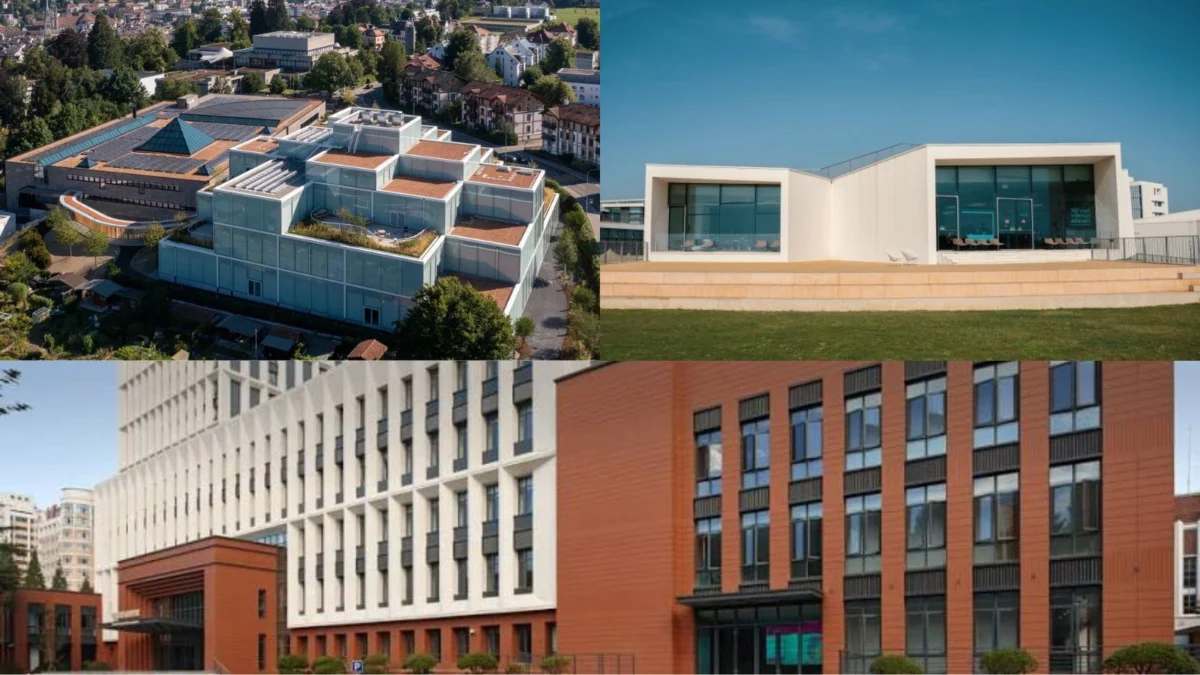
New Delhi, September 7, 2026 – In a testament to its enduring legacy and commitment to excellence in business education, the University of St. Gallen (HSG) has once again secured the coveted number one position in the Financial Times Masters in Management Rankings for 2026. This marks the second consecutive year the esteemed Swiss institution has held this prestigious title, solidifying its reputation as a global leader in management education. The rankings, released today, also highlight a strong performance from Indian business schools, with 14 institutions making it into the top 100.
Founded in 1898 with the initial objective of training merchants for Switzerland’s burgeoning textile industry, the University of St. Gallen’s journey is a remarkable narrative of growth and adaptation. Beginning with just seven students in its inaugural year, the institution has evolved over more than 125 years into a globally recognized powerhouse, consistently shaping the future of management thought and practice. Its sustained presence at the pinnacle of the FT rankings underscores its ability to not only adapt to the evolving demands of the global business landscape but to consistently set the benchmark for quality and innovation.
Following closely behind the University of St. Gallen are Portugal’s Nova School of Business and Economics (Nova SBE) and China’s Shanghai Jiao Tong University’s Antai College of Economics and Management. Nova SBE, established in 1978 as part of NOVA University of Lisbon, has climbed to the second position, showcasing significant progress in its global standing. Antai College of Economics and Management secured the third spot, demonstrating China’s growing influence in the realm of international business education.
The Financial Times Masters in Management Rankings 2026 assesses 100 English-taught Masters in Management programs designed primarily for students with limited or no prior professional experience. The methodology is a robust blend of data provided by the business schools themselves and extensive feedback from alumni who graduated in 2023. Alumni responses contribute a substantial 56% to the overall ranking score, reflecting the real-world impact and perceived value of their education. School data accounts for the remaining 44%. Key performance indicators include graduate salaries, salary growth, career progression, value for money, international exposure, diversity, and sustainability.
A Legacy of Excellence: The Rise of the University of St. Gallen
The University of St. Gallen’s journey to the top of the FT rankings is a story deeply rooted in its history and a consistent focus on academic rigor and practical relevance. Established as an academy for trade, transport, and administration, its initial mission was to equip individuals with the skills necessary to thrive in the industrializing economy of Switzerland. The institution’s move to its current Rosenberg campus in 1963 and its official renaming to the University of St. Gallen in 1995 marked significant milestones in its institutional development.
This latest No. 1 ranking is particularly noteworthy as it represents the University of St. Gallen’s 15th overall top ranking in the Financial Times Masters in Management list, and its third consecutive year holding the top position. This remarkable consistency speaks volumes about the enduring quality of its programs and the lasting impact it has on its graduates’ careers. The university’s ability to attract a diverse international student body, with 97% international students contributing to its top ranking, further solidifies its global appeal and multicultural learning environment.
Global Contenders: Nova SBE and Antai College Ascend the Ranks
The 2026 rankings reveal a dynamic shift in the global business education landscape, with Nova School of Business and Economics making one of the most significant leaps among leading institutions. Its ascent from fourth place in 2025 to second in 2026 is a clear indication of its growing international stature. Founded in 1978, Nova SBE has strategically positioned itself with an international outlook, offering comprehensive programs in economics, finance, and management. The school’s impressive 93% international student share, the second highest among the top 10, underscores its commitment to fostering a globally aware and interconnected learning community.
Shanghai Jiao Tong University’s Antai College of Economics and Management has also demonstrated remarkable progress, climbing from sixth to third place, a four-place improvement. While its international student proportion of 29% is lower than many European counterparts in the top tier, its strong performance suggests a robust curriculum and a growing reputation within Asia and beyond. This rise signifies China’s increasing influence in providing world-class business education.
Indian Business Schools Shine on the Global Stage
The Financial Times Masters in Management Rankings 2026 also celebrates the significant achievements of Indian business schools, with a remarkable 14 institutions featuring among the top 100 globally. This strong representation underscores the growing quality and international recognition of management education in India.
The Indian Institute of Management (IIM) Bangalore leads the charge, securing an impressive 21st position. This placement highlights its continuous efforts in delivering high-caliber management education and fostering strong career outcomes for its students. Following closely are SPJIMR (SP Jain Institute of Management and Research) at 26th and IIM Ahmedabad at 27th, both renowned for their rigorous academic programs and strong industry connections.
XLRI – Xavier School of Management has earned the 33rd rank, further solidifying its reputation as a leading institution for management studies, particularly in human resources and ethics. IIM Calcutta, a pioneer in management education in India, is positioned at 39th, demonstrating its sustained commitment to academic excellence.
The list of Indian institutions in the 2026 rankings continues with IIM Kozhikode at 54th, IIM Indore at 62nd, Management Development Institute (MDI) Gurgaon at 67th, and IIM Lucknow at 72nd. NMIMS Mumbai is ranked 73rd, IIM Udaipur at 83rd, Institute of Management Technology (IMT) Ghaziabad at 86th, International Management Institute (IMI) Delhi at 90th, and TA Pai Management Institute (TAPMI) at 98th. This broad representation signifies a healthy ecosystem of management education in India, catering to diverse student aspirations and career paths.
A Detailed Look at the Top 10 Institutes: FT Masters in Management Rankings 2026
The 2026 FT Masters in Management rankings showcase a diverse geographical spread of top-tier business schools, with European institutions dominating the upper echelons, interspersed with rising Asian contenders.
| Rank in 2026 | Business School | Location (Primary Campus) | Rank in 2025 | International Students |
|---|---|---|---|---|
| 1 | University of St. Gallen | Switzerland | 1 | 97% |
| 2 | Nova School of Business and Economics | Portugal | 4 | 93% |
| 3 | Shanghai Jiao Tong University: Antai | China | 6 | 29% |
| 4 | Insead | France | 3 | 87% |
| 5 | HEC Paris | France | 2 | 49% |
| 6 | ESCP Business School | France | 7 | 98% |
| 6 | Vlerick Business School | Belgium | 14 | 50% |
| 8 | IESE Business School | Spain | 16 | 76% |
| 9 | Stockholm School of Economics | Sweden | 9 | 69% |
| 10 | Rabat Business School – International University of Rabat | Morocco | 20 | 36% |
Shifting Tides and Consistent Performers in the Top Tier
Beyond the top three, the rankings reveal subtle shifts and strong performances from established global players. Insead has moved from third to fourth place, while HEC Paris has dropped from second to fifth. Despite these minor fluctuations, both remain within the top five, underscoring their continued influence and appeal. Their high international student percentages, 87% for Insead and 49% for HEC Paris, highlight their commitment to global diversity.
The sixth position is jointly held by ESCP Business School and Vlerick Business School. ESCP has improved from seventh place in 2025, and Vlerick has made a significant jump from 14th. ESCP’s remarkable 98% international student share makes it the school with the highest proportion of international students among the top 10.
IESE Business School has demonstrated considerable upward mobility, climbing eight places from 16th to eighth. The Stockholm School of Economics has maintained its ninth position, indicating a stable and strong performance. Rabat Business School – International University of Rabat has made a notable entry into the top 10, rising from 20th in the previous edition, signaling its growing international recognition.
The FT Ranking Methodology: A Deep Dive into Key Metrics
The Financial Times Masters in Management Rankings are renowned for their comprehensive and rigorous methodology. The ranking is based on 12 criteria, with a significant emphasis placed on the career outcomes and satisfaction of alumni. The core components of the ranking include:
-
Alumni Weighting (56%): This is the most significant factor, derived from surveys of graduates from the class of 2023. Key metrics within this segment include:
- Average Salary Three Years After Graduation: This carries the largest individual weight at 15%, reflecting the immediate post-graduation earning potential.
- Salary Increase: Measuring the percentage increase in salary from graduation to three years after, this accounts for 9% of the score, indicating career growth.
- Career Progression: Assessed through factors like the percentage of alumni who reached senior positions.
- Value for Money: Evaluating whether the salary earned justifies the cost of the degree.
- Career Aims Achieved: The extent to which graduates achieved their initial career goals.
-
School Data Weighting (44%): This segment relies on data provided directly by the business schools. Key indicators include:
- International Faculty: Proportion of faculty members with international experience.
- International Students: Percentage of students from abroad, reflecting the global diversity of the cohort.
- International Board: Diversity of the school’s governing board.
- Gender Equality: Representation of women among faculty and students.
- Industry Placement: Success in placing graduates in relevant industries.
- Sustainability: Integration of sustainability principles into the curriculum and operations.
The Financial Times’ meticulous approach ensures that the rankings provide a holistic view of program quality, student experience, and long-term career impact, making them a crucial reference point for prospective students worldwide.
Implications for Students and Institutions
The consistent dominance of European institutions in the Masters in Management rankings, coupled with the rising prominence of schools from China and other emerging economies, offers valuable insights for prospective students and educational institutions alike. For students, these rankings serve as a critical guide in identifying programs that offer strong career prospects, a globally diverse learning environment, and a significant return on investment. The emphasis on international exposure and career progression in the FT methodology highlights the increasing importance of these factors in today’s interconnected job market.
For business schools, the rankings provide a benchmark for performance and a roadmap for strategic development. The success of institutions like the University of St. Gallen and Nova SBE underscores the importance of a strong historical foundation combined with a forward-looking approach to curriculum development, internationalization, and alumni engagement. The increasing presence of Indian institutions in the top 100 signals a positive trajectory for management education in the country, encouraging further investment in faculty development, research, and global partnerships.
As the global business landscape continues to evolve, the Financial Times Masters in Management Rankings remain an indispensable tool for navigating the complex world of business education, recognizing those institutions that are not only shaping the leaders of today but also innovating for the challenges of tomorrow.
