

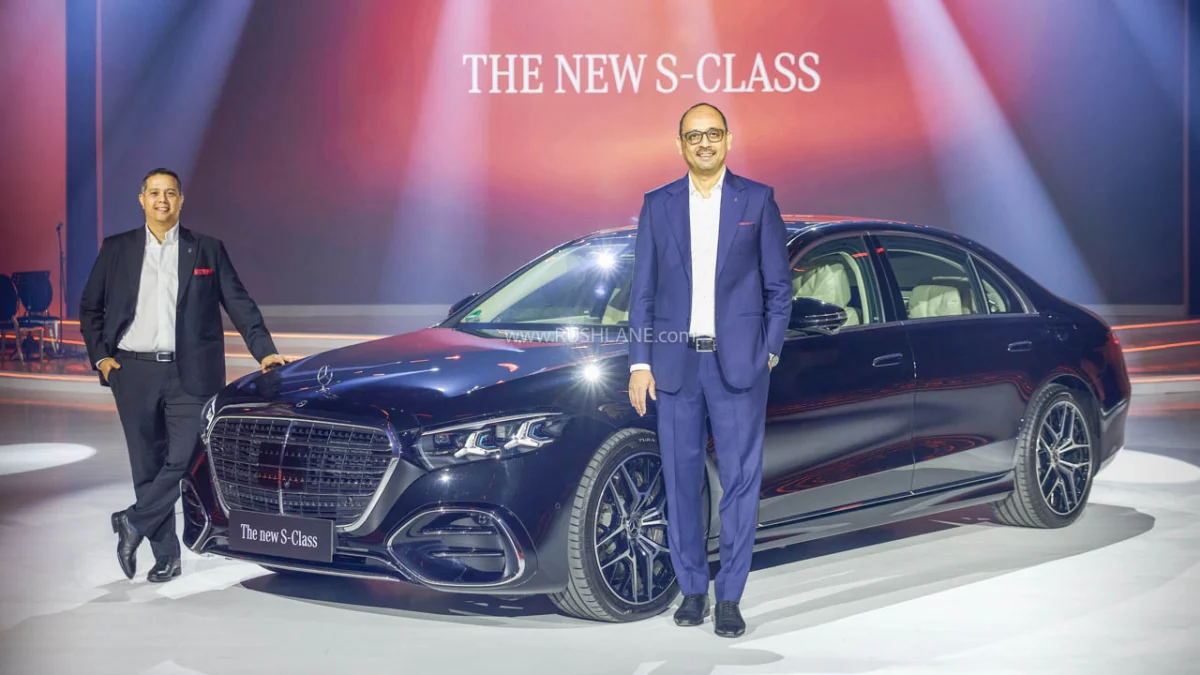
The Indian luxury automobile landscape, long dominated by the three-pointed star of Mercedes-Benz, is currently witnessing its most significant upheaval in over a decade. Since 2015, Mercedes-Benz India has held the undisputed title of the country’s leading luxury car manufacturer. However, as the industry enters the final quarter of 2026, the narrative is shifting from a one-sided reign to a high-stakes duel.
Recent data and executive commentary suggest that the goalposts for "success" in the luxury segment are being moved. While BMW India has made unprecedented strides in narrowing the sales gap—and even overtaking Mercedes-Benz in retail registrations during the first half of 2026—Mercedes-Benz is doubling down on a philosophy that prioritizes revenue, brand equity, and residual value over raw volume leadership.
The Current Landscape: A Statistical Dead Heat
For the first time in eleven years, the title of "India’s No. 1 Luxury Brand" is a matter of perspective rather than a consensus of data. According to VAHAN retail registration data for H1 2026, BMW has successfully moved ahead of Mercedes-Benz in terms of cars actually delivered to customers.
While company-reported wholesale figures (cars sent to dealers) often tell a slightly different story, the narrowing margin is undeniable. In 2015, when Mercedes-Benz first ascended to the top spot by overtaking Audi, they enjoyed a massive cushion. That year, Mercedes sold 13,502 units compared to BMW’s 6,550—a lead of nearly 7,000 vehicles. Fast forward to the full-year results of 2025, and that lead had evaporated to just 1,736 units, with Mercedes posting 19,007 sales against BMW’s 17,271.
This trend has set the stage for a confrontational 2026, where every registration counts. However, Mercedes-Benz India’s leadership appears unfazed by the encroaching competition, suggesting that the "Volume No. 1" crown may be a "mirage" that doesn’t reflect the true health of a luxury business.
Official Response: Santosh Iyer on the "Volume Mirage"
In a recent, pointed interview with ET Auto, Santosh Iyer, the Managing Director and CEO of Mercedes-Benz India, challenged the very foundation of industry rankings. His remarks signal a departure from the traditional "sales at all costs" mentality that often plagues the automotive sector.
“Who is asking us to be volume No. 1?” Iyer questioned, suggesting that the obsession with rankings is largely a media-driven narrative. “Who is asking, except the press, who tries to come up with stories on No. 1, No. 2, No. 3?”
Iyer’s argument is rooted in the structural reality of the company. Mercedes-Benz India is not a publicly listed entity in India, which frees the local leadership from the quarterly pressure of satisfying retail investors with volume growth. Instead, Iyer emphasizes that the company’s primary duty is to its customers and the long-term health of the brand.

According to Iyer, volume leadership should be the outcome of a successful strategy, not the objective itself. He noted that in Mercedes’ 32-year history in India, the brand has occupied various positions, including being No. 3 at one point before climbing back to the top. This historical perspective allows the brand to view the current BMW surge as part of a natural market cycle rather than a crisis.
Chronology of a Closing Gap: 2015–2026
To understand the gravity of the current situation, one must look at the decade-long trajectory of the Mercedes-BMW rivalry in India:
- 2015 (The Takeover): Mercedes-Benz clocks 13,502 units, ending Audi’s reign. BMW trails significantly at 6,550 units.
- 2016–2018 (The Dominance): Mercedes maintains a lead of over 5,000 units annually. The brand expands its "Made in India" portfolio and dominates the E-Class and S-Class segments.
- 2019 (Signs of Tightening): The gap narrows slightly to 4,786 units as the Indian economy faces a slowdown, but Mercedes remains comfortably ahead.
- 2020–2022 (The Pandemic & Recovery): Despite supply chain disruptions, Mercedes maintains a lead of approximately 4,500 units. In 2022, Mercedes sells 15,822 units against BMW’s 11,268.
- 2024 (The Final Buffer): Mercedes reports sales of 18,123 units. BMW posts its best year yet with 13,570 units. The gap remains stable at 4,553 units.
- 2025 (The Pivot): The market shifts. Mercedes sales experience a marginal decline to 19,007 units, while BMW surges to 17,271 units. The gap shrinks to its lowest ever: 1,736 units.
- H1 2026 (The Flip): VAHAN data shows BMW overtaking Mercedes in retail registrations, marking a symbolic shift in market momentum.
Supporting Data: The Revenue vs. Volume Divide
While the volume gap has shrunk, Santosh Iyer asserts that the revenue gap remains a "chasm." This is driven by Mercedes-Benz’s aggressive focus on the Top-End Vehicle (TEV) segment.
The TEV segment includes models like the S-Class, the GLS SUV, the G-Wagon, and the ultra-exclusive Maybach range. These vehicles often carry price tags two to five times higher than entry-level luxury models like the BMW X1 or the Mercedes A-Class.
“On the revenue side, there is no comparison at all. We are far ahead,” Iyer stated. This claim is backed by the brand’s sales mix; nearly 25-30% of Mercedes-Benz India’s total sales now come from the TEV segment. By selling one Maybach S-Class, the company generates the same revenue as selling several entry-level sedans. This strategy allows Mercedes to maintain high profitability and reinvest in customer experience even if their total unit count is challenged.
Furthermore, Mercedes-Benz’s "Retail of the Future" (ROF) model, launched in late 2021, has changed the way data is reported. Under ROF, Mercedes-Benz India owns the stock and sells directly to customers, with dealers acting as facilitators. This model prioritizes "standardized pricing," meaning every customer across India pays the same price for a specific model, eliminating the haggling and deep discounting that often inflate volume numbers at the end of a fiscal year.
The BMW Offensive: Product and Portfolio
BMW’s rise to prominence in 2025 and 2026 is not accidental. The Bavarian automaker has executed a relentless product offensive, specifically targeting the gaps in the Indian market.
- The LWB Strategy: Recognizing the Indian luxury buyer’s preference for rear-seat comfort, BMW introduced the 3 Series Gran Limousine and, more recently, the X1 Long Wheelbase and the locally produced i5 Long Wheelbase.
- Electric Momentum: BMW has taken an early lead in the luxury EV space in India. Models like the iX, i4, and the flagship i7 have resonated with tech-forward buyers. The i7, in particular, has challenged the S-Class’s dominance in the chauffeur-driven flagship segment.
- The "Power of Choice": Unlike some competitors who have moved away from diesel or been slow to adopt EVs, BMW offers a comprehensive mix of Petrol, Diesel, and Electric powertrains across almost its entire portfolio.
As BMW enters the final months of 2026, its expanded portfolio of SUVs and high-end EVs provides significant momentum to potentially finish the year as the volume leader for the first time in over a decade.

Implications: The End of the Discount Era?
The most significant implication of Mercedes-Benz’s current stance is the potential end of discount-led growth in the Indian luxury market. Santosh Iyer was vocal about the "toxic" nature of aggressive discounting.
“Today, it’s very easy to sell. If you start discounting, you can sell more,” Iyer remarked. However, he raised a critical ethical and business question: what happens to the customer who bought the car at full price three months ago?
Aggressive discounting destroys residual value—the price a car fetches in the used market. If a new car is discounted by ₹10 lakhs, the resale value of existing cars in that model line drops instantly. By maintaining pricing discipline, Mercedes-Benz aims to protect the investment of its current owners, ensuring that a Mercedes remains a "store of value."
For the Indian consumer, this means the choice between the two brands is becoming clearer:
- BMW is currently the aggressor, offering a wider variety of fresh, tech-heavy products and a "Power of Choice" philosophy that appeals to a younger, driver-centric demographic.
- Mercedes-Benz is positioning itself as the "Haute Couture" of the automotive world, focusing on brand exclusivity, standardized luxury experiences, and protecting the long-term wealth of its patrons.
Conclusion: A New Metric for Success
As 2026 draws to a close, the battle between Mercedes-Benz and BMW will likely culminate in a photo finish. If BMW maintains its retail momentum, it may very well claim the title of India’s No. 1 luxury brand by volume.
However, if Santosh Iyer’s philosophy holds true, Mercedes-Benz will not view this as a defeat. By shifting the focus to revenue, TEV dominance, and residual value protection, Mercedes is attempting to decouple "Luxury" from "Mass Market" metrics. In the high-stakes world of premium automobiles, being the "biggest" is becoming secondary to being the "most valuable." Whether the Indian market—and the press—will accept this new definition of leadership remains to be seen.
