

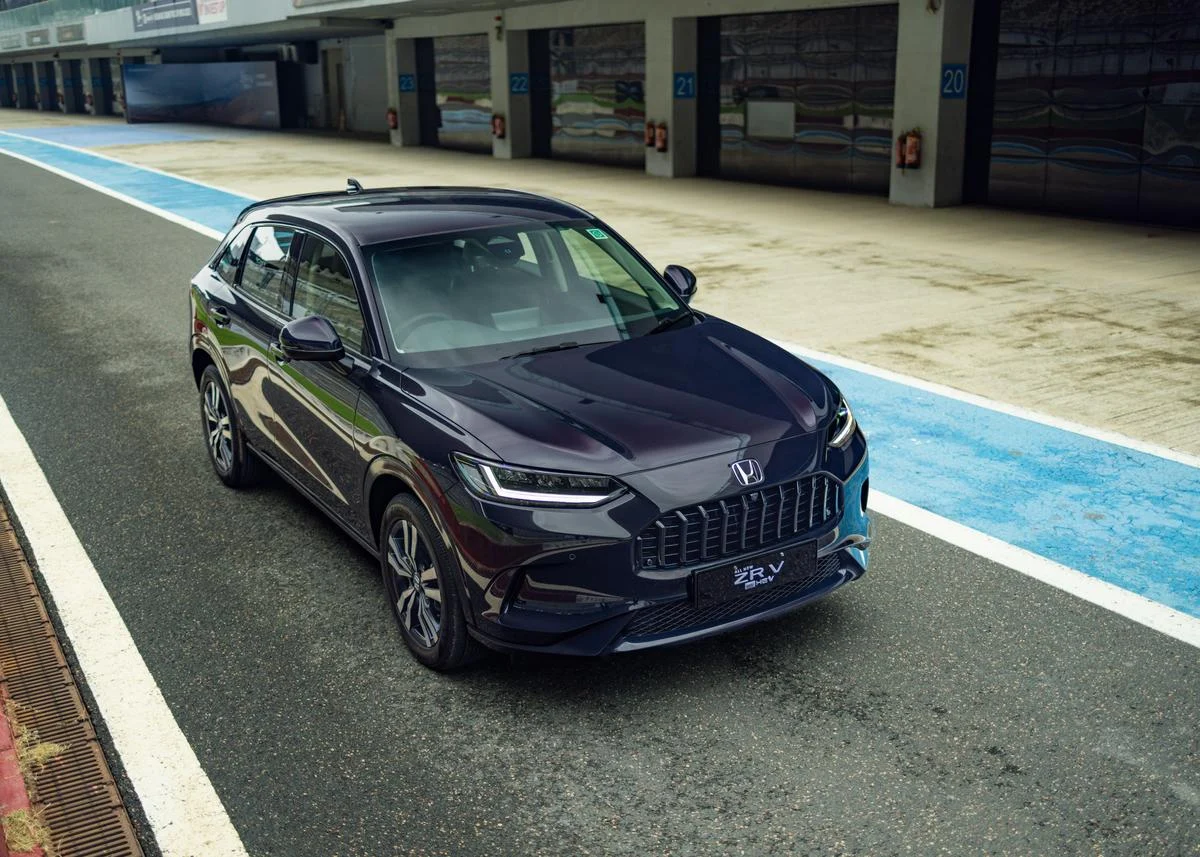
The Indian automotive landscape is currently embroiled in a "battle of excess." In the premium SUV segment, success is often measured by the diagonal inches of a touchscreen, the sheer acreage of a panoramic sunroof, or the aggressiveness of a chrome-laden grille. However, Honda Cars India has signaled a departure from this trend-chasing trajectory with the introduction of the ZR-V.
Priced at ₹47.99 lakh (ex-showroom), the ZR-V arrives as a Completely Built Unit (CBU), positioning itself not as a feature-rich bargain, but as a masterclass in mechanical integrity and ergonomic maturity. In a market where buyers are conditioned to "tick every box," Honda is betting on a different demographic: the discerning owner who values how a car is engineered over how many gadgets it carries.
Main Facts: The Engineering Philosophy of the ZR-V
The Honda ZR-V enters a crowded arena where it faces off against established heavyweights and feature-packed newcomers. At its core, the ZR-V is a five-seater SUV that prioritizes the "human-centric" design philosophy that once defined Honda’s global dominance. Unlike many of its contemporaries that feel like software packages wrapped in sheet metal, the ZR-V feels like a cohesive mechanical entity.
A Focus on Tactile Quality
The immediate impression upon entering the ZR-V is one of "reassuring solidity." In an era of capacitive touch sliders and creaky plastics, Honda has retained physical switchgear that operates with a weighted, precise "click." The cabin materials have been selected for longevity and tactile appeal rather than immediate visual flash. The soft-touch plastics, high-quality leatherette, and the implementation of a metal honeycomb mesh across the dashboard (reminiscent of the latest Civic) speak to a premium European-style execution.

Thoughtful Innovation
Honda’s engineering team has focused on "micro-innovations"—features that don’t necessarily make it into a marketing brochure but significantly improve the daily ownership experience.
- Integrated Wiper Jets: By moving the washer nozzles from the bonnet to the wiper arms, Honda ensures a clearer view with less fluid waste and no "blind moment" during the spray cycle.
- The Patient Tailgate: Most powered tailgates begin closing the moment a button is pressed, often forcing the user to scramble away. The ZR-V’s system incorporates a brief, intentional pause, allowing the user to step back comfortably.
- Visibility and Ergonomics: The A-pillars are remarkably slim, and the side mirrors are mounted on the doors rather than the pillars, significantly reducing blind spots—a critical factor for Indian city driving.
Chronology: From Concept to the Buddh International Circuit
The journey of the ZR-V to Indian shores represents a strategic pivot for Honda. Historically, Honda has been cautious with its premium portfolio in India, focusing largely on the City and Amaze sedans. The decision to bring the ZR-V as a CBU indicates a desire to test the waters for high-end hybrid technology before committing to local assembly.
The Testing Phase
To demonstrate that the ZR-V is more than just a sensible commuter, Honda recently invited members of the automotive press to the Buddh International Circuit (BIC) in Greater Noida. While a Formula 1 track is an unconventional setting for a family hybrid SUV, it served as a crucible to test the vehicle’s chassis dynamics and high-speed composure.
The BIC Performance Review
During high-speed runs on the back straight of the BIC, the ZR-V reached an indicated 150 km/h with a level of stability usually reserved for German luxury crossovers. There was a notable absence of the "floaty" sensation that plagues many high-riding SUVs at triple-digit speeds.

The chronology of the test drive moved from high-speed stability to a technical slalom course. Threading the SUV through cones at 80 km/h revealed a chassis that is remarkably balanced. The steering, though light for urban maneuvers, weighted up progressively, allowing for confident direction changes. This suggests that while the ZR-V is designed for comfort, its DNA remains rooted in Honda’s history of building driver-centric vehicles.
Supporting Data: Technical Specifications and Efficiency
The heart of the ZR-V is the latest generation e:HEV strong hybrid system. This isn’t a "mild hybrid" designed for tax breaks; it is a sophisticated dual-motor system that dictates the car’s entire character.
The Powertrain Breakdown
- Engine: 2.0-litre, four-cylinder, Atkinson-cycle petrol engine.
- Electric Motors: Two-motor system (one for propulsion, one for generation).
- Combined Output: 181 bhp and 315 Nm of torque.
- Transmission: e-CVT (Electronic Continuously Variable Transmission).
- Performance: 0–100 km/h in a claimed 7.9 seconds.
The e:HEV Operating Modes
Unlike traditional hybrids, Honda’s system operates primarily as an electric vehicle in urban settings.
- EV Drive Mode: The electric motor powers the wheels directly using battery energy.
- Hybrid Drive Mode: The petrol engine runs to power the generator motor, which in turn provides electricity to the propulsion motor.
- Engine Drive Mode: At high cruising speeds, a lock-up clutch connects the petrol engine directly to the front wheels, as internal combustion is most efficient at sustained high RPMs.
Efficiency and Economics
In a country where "Kitna deti hai?" (What is the mileage?) remains a primary concern, the ZR-V delivers impressive figures.

- Claimed Efficiency: 22+ kmpl (ARAI/Test conditions).
- Real-World Expectation: 17–19 kmpl in mixed Indian driving conditions.
For a vehicle of this size and weight, these figures outperform many diesel-powered rivals while offering the refinement and environmental benefits of a petrol-hybrid setup.
Official Responses and Market Positioning
Honda’s positioning of the ZR-V at nearly ₹48 lakh has raised eyebrows, particularly when compared to locally manufactured rivals like the Hyundai Tucson, Jeep Compass, or the top-end versions of the Mahindra XUV700.
The CBU Factor
Honda officials have quietly acknowledged that the price reflects the high import duties associated with CBU units in India. However, they maintain that the "quality of the build" from their global manufacturing hubs justifies the premium. The ZR-V is not intended to be a volume seller; it is a "halo product" designed to showcase Honda’s engineering prowess.
Addressing the Feature Gap
When questioned about the lack of certain "segment-standard" features—such as ventilated seats, a panoramic sunroof, or a larger infotainment screen—the brand’s stance remains focused on the "essential." Honda argues that while a 9-inch screen may seem small compared to a 14-inch rival, its responsiveness and intuitive interface provide a better user experience. Similarly, the omission of a panoramic sunroof is often defended by engineers as a way to maintain structural rigidity and improve air conditioning efficiency in hot climates.
Safety Credentials
Safety remains a non-negotiable pillar for the ZR-V. The vehicle comes equipped with:

- 8 Airbags as standard.
- Honda Sensing (ADAS): Including Collision Mitigation Braking, Lane Keep Assist, and Adaptive Cruise Control.
- Euro NCAP Rating: A solid 4-star rating, providing peace of mind for family-oriented buyers.
Implications: The Long-Term Ownership Perspective
The introduction of the ZR-V has significant implications for the Indian premium SUV market and for Honda’s future in the subcontinent.
Substance Over Hype
The ZR-V represents a "litmus test" for the Indian consumer. It asks whether a buyer is willing to pay more for a car that is "better made" rather than "better equipped." If the ZR-V finds a dedicated niche, it could encourage other manufacturers to focus more on mechanical refinement and less on digital gimmicks.
The Hybrid vs. EV Debate
As India grapples with the transition to electric mobility, the ZR-V makes a strong case for the hybrid as the "perfect bridge." It offers the silent, torque-rich experience of an EV in traffic without the range anxiety associated with a still-developing charging infrastructure. For buyers who do frequent long-distance interstate trips, the ZR-V’s ability to return high efficiency at highway speeds is a significant advantage over pure EVs.
Reliability and Resale
Historically, Honda vehicles in India have commanded high resale values due to their mechanical reliability. The ZR-V, despite the complexity of its hybrid system, is built on a global platform with a proven track record. For the buyer who intends to keep their vehicle for 8 to 10 years, the "solid engineering" of the ZR-V is likely to pay dividends in lower maintenance costs and higher retained value compared to feature-heavy rivals that may suffer from electronic obsolescence.

Conclusion: A Niche Masterpiece
The Honda ZR-V is a car of contradictions. It is expensive yet feels like good value; it is technologically advanced yet looks understated; it is a family SUV that handles like a sedan. It is not a car for everyone. It is a car for the buyer who has grown tired of the "battle of excess" and seeks a return to the fundamentals of what makes a car truly good to drive.
At ₹47.99 lakh, the ZR-V isn’t just selling a mode of transport; it is selling a philosophy of engineering restraint. In the long run, that might be the most "premium" feature of all.
