

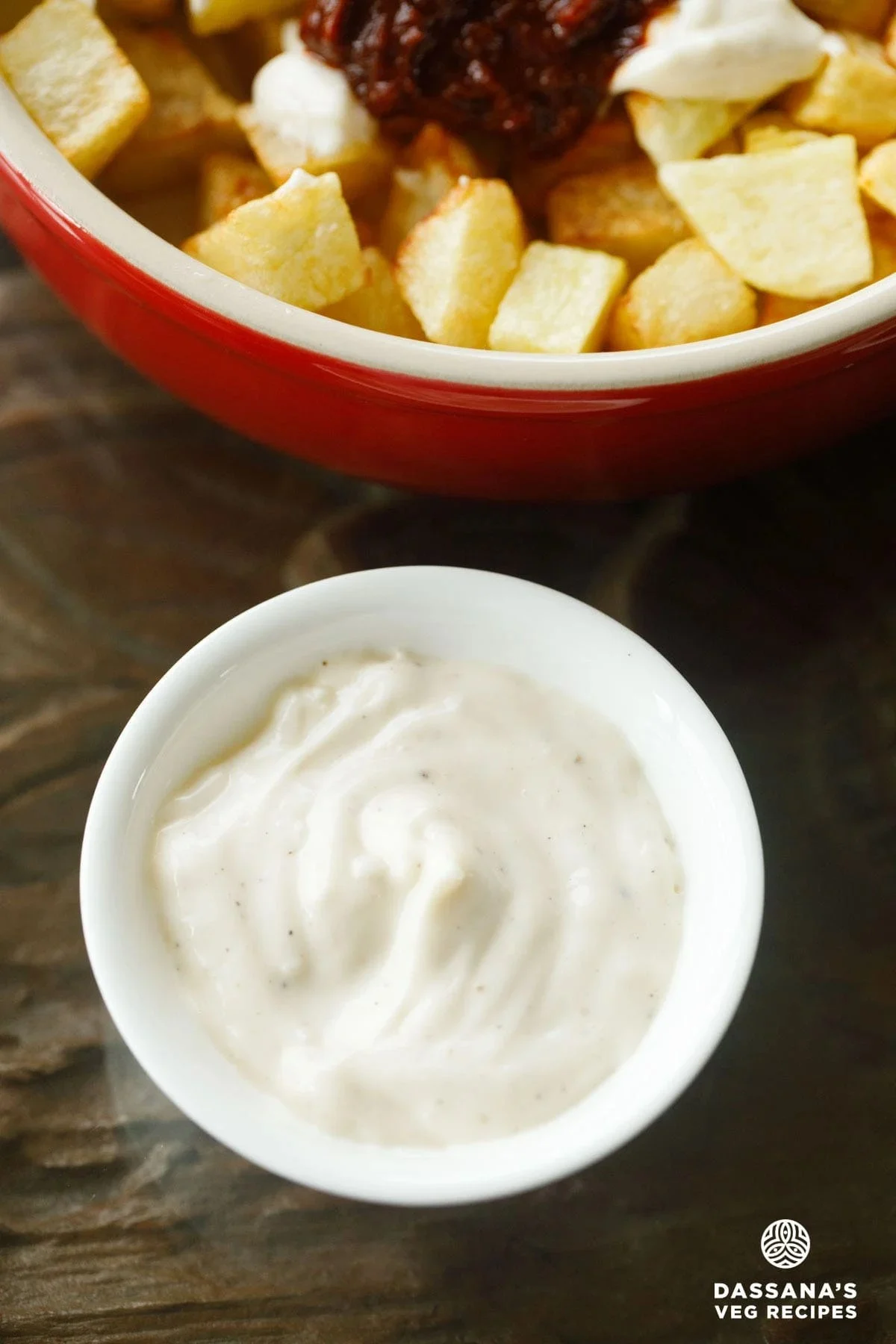
In the contemporary culinary landscape, the boundary between professional gourmet preparation and efficient home cooking continues to blur. At the center of this intersection lies the resurgence of classic Mediterranean condiments, specifically the garlic aioli. Once a labor-intensive emulsion reserved for seasoned chefs, the modern "shortcut" aioli—leveraging high-quality mayonnaise bases—has democratized access to sophisticated flavor profiles.
Renowned vegetarian chef and Le Cordon Bleu-trained pastry expert Dassana Amit has recently brought this culinary evolution to the forefront with a streamlined approach to Garlic Aioli. By stripping the recipe down to four essential components—mayonnaise, fresh garlic, lemon juice, and black pepper—Amit highlights a broader trend in global gastronomy: the prioritization of flavor balance and ingredient integrity over traditionalist complexity.
Main Facts: Redefining the Four-Ingredient Emulsion
The modern garlic aioli, as championed by Amit, departs from the ancient Mediterranean "all-i-oli" (literally "garlic and oil"). While traditional versions rely on the painstaking process of emulsifying garlic cloves with olive oil using a mortar and pestle, the contemporary iteration utilizes a mayonnaise base to achieve a similar creamy viscosity with significantly less margin for error.

The primary components of this refined recipe include:
- The Base: A half-cup of high-quality mayonnaise (homemade or premium store-bought).
- The Aromatics: Finely minced fresh garlic, which provides the signature pungent "bite."
- The Acid: Freshly squeezed lemon juice, essential for cutting through the lipid density of the mayonnaise.
- The Seasoning: Freshly cracked black pepper, adding a subtle heat and floral note.
Crucially, this version omits the addition of extra virgin olive oil. According to Amit, the inherent richness of the mayonnaise provides sufficient texture, making additional oils redundant and potentially greasy. This "less is more" philosophy reflects a shift toward cleaner, more focused flavor profiles in home-made condiments.
Chronology: From Ancient Mortars to Digital Kitchens
To understand the significance of the modern aioli, one must trace its historical trajectory from a regional necessity to a global staple.

The Mediterranean Roots (1st Century – 18th Century)
The origins of aioli are deeply contested between Spain (specifically Catalonia) and France (Provence). Early Roman texts suggest a mixture of garlic and oil was common throughout the empire. For centuries, this was a peasant sauce—a way to add caloric density and intense flavor to simple vegetables and salted fish. It required immense physical labor, as the garlic had to be pounded into a paste before oil was added drop by drop.
The Emulsion Revolution (19th Century – 20th Century)
As French culinary techniques became standardized, the introduction of egg yolks as an emulsifier transformed aioli into a cousin of mayonnaise. This made the sauce more stable and allowed for a fluffier, more luxurious mouthfeel. However, it remained a technique-heavy preparation that could easily "break" if the temperature or agitation speed was incorrect.
The Convenience Era (Late 20th Century)
With the rise of commercial mayonnaise in the mid-1900s, home cooks began experimenting with "cheater" aiolis. By the 1990s, as Mediterranean diets gained popularity in North America and Northern Europe, garlic-flavored mayo became a ubiquitous "gourmet" spread in cafes and bistros.

The Digital Refinement (2009 – Present)
The current era, defined by food influencers and trained chefs like Dassana Amit, focuses on reclaiming the quality of these shortcuts. Since 2009, Amit has documented the transition from complex procedures to "tested recipes" that prioritize the chemistry of flavor—such as the 15-minute resting period required for garlic infusion—over traditionalist labor.
Supporting Data: The Science and Nutrition of the Spread
The efficacy of a four-ingredient aioli is not merely a matter of convenience; it is grounded in culinary science.
The Infusion Principle
A critical step in Amit’s methodology is the 10 to 15-minute resting period. Chemically, this allows for the process of diffusion. When garlic is minced, it releases allicin, the compound responsible for its characteristic aroma and heat. Allowing the mixture to sit enables the lemon juice (acid) to slightly mellow the raw garlic’s harshness while the fats in the mayonnaise absorb the essential oils, creating a "rounded" flavor rather than a series of disjointed tastes.

Nutritional Profile
From a dietary perspective, the garlic aioli is a high-density condiment. Based on a standard three-serving yield, the nutritional breakdown is as follows:
- Calories: 242 kcal
- Total Fat: 24g (Saturated Fat: 3g)
- Sodium: 213mg
- Carbohydrates: 3g
- Vitamin C: 1mg (derived from fresh lemon juice)
While high in fats, the recipe is remarkably low in sugars (0.05g) and carbohydrates, making it a favorite among those following ketogenic or low-carb dietary patterns. The presence of fresh garlic also introduces trace amounts of Vitamin B6 and Manganese, though in the quantities consumed as a dip, these are secondary to the sauce’s sensory role.
Official Responses: Expert Insights on Quality Control
Chef Dassana Amit, whose credentials include a Plant-Based Patisserie course at Le Cordon Bleu, emphasizes that the simplicity of the recipe demands higher standards for its components. In her professional assessment, two factors are non-negotiable:

1. The Freshness of the Acid:
Amit explicitly warns against the use of bottled lemon juice. "Avoid bottled lemon juice," she notes, citing the enzymatic breakdown that occurs in processed juices which can lead to a metallic or overly bitter aftertaste. Fresh lemon juice provides the necessary bright, top-note acidity that activates the palate.
2. The Preparation of the Garlic:
The texture of the garlic is paramount. For a sauce intended as a dip for delicate items like Patatas Bravas or French fries, the garlic must be "finely minced." Large chunks of raw garlic can overwhelm the palate and create an unpleasant texture, whereas a fine mince allows the garlic to suspend evenly within the emulsion.
3. The Salt Equilibrium:
Professional chefs often caution against over-salting mayonnaise-based sauces. Since commercial mayonnaise is already seasoned with salt and often sugar, Amit suggests that additional salt is usually unnecessary, though it remains an optional adjustment for the home cook.

Implications: The Democratization of Gourmet Dining
The move toward high-quality, simplified condiments like this garlic aioli has significant implications for both the food industry and home kitchen dynamics.
Reduction of Ultra-Processed Foods
By providing a blueprint for a 5-minute homemade aioli, chefs like Amit encourage consumers to move away from shelf-stable, preservative-laden "garlic mayo" products found in supermarkets. Homemade versions eliminate the need for sequestrants (like Calcium Disodium EDTA) and artificial flavorings, aligning with the global "clean label" movement.
The "Elevated Casual" Dining Trend
The versatility of garlic aioli—pairing equally well with high-end roasted vegetables and "street food" like Peri Peri fries—reflects the "elevated casual" trend in the restaurant industry. As consumers become more adept at creating these sauces at home, restaurants are forced to innovate further, often by adding secondary infusions such as truffle, smoked paprika, or saffron to their own aioli bases.

Culinary Education and Accessibility
The success of such recipes demonstrates that culinary expertise is no longer gatekept by complex techniques. Amit’s approach, which requires "no cooking or special equipment," empowers novice cooks to experiment with flavor layering. This democratization of cooking skills fosters a more food-literate population, capable of distinguishing between the flat profile of a pre-made sauce and the vibrant, "infused" profile of a fresh preparation.
Conclusion
The garlic aioli, in its modern iteration, is more than just a condiment; it is a testament to the evolution of the global palate. By combining the rigorous standards of classical training with the practicalities of modern life, culinary experts like Dassana Amit have transformed a Mediterranean relic into a versatile, accessible, and scientifically sound staple of the contemporary kitchen. As home cooks continue to seek out "quick-win" recipes that do not sacrifice quality, the four-ingredient aioli stands as a benchmark for the future of domestic gastronomy.
