

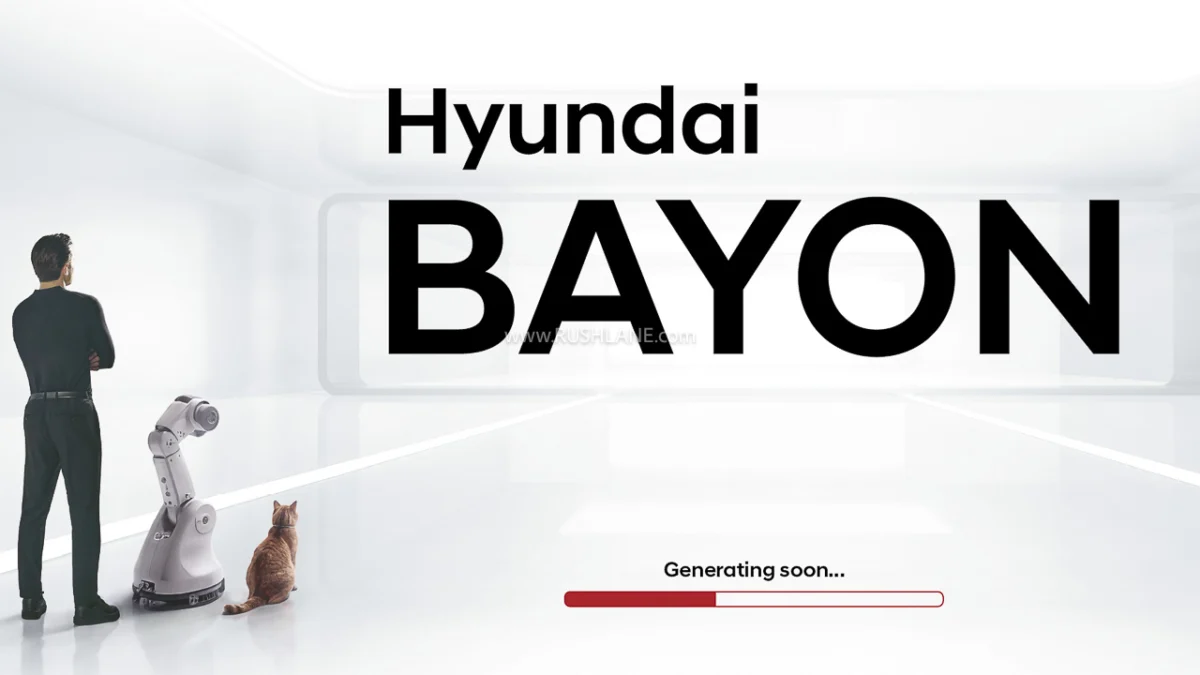
New Delhi, India – In a move that signals a significant expansion of its already dominant SUV portfolio, Hyundai Motor India Limited (HMIL) has officially christened its upcoming mid-size offering as the Hyundai Bayon. The announcement follows months of intense speculation, industry whispers, and a meticulously executed "Easter egg" marketing campaign that utilized camouflage as a storytelling medium.
Positioned to bridge the crucial gap between the sub-four-meter Venue and the segment-leading Creta, the Bayon represents Hyundai’s latest attempt to capture the "mid-compact" audience—a demographic seeking premium dimensions and advanced technology without the footprint of a traditional mid-size SUV.
1. Main Facts: The Reveal of a Global Nameplate for India
The Hyundai Bayon is not a new name in the global automotive lexicon, but its entry into the Indian market marks a pivotal shift in Hyundai’s localized strategy. While the European-spec Bayon is largely seen as a crossover based on the i20 platform, the Indian iteration appears to be a distinct beast, tailored to the specific aesthetic and functional demands of the domestic consumer.
Key Highlights of the Announcement:
- Official Branding: The "Bayon" name is confirmed, succeeding internal codenames and temporary labels used during the testing phase.
- Marketing Synergy: The name reveal is the climax of the "Intelligence ON" campaign, which used cryptic camouflage on test mules to engage the automotive community.
- Design Philosophy: The vehicle promises an "upright stance" and "SUV-centric proportions," deviating from the more "hatch-like" silhouette seen in international markets.
- Segment Positioning: It will sit above the Venue and below the Creta, likely competing with the higher variants of sub-compact SUVs and the entry-level variants of mid-size SUVs.
2. Chronology: From "Bring It On" to "Intelligence ON"
The journey to the Bayon’s official naming has been a masterclass in modern automotive marketing. Hyundai chose to turn the mundane process of road testing into a public engagement exercise.
Early September 2024: The "Wordplay" Camouflage
Earlier this month, automotive enthusiasts and "spy-shot" photographers captured a mysterious Hyundai test mule on Indian highways. Unlike the standard black-and-white swirl patterns usually seen on prototypes, this vehicle wore a white wrap adorned with bold text. The primary slogan was "BRING IT ON," but closer inspection revealed a cloud of secondary words: Innovation, Transformation, Conversation, Reflection, Expression, and Evolution.

Industry analysts quickly noted that the suffix "ON" was highlighted in a contrasting red hue in every single word. This led to immediate speculation that the vehicle’s name would end in "ON," with "Bayon" being the frontrunner among trademark enthusiasts.
Mid-September 2024: The Official Teaser
Following the viral success of the spy shots, Hyundai released a teaser image confirming the "Bayon" nomenclature. The teaser emphasized a sharp, LED-heavy lighting signature, consistent with the brand’s "Sensuous Sportiness" design language.
Late September 2024: The Identity Reveal
Hyundai Motor India officially tied the "ON" campaign to the Bayon, launching the tagline "Intelligence ON." This branding suggests that the vehicle will focus heavily on software-driven features, connectivity, and perhaps a segment-first suite of AI-integrated driving aids.
3. Supporting Data: Design Analysis and Technical Expectations
While Hyundai has been tight-lipped about the specific technical specifications, the data gathered from multiple sightings of test mules provides a comprehensive picture of what the Indian consumer can expect.
Exterior Dimensions and Styling
Unlike the European Bayon, which measures approximately 4,180mm in length, the India-spec model is expected to maximize its footprint to offer better cabin room.

- Front Fascia: Spy shots reveal a split-headlamp setup. High-mounted LED Daytime Running Lamps (DRLs) sit flush with the hood line, while the main LED projector units are housed lower in the bumper, flanking a wide, parametric grille.
- Side Profile: The vehicle features squared-off wheel arches and thick body cladding, providing the ruggedness Indian buyers associate with SUVs. The roofline remains relatively flat compared to the sloping rear of the i20, ensuring better headroom for rear passengers.
- Rear Design: A horizontal LED light bar connects the taillamps, a design trend popularized by the new Verna and Creta. An integrated roof spoiler and a prominent faux skid plate complete the rear look.
The "Digital First" Cabin
Interior sightings suggest that the Bayon will inherit the "twin-screen" layout seen in the updated Creta and Alcazar. This includes:
- Infotainment: A 10.25-inch touchscreen with wireless Apple CarPlay and Android Auto.
- Instrument Cluster: A fully digital 10.25-inch display with customizable themes.
- New Controls: The inclusion of a four-dot steering wheel—which is Morse code for the letter "H"—indicates that this model is part of Hyundai’s next-generation interior design cycle.
Predicted Powertrains
To remain competitive, Hyundai is expected to offer a versatile engine lineup:
- 1.5L Naturally Aspirated Petrol: Producing roughly 115 PS and 144 Nm of torque, likely paired with a 6-speed manual or an IVT (CVT) gearbox.
- 1.0L Turbo Petrol: For those seeking performance, the 120 PS three-cylinder turbo engine remains a strong possibility.
- CNG Integration: Given the rising demand for factory-fitted CNG kits in the SUV space, Hyundai is expected to offer a "Hy-CNG" variant from launch or shortly thereafter.
4. Official Responses: A New Mindset for Mobility
The leadership at Hyundai Motor India has framed the Bayon not just as a product, but as a shift in brand philosophy.
Tarun Garg, Managing Director and CEO of Hyundai Motor India, provided insight into the naming choice and the vehicle’s purpose. "The name Bayon draws inspiration from Bayonne, a city in the French Basque Country, known for its vibrant culture and dynamic spirit. This reflects the character of our new SUV—it is designed for those who are constantly moving, evolving, and seeking intelligent solutions."
Garg further emphasized the "Intelligence" aspect of the vehicle: "With Hyundai BAYON, we are introducing more than a new SUV. It represents a new mindset. It is about intuitive technology that makes life easier for our customers. We are confident that BAYON will set new benchmarks in the mid-size SUV segment."

The company has confirmed that a full technical briefing and a formal media unveiling are scheduled for the coming weeks, with a market launch expected in the fourth quarter of 2024.
5. Strategic Implications: Filling the "Golden Gap"
The introduction of the Bayon is a calculated move to address a specific "white space" in the Indian automotive market.
Portfolio Optimization
Currently, there is a significant price and size jump between the Venue (approx. ₹7.9 lakh – ₹13.5 lakh) and the Creta (approx. ₹11 lakh – ₹20 lakh). Buyers who find the Venue’s rear seat space cramped but cannot stretch their budget to a mid-trim Creta often look toward competitors like the Maruti Suzuki Brezza or the Tata Nexon. The Bayon is designed to intercept these buyers by offering "Creta-level" tech and "Venue-plus" space at a mid-tier price point.
Competitive Landscape
The Bayon enters one of the most contested arenas in the world. Its primary rivals will include:
- Maruti Suzuki Brezza: The segment leader in terms of volume.
- Tata Nexon & Curvv: The pioneers of safety and "SUV-coupe" styling.
- Mahindra XUV 3XO: The current feature-king of the sub-compact segment.
- Kia Sonet: Its internal cousin, which offers a similar tech-heavy package.
Strengthening the "SUV-Only" Image
Hyundai’s strategy has shifted heavily toward SUVs, which now account for over 60% of its total sales in India. By adding the Bayon, Hyundai will have a lineup consisting of the Exter, Venue, Bayon, Creta, Alcazar, Tucson, and the electric IONIQ 5. This "ladder" of SUVs ensures that there is a Hyundai for every possible price bracket from ₹6 lakh to ₹50 lakh.

Future-Proofing with ADAS
One of the most significant implications of the "Intelligence ON" tagline is the likely democratization of Level 2 ADAS (Advanced Driver Assistance Systems). By bringing features like Forward Collision Warning, Lane Keep Assist, and Adaptive Cruise Control to the Bayon, Hyundai aims to make safety a primary differentiator in the ₹12–₹16 lakh price bracket.
Conclusion: A High-Stakes Launch
The Hyundai Bayon arrives at a time when the Indian automotive industry is experiencing a cooling of demand for small cars and an insatiable appetite for feature-rich crossovers. By leveraging a global nameplate but re-engineering it for local tastes, Hyundai is playing a sophisticated game of brand equity and localized utility.
As the "Intelligence ON" campaign transitions from teasers to showrooms, the Bayon will be the litmus test for whether Indian consumers are ready for a "mid-compact" SUV that prioritizes software and sophistication over raw size. If the success of the Creta is any indication, Hyundai’s new "ON" mindset may very well be the spark that ignites the brand’s next phase of growth in the subcontinent.
