

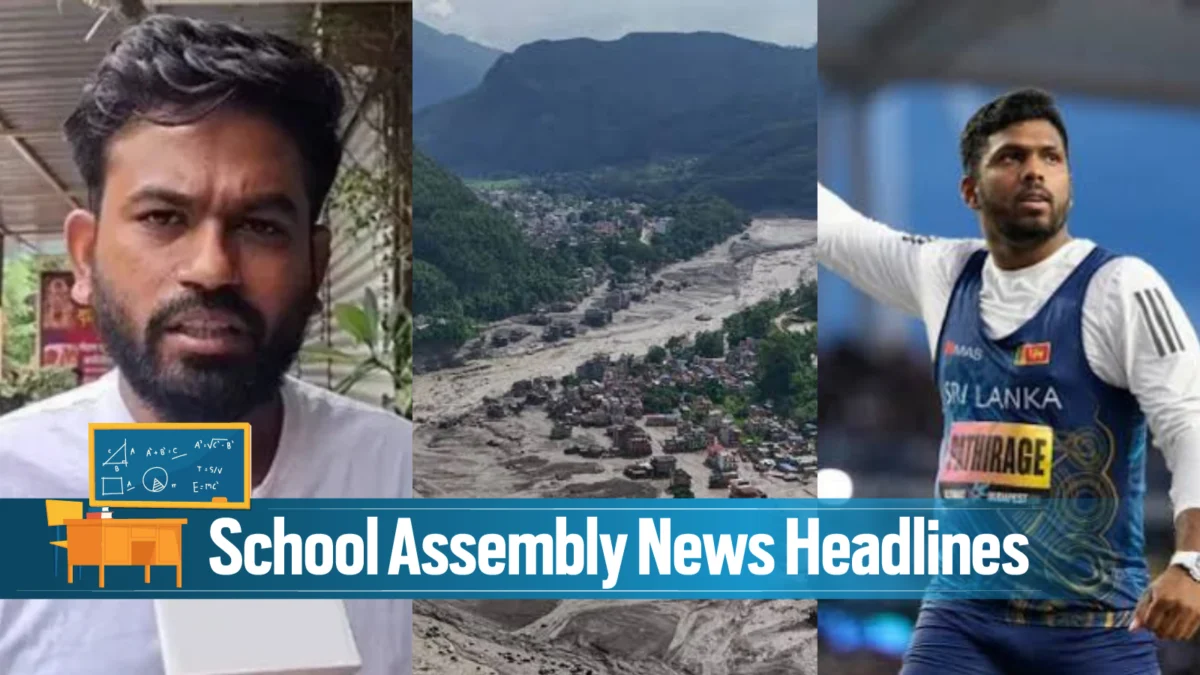
A coalition of political activism and international relations, punctuated by significant developments in sports and business, paints a complex picture of current events. From domestic protests demanding accountability to international aid amid natural disasters, the global landscape is marked by both contention and cooperation.
The political arena, both domestically and internationally, is currently a focal point of activity. In a move that signals a deepening engagement with grassroots movements, the Cockroach Janata Party (CJP) has publicly declared its intention to lend its support to the ongoing protest by MPSC (Maharashtra Public Service Commission) aspirants. This burgeoning alliance underscores the growing dissatisfaction among aspiring public servants regarding alleged irregularities within the MPSC examination process. The CJP’s involvement amplifies the pressure on the MPSC leadership, with the party issuing a stern ultimatum: the resignation of the MPSC chairman and secretary is demanded by September 24th. Failure to comply, the CJP warns, will trigger a comprehensive statewide campaign, indicating a significant escalation of their protest efforts. This bold stance by the CJP suggests a strategic move to leverage public sentiment and amplify the voices of the aggrieved aspirants, potentially leading to widespread political discourse and action.
Domestic Protests and Demands for Accountability
The MPSC aspirant protest, which has been gaining momentum, centers on allegations of systemic flaws and potential manipulation within the examination process. These examinations are critical gateways to numerous government positions, and any perceived unfairness can have far-reaching consequences for the careers of thousands. The aspirants have been vocal about their concerns, citing issues ranging from question paper discrepancies to alleged favoritism in the evaluation process.
The Cockroach Janata Party’s intervention injects a new dimension into the protest. Historically, the CJP has positioned itself as a champion of the common person, often aligning with movements that challenge established structures. Their decision to join the MPSC aspirants’ protest signifies a recognition of the gravity of the allegations and a commitment to ensuring fair and transparent recruitment processes. The party’s ultimatum, setting a clear deadline for the resignation of key MPSC officials, is a calculated move designed to force a swift resolution. The threat of a "statewide campaign" suggests a multi-pronged approach, potentially involving public rallies, awareness drives, and even legal challenges, aiming to exert maximum pressure on the authorities.
The specific demands for the resignation of the MPSC chairman and secretary highlight the protestors’ belief that the highest levels of the commission are responsible for the alleged irregularities. This demand is not merely symbolic; it reflects a desire for fundamental change in leadership and a commitment to restoring public trust in the MPSC. The September 24th deadline adds a sense of urgency, suggesting that any further delay or inaction could be met with intensified and potentially disruptive forms of protest.
India’s Power Diplomacy: Aiding Nepal in Crisis
In a demonstration of regional solidarity and proactive disaster response, India has approved the export of power to Nepal for a significant duration each day. This crucial assistance will extend for 18 hours daily until December 31st. The decision, as announced by India’s Ministry of Power, will see up to 654 MW of electricity supplied to Nepal. This move comes at a critical juncture for Nepal, which has been severely impacted by devastating floods that have crippled its hydropower infrastructure. The damage to these vital power generation facilities has plunged the nation into an energy crisis, making India’s timely intervention indispensable.
This act of cross-border assistance underscores the interconnectedness of regional economies and the importance of mutual support during times of crisis. Nepal, heavily reliant on its hydropower potential, has faced immense challenges in meeting its energy demands following the natural calamity. The sustained supply of electricity from India is not just a humanitarian gesture but also a pragmatic measure to prevent further economic disruption and ensure essential services remain operational in Nepal.
The quantum of power being supplied, up to 654 MW, is substantial and indicative of India’s commitment to alleviating Nepal’s energy deficit. The duration of the assistance, extending until the end of the year, suggests a long-term strategy to support Nepal’s recovery and stabilization efforts. This initiative also highlights India’s growing role as a regional energy provider, capable of extending vital support to its neighbors during times of need.
Global Geopolitical Currents: Strait of Hormuz and Yemen Conflict
The international stage is not without its own significant developments, marked by shifts in diplomatic engagements and ongoing regional conflicts. Oman has announced the cancellation of Iran-Gulf talks that were scheduled to discuss security in the Strait of Hormuz. The Omani foreign ministry stated that the decision was made "in the interest of regional consensus." Iran, in turn, has attributed the delay to requests from certain regional states, asserting that the postponement was a joint agreement between Tehran and Muscat. This development signals a pause in a crucial diplomatic dialogue aimed at de-escalating tensions in one of the world’s most vital maritime chokepoints.
The Strait of Hormuz is a critical transit route for a significant portion of the world’s oil supply, and any disruption to its security has profound implications for global energy markets and economic stability. The cancellation of these talks, even if temporary, raises questions about the current state of regional diplomacy and the challenges in achieving a unified approach to security concerns. The differing interpretations of the reasons behind the postponement, as presented by Oman and Iran, further underscore the complexities of the geopolitical landscape in the Persian Gulf.
Meanwhile, the conflict in Yemen continues to claim lives and destabilize the region. Yemeni forces have launched significant airstrikes in an effort to retake the strategically important port city of al-Makha (Mocha) from Houthi fighters. The control of al-Makha is crucial for both military and economic reasons, given its access to vital shipping lanes and its role in the country’s import and export activities. The ongoing battle for this key port city highlights the persistent nature of the conflict and the ongoing efforts by various factions to gain strategic advantage.
In response to escalating attacks, Saudi Arabia has reissued danger alerts for four of its southern cities. This precautionary measure underscores the heightened security concerns in the region, particularly in areas that are vulnerable to cross-border incursions and missile attacks. The renewed alerts serve as a stark reminder of the ongoing risks faced by civilian populations and the volatile security situation in and around Yemen. The interplay of these diplomatic pauses and ongoing conflicts paints a picture of a region grappling with intricate security challenges and evolving political alliances.
Sports Arena: Penalties and Triumphs
The world of sports has witnessed both setbacks and remarkable achievements. In a significant development for international cricket, Pakistan has been penalized 11 World Test Championship (WTC) points and fined 50% of its match fee for maintaining a slow over-rate during their recent encounter against England. This penalty has had a considerable impact on Pakistan’s standing in the WTC table, pushing them down to ninth position with a points percentage of just 4.63%. This outcome serves as a stark reminder of the stringent regulations governing international cricket and the consequences of failing to adhere to them, impacting a team’s competitive standing and financial resources.
On a more celebratory note, Sri Lankan javelin thrower Rumesh Pathirage has achieved a historic victory, clinching the title at the World Ultimate Championships. Pathirage delivered a phenomenal performance, recording an outstanding javelin throw of 91.09 meters. This remarkable feat saw him surpass strong contenders such as Anderson Peters (86.18m) and Julian Weber (85.89m), securing a prestigious title for his nation. Pathirage’s exceptional throw not only highlights his individual prowess but also brings significant prestige to Sri Lankan athletics on the global stage. His performance is a testament to dedication, rigorous training, and the pursuit of excellence in the demanding discipline of javelin throwing.
Business Briefs: Oil Prices Surge Amidst Gulf Tensions
The global business landscape is currently being shaped by escalating geopolitical tensions, particularly in the Persian Gulf, which has led to a significant surge in oil prices. Oil prices have increased by over 3%, a reaction directly linked to recent Houthi attacks on Saudi Arabia and the subsequent shutdown of a key Saudi pipeline. This disruption to supply has sent ripples through the energy market, with Brent crude soaring to $107.82 a barrel and West Texas Intermediate (WTI) reaching $103.22. The escalating tensions in the Gulf region have amplified concerns about the stability of global oil supplies, leading to a sharp upward trend in crude oil prices. This price hike has broader economic implications, potentially impacting inflation, transportation costs, and the profitability of businesses worldwide. The volatility in oil prices underscores the delicate balance between geopolitical stability and global energy security, with events in the Middle East having a profound and immediate impact on the world economy.
Educational Milestones: Deferrals and Inspiring Achievements
The realm of education is also marked by significant events, encompassing both administrative adjustments and inspiring personal achievements. The Savitribai Phule Pune University (SPPU) has announced the deferral of the Maharashtra State Eligibility Test (MH SET) 2026 for the third time. According to the revised schedule, the examination is now slated to be conducted on October 25, 2026. This repeated postponement raises questions about the planning and execution of this crucial examination, which is a prerequisite for aspiring university lecturers and junior researchers in Maharashtra. Students and educators alike will be keenly observing the university’s efforts to ensure a timely and efficient conduct of the examination in the future.
In a truly remarkable and inspiring story, Renu Hans, a 45-year-old speech- and hearing-impaired Kashmiri woman, has successfully cleared the JKBOSE Class 10 board examinations. Her achievement is a powerful testament to her resilience, determination, and unwavering spirit in overcoming significant personal challenges. In a society where age and disability can sometimes be perceived as insurmountable barriers, Renu Hans’ success serves as a beacon of hope and an inspiration to individuals from all walks of life. Her accomplishment highlights the importance of inclusive education systems and the potential that lies within every individual, regardless of their circumstances. This story resonates deeply, emphasizing that with perseverance and the right support, even the most daunting obstacles can be surmounted.
