

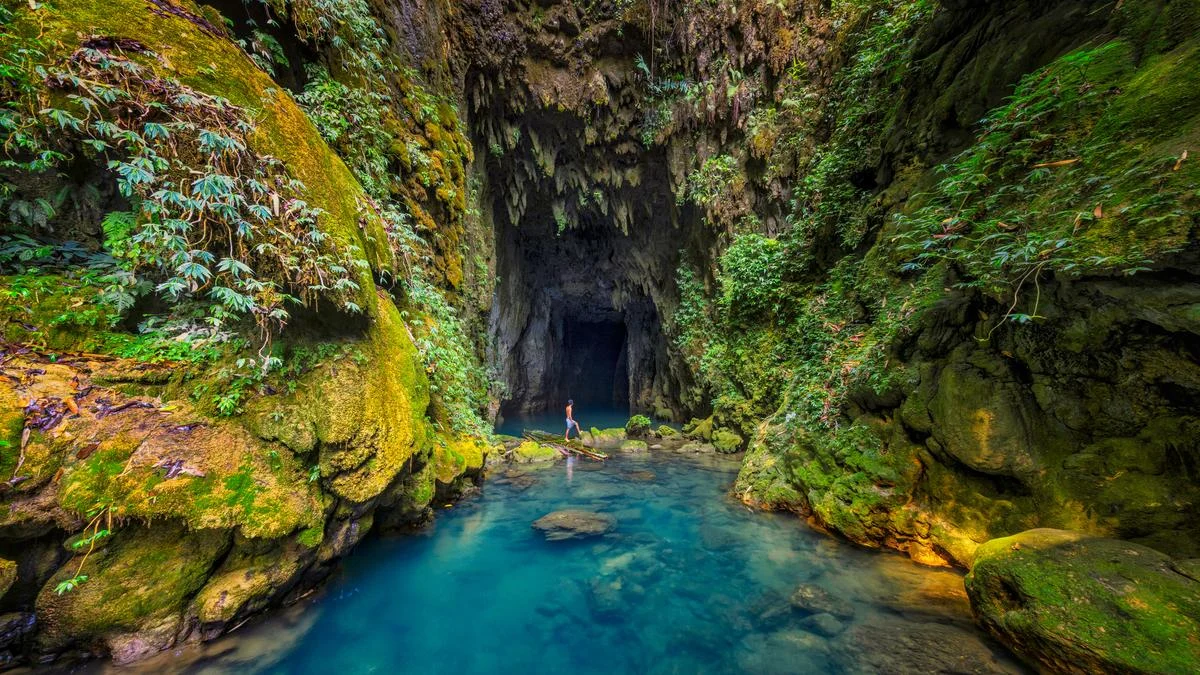
KOTTAYAM, KERALA — In an era of rapid transit and digital detachment, Navin Paul, an engineer-turned-photographer, chose the most deliberate path imaginable to rediscover his country. What began on March 3, 2021, as a personal escape from the rigid structures of a professional routine evolved into a monumental five-year expedition. On July 26, 2026, Paul concluded a 21,000-kilometer journey that spanned 28 states and more than 180 villages, documenting the vanishing traditions and enduring hospitality of India through the lens of his Nikon D850.

Named the "Trooper" project after his trusty road bicycle, Paul’s journey was less about the destination and more about the "fragments of stories" found in the slow, rhythmic cadence of the road.
Main Facts: A Macro-View of the Micro-Culture
The scale of Navin Paul’s journey is staggering not just in distance, but in depth. Carrying a full suite of camera gear, a tent, and minimal clothing, Paul traversed the Indian subcontinent with no fixed itinerary. His mission was to document the "small routines of everyday life"—the rituals that define communities but often escape the notice of high-speed travelers.

The project yielded a vast archive of photographs capturing everything from the 400-year-old Rabankata folk dance in West Bengal to the salt pans of Gokarna and the terraced paddy fields of Nagaland. Sustained by personal savings and the sale of photo prints edited on the road using Photoshop and Lightroom, the journey serves as a contemporary ethnographic study of a nation in transition.
Chronology of the Expedition: 2021–2026
The Departure (2021)
The journey commenced in Paul’s hometown of Kottayam, Kerala. Armed with a loose plan and a desire for a slower pace, he headed north. The initial months were a period of adaptation, both physically and socially. Paul notes that in the early days, asking strangers for a place to sleep often resulted in rejection. "In the beginning, people said ‘no’ more often than ‘yes’," he recalls. "I was an outsider, asking for trust without offering much in return."

The Middle Years: Adaptation and Endurance (2022–2024)
As the years progressed, Paul’s rhythm stabilized. He cycled during the cooler morning hours, covering between 60 and 100 kilometers daily, and spent afternoons resting under toll gates or roadside shelters.
This period saw him navigating extreme geographic and climatic shifts. In Ladakh, he faced sub-zero temperatures and dust storms, photographing sturdy willow trees and ice climbers like Tsewang Namgyal. In Rajasthan, the searing heat of the desert tested the limits of both man and machine.

A significant portion of this time was spent in the Northeast. In Tripura’s Jampui Hills, Paul was stranded for nearly 18 months due to heavy monsoon rains and landslides that washed away critical infrastructure. It was during these periods of forced stillness that he formed his deepest connections, staying with farming families and documenting the seasonal rhythms of rice planting in Kohima.
The Conclusion (2025–2026)
The final leg of the journey involved a synthesis of his experiences. Paul returned home only twice in five years to reset. By the time he reached the concluding date in July 2026, he had moved through the "chaos of big cities" and the "quietude of the hinterlands," finding that while the landscapes changed, the fundamental human traits of generosity and curiosity remained constant across the map.

Supporting Data: Cultural Parallels and Vanishing Traditions
Paul’s documentation highlights a fascinating "family-like" connection between disparate Indian regions. His observations provide qualitative data on the cultural threads that bind the subcontinent:
1. The Geometry of Tradition
In Bishnupur, West Bengal, Paul captured the Rabankata, a 400-year-old folk dance drama rooted in the Ramayana. The performers wear heavy handcrafted wooden masks of characters like Vibhishana and Hanuman, paired with costumes made of dyed jute. Paul observed that while the masks were unique to Bengal, the storytelling tradition mirrored the Chhau dances he encountered in Purulia and the epic-based performances of the South.

2. The Linguistics of Clothing and Food
Paul noted the physical manifestations of India’s shared heritage. The mundu of Kerala found its cousins in the veshtis and dhotis of the North and East. Similarly, the matta rice of his childhood was replaced by the sticky rice of Assam and the Northeast. Despite the change in texture, the central role of rice in the social fabric—celebrated through festivals like Onam, Pongal, Magh Bihu, and Nuakhai—remained a constant variable.
3. The Last of the Line
His lens also captured the "vanishing" elements of Indian identity. In Nagaland, he photographed 84-year-old Thongam of the Konyak tribe, one of the last individuals to bear traditional facial tattoos that served as markers of status and identity. Similarly, he documented the Rabari nomadic shepherds near Udaipur, noting that the younger generation is increasingly opting for permanent settlements and government jobs, signaling the end of an ancient migratory lifestyle.

Community Context and Local Responses
The "Trooper" project was as much a social experiment as a photographic one. Paul’s mode of transport—a bicycle—acted as a "social icebreaker." Unlike a tourist in a vehicle, a cyclist is vulnerable and approachable.
In Murudeshwara, Karnataka, a chance conversation with a fisherman led to a home-cooked meal of fresh fish and rice. In Srinagar, Jammu and Kashmir, heavy rains led a local family to host him for several days; upon his departure, the wife gifted him a hand-knitted Kashmiri cap.

However, the journey also highlighted the protective nature of rural communities. In coastal Maharashtra and Bastar, Chhattisgarh, locals often remarked on the "bravery" of Paul’s parents for allowing an only son to undertake such a perilous journey. These interactions underscore a communal sense of guardianship that Paul encountered across state lines.
Implications: The Philosophy of the "Slow Frame"
The conclusion of Paul’s journey has several implications for the fields of photography and travel journalism:

1. The Rejection of the "Fixed Routine"
Paul’s success suggests a growing relevance for "slow travel" as a method of authentic documentation. By removing the pressure of a fixed itinerary, he was able to wait for the "last light" on an ice wall in Ladakh or spend days learning the rhythm of a Naga farming song. This approach challenges the modern trend of "fast content" creation.
2. Trust as a Currency
The project serves as a testament to the high level of social trust that still exists in rural India. In an age of increasing polarization, Paul’s experience of being welcomed into homes—from gurdwaras in Rajasthan to tribal huts in Arunachal Pradesh—provides a counter-narrative of unity. "What stands out isn’t the distance covered," Paul says, "but the number of times someone chose to trust me."

3. Preservation Through Digital Media
As Paul prepares to compile his work into a photobook, the "fragments" he collected serve as a digital archive for traditions that are rapidly modernizing. From the return of legal buffalo fights in Assam under new animal safety laws to the shifting livelihoods of the Apatani tribe, his work captures a specific moment in India’s developmental timeline.
Conclusion
Navin Paul’s five-year odyssey on "Trooper" is more than a feat of physical endurance; it is a profound mapping of the Indian soul. By trading the engineer’s blueprint for the photographer’s viewfinder, he has managed to capture a country that is "distinct in expression, yet connected at the core." As his work moves from the road to the printed page, it stands as a reminder that the most significant connections are often found when we move slow enough to let the world catch up to us.

Navin Paul continues to document people and cultures across India. His upcoming photobook will feature a curated selection of the 21,000-kilometer journey. He can be followed on Instagram at @navinpaulphotography.
