

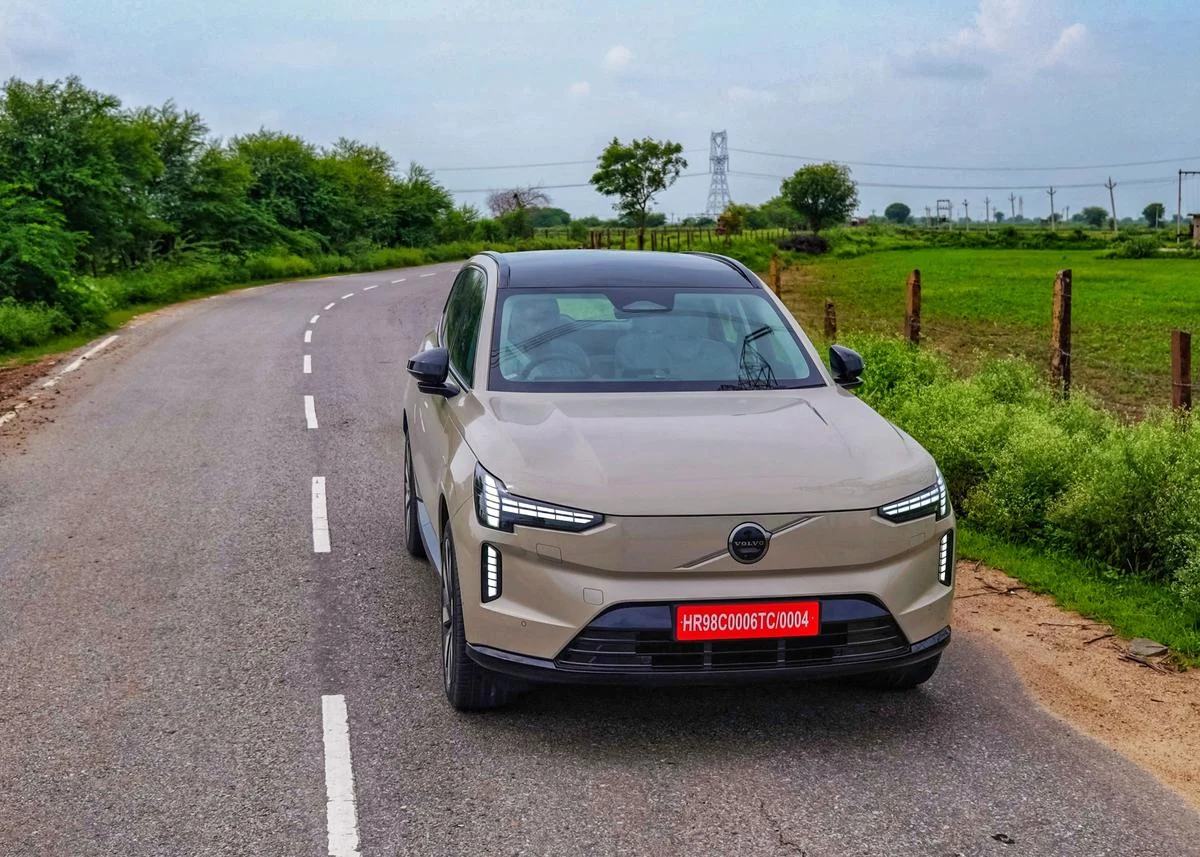
The global automotive landscape is currently undergoing a seismic shift, transitioning from the roar of internal combustion to the silent, high-torque efficiency of electrification. At the forefront of this evolution stands Volvo, a brand that has long been synonymous with safety and understated elegance. With the introduction of the EX90, Volvo is not merely launching a new model; it is redefining its flagship identity for the electric era.
The Volvo EX90 is a full-sized, three-row SUV that serves as the spiritual and technological successor to the venerable XC90. However, it carries the weight of a new mission: to prove that luxury in the 21st century is defined by restraint, sustainability, and intelligent technology rather than ostentatious displays of wealth. As it prepares for its Indian debut, the EX90 arrives with a promise of 625 kilometers of range, a suite of advanced sensors, and a cabin that functions as a sanctuary of Scandinavian minimalism.
Main Facts: The Core Identity of the EX90
The Volvo EX90 is built upon a dedicated electric vehicle architecture, allowing for a level of packaging efficiency that was previously impossible. Unlike many of its competitors who opt for aggressive, "look-at-me" styling, the EX90 adheres to a philosophy of visual quietude. It is a large vehicle, yet it avoids looking unnecessarily imposing through the use of clean lines and aerodynamically optimized surfaces.

The most striking departure from the traditional Volvo silhouette is the front fascia. In the absence of a conventional combustion engine requiring airflow, the EX90 features a "shield" design. This cleaner surfacing gives the vehicle a modern, tech-forward character. The lighting signature, an evolution of the "Thor’s Hammer" motif, now utilizes a pixel-like arrangement. These headlights are not merely decorative; they possess the ability to shape the light beam dynamically around other road users, ensuring maximum visibility for the driver without blinding oncoming traffic.
Underpinning this design are 21-inch wheels fitted with a staggered tire setup—a choice usually reserved for high-performance sports cars. In the India-spec model, the EX90 utilizes 265/45 tires at the front and 295/40 at the rear, featuring Michelin Pilot Sport EV rubber specifically engineered for the high torque and weight demands of a flagship electric SUV.
Chronology: From Concept to the Indian Market
The journey of the EX90 began as a global commitment by Volvo Cars to become a fully electric car company by 2030. The EX90 represents the first of a new generation of Volvo vehicles that are "software-defined." Unlike previous models where software was an afterthought to the mechanical hardware, the EX90 was designed from the ground up around a core computing system.

The development cycle focused heavily on safety and interior well-being. Following its global reveal, Volvo spent considerable time refining the 800V electrical architecture to ensure it could handle the extreme temperatures and varied charging infrastructures of international markets, including India. The India-spec version, while sharing the core powertrain of the global model, has been tailored to local preferences, most notably in its seating configuration and the specific calibration of its air suspension to handle the subcontinent’s diverse road conditions.
Supporting Data: Engineering, Performance, and Range
The EX90 is a powerhouse of technical specifications, designed to compete with the best from Germany and the United States.
Powertrain and Battery
At the heart of the EX90 is a massive 106kWh (usable) lithium-ion battery pack. This powers a twin-motor, all-wheel-drive system that delivers a combined output of 456hp and a staggering 670Nm of torque. Despite its considerable mass, these figures allow the EX90 to sprint from 0-100kph in just 5.5 seconds.

The vehicle utilizes an 800V electrical architecture, which is the current gold standard for EVs. This allows for ultra-fast DC charging. When connected to a 350kW charger, the EX90 can replenish its battery from 10% to 80% in approximately 22 minutes, effectively minimizing "range anxiety" for long-distance travelers.
Interior Technology and Audio
The cabin is centered around a 14.5-inch vertically oriented touchscreen. This interface runs on Google’s built-in ecosystem, providing native access to Google Maps, Google Assistant, and the Play Store. The system is designed to improve over time via over-the-air (OTA) updates, ensuring the car’s technology does not become obsolete.
For audiophiles, Volvo has integrated a Bowers & Wilkins High Fidelity audio system. This setup is one of the most advanced in the industry, featuring:

- 25 speakers strategically placed throughout the cabin.
- 1,610 watts of total power.
- Dolby Atmos integration for a 3D surround sound experience.
- Abbey Road Studios Mode, which uses digital signal processing to recreate the acoustic environment of the world-famous London recording studio.
Practicality and Dimensions
The EX90 in India is configured as a six-seater. By utilizing individual captain’s chairs in the second row, Volvo has created an "executive lounge" feel. Unlike many SUVs where the third row is an "occasional" space for children, the EX90’s third-row seats are properly contoured and provide sufficient room for adults on shorter journeys, or teenagers on long-distance trips.
Official Responses and Context: The Safety Proposition
Safety has always been the pillar of the Volvo brand, and the EX90 takes this to a logical extreme. The vehicle is equipped with a comprehensive Advanced Driver Assistance System (ADAS).
The India-spec car utilizes:

- 5 Cameras providing a 360-degree view.
- 5 Radar units for long-distance sensing.
- 12 Ultrasonic sensors for close-proximity detection.
While the global version of the EX90 features a roof-mounted LiDAR sensor, the Indian specification relies on this extensive radar and camera suite. Volvo officials suggest that this combination is more than sufficient to provide a high level of "Pilot Assist" functionality, collision avoidance, and pedestrian detection. The philosophy here is "supportive safety"—the car acts as a co-pilot, intervening only when necessary to prevent an accident, rather than attempting to take full control away from the driver.
Implications: Market Outlook and the "New Luxury"
The arrival of the Volvo EX90 in India signals a shift in the luxury SUV segment. It enters a market currently occupied by the BMW iX, the Audi Q8 e-tron, and the Mercedes-Benz EQS SUV. However, Volvo’s approach is distinct. It does not chase the "sportiness" of BMW or the "maximalism" of Mercedes.
The Driving Experience
From behind the wheel, the EX90 masks its weight through a well-judged steering rack and standard air suspension. The suspension can raise the vehicle by 40mm, providing the ground clearance necessary for Indian speed breakers and monsoon-damaged roads. The driving character is one of "calm confidence." The immediate torque of the electric motors provides effortless passing power, but the delivery is smooth rather than jarring.

Economic and Environmental Impact
With an expected price bracket of ₹90 lakh to ₹1 Crore (ex-showroom), the EX90 is positioned at the premium end of the market. Its success will depend on two factors: the expansion of ultra-fast charging infrastructure in India and the consumer’s willingness to embrace "restrained luxury."
The electrochromic panoramic glass roof is a prime example of this new luxury. By replacing a mechanical sunblind with a layer of glass that turns opaque at the touch of a button, Volvo has reduced mechanical complexity and weight while adding a "wow" factor that serves a functional purpose—keeping the cabin cool in the intense Indian summer.
Conclusion
The Volvo EX90 is more than just a large electric SUV; it is a statement of intent. It proves that a flagship can be powerful without being aggressive and high-tech without being confusing. By focusing on the fundamentals—ride quality, acoustic isolation, safety, and sustainable materials—Volvo has created a vehicle that feels mature and future-proof.

If Volvo can price the EX90 competitively within its expected ₹90 lakh – ₹1 Cr range, it will likely attract a new generation of buyers: those who value the environment and safety as much as they value status. The EX90 is not just a car for today; it is a blueprint for the luxury mobility of tomorrow.
This report was prepared in association with Motorscribes and The Hindu. For more updates on the evolving Indian automotive market, follow @motorscribes on Instagram.
