

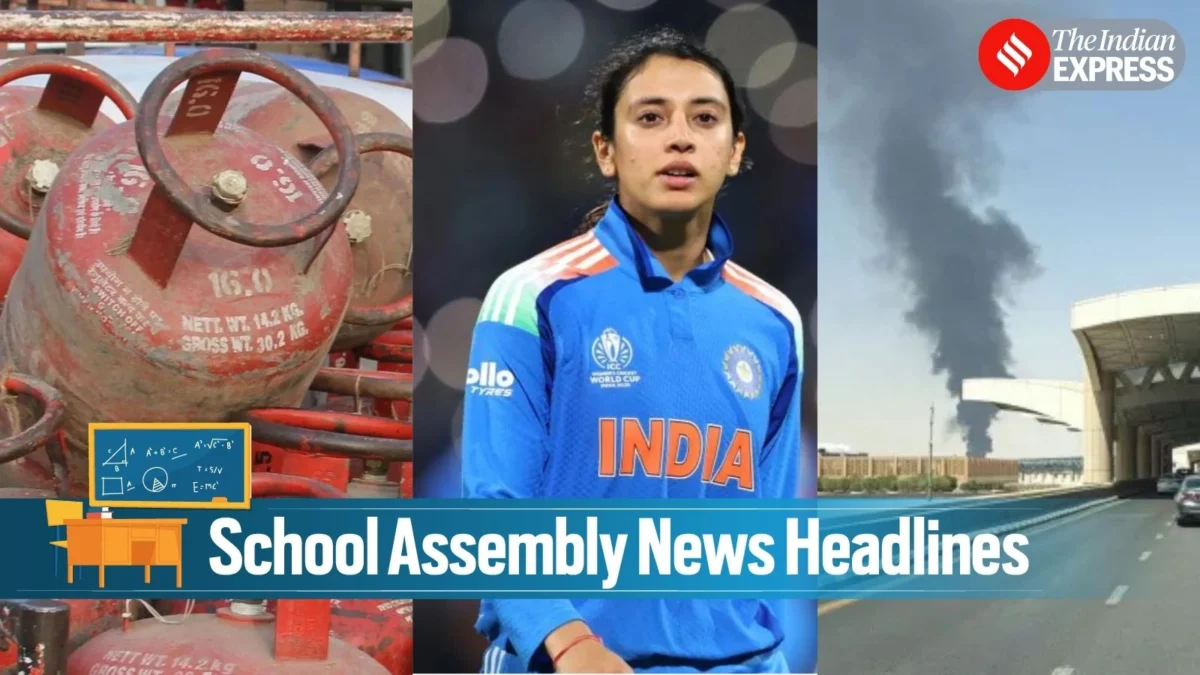
New Delhi, September 20, 2026, 05:30 PM IST – As the nation and the world navigate a dynamic landscape, September 21, 2026, brings a diverse array of significant developments impacting daily life, national security, economic policies, and the burgeoning field of women’s sports. From crucial government initiatives aimed at streamlining essential services to geopolitical tensions and groundbreaking athletic achievements, these headlines offer a comprehensive snapshot of the day’s most pressing issues, suitable for dissemination through school assemblies and fostering informed discussion among students.
Key Highlights of the Day
The day’s most prominent developments include a pivotal mandate from the Ministry of Petroleum & Natural Gas concerning the booking of domestic gas cylinders, a concerning escalation of conflict in the Middle East with the Houthi rebels targeting the capital of Saudi Arabia, and a historic milestone achieved by Indian cricketer Smriti Mandhana in the realm of Women’s T20 Internationals. Furthermore, the North Central Railway has announced a significant boost in its services to cater to the upcoming festive season, and the Ministry of External Affairs (MEA) is extending valuable internship opportunities to aspiring young professionals, signalling a commitment to nurturing future talent. These diverse events underscore the interconnectedness of national progress, international affairs, and individual achievements.
Deep Dive into Today’s Leading Stories
Houthi Escalation: Saudi Capital Targeted in Regional Security Concern
Main Facts: In a significant escalation of regional tensions, Houthi rebels have reportedly launched a series of drone and missile attacks targeting the capital city of Saudi Arabia, Riyadh. While initial reports are still being corroborated and details are emerging, the brazen nature of these attacks underscores the persistent threat posed by the Houthi insurgency in Yemen to regional stability. The attacks are believed to be a response to ongoing military operations in the region and highlight the complex geopolitical dynamics at play.
Chronology: The precise timing and sequence of the Houthi attacks are under investigation. However, sources indicate that the assaults occurred in the early hours of September 21st, with multiple explosions reported across Riyadh. Saudi air defense systems are understood to have been activated to intercept incoming projectiles. This incident follows a pattern of escalating Houthi aggression in recent months, with previous attacks targeting Saudi oil infrastructure and other strategic locations. The current offensive, however, marks a direct targeting of the kingdom’s seat of power, raising serious concerns.
Supporting Data: The Houthi movement, an Iran-aligned group, has been engaged in a protracted conflict in Yemen since 2014. Their arsenal includes a range of ballistic missiles and unmanned aerial vehicles, some of which are believed to be of Iranian origin. While the exact number of projectiles launched and their success rate in breaching Saudi defenses are yet to be officially confirmed, the intent to strike a major metropolitan area is undeniable. The Saudi-led coalition has been involved in military operations in Yemen since 2015, aiming to restore the internationally recognized government. This latest attack signifies a potential shift in the Houthis’ strategic objectives, moving beyond localized military targets to directly challenge the Saudi leadership.
Official Responses: Saudi authorities have yet to issue a comprehensive official statement detailing the full extent of the damage and casualties, if any. However, early reports suggest that emergency services were mobilized. The Saudi-led coalition is expected to respond robustly, potentially through retaliatory strikes. International bodies, including the United Nations, are likely to call for de-escalation and a renewed push for diplomatic solutions to the Yemeni conflict. The United States and other key allies of Saudi Arabia are also expected to condemn the attacks and reaffirm their commitment to the kingdom’s security.
Implications: The Houthi attacks on Riyadh carry significant implications for regional stability. They highlight the persistent threat of asymmetric warfare and the challenges faced by established military powers in defending against such threats. The attacks could lead to further military escalation, potentially drawing in other regional actors and exacerbating the humanitarian crisis in Yemen. Economically, the targeting of the Saudi capital could create market jitters, particularly concerning oil supplies, although the immediate impact on global energy markets will depend on the extent of any damage to critical infrastructure. Diplomatically, these events will likely intensify international pressure for a peaceful resolution to the conflict in Yemen. For students, this serves as a stark reminder of the ongoing geopolitical complexities and the human cost of protracted conflicts.
Ministry of Petroleum Mandates Biometric Aadhaar Authentication for Subsidised Gas Cylinders
Main Facts: In a significant move to streamline the distribution of subsidised domestic gas cylinders and curb potential misuse, the Ministry of Petroleum & Natural Gas has mandated the use of Biometric Aadhaar Authentication (BAA) for all bookings. This directive aims to ensure that only eligible beneficiaries receive the subsidised cylinders, thereby improving transparency and efficiency in the Public Distribution System (PDS) for LPG.
Chronology: The decision to implement BAA has been under consideration for some time, with pilot projects likely conducted in various regions to assess its feasibility and effectiveness. The official announcement and mandatory implementation date are set for September 21, 2026. This phased rollout aims to allow consumers and distributors ample time to adapt to the new system.
Supporting Data: India’s LPG subsidy scheme is one of the world’s largest, aiming to provide affordable cooking fuel to millions of households. However, concerns about leakages, duplicate bookings, and diversion of subsidised cylinders have persisted. Biometric authentication, leveraging the unique identification provided by Aadhaar, is expected to create a robust and verifiable linkage between the beneficiary and the subsidized cylinder. This technology has already been successfully implemented in other government schemes, demonstrating its potential for enhancing accountability. The number of domestic gas cylinder bookings nationwide runs into millions daily, and the successful integration of BAA will be crucial for its widespread adoption.
Official Responses: The Ministry of Petroleum & Natural Gas has issued clear guidelines to all LPG distributors across the country. They have emphasized the importance of consumer awareness campaigns to educate citizens about the new authentication process. Oil marketing companies (OMCs) are expected to facilitate the necessary technological infrastructure at the point of sale. The government has assured that adequate support will be provided to consumers who may face challenges in adapting to the new system, particularly in rural and remote areas.
Implications: The mandatory BAA for LPG bookings has several key implications. Firstly, it is expected to significantly reduce instances of fraudulent bookings and diversions, ensuring that the subsidy reaches the intended beneficiaries. This could lead to substantial savings for the government and a more equitable distribution of resources. Secondly, it will enhance the overall transparency and accountability of the LPG distribution network. For consumers, it means a more secure and streamlined booking process once they are accustomed to it. However, there may be an initial learning curve and potential challenges for individuals with difficulties in providing biometric data, necessitating robust grievance redressal mechanisms. This initiative aligns with the government’s broader digital India agenda, promoting the use of technology for efficient service delivery.
Smriti Mandhana Creates History: Highest Run-Scorer in Women’s T20Is
Main Facts: In a momentous occasion for Indian cricket and women’s sports globally, Smriti Mandhana has etched her name in the record books by becoming the highest run-scorer in the history of Women’s T20 Internationals. This remarkable achievement underscores her consistent brilliance, exceptional talent, and unwavering dedication to the sport.
Chronology: Mandhana’s journey to this record has been a culmination of years of dedication and outstanding performances across numerous T20 internationals. The specific match and innings where she surpassed the previous record holder are a matter of recent sporting history, likely occurring during a high-stakes international fixture in the lead-up to September 21, 2026. Her consistent scoring prowess in crucial matches has been a hallmark of her career.
Supporting Data: Smriti Mandhana, known for her elegant stroke play and aggressive batting, has been a cornerstone of the Indian women’s cricket team for years. Her batting average, strike rate, and number of half-centuries and centuries in T20Is are statistical indicators of her dominance. The previous record holder would have had a significant run tally, and Mandhana’s ascent to the top signifies a sustained period of exceptional form. The growth of women’s cricket globally, with more T20 leagues and international series, has provided a platform for such records to be set and challenged, and Mandhana’s achievement is a testament to this evolving landscape.
Official Responses: Cricket boards, sporting bodies, and fellow cricketers have widely lauded Mandhana’s achievement. The Board of Control for Cricket in India (BCCI) is expected to issue a formal statement of congratulations, recognizing her contribution to Indian cricket. International cricketing organizations like the ICC are also likely to celebrate this milestone, highlighting its significance for the sport. Social media platforms have been abuzz with congratulatory messages from fans and athletes worldwide.
Implications: Smriti Mandhana’s record-breaking feat has far-reaching implications. Firstly, it serves as a powerful inspiration for aspiring young cricketers, particularly girls, across India and the world. Her success demonstrates that with hard work and talent, individuals can reach the pinnacle of their chosen fields. Secondly, it further elevates the profile of women’s cricket, attracting more attention, sponsorship, and viewership. This increased visibility can lead to greater opportunities and investment in the sport, fostering its growth and development. For students, Mandhana’s story is a powerful narrative of perseverance, skill, and achieving extraordinary success through dedication.
North Central Railway Deploys Over 1,000 Special Trains for Festive Season
Main Facts: To accommodate the anticipated surge in passenger traffic during the upcoming festive season, the North Central Railway (NCR) has announced the launch of over 1,000 special trains. This proactive measure aims to ensure smooth and convenient travel for millions of people planning to visit their families and celebrate various festivals across the country.
Chronology: The planning and deployment of these special trains typically begin months in advance. The announcement on September 21, 2026, signifies the final stages of preparation and public notification. The operational commencement of these trains will align with the unfolding of the festive calendar, likely starting in late September and continuing through November.
Supporting Data: The festive season in India, encompassing major festivals like Diwali, Chhath Puja, and others, witnesses a significant increase in inter-state and intra-state travel. Railways are a primary mode of transportation for a large segment of the population due to their affordability and reach. The North Central Railway, with its extensive network connecting major hubs in North and Central India, plays a crucial role in facilitating this travel. The introduction of over 1,000 special trains translates to a substantial increase in carrying capacity, estimated to transport an additional several hundred thousand passengers compared to regular services. This also implies a significant logistical operation involving the deployment of additional crew, rolling stock, and maintenance resources.
Official Responses: The General Manager and other senior officials of the North Central Railway have highlighted the commitment of the railway administration to passenger convenience. They have emphasized the importance of timely running of these special services and ensuring passenger safety and comfort. Information regarding the schedules, booking procedures, and availability of these special trains is being disseminated through official railway websites, mobile applications, and public announcements at railway stations.
Implications: The deployment of over 1,000 special trains by the North Central Railway has several positive implications. Primarily, it addresses the critical need for increased transportation capacity during a period of high demand, thereby reducing travel-related stress for passengers and preventing overcrowding on regular services. This initiative also contributes to the economic activity associated with the festive season by facilitating easier movement of people. For students, it signifies the efficient planning and execution of large-scale logistical operations by government agencies to serve the public. It also provides an opportunity to understand the importance of public transportation infrastructure in a densely populated country.
Ministry of External Affairs Offers Internship Opportunities for Young Talent
Main Facts: In a significant step towards nurturing future diplomatic and administrative talent, the Ministry of External Affairs (MEA) has announced the opening of internship opportunities for final-year university students and fresh graduates. This initiative aims to provide young individuals with invaluable exposure to the workings of India’s foreign policy apparatus and the broader landscape of international relations.
Chronology: The MEA has a history of offering internships, but the announcement on September 21, 2026, likely pertains to a new cycle or an expanded program. The application process would typically involve a period of application submission, shortlisting, interviews, and the final selection of interns, with the internship program commencing in the subsequent months.
Supporting Data: The Ministry of External Affairs is the nodal agency responsible for India’s foreign policy formulation and implementation. Interning at the MEA provides a unique opportunity to understand the intricacies of diplomatic negotiations, international law, multilateral engagements, and the functioning of Indian missions abroad. The number of internship slots is usually competitive, attracting a large pool of aspiring candidates from diverse academic backgrounds, including political science, international relations, law, economics, and languages. The program is designed to offer practical learning experiences, allowing interns to contribute to research, analysis, and administrative tasks under the guidance of experienced diplomats.
Official Responses: The MEA’s announcement would have been made through official channels, including their website and social media platforms. The ministry’s spokesperson would likely emphasize the educational and professional benefits of the internship, highlighting the opportunity to gain firsthand experience in international diplomacy. The program is designed to be a mutually beneficial arrangement, providing the MEA with fresh perspectives and support while offering interns a challenging and rewarding learning environment.
Implications: The MEA’s internship program carries significant implications for both the participating students and the Ministry. For students, it represents a golden opportunity to gain practical experience in a highly specialized field, potentially shaping their future career aspirations and providing a competitive edge in the job market. It also fosters a deeper understanding of India’s role in the global arena. For the MEA, it serves as a talent scouting mechanism, identifying promising individuals who could potentially join the foreign service or contribute to related fields in the future. This initiative aligns with the government’s broader objective of building a skilled and engaged youth demographic, fostering a new generation of leaders and professionals.
Conclusion:
The news headlines of September 21, 2026, paint a picture of a world grappling with complex challenges and celebrating remarkable achievements. From the geopolitical tremors felt with the Houthi attacks to the quiet efficiency of government policy implementation through biometric authentication, and the inspiring triumph of individual athletic prowess, these stories offer valuable insights for young minds. The proactive measures by North Central Railway and the forward-thinking internship program by the MEA underscore the continuous efforts towards national development and youth empowerment. These events serve as crucial talking points for school assemblies, encouraging critical thinking, global awareness, and an appreciation for the diverse facets of our interconnected world.
