

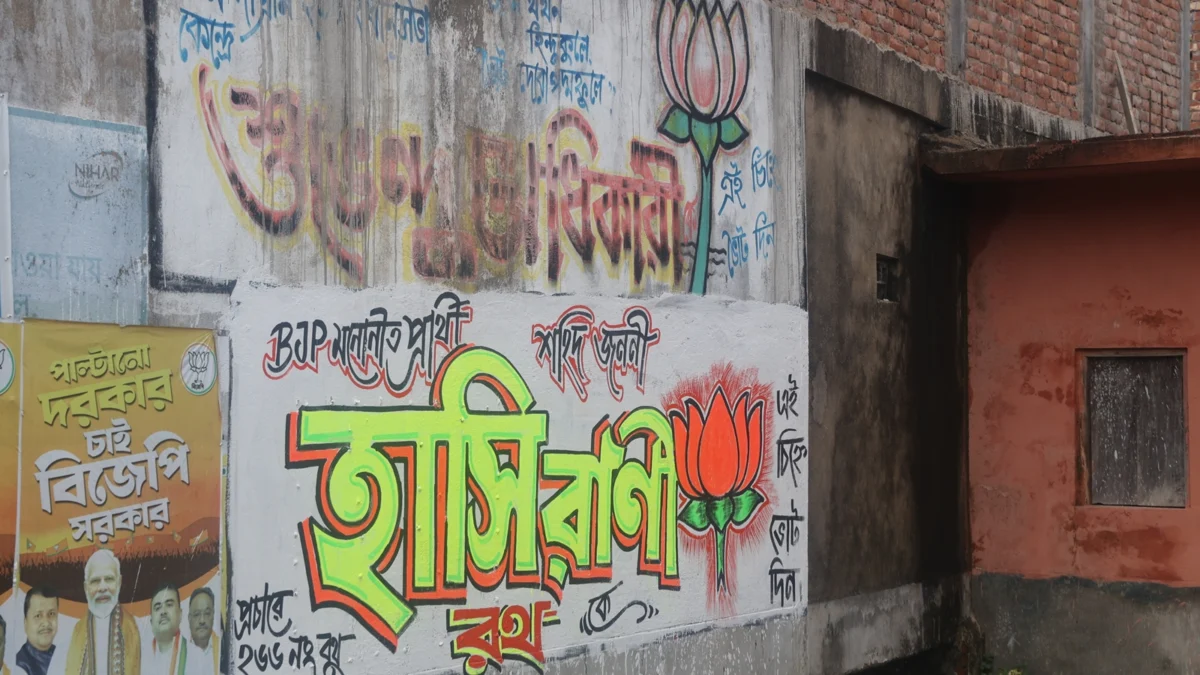
Kolkata, West Bengal – September 28, 2026 – West Bengal is once again at the epicentre of a fierce political battle, as the ruling Bharatiya Janata Party (BJP) faces its inaugural electoral test following its decisive victory in the Assembly elections earlier this year. Scheduled for October 6, by-elections in the crucial constituencies of Nandigram and Rejinagar have plunged the state into a vortex of controversy, with the Opposition alleging widespread intimidation, candidate withdrawals under duress, and politically motivated arrests. These developments cast a long shadow over the democratic process, turning what would typically be local contests into a high-stakes referendum on the state’s political landscape and the health of its electoral institutions.
The by-polls are not merely about filling vacant seats; they are perceived as a critical barometer for the public mood and the resilience of the Opposition in a state now dominated by the BJP. For the Opposition, spearheaded by a fragmented Trinamool Congress (TMC) faction and other regional players, the fight is one for survival and a test of their ability to counter the formidable machinery of the incumbent government. Conversely, the BJP, while outwardly confident, is keen to solidify its mandate and demonstrate its undisputed authority, dismissing the Opposition’s claims as pre-emptive excuses for anticipated defeat.
Chronology of Contentious Events Leading to the By-Polls
The path to the October 6 by-elections has been fraught with dramatic twists and turns, particularly in Nandigram and Rejinagar, each presenting a unique set of challenges and allegations.
The Nandigram Tangle: Withdrawals, Support, and Arrests
The by-election in Nandigram, a constituency steeped in recent political history, was necessitated by the resignation of a prominent leader, who chose to retain the Bhabhanipur seat after defeating Mamata Banerjee in the recent Assembly elections. This created an immediate vacuum and set the stage for a contentious battle.
The initial tremors began with the withdrawal of Sanchita Dey Pradhan, the candidate representing the Mamata Banerjee-led faction of the Trinamool Congress (TMC). Her sudden exit from the race sent shockwaves through the Opposition ranks, prompting allegations of undue pressure and manipulation. In a swift strategic manoeuvre to counter this setback and consolidate anti-BJP votes, Mamata Banerjee publicly extended her support to Milan Pradhan, the candidate fielded by the Congress party. This unprecedented cross-party endorsement underscored the urgency and perceived existential threat faced by the Opposition.
However, the political landscape shifted dramatically within hours of Banerjee’s announcement. Milan Pradhan was arrested in connection with cases dating back to the volatile 2007 anti-land acquisition agitation in Nandigram. This arrest, occurring immediately after receiving high-profile political backing, was swiftly condemned by the Opposition as a clear instance of political vendetta and misuse of state machinery. Pradipta Mukherjee, spokesperson for the Mamata faction of the TMC, minced no words, labelling the incident as a manifestation of the "fascist tendency of the BJP to stifle Opposition voices." He further asserted that despite having the "people’s mandate," the BJP was "now using state machinery to oppress the Opposition."
Rejinagar’s Ordeal: Harassment Claims and a Controversial Masjid Replica
The situation in Rejinagar has unfolded with even greater complexity, featuring allegations of police harassment, a controversial religious structure, and internal strife within the Opposition. The by-election here was triggered by the resignation of Humayun Kabir, chief of the Aam Janata Unnayan Party (AJUP), who chose to retain his Naoda seat. His son, Golam Nabi Azad, is now the AJUP candidate for Rejinagar.
Kabir, a former TMC MLA who formed AJUP ahead of the general elections, has been a central figure in the escalating tensions. He publicly alleged severe police harassment against his party workers, claiming that this pressure was designed to cripple his campaign. Following an appearance for police questioning at Berhampore police station, Kabir declared his decision to cease ground campaigning. "It is very clear. The police are trying to harass me and my party workers," Kabir stated over the phone. "To prevent further arrests and harassment of my party workers, I have decided that I will not campaign on the ground. I will also not allow my son, who is the candidate, to campaign. Instead, I will use social media. But I will not bow down." This unprecedented move to conduct an entirely digital campaign highlights the perceived intensity of the alleged pressure.
Kabir’s predicament is intertwined with a highly controversial project: his plan to construct what he describes as a replica of the Babri Masjid in Murshidabad. This initiative has drawn significant attention and has become a flashpoint for communal tensions. Police questioning of Kabir stemmed from a viral audio clip allegedly featuring two individuals discussing a plan to disable CCTV cameras around the Masjid replica site and plant BJP flags, ostensibly to incite communal unrest. Investigators subsequently arrested Sarfaraz Nawaz Chowdhury, a resident of Tungi village in Naoda, identifying one of the voices in the recording as his. They believe the other voice belongs to a political leader from Murshidabad, leading to the notice issued to Kabir based on information gleaned from Chowdhury’s interrogation.
The police action against AJUP functionaries has intensified in recent days, painting a grim picture for the party. On September 20, four senior AJUP office-bearers – Manjur Rehman, Nasim Sheikh, Haq Mallick, and Abdul Halim – were arrested in connection with various old cases, a common tactic often seen as a means to neutralise political opponents. This was preceded by the arrest of Independent candidate Saiful Islam on September 19, linked to a 2021 election clash case. A day earlier, Ashik Iqbal, the AJUP state secretary, was apprehended on allegations of possessing fake currency notes. Humayun Kabir has vociferously accused both the BJP and the Democratic Trinamool Congress, a breakaway faction led by Ritabrata Banerjee, of colluding to target AJUP workers by providing names to local police, thereby weaponizing law enforcement for political gain.
Adding to the complexities in Rejinagar, the TMC itself faced internal disarray. Its candidate, Rabiul Alam Chowdhury, initially announced his intention to withdraw from the race. He cited "internal difficulties" and concerns regarding the introduction of the party’s new "footballer" election symbol as reasons for his decision. However, following swift intervention from Mamata Banerjee and the party leadership, Chowdhury reversed his decision and is now back in the contest, underscoring the high stakes and the leadership’s determination to overcome internal fissures. The Congress has fielded Mohammed Abdullahil Kafi, while the BJP has nominated Sakharav Sarkar, with state minister Gouri Shankar Ghosh appointed as the BJP’s election in-charge for the constituency.
Supporting Data and Contextual Deep Dive
The significance of these by-elections extends far beyond the immediate electoral outcomes, touching upon the historical sensitivities, demographic realities, and evolving political narratives of West Bengal.
Nandigram: A Symbol of Resistance and Shifting Loyalties
Nandigram holds a particularly potent symbolic value in West Bengal politics. It was the epicentre of a fierce anti-land acquisition movement in 2007, a struggle that propelled Mamata Banerjee and the then-Opposition TMC to national prominence and ultimately paved the way for the end of the Left Front’s decades-long rule. The arrest of Milan Pradhan, the Congress candidate supported by the Mamata faction, on charges related to this very agitation, is thus not merely a legal matter but a highly charged political statement. It reopens old wounds and raises questions about historical accountability, with the Opposition framing it as an attempt to rewrite narratives and suppress dissenting voices from that era.
The by-election here, following the resignation of the BJP leader who narrowly defeated Mamata Banerjee in the Assembly elections, represents a critical test of loyalty and political consolidation. The BJP’s strong performance in the Assembly elections, particularly in areas like Nandigram, indicated a significant shift in political allegiances. The current by-poll will gauge whether this shift is enduring or whether the Opposition can reclaim some lost ground amidst allegations of heavy-handed tactics.
Rejinagar: The Demographic Chessboard
Rejinagar presents a different, yet equally crucial, battleground, primarily due to its distinct demographic composition. Muslims account for approximately 65% of the electorate in Rejinagar, making it a constituency where minority votes are decisive. This demographic reality elevates the stakes, particularly in the context of Humayun Kabir’s Babri Masjid replica project and the associated allegations of attempts to trigger communal tension.
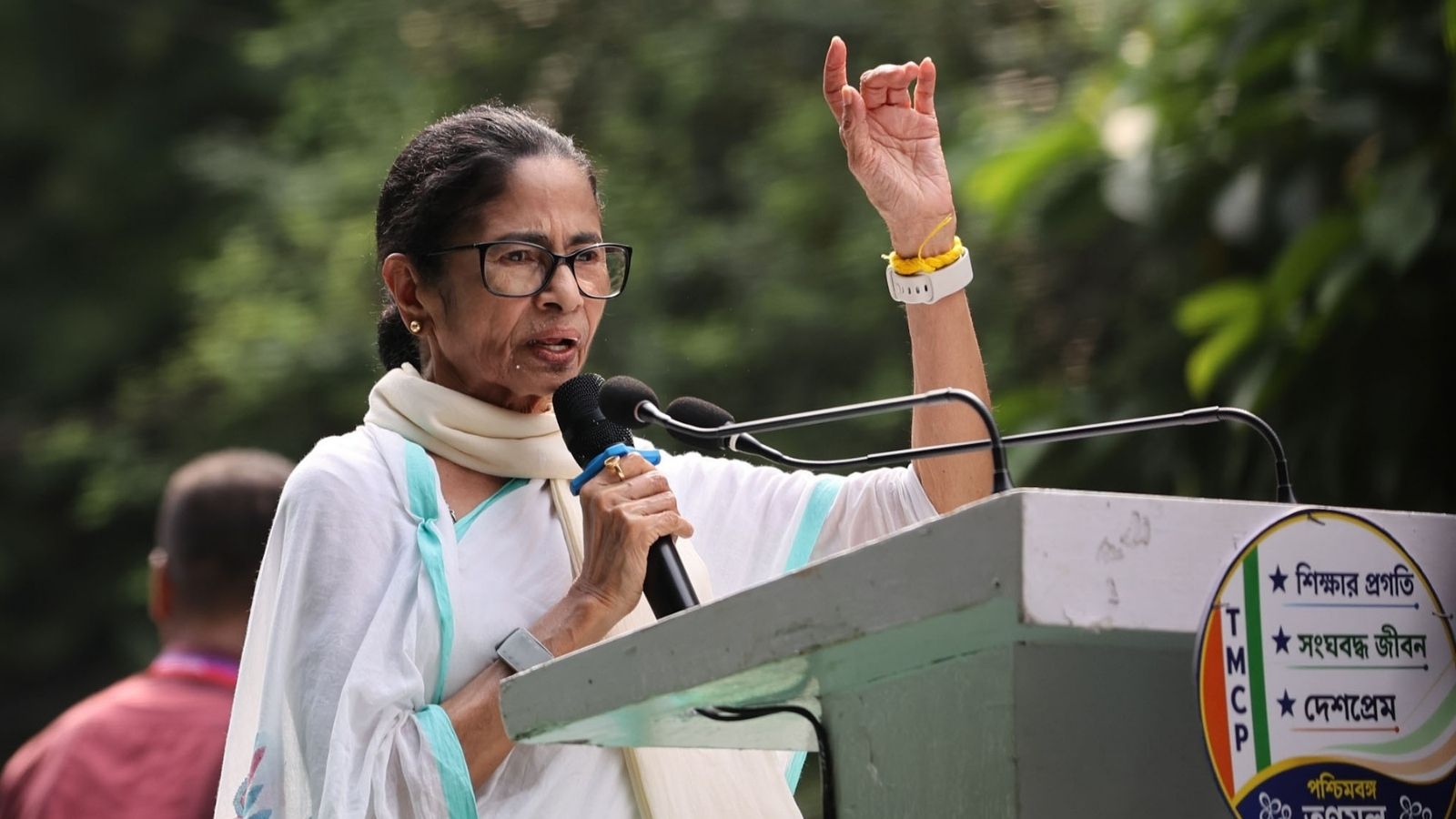
The BJP’s candidate, Sakharav Sarkar, has focused his campaign on a narrative of "development and employment." "I am campaigning. I am talking about setting up good industries and factories in the area. There is a need for a college in the area. There should be a proper bridge. Our pitch to the public is development and employment. Those opposing us are playing the religion card," Sarkar told The Indian Express. This strategy aims to transcend identity politics and appeal to economic aspirations, a common BJP tactic in diverse constituencies.
Conversely, the Opposition views the police action against AJUP and the controversy surrounding the Babri Masjid replica as deliberate attempts to polarise the electorate and suppress the minority vote. The remarks by a prominent BJP leader, describing the Rejinagar contest as a "test" of whether minority voters want to support the government’s development agenda, have drawn sharp criticism from the Opposition, who perceive it as an overt attempt to frame the election along communal lines. The outcome in Rejinagar will be a significant indicator of how minority voters are responding to the BJP’s governance and the Opposition’s fragmented efforts to consolidate their support.
Official Responses and Counter-Narratives
The allegations and counter-allegations have generated a cacophony of official responses, each party striving to control the narrative ahead of the crucial polls.
The BJP’s Stance: Dismissal and Confidence
The Bharatiya Janata Party has vehemently rejected all allegations of intimidation, police pressure, and political vendetta. BJP state president Samik Bhattacharya adopted a dismissive tone towards the Opposition, while also striking a note of caution regarding the health of democracy. "The so-called main Opposition party has no name… Their candidate (from Nandigram) covered hundreds of kilometres and met the Chief Minister while their party was in the dark. This proves that there is no Opposition. It is not a welcome situation in a democracy," he remarked, implying disunity and lack of credible leadership within the Opposition ranks. This statement cleverly shifts the blame for the Opposition’s woes onto internal factors rather than external pressure.
In Rejinagar, BJP state minister Gouri Shankar Ghosh, the party’s election in-charge for the constituency, dismissed Humayun Kabir’s allegations outright. "He (Kabir) knows he will lose. Now, he is making such excuses. The BJP will win in Rejinagar," Ghosh asserted, projecting confidence and framing Kabir’s claims as a desperate attempt to explain an impending defeat. This narrative is consistent with the BJP’s broader strategy of portraying itself as the dominant political force, unperturbed by Opposition complaints. The BJP’s campaign, as articulated by candidate Sakharav Sarkar, is firmly rooted in the promise of development and employment, steering clear of the contentious issues raised by the Opposition.
The Opposition’s Cry: Misuse of Power
The Opposition, despite its fragmentation, has presented a united front in condemning what it perceives as an assault on democratic principles. Pradipta Mukherjee, representing the Mamata-led TMC faction, articulated the core of their grievance, accusing the BJP of exhibiting "fascist tendency… to stifle Opposition voices" and "using state machinery to oppress the Opposition." This narrative positions the BJP as an authoritarian force willing to subvert democratic norms to maintain power.
Humayun Kabir, the AJUP chief in Rejinagar, has provided detailed accounts of alleged police harassment, painting a picture of a targeted campaign against his party workers. His decision to shift to social media campaigning underscores the perceived inability to conduct traditional ground-level political activity without fear of repercussions. His accusations against the BJP and the Democratic Trinamool Congress of providing names to local police suggest a coordinated effort to dismantle his party’s electoral machinery. The Congress, by accepting Mamata Banerjee’s support in Nandigram, implicitly endorses the narrative of a challenging electoral environment requiring broader unity against the ruling party.
The police, while not directly quoted in a political statement, have acted based on their investigation into the viral audio clip and various "old cases." Their actions, however, are viewed through a political lens by the Opposition, who argue that the timing and nature of the arrests are politically motivated rather than purely law enforcement matters.
Implications and the Future of West Bengal Politics
The by-elections in Nandigram and Rejinagar transcend their immediate results, holding profound implications for the political future of West Bengal, the credibility of its electoral process, and the broader narrative of India’s democratic health. The results, to be announced on October 9, will be keenly watched by political observers nationwide.
Testing the BJP’s Hegemony
For the BJP, these by-polls are more than just an opportunity to add two seats to their legislative tally; they are a critical test of their ability to govern and maintain popular support after their significant Assembly election victory. A strong performance, particularly amidst the allegations of intimidation, would further solidify their dominance and potentially embolden them to pursue their agenda with renewed vigour. Conversely, a setback, even a minor one, could be interpreted as a sign of public discontent or the effectiveness of the Opposition’s counter-narrative, potentially forcing the BJP to recalibrate its approach. The party’s dismissal of Opposition concerns, while projecting strength, also risks alienating voters who may perceive such tactics as undemocratic.
The Opposition’s Fragile Resilience
For the Opposition, particularly the fragmented TMC factions and the Congress, these by-elections represent a crucial moment of reckoning. The challenges they face – candidate withdrawals, arrests, and alleged police pressure – highlight the immense difficulties of operating in an environment where state power is perceived to be wielded against them. The ability to overcome these hurdles, even partially, would be a testament to their resilience and could provide a much-needed morale boost. However, a significant defeat, especially after the public allegations, could further demoralise their cadres and deepen the existing fissures, potentially leading to a more consolidated, albeit weaker, Opposition. The unprecedented cross-party support in Nandigram and the internal struggles in Rejinagar underscore the desperate need for a unified strategy against a formidable opponent.
The Health of Democracy
Beyond electoral arithmetic, the events surrounding these by-polls raise serious questions about the health of democratic institutions and practices in West Bengal. Allegations of politically motivated arrests, misuse of state machinery, and attempts to suppress dissent strike at the very heart of free and fair elections. The role of the police in investigations that appear timed with electoral events will undoubtedly be scrutinised, with implications for public trust in law enforcement. The ability of the Election Commission and other independent bodies to ensure a level playing field will be under intense observation.
The debates around "development versus identity politics," particularly pronounced in Rejinagar, also underscore the evolving nature of political discourse in the state. How voters respond to these competing narratives, especially in a demographically sensitive constituency, could offer insights into broader electoral trends.
As West Bengal braces for the outcome on October 9, the by-elections in Nandigram and Rejinagar stand as a microcosm of the intense political dynamics currently at play. They are a test of power, a cry of protest, and a crucial indicator of the direction the state’s political landscape is likely to take in the years to come.
