

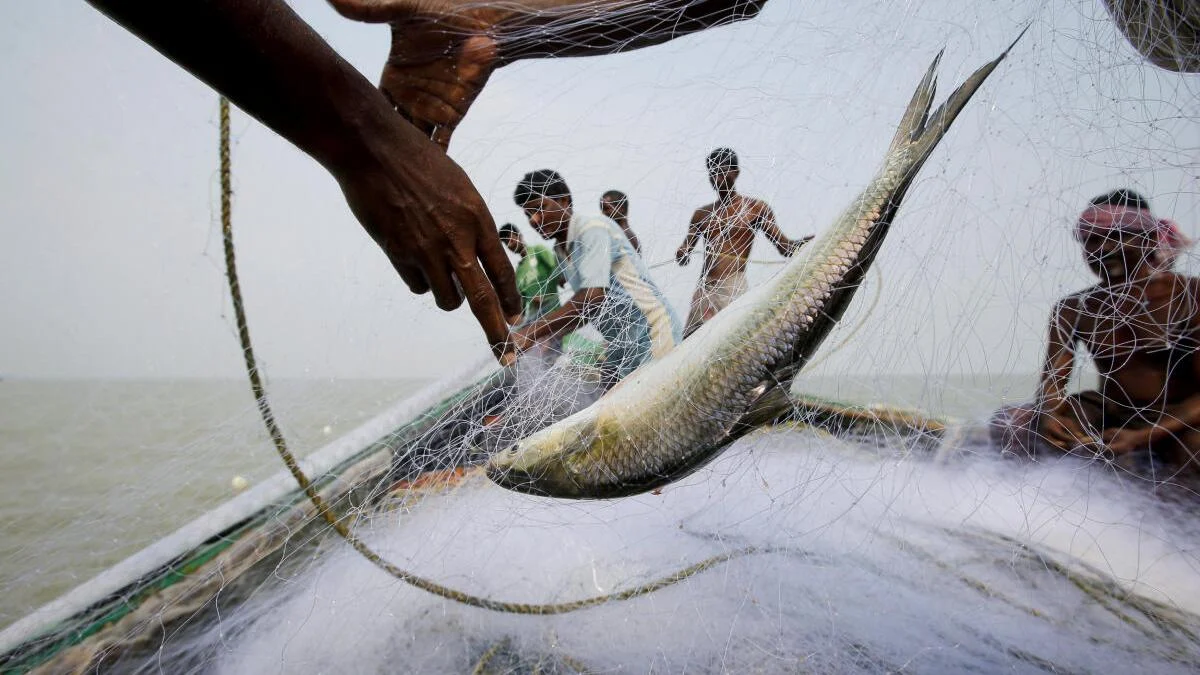
The Ilish, or Hilsa, is more than just a fish; it is a cultural icon, a culinary obsession, and a poignant indicator of ecological health for millions across the Indian subcontinent. Its journey from the vast, saline embrace of the ocean to the aromatic confines of the Bengali kitchen is a testament to nature’s intricate cycles and the deep-seated human connection to food. This article delves into the multifaceted world of the Ilish, exploring its migratory marvels, the nuanced debates surrounding its taste, the ecological challenges it faces, and its enduring legacy in Bengali culture.
The Odyssey of the Ilish: From Ocean Depths to Riverine Havens
The story of the Ilish begins far from the tantalizing aromas of mustard paste and chilies that define its culinary destiny. It is a creature of the deep, cold waters of the ocean, where its life truly begins. However, an ancient, irresistible call draws it inland with the onset of the monsoons. As swollen rivers surge, the Ilish embarks on a remarkable journey, a migratory pilgrimage driven by an instinct as old as time: reproduction.
"It is an ocean fish," explains Sujoy Chatterjee, co-founder of the Kolkata lunchroom Amar Khamar. Chatterjee, deeply involved in reviving heirloom ingredients and rare fish varieties across West Bengal and the Sundarbans, highlights the primary purpose of this arduous upstream trek. "The hilsa comes to the rivers for laying eggs." This vital act of procreation is the genesis of the Ilish’s profound connection to Bengali identity.

The fish travels in vast, powerful shoals, exhibiting an astonishing capacity to battle river currents. Research suggests these determined swimmers can cover 40 to 60 kilometers in a single day, sometimes even more. This incredible feat is facilitated by the depth of the waterways. However, as Sujoy notes, "rivers that have become shallower through siltation can make the passage harder." This environmental impediment poses an early challenge to the Ilish’s life cycle.
The saying, "hilsa dies for its children," eloquently captures the essence of this phenomenon. The adult fish undertake the perilous journey upstream to spawn, ensuring the continuation of their species. The young Ilish, hatched in the freshwater tributaries, eventually navigate their way back to the ocean, where they mature before embarking on their own ancestral journey upriver, perpetuating a cycle that has sustained both the fish and the culture it nourishes for millennia.
A Taste of Place: Differentiating the Ganga and Padma Ilish
For Bengalis, the origin of an Ilish is not merely a geographical footnote; it is a determinant of flavor, sparking debates as fervent as any constitutional discourse. The subtle nuances between Ganga Ilish and Padma Ilish are a subject of immense connoisseurship. Sujoy Chatterjee offers a visual distinction: Ganga Ilish is often perceived as more elongated, its flesh whiter, sometimes adorned with a silvery-golden stripe along the belly. Padma Ilish, in contrast, might appear broader, rounder, with a subtly different hue to its flesh.

However, the definitive differences lie in the taste, a characteristic that has long been debated by fisherfolk and seasoned eaters alike. The prevailing belief is that an Ilish undergoes a transformation once it enters the riverine environment. Sujoy draws an apt analogy from agriculture: "If you ask me why Gobindobhog rice grows beautifully in one part of Bardhaman, I will talk about terroir, about microclimate. With hilsa also, the ecology of the place must matter."
This ecological influence is believed to be shaped by a confluence of factors: river depth, the strength and nature of the current, the composition of the riverbed’s silt, the unique water chemistry, and the specific diet available to the fish in its freshwater habitat. An age-old explanation suggests that as the Ilish navigates through freshwater, it sheds some of its marine salinity, resulting in a subtly sweeter, more delicate flesh. While not always scientifically validated, Sujoy emphasizes the profound significance of this ingrained knowledge: "generations of people who catch and eat the fish have consistently linked taste to water."
The connoisseurship of Ilish once reached extraordinary levels in old Kolkata. Sujoy recalls accounts of discerning eaters who could purportedly identify the precise stretch of the Hooghly River from which a fish had been caught – be it near Babughat, Bagbazar, or elsewhere – simply by its taste. "It was almost like a blind tasting of wine," he muses, painting a vivid picture of a city intimately connected to its river, tasting its very essence kilometer by kilometer.

This era, however, benefited from a confluence of factors that are no longer prevalent: a smaller population, less altered river systems, and significantly lower fishing pressures. Moreover, the Ilish was more strictly governed by its natural seasonality.
The Seasonal Rhythm and the Modern Appetite
The Ilish’s migration is intrinsically linked to the monsoon. It typically enters the rivers with the rains, and by January or February, begins its return journey towards the sea. Historically, Bengali culinary traditions closely mirrored this natural cycle. Certain religious and cultural occasions were intrinsically tied to the appearance and disappearance of Ilish from the plate, marking distinct periods in the year.
Today, however, the demand for Ilish has outpaced the constraints of seasonality. Kolkata’s Ilish supply now arrives through a complex network of sources. This includes the local catch from the coasts and estuarine regions of West Bengal, fish from Gujarat, particularly the Narmada River basin near Bharuch, and, subject to trade regulations, the highly coveted Ilish from Bangladesh.

The mention of Gujarati Ilish in certain Bengali circles can sometimes elicit a raised eyebrow. However, Sujoy advocates for a more inclusive perspective: "There is no point in being so snobbish. A good quality hilsa from Gujarat can be a very good fish." He points to the immense demand for Ilish in Bengal, which often exceeds local supply. Ultimately, he stresses, the quality and freshness of the fish are paramount.
At Gariahat Market, a bustling hub of Kolkata’s fish trade, Mujibor Molla, who has presided over his family’s fish stall for 25 years, echoes these sentiments. He notes that most of this year’s Ilish originates from areas like Diamond Harbour, Canning, Lakshmikantapur, Sonakhali, and Malancha, which serve as crucial wholesale points for the city’s fish trade. The current market price hovers between ₹1,800 to ₹2,000 per kilogram, with no imports from Bangladesh reported recently.
Mujibor explains the delicate nature of Ilish, categorizing it as a sukhi (delicate fish) that deteriorates rapidly after being caught. Consequently, much of the catch is immediately placed in cold storage. He also observes a significant shift in fishing grounds due to increasing pollution closer to the shore. "More hilsa are moving towards the cleaner waters of the high seas, where much of this year’s catch is coming from," he states. While Ilish is available in the off-season, Mujibor notes, "it does not have the same flavour as the monsoon catch." During these off-peak months, prices typically range between ₹1,200 and ₹1,400 per kilogram.

Global Trade and Shifting Supply Chains
The international movement of Ilish, particularly in its frozen form, reveals a complex web of global trade. Data from Tridge, a global agri-food market intelligence platform, provides insights into these flows. In June 2026, for instance, the platform recorded a substantial volume of frozen Ilish transactions from Myanmar to India (over 316,000 kg). During the same period, India exported smaller quantities of frozen Ilish to Iraq and Malaysia.
The trade in fresh Ilish paints a similar picture, with a significant portion of imports into India originating from Myanmar. By July 2026, Tridge recorded nine fresh Ilish import transactions into India, all from Myanmar, totaling approximately 3,250 kg. Concurrently, India exported fresh Ilish to the United Kingdom, albeit in smaller quantities. These figures underscore the growing reliance on international markets to meet the insatiable demand for this prized fish.
Ecological Pressures and the Call for Conservation
The Ilish’s very existence is intricately tied to the delicate balance between marine and freshwater ecosystems. Several environmental factors pose significant threats to its population and migratory patterns. Rising ocean temperatures can disrupt the plankton blooms that form a crucial part of its diet. Alterations in dissolved oxygen levels, river depths, and water temperatures can directly impact its migratory cues. Furthermore, increasing riverine pollution significantly alters the delicate ecological balance of the spawning grounds.

Deep-sea fishing practices also pose a threat, as they can intercept Ilish populations before they reach their critical spawning grounds in the rivers. Sujoy Chatterjee voices a growing concern about the trend of Ilish maturing at smaller sizes, a potential indicator of stress on the species. "The problem, in other words, does not begin with a fisherman’s net. It can begin at the fish counter," he suggests.
The relentless consumer demand for Ilish year-round, coupled with the willingness to pay premium prices, fuels the supply chain, often irrespective of the fish’s natural reproductive cycle. Sujoy champions a simple yet profound act of conservation: patience. "Why not respect the seasonality? Have hilsa when it is at its best. At other times, celebrate the local fish, the smaller fish," he urges. This conscious choice by consumers can play a pivotal role in alleviating pressure on the species and allowing its populations to recover.
The Sensory and Sentimental Legacy
The arrival of the Ilish season is heralded not just by its presence in the markets but by its pervasive aroma. The tantalizing scent of freshly fried Ilish, wafting through homes, evokes a flood of cherished memories for anyone who has grown up in a Bengali household. "As children, we would complain. Everything is smelling of hilsa," Sujoy reminisces, highlighting how the aroma becomes intrinsically linked to childhood, to family, and to the very essence of home. "Flavors are memories," he aptly concludes.

These memories are often populated by people: beloved aunts who were exceptional cooks, elderly household staff who could transform humble ingredients into culinary marvels, and family members engaged in spirited debates about the "correct" way to prepare the fish. Households with both East Bengali and West Bengali heritage, in particular, often present a rich tapestry of differing traditions, ensuring that there is rarely a single, undisputed method for preparing Ilish.
The intricate bone structure of the Ilish presents a unique culinary challenge and a hallmark of the Bengali dining experience. The meticulous process of deboning, often performed with surgical precision by experienced eaters, is a ritual in itself.
Culinary Artistry and the Appreciation of Simplicity
The preparation of Ilish often celebrates its inherent richness, eschewing heavy sauces that might overpower its delicate flavor. A classic preparation involves lightly frying the fish, allowing its natural oil to infuse a thin jhol (broth), often with brinjal. This dish, where the brinjal absorbs the luscious ilish-er tel (oil of the hilsa), is lauded by Sujoy as "a world-class dish." He argues that if such a delicately balanced broth were part of French or Italian cuisine, it would be discussed with immense reverence for its technical brilliance.

Such dishes, he contends, embody centuries of accumulated culinary wisdom: the art of minimal intervention when an ingredient is of exceptional quality. The judicious use of acidity, as in an ilish-er tok (sour fish curry), can even soften the tiny bones, making them less of a hindrance. The versatility of Ilish is further evident in its harmonious pairing with ingredients like kochu (taro) and even in its subtle inclusion within a shukto (a mixed vegetable dish with a milky base).
In traditional Bengali households, waste was an alien concept. Every part of the Ilish, from head to tail, found its purpose in distinct preparations, showcasing a deep respect for the ingredient.
A Symbol of Identity and Resilience
The Ilish’s influence extends far beyond Bengal, gracing tables in Assam and other parts of the subcontinent. Its migratory routes transcend political boundaries, swimming through waters that pay little heed to national borders. Frozen, it embarks on even longer journeys, reaching Bengali and South Asian diaspora communities in the Gulf, the United Kingdom, the United States, and beyond.

Yet, it is in Bengal that the relationship with the Ilish has evolved into something uniquely elaborate. It is woven into the fabric of Bengali identity, appearing in poems, proverbs, rituals, and even in the imagery of the monsoon. It has inspired a level of culinary discernment that allows people to distinguish rivers by taste and has prompted children to declare their entire homes reek of fish. The Ilish embodies a unique duality: it can be discussed as a subject of marine biology in one breath and as a cherished element of an aunt’s comforting jhol in the next. Its enduring legacy is a testament to its power to connect people to their land, their history, and their deepest sensory memories.
