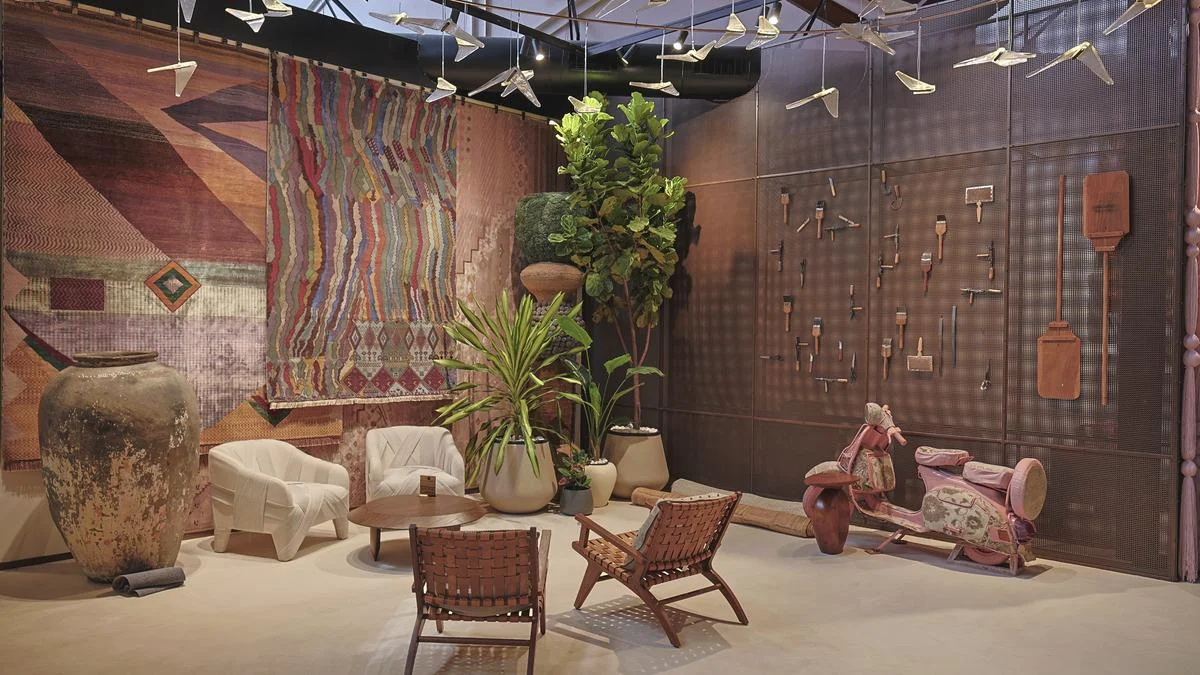
Mumbai, India – In a city where opulence often speaks in grand gestures, the luxury home market is witnessing a significant evolution, marked by an increasing demand for retail spaces that transcend mere commerce to offer immersive experiences. The latest testament to this burgeoning trend is the newly inaugurated 20,000-square-foot flagship store of Jaipur Rugs, strategically positioned within the historic Empire Mills in Lower Parel. This expansive new retail haven, housed in a meticulously restored Victorian-era textile warehouse, is far more than a showroom; it is envisioned as a dynamic gallery celebrating the intricate artistry and compelling narratives woven into every carpet.
The launch event, held on a bustling Friday evening, drew a significant crowd, reflecting Mumbai’s vibrant engagement with high-end design and artisanal crafts. Industry insiders and discerning patrons alike lauded the new space for its unique blend of offerings. Pavitra Rajaram, Creative Director of Nilaaya Anthology, aptly described the store as "part souk and part international gallery," emphasizing its vital role in addressing a perceived void in the city’s luxury retail landscape. "Bombay needed this desperately," Rajaram stated. "There was no space selling carpets exclusively that offers this kind of range." The sentiment was echoed by attendees, with functional medicine health coach Niki Gomez humorously suggesting, "It’s a great showcase of their different styles and approaches, but I wish they’d included a tennis court as in their campaign, since they have the space for it." This playful remark highlights the brand’s innovative marketing strategies that have successfully elevated the perception of carpets from functional floor coverings to statement pieces of art.
The Shifting Sands of Luxury Retail: Beyond the Product
Yogesh Chaudhary, Managing Director of Jaipur Rugs, articulated a profound shift he’s observing in the luxury consumer’s mindset. "Luxury retail is changing," he explained. "Customers are no longer looking only for a beautiful product; they are looking for meaning, provenance, and an experience that stays with them. We wanted to create a space where the product, the artisan, and the story behind the craft are equally important." This philosophy is deeply embedded in the design and ethos of the new flagship, aiming to forge a deeper connection between the consumer and the centuries-old traditions of Indian carpet weaving.
The sheer scale of the Mumbai flagship signifies a deliberate move by Jaipur Rugs to create an environment that allows for a comprehensive exploration of their diverse collections. In a city often characterized by its compact living spaces, the 20,000-square-foot expanse provides a refreshing contrast, offering ample room to showcase the grandeur and intricate detail of their creations. This deliberate spatial strategy underscores the brand’s commitment to presenting its carpets not just as products, but as significant artistic statements within a curated environment.

Architectural Resonance: A Fusion of Industrial Heritage and Contemporary Design
The architectural vision for the Mumbai flagship was entrusted to ROAR, a Dubai-based multidisciplinary studio helmed by the acclaimed designer Pallavi Dean. Dean masterfully orchestrated a symphony of contrasts, harmonizing the raw, industrial bones of the Victorian-era warehouse with sophisticated contemporary installations. The building’s inherent character – its robust steel structure, soaring pitched roof, and abundant clerestory light – was preserved and celebrated, serving as a powerful backdrop for the vibrant textiles.
"The building already had a powerful identity – the steel structure, the pitched roof, the clerestory light, and the memory of its textile past," Dean elaborated. "We looked at weaving as a system of repetition, rhythm, and connection, and translated those ideas into the architecture through fractal geometry and a series of sculptural volumes." This approach ensures that the space itself becomes an integral part of the narrative, mirroring the rhythmic processes of weaving and the interconnectedness of the artisan community. The result is an environment that feels both timeless and cutting-edge, providing an evocative setting for the display of Jaipur Rugs’ artistry.
The spatial design facilitates a journey of discovery. Visitors are guided through distinct zones, each curated to highlight specific collections, design philosophies, or artisan collaborations. The interplay of light and shadow, the texture of exposed brickwork against polished concrete, and strategically placed seating areas encourage contemplation and engagement with the intricate patterns and rich hues of the carpets. The scale of the space also allows for the presentation of larger, more impactful pieces, further enhancing their artistic presence.
A Tapestry of Artistry: Beyond Carpets, a Celebration of Craft
Jaipur Rugs’ commitment to showcasing the breadth of Indian craftsmanship extends beyond its core product. The Mumbai flagship proudly features a curated selection of other art forms, including intricate framed embroidery on silk by Padma Shri awardee Lalita Vakil and captivating miniature paintings rendered in natural pigments by Riyazuddin. These additions underscore the brand’s dedication to preserving and promoting diverse traditional Indian art forms, recognizing the shared spirit of meticulous craftsmanship that binds them.

A particularly noteworthy aspect of the store’s curation is the prominent display of the acclaimed Manchaha and Freedom Manchaha collections. These lines represent a radical departure from traditional design hierarchies, empowering artisans with the creative freedom to design carpets entirely from their own imaginations. This reversal of the typical designer-artisan dynamic fosters innovation and allows for the authentic expression of individual artistic visions, resulting in truly unique and deeply personal creations. The Manchaha collections, meaning "from the heart," are a powerful testament to the untapped creative potential within the artisan community.
The concept behind Manchaha is a carefully considered strategy by Jaipur Rugs to democratize the design process and elevate the status of the artisan. By providing a platform for their unbridled creativity, the company not only produces exceptionally original pieces but also fosters a sense of ownership and pride among the weavers. This approach resonates deeply with the modern luxury consumer who seeks authenticity and a tangible connection to the stories behind their purchases. The presence of these collections within the grand flagship store serves to highlight this commitment on a significant scale.
A Legacy Woven Across Generations and Continents
The story of Jaipur Rugs is a compelling narrative of entrepreneurial vision and dedication to craft. Founded in 1978 by Nand Kishore Chaudhary with just two looms, the company has undergone a remarkable transformation. Today, it boasts over 7,000 looms and has established a global footprint with stores in London, Milan, Dubai, and Singapore, alongside its new Mumbai flagship. Its reach extends across 90 countries, a testament to the universal appeal of its exquisite creations.
Central to Jaipur Rugs’ success is its deep-rooted commitment to empowering artisans. The company collaborates with an impressive 40,000 artisans, a significant majority of whom are women. This focus on female empowerment is not merely a social initiative but a core tenet of the brand’s identity, fostering economic independence and preserving traditional skills within communities. The new flagship in Mumbai serves as a powerful showcase for the collective talent and dedication of these artisans, bringing their stories and their craft to a wider audience.

In recent years, Jaipur Rugs has embraced innovative collaborations to further bridge the gap between traditional crafts and contemporary culture. A notable partnership with PUMA saw the sports brand utilize artisanal carpet dyes for their footwear, while Jaipur Rugs weavers meticulously incorporated intricately woven PUMA logos into handcrafted rugs. This cross-disciplinary approach demonstrates the brand’s agility and willingness to explore new avenues for artistic expression.
Furthermore, Jaipur Rugs’ participation in Homo Faber, the esteemed craft biennale in Venice, underscores its international recognition and its role in elevating Indian artisanal heritage on the global stage. The exhibition of its rugs at such a prestigious event signifies their standing as works of art, deserving of critical acclaim and appreciation from a discerning international audience.
The Vision Ahead: Carpets as Cultural Connectors
Greg Foster, Jaipur Rugs’ Artistic Director, articulated a clear vision for the brand’s future, one that places its creations at the nexus of contemporary culture. "I really want Jaipur Rugs to feel like it’s at the centre of contemporary culture," Foster stated. "From art and fashion to music and dance, it’s about making the connect between the outstanding craftsmanship of our artisans with the finest creative talents." This ambition is vividly realized within the expansive Mumbai flagship, which serves as a platform for such cultural intersections.
The flagship’s design, its curated art installations, and its emphasis on artisan stories all contribute to this overarching goal. It is a space designed not just for transactions, but for inspiration, education, and a profound appreciation of the artistry that defines Jaipur Rugs. By consistently pushing the boundaries of design and collaboration, and by championing the invaluable contributions of its artisan partners, Jaipur Rugs is not just selling carpets; it is weaving a richer tapestry of Indian culture and craftsmanship for the world to experience. The opening of its Mumbai flagship marks a significant milestone in this ongoing journey, solidifying its position as a leader in the global luxury home market and a beacon of artisanal excellence.