

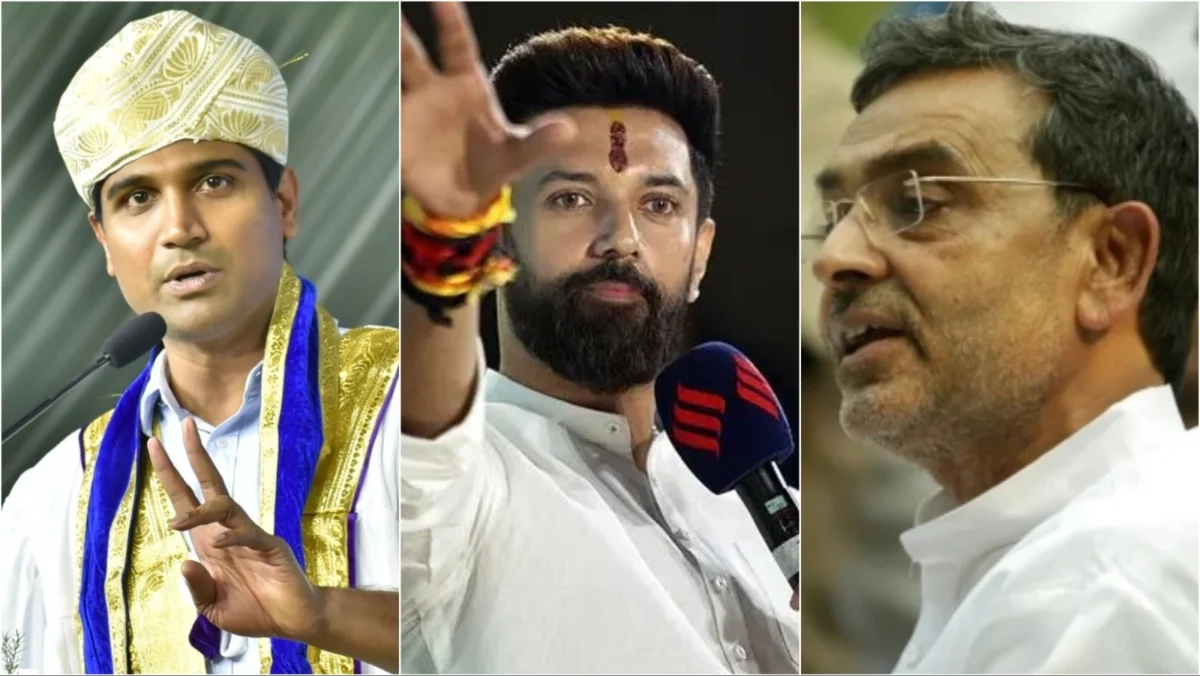
Hyderabad, New Delhi, Patna – September 25, 2026 – A significant internal rift within India’s Election Commission (ECI) has escalated into a major political flashpoint, with key allies of the ruling National Democratic Alliance (NDA) publicly demanding that Chief Election Commissioner (CEC) Gyanesh Kumar issue an urgent clarification. The calls come in the wake of an investigative report by The Indian Express, which revealed that two Election Commissioners, Sukhbir Singh Sandhu and Vivek Joshi, had lodged at least 14 formal objections over ten months regarding decisions related to the Special Intensive Revision (SIR) of electoral rolls, citing a lack of knowledge and glaring procedural gaps.
The demands for transparency from parties like the Telugu Desam Party (TDP), the Lok Janshakti Party (Ram Vilas) (LJP-RV), and the Rashtriya Lok Morcha (RLM) underscore the gravity of the situation. They argue that the CEC must "dispel misgivings in the minds of the people" to preserve public confidence in the integrity of India’s democratic process, which hinges on the impartiality and robustness of its electoral watchdog. This unprecedented public pressure from within the ruling coalition itself signals a widespread concern that transcends partisan lines, highlighting the fundamental importance of the ECI’s credibility.
The Rift Unveiled: A Chronology of Dissent
The controversy erupted following an exclusive report published by The Indian Express on September 23, 2026, which meticulously detailed the internal dissent within the Election Commission.
The Express Investigation: Unmasking Internal Discord
The investigation brought to light a series of formal objections raised by Election Commissioners Sukhbir Singh Sandhu and Vivek Joshi. Over a ten-month period, these two senior officials reportedly placed on record at least 14 instances where decisions pertaining to the Special Intensive Revision (SIR) of electoral rolls were made without their prior knowledge or consultation. Their objections weren’t merely procedural; they pointed to "glaring gaps in processes," suggesting a systemic bypass of established protocols and collective decision-making, which is fundamental to the ECI’s multi-member structure. The concerns ranged from methodological discrepancies in data collection to issues of transparency in the revision process itself. The report painted a picture of an institution struggling with internal cohesion at a time when electoral integrity is under increasing global scrutiny.
The Special Intensive Revision (SIR) Process: A Pillar of Electoral Accuracy
The Special Intensive Revision (SIR) of electoral rolls is a critical exercise undertaken by the Election Commission to update and purify voter lists. This involves a comprehensive review of existing rolls, door-to-door verification, inclusion of eligible new voters, and deletion of deceased or duplicate entries. The accuracy and transparency of the SIR are paramount for ensuring free and fair elections. Any perceived flaws or lack of transparency in this process can directly impact the democratic rights of millions of citizens, potentially disenfranchising eligible voters or including ineligible ones, thereby skewing electoral outcomes. Given its foundational role, the integrity of the SIR process is considered non-negotiable, and any doubts cast upon it are inherently destabilizing to the electoral system.
ECI’s Initial Response: Acknowledging, Not Explaining
In response to The Indian Express investigation, the Election Commission issued a press note signed by Deputy Director P Pawan. While acknowledging the existence of these "notes, observations, technical suggestions and internal checks-and-balances" by its members, the ECI characterized them as a "normal part of deliberation in any institution" and "a part of the decision-making process before a final decision is taken." The statement asserted that these were "standard, ongoing practices" and that "the suggestions given by the Commissioners were for further improving the electoral processes."
However, critics were quick to point out that the EC’s response fell significantly short of addressing the core concerns. It neither provided specific clarifications on the 14 objections raised by Commissioners Sandhu and Joshi, nor did it explain how or if these specific concerns regarding decisions made without their knowledge were ultimately addressed. The generic nature of the response, dismissing serious allegations of procedural bypass as mere "differing views," did little to assuage fears or rebuild trust, instead fueling further demands for a more comprehensive and transparent explanation. The ECI’s stance, while attempting to normalize internal dissent, inadvertently highlighted the lack of a clear, public accountability mechanism for resolving such fundamental disagreements.
NDA Allies Break Silence, Demand Transparency
The revelations and the ECI’s subsequent non-committal response have prompted an unusual chorus of concern from within the NDA coalition, with prominent leaders publicly urging the CEC to provide a comprehensive explanation.
LJP (Ram Vilas): Chirag Paswan’s Direct Challenge
Union Minister and chief of the Lok Janshakti Party (Ram Vilas), Chirag Paswan, was particularly vocal in his demand for clarity. Speaking to reporters, Paswan emphasized the constitutional stature of the ECI and the imperative for it to maintain public trust. "If questions are being raised on the Election Commission, which is an independent constitutional body, responsibility lies with the CEC to present his stance clearly," Paswan stated emphatically. "It is problematic if people begin to doubt the electoral process itself. The EC needs to present its stance, not to Rahul Gandhi, but to the public. But it must dispel misgivings in the minds of people."
Paswan’s statement is significant for several reasons. Firstly, as a Union Minister and a crucial NDA ally, his intervention carries considerable weight, suggesting that the issue has reached a level of concern that transcends party lines within the ruling alliance. Secondly, by explicitly stating that the clarification is owed to "the public" rather than just the opposition leader Rahul Gandhi, Paswan underscored the universal democratic principle of transparency and accountability, positioning the ECI as a guardian of all citizens’ electoral rights, not just a referee between political factions. His call directly places the onus on CEC Gyanesh Kumar to personally address the controversy, implying that the collective press note was insufficient.
TDP’s Stance: Balancing Trust and Transparency
Lavu Srikrishna Devarayalu, the Lok Sabha floor leader for the Telugu Desam Party (TDP), another pivotal NDA ally, adopted a more nuanced but equally firm position. While he acknowledged that the SIR was "conducted in a transparent manner" in Andhra Pradesh – perhaps to reassure his local constituents – he swiftly pivoted to the broader institutional concerns. "At the same time," Devarayalu added, "the Election Commission of India is a constitutional institution entrusted with a crucial responsibility in our democracy. Therefore, whenever questions are raised by anyone, providing appropriate clarification and maintaining transparency will only help strengthen public confidence in the institution."
The TDP’s statement reflects a careful balancing act: affirming local processes while simultaneously advocating for overarching institutional integrity. Devarayalu’s emphasis on "strengthening public confidence" highlights the understanding that even if local implementations are deemed satisfactory, doubts at the national ECI level can erode trust across the board. The TDP, having recently re-entered the NDA fold with a significant mandate, understands the value of robust democratic institutions and the potential damage that even a perception of impropriety can cause to public faith in the electoral system. Their demand, while polite, is a clear signal that the status quo of silence is unacceptable.
RLM’s Call for Clarification: Upendra Kushwaha’s Concerns
Upendra Kushwaha, chief of the Rashtriya Lok Morcha (RLM) and a Rajya Sabha MP, echoed similar sentiments, expressing direct concern about the ECI’s operational integrity. Speaking to The Indian Express, Kushwaha stated, "What has transpired so far is that there is surely an issue with the EC’s functioning. Whatever may be the case, the EC must clarify its position… it must clarify the questions being raised and concerns being flagged."
Kushwaha’s assertion that "there is surely an issue with the EC’s functioning" is a direct challenge to the ECI’s narrative that internal dissent is merely "normal deliberation." His straightforward demand for the EC to "clarify its position" underscores the urgency and seriousness with which this internal rift is being viewed by political stakeholders. As an ally from Bihar, a state known for its keenly contested elections and robust political discourse, Kushwaha’s intervention reflects a broader political consensus that the integrity of the electoral machinery cannot be compromised or left ambiguous. His statement, like Paswan’s, points to a deeper concern about potential systemic issues rather than isolated incidents.
The Opposition’s Voice and Counter-Narratives
While the NDA allies’ demands have put direct pressure on the ECI, the Opposition has naturally seized upon the revelations to intensify its long-standing critique of the institution’s independence and transparency.
Rahul Gandhi and Broader Opposition Demands
Although not explicitly quoted in the original report regarding this specific incident, the context provided by Chirag Paswan’s statement ("not to Rahul Gandhi, but to the public") suggests that the Congress leader and the broader Opposition have been vocal in seeking answers. The Opposition, particularly the Indian National Congress led by Rahul Gandhi, has historically raised concerns about the Election Commission’s functioning, especially in recent years. Their narrative often revolves around allegations of institutional bias, lack of transparency in decision-making, and perceived pressure from the ruling establishment.
The Express investigation into the SIR controversy provides significant ammunition for the Opposition to reinforce these claims. They are likely to highlight the internal dissent as proof of systemic issues, arguing that if Commissioners themselves are raising objections about processes being bypassed, it validates their fears about the integrity of the electoral mechanism. The Opposition’s demands would typically include a full, independent inquiry into the allegations, public disclosure of all dissenting notes, and reforms to ensure the ECI’s complete autonomy and accountability. For them, this isn’t just about the SIR; it’s about the very foundation of electoral democracy.
JD(U)’s Defense and Challenge to Allegations
In contrast to the demands for clarification, Rajiv Ranjan, spokesperson for the Janata Dal (United) (JD(U)), another NDA ally, adopted a defensive posture, questioning the Opposition’s sincerity. Ranjan challenged the Opposition, asking why they had not filed any official complaint "if the allegations are true." He contended, "The RJD was aware that it was going to be defeated. They kept trying to blame the Election Commission repeatedly. But the Election Commission of India sought a clarification when allegations of irregularities in the SIR were raised, and submitted that if there are so many accusations, why is there no official complaint."
Ranjan’s argument attempts to deflect the focus from the ECI’s internal rift by framing the controversy as a politically motivated attack from a defeated opposition. By demanding an "official complaint," he implicitly questions the legitimacy of media investigations and public concerns. This narrative is common from ruling parties, aiming to discredit allegations by portraying them as sour grapes from electoral losers. However, this stance also inadvertently sidesteps the core issue of the internal ECI notes, which originate from within the institution itself, not from external political complaints. The JD(U)’s position highlights the partisan lens through which such controversies are often viewed, potentially downplaying legitimate concerns about institutional processes.
The Bedrock of Democracy: Why ECI’s Credibility Matters
The current controversy extends far beyond mere procedural squabbles; it touches upon the fundamental pillars of India’s democratic system, where the Election Commission stands as an indispensable guardian.
Constitutional Mandate and Independence
The Election Commission of India is a constitutional body established under Article 324 of the Indian Constitution, entrusted with the immense responsibility of conducting free and fair elections. Its independence is sacrosanct, designed to insulate it from political pressures and ensure impartiality in electoral processes. The multi-member commission structure, comprising a Chief Election Commissioner and other Election Commissioners, was introduced precisely to foster collective decision-making, encourage diverse perspectives, and prevent the concentration of power in a single individual. This structure is intended to be a check and balance within the institution itself, ensuring robust deliberation and consensus on critical matters like electoral roll revisions. When internal dissent becomes public and suggests a bypass of this collective mechanism, it fundamentally undermines the constitutional design and the spirit of independence.
Erosion of Public Trust: A Dangerous Precedent
Public trust in the fairness and impartiality of the electoral process is the bedrock of any functioning democracy. If citizens begin to doubt the integrity of the institution responsible for conducting elections, it can lead to widespread cynicism, disengagement, and even political instability. Doubts about the accuracy of voter lists or the transparency of their revision can fuel perceptions of manipulation, leading to a loss of faith in the legitimacy of elected governments. The current controversy, highlighting internal dissent and a perceived lack of transparency within the ECI, risks eroding this crucial public trust. A dangerous precedent is set when a constitutional body, meant to be above reproach, faces questions about its internal processes, potentially leading to calls for boycotts, increased street protests, and a general questioning of democratic outcomes.
Precedents and Future Challenges
The ECI has faced scrutiny in the past, from debates surrounding the efficacy of Electronic Voting Machines (EVMs) to allegations of delays in announcing election schedules. However, an internal rift of this magnitude, publicly revealed and highlighting a breakdown in collective decision-making, is particularly alarming. In an era of rampant misinformation and polarized politics, the ECI’s role becomes even more critical. The increasing complexity of election management, coupled with the rapid evolution of technology, demands an institution that is not only robust and independent but also demonstrably transparent and cohesive in its functioning. Any internal disharmony, especially concerning fundamental processes like voter registration, threatens to cast a long shadow over future elections, requiring not just clarifications but potentially institutional reforms to restore full confidence.
Unanswered Questions and Future Implications
The current crisis presents a series of unanswered questions for the Election Commission and has significant implications for India’s democratic future.
The CEC’s Silence and Institutional Dynamics
A striking aspect of the current situation is the continued silence from Chief Election Commissioner Gyanesh Kumar himself. Despite explicit calls from NDA allies for him to personally "dispel misgivings" and "present his stance clearly," the ECI’s response has come in the form of a generic press note from a Deputy Director. This lack of a direct address from the CEC, who is constitutionally the head of the institution, is notable. It raises questions about the internal power dynamics within the Commission and whether the CEC is willing or able to publicly acknowledge and resolve the specific concerns raised by his colleagues. The perception that the CEC is either unwilling to clarify or unable to manage internal dissent effectively could further undermine the institution’s authority and credibility. The multi-member body is designed for collective leadership, and a visible fracture at the top signals deep-seated issues that a generic statement cannot mend.
Calls for Greater Transparency and Accountability
The incident has intensified calls for greater transparency and accountability within the ECI. While the Commission has always maintained a degree of confidentiality in its internal deliberations, the current controversy suggests that the line between deliberation and procedural bypass may have been blurred. Moving forward, there will likely be increased pressure from political parties, civil society organizations, and the media for the ECI to adopt more transparent internal protocols. This could include clearer guidelines for recording dissenting notes, public disclosure mechanisms for significant internal disagreements, and a more robust process for addressing and resolving objections raised by Commissioners. The demand is not merely for an explanation of past events but for a systemic overhaul that ensures such internal rifts do not jeopardize the integrity of electoral processes in the future.
Political Ramifications
The political ramifications of this controversy are substantial. For the Opposition, it provides fresh ammunition to challenge the credibility of the ECI and, by extension, the legitimacy of election outcomes. They will undoubtedly use this issue to galvanize public opinion and pressure the government for electoral reforms. For the ruling NDA, the demands from its own allies create an uncomfortable situation, forcing them to navigate between defending a key constitutional body and addressing the genuine concerns of their political partners and the public. The issue could become a significant talking point in upcoming state and national elections, influencing voter perceptions and potentially impacting electoral strategies. The ability of the ECI to restore confidence quickly and decisively will be crucial in mitigating these political repercussions. If the ECI fails to provide a convincing explanation, it risks becoming a recurring point of contention in India’s already polarized political landscape.
Conclusion
The public demands from NDA allies for clarification on the internal rift within the Election Commission of India mark a critical moment for India’s democratic institutions. The revelations of significant dissent among Election Commissioners regarding the Special Intensive Revision of electoral rolls have cast a pall of doubt over the very processes that underpin free and fair elections. While the ECI has acknowledged the internal notes, its generic response has failed to address the specific concerns raised by Commissioners Sandhu and Joshi, leading to a chorus of calls for more comprehensive transparency.
Union Minister Chirag Paswan, TDP leader Lavu Srikrishna Devarayalu, and RLM chief Upendra Kushwaha have all underscored the paramount importance of public trust in the ECI, urging CEC Gyanesh Kumar to personally step forward and dispel the misgivings. Their interventions highlight a bipartisan concern that transcends immediate political gains, emphasizing the foundational role of the ECI in upholding India’s democratic integrity.
The ECI, as a constitutional body tasked with safeguarding electoral processes, bears an immense responsibility to address these serious allegations with utmost transparency and accountability. A mere acknowledgment of "differing views" is insufficient when the very legitimacy of electoral rolls is being questioned from within its own ranks. The silence of the Chief Election Commissioner on such a grave matter only amplifies public anxiety and fuels further speculation.
As India navigates an increasingly complex and polarized political landscape, the credibility of its electoral watchdog is non-negotiable. The current controversy serves as a stark reminder that public confidence in democratic institutions is fragile and must be actively nurtured through unwavering commitment to transparency, impartiality, and accountability. The Election Commission of India must swiftly provide a detailed and convincing explanation to restore faith, not just among political stakeholders, but among the millions of citizens whose democratic rights depend on its unquestioned integrity. Failure to do so risks long-term damage to the bedrock of India’s vibrant democracy.
