

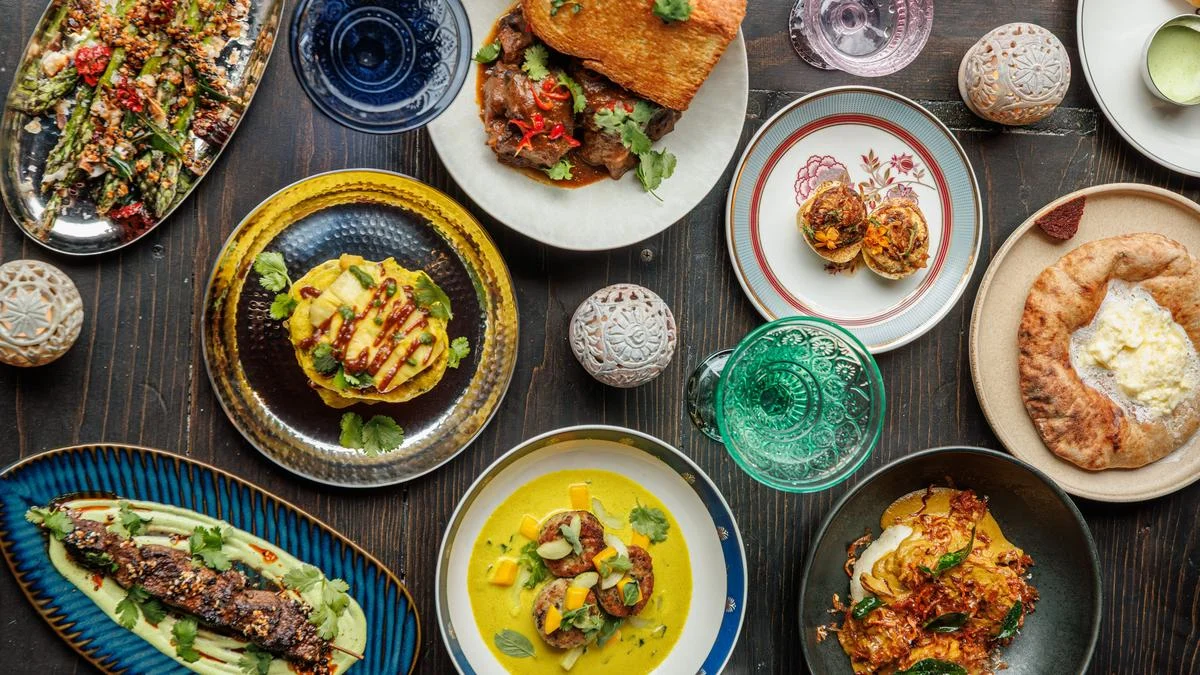
The aroma of curry leaves tempering in hot oil is a familiar scent in New York City’s East Village, but at Dravida, located on First Avenue, the olfactory map extends far beyond the borders of the Indian subcontinent. Here, the menu serves as a living archive of the South Asian diaspora—a narrative of movement, survival, and adaptation told through the medium of high-concept gastronomy.
Led by the formidable Chef Aarthi Sampath, Dravida is not merely a restaurant; it is a culinary thesis on how migration transforms flavor. From the indentured laborers who brought turmeric to the Caribbean to the merchants who carried cumin to the tip of South Africa, Sampath’s kitchen explores the "divided world" of borders through a lens of shared heritage.
Main Facts: A Global South Asian Vision
Dravida enters the New York dining scene at a pivotal moment. For decades, Indian cuisine in the United States was largely pigeonholed into the "curry house" trope—heavy cream-based sauces and tandoori meats that barely scratched the surface of the subcontinent’s diversity. Dravida, however, refuses to be confined by geography.
The restaurant’s concept is "Global South Asian." This means the menu is as likely to feature a Maine lobster cooked in the fiery, vinegar-laced "Schezwan" sauce of Mumbai’s Indo-Chinese streets as it is to serve a refined take on "Maggi" noodles. The latter, a staple of South Asian childhoods, is elevated here into a seasonal vegetable curry ramen featuring blue crab, scratch-made noodles, and a complex seafood stock.

Chef Aarthi Sampath, the visionary behind the concept, brings a pedigree that combines traditional roots with competitive edge. A Mumbai-born chef with familial ties to Tamil Nadu, Sampath first gained national recognition in the United States by winning Season 29 of the high-stakes culinary competition Chopped in 2016. She further cemented her status as a global culinary authority by serving as a judge on MasterChef Tamil. At Dravida, she synthesizes these experiences into a menu that is both deeply personal and historically expansive.
Chronology: From Mumbai to the East Village
The journey to Dravida’s opening is a story of meticulous research and cultural immersion. Sampath’s career trajectory has always been defined by a desire to push the boundaries of what "Indian food" represents in the West.
- Early Years and Education: Born in Mumbai, Sampath was raised in a household where the flavors of Tamil Nadu were central. Her formal training in India provided a foundation in classical techniques, but her move to the United States opened her eyes to the vast, untapped potential of diaspora stories.
- 2016 – The Catalyst: Winning Chopped provided Sampath with a platform. It was during this period that she began to conceptualize a space that didn’t just serve food, but told a story of the people who moved across oceans.
- The Research Phase: Before the first stove was lit at Dravida, Sampath embarked on a journey of "culinary archaeology." She didn’t just study cookbooks; she entered the homes of immigrants. She spent time with Trinidadian families in New York, listening to stories of ancestors who were forced into indentured labor in the sugar fields. She explored the history of the Burmese community in Chennai and the South Asian merchants in Durban, South Africa.
- The Opening: When Dravida finally opened its doors in the East Village, it was the culmination of these years of travel and listening. The restaurant was designed to reflect this textured history, featuring hand-painted murals and textural walls that evoke a sense of weathered history and modern resilience.
Supporting Data: Mapping the Menu
The menu at Dravida is structured like a travelogue, with each dish serving as a waypoint in the history of the South Asian diaspora. The kitchen relies on in-house spice blends, heritage recipes, and seasonal American produce to create a fusion that feels organic rather than forced.
The Caribbean Connection: "Doubles"
One of the standout items is the Trinidadian Double. A staple street food in Trinidad and Tobago, Doubles consist of two pieces of fried dough (barra) filled with curried chickpeas (channa). Its roots lie in the 19th-century "Girmitiya" system, where South Asians were brought to the Caribbean as indentured laborers. Sampath’s version honors the original street-food spirit while refining the textures for a fine-dining setting.

The African Influence: Durban Oxtail Bunny Chow
The Bunny Chow is perhaps South Africa’s most famous contribution to the South Asian culinary canon. Originating in Durban, a city with one of the largest Indian populations outside of Asia, the dish traditionally consists of a hollowed-out loaf of white bread filled with spicy curry. At Dravida, Sampath uses oxtail—a rich, gelatinous cut—to create a version that is both rustic and luxurious, paying homage to the resilience of the Indian community during the apartheid era.
The British-Indian Synthesis: Duck Nihari Hand Pie
Reflecting on her time in London, Sampath created the Duck Nihari Hand Pie. Nihari is a slow-cooked meat stew, traditionally eaten for breakfast in Pakistan and North India. By encasing a braised duck leg stew in a flaky pastry, Sampath nods to the British "pie culture" while maintaining the deep, aromatic spice profile of a traditional nihari.
The Local Fusion: Indo-Chinese Maine Lobster
Nothing says "New York" quite like Maine lobster, but at Dravida, it is reimagined through the lens of Mumbai’s "Schezwan" cuisine—a distinctively Indian adaptation of Chinese flavors characterized by the use of dried red chilies, garlic, and celery. This dish represents the fluidity of South Asian identity, proving that even "foreign" influences can become "native" over time.
Official Responses and Critical Reception
Since its opening, Dravida has become a magnet for food critics and cultural icons alike. The response from the South Asian community in New York has been particularly poignant, with many diners expressing a sense of "being seen" through the menu’s specific regional nods.

Padma Lakshmi, the renowned television host and food expert, has been among the high-profile figures to offer glowing praise for the restaurant. Her endorsement has helped solidify Dravida’s position in the "New Wave" of Indian dining in New York, alongside other acclaimed establishments like Semma (led by Chef Vijay Kumar) and Chatti (by Regi Mathew).
Chef Sampath herself views the restaurant’s success as a sign of a broader cultural shift. "I think South Asian chefs are finally taking a seat at the table," she stated in a recent interview. "We are no longer content with just being a ‘cheap eat’ or a weekend takeout option. We are ready to tell the world, ‘We are here, our history is complex, and our food is amazing.’"
Industry analysts note that Dravida’s success is part of a larger trend where "regionality" is the new benchmark for excellence. Diners in 2024 are looking for specific stories—whether it’s the street food of Chennai or the home-cooked meals of a Trinidadian grandmother—rather than a generic "Indian" experience.
Implications: The Future of Culinary Storytelling
The emergence of Dravida marks a significant evolution in the global gastronomic landscape. It suggests that the future of "ethnic" dining lies not in assimilation, but in the celebration of the diaspora’s unique, hybrid identities.

1. Decolonizing the Palate
By highlighting dishes like the Bunny Chow and Doubles, Sampath is effectively decolonizing the narrative of South Asian food. These dishes were born out of necessity and struggle under colonial rule; by elevating them to the level of fine dining in Manhattan, Dravida reclaims that history as a source of pride rather than just a byproduct of tragedy.
2. The Death of the "Authenticity" Myth
Dravida challenges the rigid definition of "authenticity." Is a dish from Trinidad "authentic" Indian food? Sampath argues that it is. Authenticity, in the context of Dravida, is not about staying frozen in time in a specific village in India; it is about being true to the lived experience of the people who carried those flavors across the globe.
3. Economic and Cultural Impact
The success of high-end regional restaurants like Dravida has significant economic implications. It allows South Asian chefs to command higher price points, invest in better ingredients, and provide professional career paths for a new generation of culinary talent. Culturally, it shifts the perception of South Asia from a monolith to a vibrant, global network of interconnected cultures.
Conclusion
Dravida is more than a restaurant; it is a bridge between the past and the present, and between the subcontinent and the world. Through the skilled hands of Chef Aarthi Sampath, the struggles of the diaspora are transformed into a celebration of flavor. As New York continues to evolve as a global culinary capital, establishments like Dravida ensure that the stories of the marginalized and the migrant are not just remembered, but savored.

For those looking to experience this journey, Dravida remains a cornerstone of the East Village, offering a seat at a table that is as wide as the ocean and as deep as history itself.
Logistics:
- Location: 1st Ave, East Village, New York, NY.
- Operating Hours: Open Tuesday through Sunday; closed on Mondays.
- Signature Experience: The seasonal "Maggi" ramen and the Trinidadian Doubles are considered essential orders for first-time visitors.
