

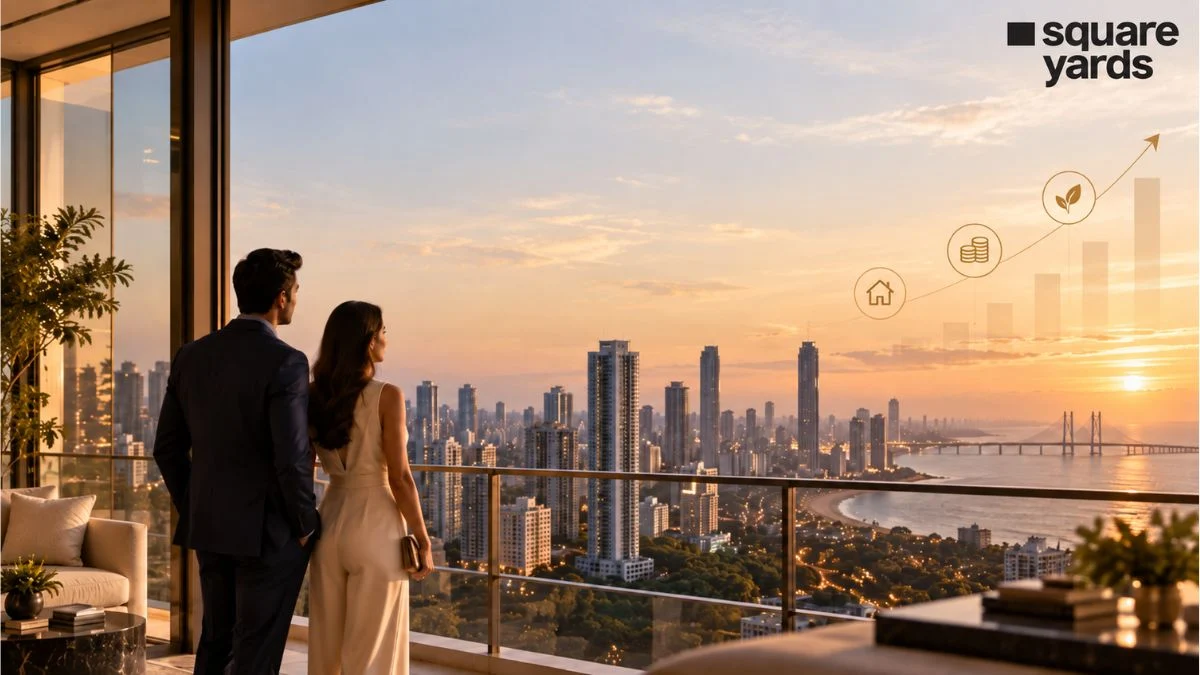
MUMBAI – The skyline of India’s financial capital is undergoing a transformation that transcends mere architecture. As of the first half of the calendar year 2026 (H1 CY26), Mumbai’s luxury housing market—specifically the segment comprising residences priced at Rs 10 crore and above—has witnessed a staggering 26% increase in sales compared to the previous year. However, the most significant change is not found in the volume of transactions, but in the psychology of the buyer.
The affluent Mumbai homebuyer is no longer satisfied with the traditional markers of prestige: a pincode in South Mumbai or a gold-plated lobby. Instead, a profound shift is occurring—a transition from "status-driven" acquisitions to "value-driven" investments. Today’s high-net-worth individuals (HNWIs) are evaluating luxury through the lenses of design, liveability, wealth preservation, and long-term asset performance.
I. Main Facts: The Statistical Surge and the Shift in Sentiment
The luxury real estate sector in Mumbai has defied global economic headwinds, posting record-breaking numbers in the first six months of 2026. The 26% year-on-year growth in the Rs 10 crore-plus category highlights a robust appetite for premium domestic assets. Yet, the criteria for these purchases have become increasingly sophisticated.
According to market analysts and industry leaders, the modern luxury buyer is moving beyond the "bigger is better" philosophy. While square footage remains a factor, it is no longer the primary driver of a deal. The "New Luxury" is defined by:
- Design and Functionality: A move toward biophilic design, private elevators, and multi-purpose "lifestyle" zones.
- Health and Wellness: Integrated wellness centers, advanced air filtration systems, and low-density living.
- Institutional Quality: A preference for developers with impeccable track records in construction quality and timely delivery.
- The Investment Quotient: A dual-purpose approach where the home serves as both a sanctuary and a strategic hedge against inflation.
II. Chronology: The Evolution of the Mumbai Luxury Market (2021–2026)
To understand the current "value-driven" era, one must look at the trajectory of the market over the last five years.
2021–2022: The Post-Pandemic Rebound
Following the global lockdowns, Mumbai saw a surge in "revenge buying" and a desperate need for more space. Low interest rates and stamp duty waivers catalyzed the market. During this period, luxury was defined by "safety" and "isolation." Buyers sought larger floor plates to accommodate home offices and gyms.
2023–2024: The Rise of the Branded Residence
As the market matured, buyers became more discerning. The focus shifted toward "Branded Residences"—partnerships between developers and luxury hospitality brands (e.g., Ritz-Carlton, Four Seasons, or Armani/Casa). This era marked the beginning of the trust-based purchase, where buyers paid premiums for guaranteed service standards.
2025–Early 2026: The Era of Optimization
Entering 2026, the market moved from "excess" to "optimization." The Knight Frank Wealth Report 2026 noted a pivot toward lifestyle experiences and personal expression. The focus shifted from what a house says about the owner to how the house serves the owner. Infrastructure projects like the Mumbai Trans Harbour Link (MTHL) and the expanded Metro network began to redefine "prime locations," allowing luxury pockets to emerge outside of traditional South Mumbai hubs.
III. Supporting Data: Quantifying the Value Shift
The transition to value-based luxury is backed by hard data from the industry’s most respected outlooks.
The Investment vs. Consumption Balance
The India Sotheby’s International Realty Luxury Residential Outlook 2026 reveals a fascinating equilibrium in buyer motivation:
- 53% of buyers cited "Capital Appreciation" as their primary reason for purchasing a luxury home.
- 47% of buyers cited "Self-use" or lifestyle upgrades.
This nearly 50/50 split suggests that luxury real estate is now viewed as a critical component of a diversified investment portfolio, rather than just a lifestyle expense.
Market Concentration and Resale Strength
In H1 CY26, the "Top 10" localities in Mumbai—including Worli, Lower Parel, Bandra West, and Juhu—accounted for 80% of the total primary luxury sales value. This concentration indicates that while buyers are looking for value, they are finding it in micro-markets with proven resilience.
Furthermore, the secondary (resale) market has maintained a steady share, averaging 30% of total luxury transactions since 2021. This stability in the secondary market is a key indicator of "capital preservation," as luxury assets continue to hold and grow their value even after the initial developer sale.
The Rise of Branded Reliability
Data suggests that "Branded Residences" command a 20% to 35% premium over non-branded luxury projects in the same vicinity. Buyers are increasingly willing to pay this premium not just for the name, but for the assurance of maintenance, construction quality, and long-term facility management.
IV. Official Responses and Industry Perspectives
Manan Joshi, Founder at Sarvam Properties, provides a localized perspective on how these trends are manifesting on the ground. According to Joshi, the dialogue between developers and buyers has fundamentally changed.
"The affluent investor is no longer just looking at a brochure; they are looking at the balance sheet of the developer and the technical specifications of the glass used in the facade," Joshi notes. "In Mumbai, the scarcity of land has always driven prices, but now, the scarcity of quality is what drives the premium. Buyers are seeking professional advisors to help them navigate approvals, construction timelines, and the potential for inter-generational wealth creation."
Joshi emphasizes that the "value" in value-driven luxury often comes from the surrounding infrastructure. "With the evolving connectivity landscape—new coastal roads and metro lines—a luxury property’s value is now tied to its ‘time-wealth.’ How quickly can the resident reach the business district or the airport? That is the new luxury."
The Developer’s Mandate
Developers are responding to this evaluative buyer by focusing on:
- Transparency: Providing real-time updates on construction milestones.
- Sustainability: Achieving LEED or IGBC certifications to appeal to the environmentally conscious HNWI.
- Low Density: Offering fewer apartments per floor to ensure privacy, which has become the ultimate currency in a crowded metropolis.
V. Implications: What This Means for the Future of Mumbai
The shift toward value-driven luxury has several long-term implications for the city’s real estate ecosystem and its economic standing.
1. The Professionalization of Real Estate Advisory
As buyers become more evaluative, the role of the traditional real estate broker is being replaced by professional advisors and wealth managers. High-ticket purchases are now treated with the same due diligence as a corporate merger or a private equity investment.
2. Infrastructure as a Value Multiplier
The premium for "traditional" luxury addresses may soften as infrastructure levels the playing field. Localities that offer better "liveability"—less congestion, better air quality, and proximity to modern amenities—will see higher capital appreciation than congested heritage areas. This will lead to a more polycentric luxury market in Mumbai.
3. Capital Preservation and Legacy Building
Luxury homes are increasingly being viewed as "legacy assets." The emphasis on construction quality and branded maintenance ensures that the property remains viable for the next generation. This "inter-generational wealth" lens means that developers who cut corners on materials or design will find themselves phased out of the Rs 10 crore-plus segment.
4. Pressure on Developers to Deliver "Meaning"
As the Knight Frank report suggests, luxury has moved from "excess to meaning." Future projects will need to offer more than just gold-leafed interiors. They will need to offer community, wellness, and a sense of personal growth. We can expect to see more "curated" living experiences, such as buildings with private art galleries, resident-only Michelin-star dining, or integrated holistic health clinics.
Conclusion: The Final Verdict on the 2026 Market
As Mumbai moves into the second half of 2026, the momentum in the luxury housing sector shows no signs of waning. However, the "status" of an address is no longer enough to close a deal. The modern Mumbai homebuyer is an astute evaluator of value, looking for a rare confluence of lifestyle enhancement and financial prudence.
For developers, the challenge is clear: building a "luxury" project is the baseline; establishing a "value proposition" is the goal. In a market where the entry price is Rs 10 crore, the question is no longer "How much does it cost?" but "What does this property enable for my life and my legacy?"
In the words of Manan Joshi, the shift is permanent. Mumbai’s elite are not just buying homes; they are curating their futures. The property that offers the best design, the highest construction standards, and the most robust investment potential will always command the market, regardless of the price tag. The era of the "Bling" is over; the era of "Value" has arrived.
