

Main Facts
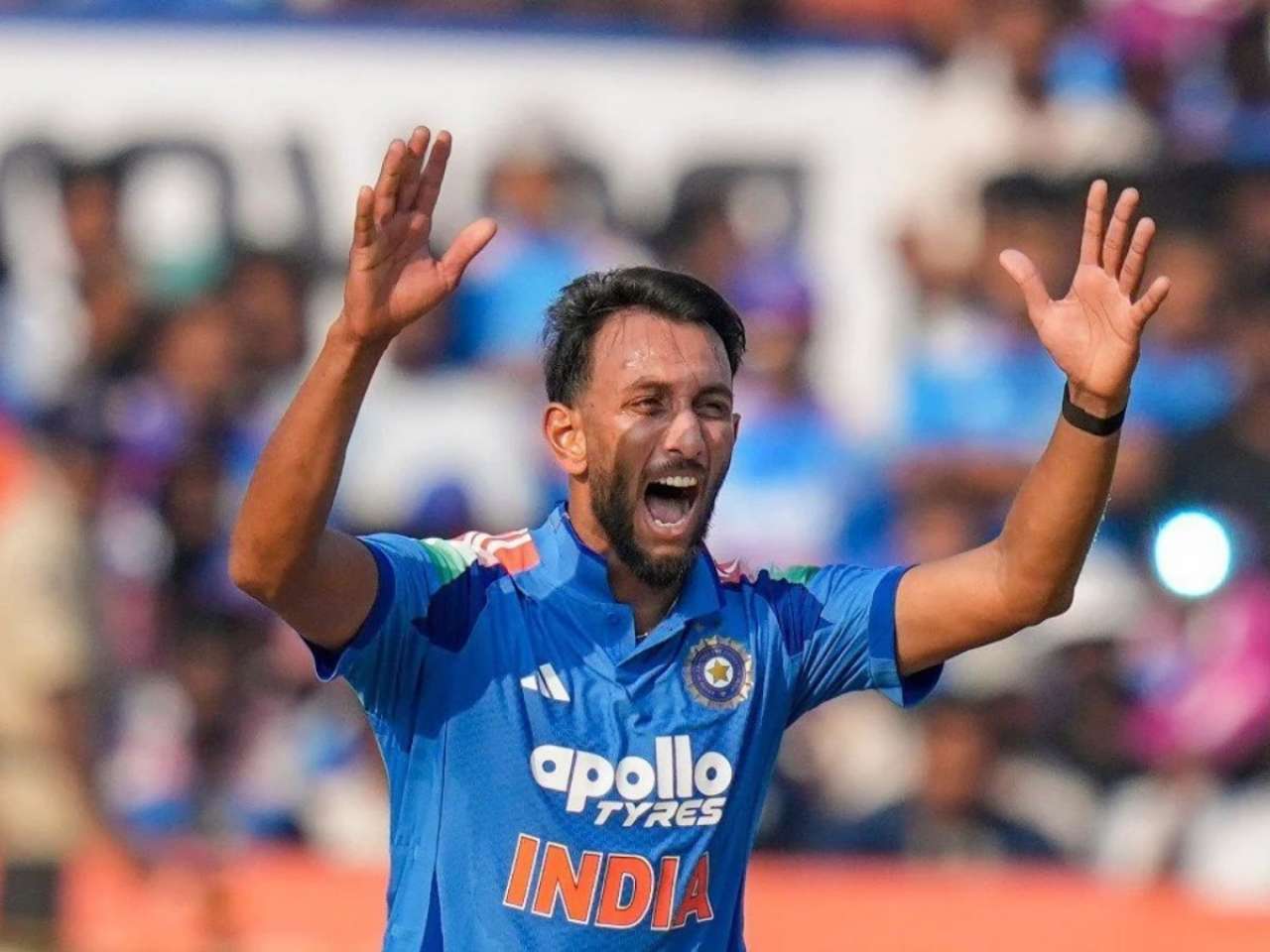
The Indian cricket team faces significant logistical and strategic adjustments as they prepare for the concluding One-Day International (ODI) against West Indies and the subsequent Twenty20 International (T20I) series. Fast bowler Prasidh Krishna has been officially ruled out of the third and final ODI due due to a hamstring strain sustained during the second match. His place in the squad for the upcoming ODI has been taken by fellow pace bowler Anshul Kamboj, a promising talent from Haryana. In a separate, albeit equally impactful, development, all-rounder Washington Sundar has been withdrawn from the T20I squad against West Indies, with Naman Dhir named as his replacement. Sundar’s exclusion is a strategic move by the selection committee, aiming to prepare him for the rigours of Test cricket, particularly with an eye on the upcoming series against New Zealand in November and the commencement of the Ranji Trophy.
These changes come at a pivotal juncture for the Indian side, which has already secured a commanding 2-0 lead in the three-match ODI series. While the series victory provides a cushion, the alterations underscore the team management’s dual focus: managing player fitness proactively and strategically developing talent across formats. Prasidh Krishna’s injury represents a setback for India’s fast-bowling resources, especially given his potential role in future white-ball assignments. Meanwhile, the decision regarding Washington Sundar highlights a conscious effort to nurture multi-format players, ensuring their readiness for the demands of Test cricket amidst a packed international schedule. The induction of Anshul Kamboj and Naman Dhir offers fresh blood and an opportunity for these domestic performers to showcase their mettle on the international stage.
)
Chronology of Events
The narrative of these recent squad changes is intricately linked to the ongoing India-West Indies series, particularly the events of the second ODI, which proved decisive in more ways than one.

Pre-Series Anticipation and First ODI: The tour of West Indies began with a sense of anticipation, marking another chapter in India’s preparations for major white-ball tournaments. The first ODI, played on September 27th, saw India secure a comfortable victory, setting the tone for their dominance. Prasidh Krishna, having recently returned to the national setup after a period of injury, was keen to establish his rhythm and stake his claim in the fast-bowling department.
The Second ODI in Guwahati: A Day of Records and Injury: The second ODI, held in Guwahati on Wednesday, September 30th, was a high-scoring affair that witnessed both spectacular batting performances and an unfortunate injury.
)
- West Indies’ Batting Blitz: Electing to bat first, the West Indies batsmen unleashed a relentless assault on the Indian bowlers. Capitalizing on a flat pitch and quick outfield, they posted a mammoth total of 405 runs for the loss of 7 wickets. Their innings was characterized by aggressive stroke play and crucial partnerships, pushing the Indian attack to its limits.
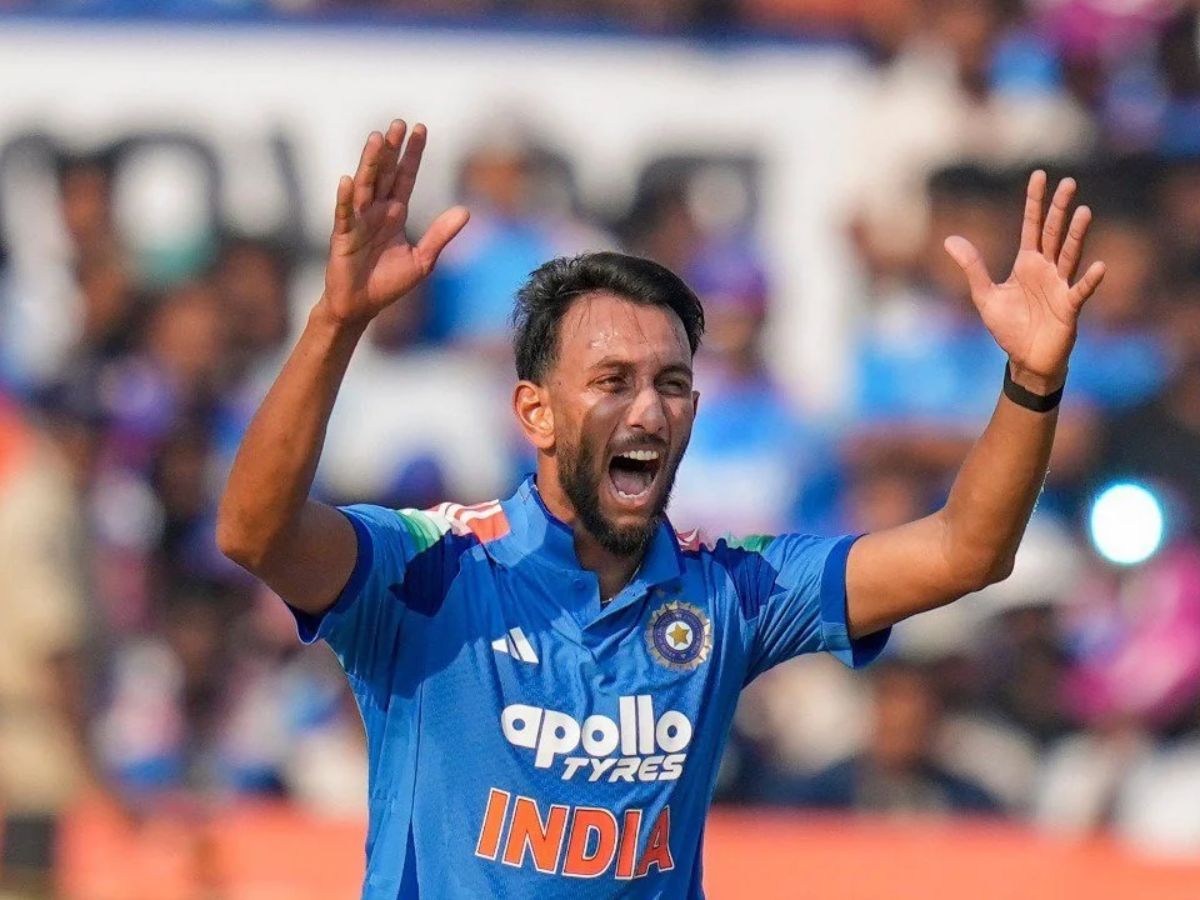
- Prasidh Krishna’s Hamstring Strain: It was during this demanding innings that Prasidh Krishna experienced discomfort. The rapid bowler, tasked with providing crucial breakthroughs and containing the opposition’s scoring rate, managed to complete only 5 overs before he felt tightness in his hamstring. Despite his best efforts, the pain became unbearable, forcing him to leave the field. This early departure from the game immediately raised concerns within the team management and medical staff, signaling a potential injury. His inability to complete his spell was a clear indicator that something was amiss, and subsequent medical assessment confirmed a hamstring strain.
- India’s Historic Chase: Undeterred by the formidable target of 406, India responded with a breathtaking display of batting prowess. The chase turned into a historic event, with India achieving their greatest ever successful pursuit in the ODI format. Young sensation Shubman Gill played an innings of a lifetime, remaining unbeaten on a colossal 223 runs. He was ably supported by captain Rohit Sharma, who notched his 35th ODI century, scoring 101 runs. Their combined efforts propelled India to an emphatic 8-wicket victory with 39 balls remaining, securing an unassailable 2-0 lead in the three-match series. While the victory was celebrated, the underlying concern about Prasidh’s injury lingered.
Post-Match Assessment and Official Announcements: Following the conclusion of the second ODI, Prasidh Krishna underwent a thorough medical evaluation. The team management, prioritizing player welfare and long-term fitness, made the decision not to risk further aggravation of the hamstring strain.
- Prasidh Krishna Ruled Out: On October 1st (or 2nd, as per the original content’s implied timeline before the Oct 3rd match), an official announcement confirmed Prasidh Krishna’s withdrawal from the third ODI. The decision was made with an emphasis on rehabilitation and preventing the injury from becoming a chronic issue.
- Anshul Kamboj Named Replacement: Concurrently, the Board of Control for Cricket in India (BCCI) confirmed that Anshul Kamboj, a promising pace bowler from the domestic circuit, would join the squad as Prasidh Krishna’s replacement for the third ODI. This move underscored the importance of maintaining pace bowling depth even for a single match.
- Washington Sundar’s Strategic Withdrawal and Naman Dhir’s Call-up: In a separate but related development, the selection committee also announced changes to the T20I squad that would follow the ODI series. Washington Sundar was strategically removed from the T20I roster. This decision was explicitly stated to be aimed at providing Sundar with opportunities to focus on Test cricket, particularly with the Ranji Trophy commencing on October 11th and a Test series against New Zealand scheduled for November. Naman Dhir, who had already made his international debut in the ongoing ODI series, was subsequently called up to the T20I squad to fill the void left by Sundar.
Upcoming Fixtures: The immediate focus for the Indian team shifts to the third ODI scheduled for October 3rd, where they will aim for a clean sweep. Following this, the team will transition to the T20I format, where the newly inducted players, Kamboj and Dhir, will be part of the squad looking to continue India’s winning momentum.
)
Supporting Data and Player Profiles
The recent squad adjustments shine a spotlight on the individual trajectories and roles of the players involved, offering a deeper understanding of their significance to the Indian cricket team’s ecosystem.
)
Prasidh Krishna: A Pacer’s Promise and Peril
Prasidh Krishna, standing tall at 6 feet 2 inches, has been identified as a key component of India’s fast-bowling future, particularly in the white-ball formats. His ability to extract extra bounce from most pitches due to his height, coupled with his genuine pace (consistently bowling in the 140 km/h range), makes him a formidable threat. He made his ODI debut in March 2021 against England, impressing immediately with figures of 4/54. Since then, he has been in and out of the squad, often battling injuries.
- Career Highlights: In his relatively young ODI career, Prasidh has demonstrated flashes of brilliance, particularly in conditions that offer even a hint of seam movement. He has played a limited number of ODIs but has shown the potential to be a wicket-taker in the middle overs and an effective bowler at the death. His economy rate, while sometimes on the higher side in challenging conditions, is often balanced by his ability to pick up crucial wickets.
- Impact of Absence: Prasidh’s absence, even for a single match, deprives India of a genuine pace option who can trouble batsmen with bounce and pace. His recent return from a stress fracture had been carefully managed, and this hamstring strain is an unfortunate setback. For a fast bowler, recurrent injuries are a significant concern, often hindering rhythm and consistency. The team management’s decision to rule him out highlights their commitment to his long-term fitness over short-term gains, especially with a packed international calendar ahead. His role was seen as vital for creating depth in India’s pace battery, particularly in the lead-up to potential major tournaments.
Anshul Kamboj: The Domestic Dark Horse
Anshul Kamboj emerges from the strong domestic cricket system of Haryana, a state renowned for producing quality pace bowlers. His call-up is a testament to consistent performances in the Ranji Trophy, Vijay Hazare Trophy (List A), and Syed Mushtaq Ali Trophy (T20s).
)
- Playing Style and Domestic Record: Kamboj is a right-arm medium-fast bowler known for his disciplined lines and lengths, coupled with the ability to swing the ball. While specific international statistics are yet to be compiled, his domestic record typically shows him to be a reliable performer, capable of bowling economical spells and picking up wickets at crucial junctures. His inclusion signals the selectors’ intent to reward domestic excellence and broaden the pool of fast-bowling talent. In domestic cricket, he has steadily improved, showcasing good control and an understanding of different match situations. His List A performances, in particular, would have caught the selectors’ eyes, as they are often a direct pathway to ODI cricket.
- Expectations: While he might not feature in the playing XI for the third ODI, his inclusion in the squad provides him invaluable exposure to the national team environment. It’s an opportunity to learn from senior players and coaches, and for the team management to assess his readiness for international cricket. His presence adds to the squad’s depth, offering a like-for-like replacement in terms of bowling style if needed.
Washington Sundar: The Test Specialist in Waiting
Washington Sundar is a unique talent in Indian cricket: a left-handed batsman who bowls off-spin. He has been a fixture in India’s white-ball squads, particularly in T20Is, where his economical bowling in the powerplay and handy contributions with the bat have been highly valued. However, the recent decision to rest him from the T20I series against West Indies is a clear strategic pivot towards his potential in Test cricket.
- All-Rounder Capabilities: Sundar’s ability to bowl tight lines and extract turn, even on unhelpful pitches, makes him a valuable asset. With the bat, he possesses a calm temperament and the ability to score crucial runs down the order. He has already shown glimpses of his Test match potential, particularly with his resolute batting in Australia during the historic 2020-21 Border-Gavaskar Trophy.
- Focus on Test Cricket: The selection committee’s explicit mention of preparing him for Test cricket, ahead of the New Zealand series in November and the Ranji Trophy starting October 11th, underscores a long-term vision. India is keen to develop spinning all-rounders who can contribute significantly with both bat and ball, especially in overseas conditions where an extra spinner might be needed, or on pitches that aid turn. Sundar’s exclusion from the T20I series is a calculated move to allow him to concentrate on the longer format, hone his red-ball skills, and build his physical endurance for multi-day cricket. This indicates a structured approach to player development, recognizing the different demands of each format.
Naman Dhir: The T20I Call-Up
Naman Dhir, who recently made his international debut in the ongoing ODI series against West Indies, now finds himself elevated to the T20I squad. This rapid progression indicates the selectors’ confidence in his abilities, particularly his suitability for the shortest format of the game.
)
- Playing Style and Recent Form: While specific details of his domestic T20 performances might not be widely publicised yet, his call-up suggests he is an aggressive batsman, potentially an all-rounder, who can provide quick runs and contribute dynamically in the T20 format. His inclusion points towards his strong showings in domestic T20 competitions such as the Syed Mushtaq Ali Trophy or perhaps an impressive stint in the Indian Premier League (IPL). Having already been with the squad for the ODIs, he will be familiar with the team environment, easing his transition into the T20 setup.
- Opportunity: For Dhir, this is a significant opportunity to establish himself in the national team across white-ball formats. His inclusion reflects the selectors’ ongoing search for fresh talent and dynamic players who can adapt to the fast-paced nature of T20 cricket.
Team India’s Bench Strength: These changes, while prompted by injury and strategic decisions, also highlight the robust bench strength of Indian cricket. The ability to call upon players like Anshul Kamboj and Naman Dhir, who have performed consistently in domestic cricket, showcases the depth of talent available. This depth is crucial for a team with a demanding international schedule, allowing for player rotation, injury management, and the continuous development of a strong talent pipeline.
Official Responses and Team Management’s Stance
)
The official communications surrounding these squad changes have been clear and deliberate, reflecting a well-thought-out strategy by the Board of Control for Cricket in India (BCCI) and the team management. Their responses underscore a multi-faceted approach encompassing player welfare, strategic development, and immediate squad requirements.
Prioritizing Player Welfare: The Case of Prasidh Krishna
The primary official response regarding Prasidh Krishna’s withdrawal from the third ODI has been centered on player health and long-term fitness. "The team management doesn’t want to take any risks with Prasidh," was the succinct but potent message conveyed. This statement is indicative of a broader philosophy adopted by the Indian cricket establishment in recent years, particularly concerning fast bowlers.
)
- No Compromise on Fitness: Fast bowlers, by the very nature of their craft, are highly susceptible to injuries. Hamstring strains, stress fractures, and ankle issues are common occurrences. The BCCI’s medical team, in conjunction with the coaching staff, conducts rigorous assessments. The decision to rule Prasidh out, even for a single ODI, highlights a zero-tolerance approach to aggravating existing injuries. This proactive stance aims to prevent minor niggles from escalating into chronic problems that could sideline a player for extended periods, as has been the case with several Indian pacers in the past.
- Long-Term Vision: With a packed international schedule that often sees players move seamlessly between formats, managing player load has become paramount. For a bowler of Prasidh’s calibre and potential, ensuring full recovery is crucial for his future availability and performance, especially if he is viewed as a contender for upcoming major tournaments like the World Cup (if his timeline aligned, or other significant ICC events). The official stance emphasizes that short-term gains will not jeopardize a player’s long-term career.
Strategic Player Development: The Washington Sundar Conundrum
The decision to pull Washington Sundar out of the T20I series is arguably the most insightful of the recent changes, showcasing a deliberate strategic shift in player management.
- Focus on Test Cricket: The explicit reason provided – "the selection committee aims to provide him opportunities in Test cricket ahead of the New Zealand Test series in November. The Ranji Trophy commences on 11 October" – reveals a clear developmental pathway. Sundar, a skilled all-rounder, has demonstrated his capability in Test matches before, notably with his resilient batting and handy off-spin in Australia. The team management evidently sees a greater potential and a more pressing need for his services in the longest format, especially as India continues to build a robust Test squad capable of winning both home and away.
- Nurturing Multi-Format Specialists: This move is a testament to the BCCI’s evolving strategy of nurturing multi-format players while also acknowledging the specialized demands of each format. Instead of over-exposing Sundar to T20 cricket, where India has ample spinning all-rounder options, they are strategically positioning him to gain valuable red-ball match practice through the Ranji Trophy. This will allow him to refine his skills, build stamina for longer spells, and acclimatize to the different tactical nuances of Test cricket, thereby enhancing India’s options in that format.
- Confidence in Bench Strength: The ability to rest a player of Sundar’s experience from a T20I series also speaks volumes about India’s white-ball bench strength. It implies that the selectors are confident in the abilities of other players to step up and perform, allowing them the luxury of making such strategic calls for core players.
Rewarding Domestic Performance: The Call-ups of Kamboj and Dhir
The inclusion of Anshul Kamboj and Naman Dhir is a direct reflection of the BCCI’s commitment to rewarding consistent performers in the domestic circuit.
)
- Merit-Based Selection: Both players have reportedly performed well in their respective domestic competitions. Kamboj’s consistent pace bowling for Haryana and Dhir’s impactful performances (presumably in white-ball formats) have caught the selectors’ eyes. These call-ups serve as a powerful motivator for other domestic players, reinforcing the message that strong performances at the first-class or List A/T20 level will eventually be recognized and rewarded with national opportunities.
- Building a Talent Pipeline: The official response, while not explicitly stated, implicitly acknowledges the role of these players in building a sustainable talent pipeline. By integrating promising domestic players into the national squad, even if initially just for squad exposure, India is proactively preparing its next generation of cricketers. This ensures that there is always a pool of ready-to-go players who can step in when injuries strike or when strategic rotations are necessary.
In essence, the official responses and the team management’s stance are characterized by a pragmatic blend of immediate necessity (replacing an injured player), long-term strategic planning (Sundar’s Test focus), and a consistent commitment to rewarding domestic excellence (Kamboj and Dhir). This holistic approach aims to maintain India’s competitive edge across all formats while safeguarding the careers of its valuable players.
Broader Implications and Future Outlook
)
The recent changes in the Indian squad, while seemingly immediate responses to injury and series circumstances, carry broader implications for the team’s strategic direction, player management philosophy, and the overall health of Indian cricket’s talent pipeline.
Impact on India’s Player Load Management Strategy:
Prasidh Krishna’s hamstring strain underscores the perennial challenge of managing fast bowlers’ workloads in modern cricket. With bilateral series, multi-nation tournaments, and the Indian Premier League (IPL) packed into a demanding calendar, fast bowlers are under immense physical strain.
)
- Prioritizing Health Over Immediate Gains: The team management’s decision to sideline Prasidh, even if India has already won the series, reflects a growing emphasis on player welfare. This approach, which prioritizes full recovery and rehabilitation over pushing players back into action prematurely, is crucial to prolonging careers and ensuring key players are available for major tournaments. It’s a recognition that a fit fast bowler for critical future assignments is more valuable than a partially fit one for a less significant match.
- Sports Science Integration: This incident will likely reinforce the importance of advanced sports science, strength and conditioning, and comprehensive injury prevention programs within the Indian setup. The BCCI will continue to invest in monitoring player physiology, workload data, and recovery protocols to minimize injury risks.
Reinforcing Bench Strength and the Domestic Pipeline:
The call-ups of Anshul Kamboj and Naman Dhir are significant indicators of the robust domestic cricket structure in India.
- Rewarding Consistency: Their inclusions are direct consequences of consistent performances in the Ranji Trophy, Vijay Hazare Trophy, and Syed Mushtaq Ali Trophy. This serves as a powerful message to aspiring cricketers: excel in domestic competitions, and the national call-up will follow. This meritocratic approach is vital for keeping the domestic circuit competitive and motivating.
- Depth Across Formats: The ability to seamlessly replace injured or strategically rested players with competent domestic talents showcases the incredible depth of Indian cricket. This depth is essential for navigating a grueling international schedule, managing player fatigue, and experimenting with new combinations. It ensures that the quality of the squad doesn’t significantly diminish even with changes.
Strategic Player Development: Washington Sundar’s Case as a Blueprint:
The decision to withdraw Washington Sundar from the T20I squad to focus on Test cricket is a pioneering move that could set a precedent for strategic player development in India.
)
- Multi-Format Specialization: It acknowledges that while some players can excel across all three formats, others might need specialized attention to maximize their potential in a particular format. Sundar, with his unique skill set as an off-spinning all-rounder, is seen as a valuable asset for Test cricket, especially with India’s need for versatile options in overseas conditions.
- Long-Term Planning: This move exemplifies long-term planning by the selection committee, looking beyond immediate series to build a formidable Test squad. By allowing Sundar to play Ranji Trophy and prepare specifically for the New Zealand Test series, they are investing in his red-ball game, which has different demands compared to white-ball cricket (e.g., longer spells, different batting temperament). This could become a model for managing other multi-format players in the future, allowing them to specialize and excel without burning out.
Challenges for West Indies and Series Context:
While the changes are internal to the Indian team, they do have a subtle impact on the West Indies.
- Adapting Scouting Reports: West Indies’ strategists would have prepared extensively for players like Prasidh Krishna and Washington Sundar. The introduction of new faces like Kamboj and Dhir means West Indies will have less data and fewer pre-conceived notions about their playing styles, potentially requiring on-the-fly adjustments.
- Maintaining Focus: For West Indies, having already lost the series, their focus will be on salvaging pride in the third ODI and competing fiercely in the T20I series. India’s player changes, while not necessarily weakening the squad significantly, might offer a psychological edge if West Indies can exploit the relative inexperience of the new recruits.
Future Outlook:
The immediate future for the Indian team involves completing the ODI series with a potential clean sweep and then transitioning to the T20I series against West Indies. Beyond that, the focus shifts to the upcoming home season, including the Test series against New Zealand and other white-ball assignments.
)
- Prasidh Krishna’s Rehabilitation: His recovery will be closely monitored, with an aim to get him fit for crucial upcoming series. His availability will be vital for maintaining a strong pace attack.
- Kamboj and Dhir’s Opportunities: For the new entrants, these are golden opportunities to make a mark and cement their places in the national squad. Strong performances could pave the way for longer international careers.
- Sundar’s Test Trajectory: All eyes will be on Washington Sundar’s performances in the Ranji Trophy and, subsequently, in the New Zealand Test series. His success in this new strategic role could validate the BCCI’s approach to player development.
In conclusion, the recent squad changes are more than just mere substitutions; they are reflections of India’s evolving cricketing philosophy. They highlight a commitment to player well-being, strategic long-term planning, and the continuous nurturing of domestic talent, all aimed at maintaining India’s position as a dominant force in international cricket across all formats.
