

NEW DELHI – In an unprecedented display of market dominance and operational scaling, Honda Motorcycle & Scooter India (HMSI) has reported its highest-ever monthly sales performance for September 2026. The company successfully breached the 7-lakh unit threshold, a feat driven by a robust domestic recovery and an aggressive expansion of its export portfolio. By recording total volumes of 7,06,266 units, Honda has signaled a decisive shift in its growth trajectory, marking a 24.31% year-on-year (YoY) increase compared to the 5,68,164 units sold in September 2025.
This record-breaking performance comes at a critical juncture for the Indian two-wheeler industry, as manufacturers gear up for the festive season and navigate the transition toward premiumization and electrification. Honda’s ability to scale its domestic presence while simultaneously hitting new peaks in the global market underscores the success of its "Made in India, for the World" strategy.
I. Main Facts: A Month of Record-Breaking Statistics
The September 2026 sales data reveals a company firing on all cylinders. The growth was not localized to a single segment or market but was distributed across domestic sales and international shipments.
Domestic Market Dominance
In the Indian market, HMSI’s domestic sales reached a staggering 6,36,768 units in September. This represents a 25.92% growth over the 5,05,693 units sold in the same month last year. Perhaps more impressive is the sequential growth; compared to August 2026, where the company moved 5,17,329 units, Honda added 1,19,439 vehicles to its monthly tally—a 23.09% month-on-month (MoM) increase.
Export Momentum
On the global front, Honda’s export division achieved its highest-ever monthly volume, shipping 69,498 units. This reflects an 11.25% YoY growth from the 62,471 units exported in September 2025. While domestic sales remain the primary volume driver, exports now contribute approximately 9.84% of the total monthly volume, highlighting Honda’s growing influence in overseas markets.
Summary of September 2026 Performance:
- Total Sales: 7,06,266 units (+24.31% YoY)
- Domestic Sales: 6,36,768 units (+25.92% YoY)
- Exports: 69,498 units (+11.25% YoY)
- Total Volume Increase: 1,38,102 units compared to Sept 2025.
II. Chronology: The Road to the 7-Lakh Milestone
To understand the magnitude of Honda’s September performance, one must look at the sequential build-up throughout the 2026 calendar year and the first half of the 2026-27 fiscal year (FY).
The Third Quarter (July–September 2026)
The second quarter of the fiscal year (Q2 FY27), which corresponds to the third calendar quarter of 2026, saw Honda record total sales of 18,28,362 units. This is a 12.97% increase over the 16,18,403 units sold during the same period in 2025.
- Domestic Q3: 16,30,533 units (Up 12.21%)
- Export Q3: 1,97,829 units (Up 19.64%)
The data suggests that while the quarter started with steady growth, the momentum accelerated sharply in September, likely due to inventory building for the Navratri and Diwali festive periods, which are traditional peaks for two-wheeler consumption in India.

First Half of the Fiscal Year (April–September 2026)
The cumulative performance for the first half (H1) of the fiscal year showcases a sustained upward trend. Between April and September 2026, Honda’s total sales reached 34,40,072 units, growing 14.92% YoY from the 29,93,555 units recorded in H1 FY26.
- H1 Domestic: 30,44,072 units (Up 13.50%)
- H1 Exports: 3,96,000 units (Up 27.12%)
The fact that exports grew at double the rate of domestic sales in the first half (27.12% vs. 13.50%) indicates that Honda’s Indian manufacturing hubs are increasingly becoming vital to the brand’s global supply chain.
III. Supporting Data: Product Strategy and Portfolio Diversification
The surge in volumes is intrinsically linked to Honda’s aggressive product offensive. Historically known for its dominance in the scooter segment (led by the Activa) and the commuter motorcycle segment (Shine), Honda has recently pivoted toward the premium and "lifestyle" segments to capture a wider demographic.
The Premium Push: CB and Rebel Series
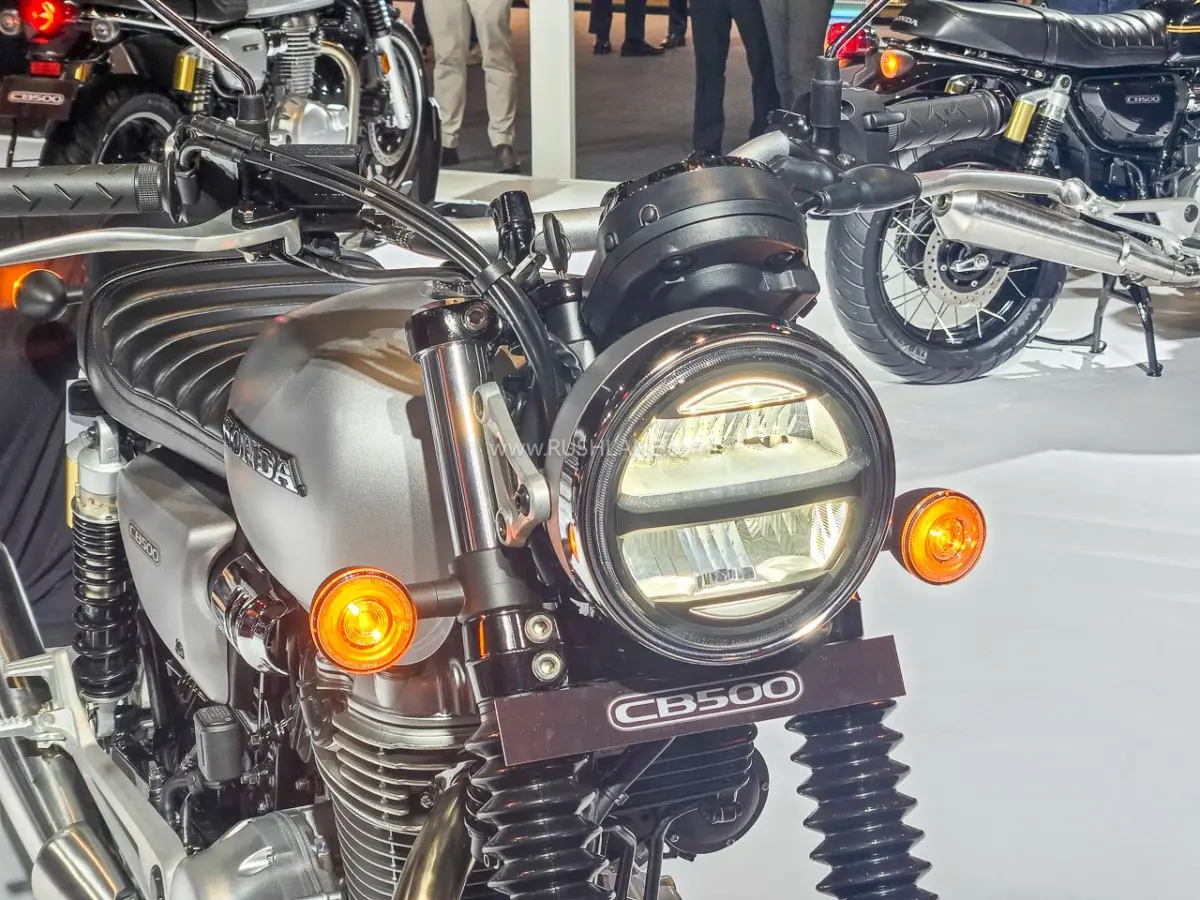
The introduction of the updated CB350 range and the new CB500 has allowed Honda to challenge the mid-capacity motorcycle segment, which was long dominated by domestic rivals. The CB500, in particular, is positioned as a versatile, twin-cylinder machine that appeals to both enthusiasts and those looking for an upgrade from the 200-250cc segment.
Furthermore, the Rebel 300 and the anticipated local manufacturing of the Rebel 500 signal Honda’s intent to capture the cruiser market. By localizing production of these models, Honda is not only making them more affordable for Indian buyers but also creating a cost-competitive base for exporting these high-demand models to Europe and North America.
Adventure and Electric Mobility
The ADV160 adventure scooter represents a new niche in the Indian market, blending the convenience of a scooter with the rugged styling of an adventure bike. While demand is high, Honda has signaled a cautious approach to supply chain management, with delivery timelines for the ADV160 now extending into 2027.
In the electric vehicle (EV) space, the QC3 electric scooter is Honda’s strategic entry into a rapidly evolving landscape. As the Indian government continues to push for green mobility through subsidies and infrastructure development, the QC3 is expected to be a volume driver in urban centers, complementing the internal combustion engine (ICE) portfolio.
IV. Official Perspectives and Market Response
While official statements from HMSI leadership emphasize "customer-centricity" and "technological innovation," industry analysts point to three primary factors for this record-breaking month:

- Rural Recovery: After several quarters of stagnant growth, the rural economy in India has shown signs of a strong rebound. Increased agricultural yields and government infrastructure spending have boosted disposable income, directly benefiting the 100-125cc motorcycle segment where Honda’s "Shine" brand remains a leader.
- Festive Inventory Loading: Dealerships across India have increased their off-take in anticipation of the 2026 festive season. September’s domestic figure of 6.36 lakh units includes significant primary billing to dealers to ensure stock availability for the high-demand weeks ahead.
- Global Supply Chain Stabilization: Honda’s ability to hit a new export high of nearly 70,000 units in a single month suggests that the supply chain bottlenecks—particularly in semi-conductors and specialized components for premium bikes—have largely been resolved.
Market analysts observe that Honda’s growth of 24.31% significantly outpaces the general industry average, suggesting that Honda is successfully clawing back market share from both traditional competitors and new-age EV startups.
V. Implications: The Road Ahead for HMSI
Honda’s performance in September 2026 has several long-term implications for the company and the broader automotive landscape.
Challenging for the Top Spot
For decades, the battle for the top spot in the Indian two-wheeler market has been a two-horse race between Hero MotoCorp and Honda. With Honda now consistently crossing the 7-lakh monthly mark and showing double-digit growth in its H1 cumulative sales, the gap between the two giants is narrowing. Honda’s diversified portfolio—spanning from the 100cc Shine to the 500cc CB series—gives it a broader "attack surface" than many of its competitors.
India as a Global Export Hub
The 27.12% growth in H1 exports is a testament to the "Atmanirbhar Bharat" (Self-Reliant India) initiative. Honda’s Indian plants are no longer just producing for local consumption; they are now manufacturing sophisticated machinery like the Rebel series and the ADV scooters for global markets. This not only improves Honda’s margins through economies of scale but also insulates the company against localized economic downturns in any single region.
The Premiumization Trend
The success of the CB500 and the interest in the XR300 suggest that the Indian consumer is moving away from purely utilitarian transport. Honda’s decision to invest in "BigWing" (its premium dealership network) is paying dividends. As more buyers opt for 300cc+ motorcycles, Honda’s revenue per unit is likely to increase, even if volume growth eventually plateaus.
Future Challenges: The EV Transition and Delivery Timelines
Despite the record numbers, challenges remain. The delay of ADV160 deliveries into 2027 highlights potential friction in production scaling for new, complex models. Additionally, while the QC3 electric scooter is a step in the right direction, Honda faces stiff competition from established EV players like Ola Electric and Ather Energy, as well as legacy rivals like TVS and Bajaj who have already made significant inroads into the electric segment.
Conclusion
Honda Motorcycle & Scooter India’s September 2026 performance is a landmark achievement that reflects a masterclass in market adaptation. By balancing the high-volume commuter segment with a burgeoning premium portfolio and a robust export strategy, HMSI has set a new benchmark for the industry. As the company moves into the second half of the fiscal year, the focus will undoubtedly remain on sustaining this momentum, resolving delivery delays for new models, and solidifying its position as a global manufacturing powerhouse.
