

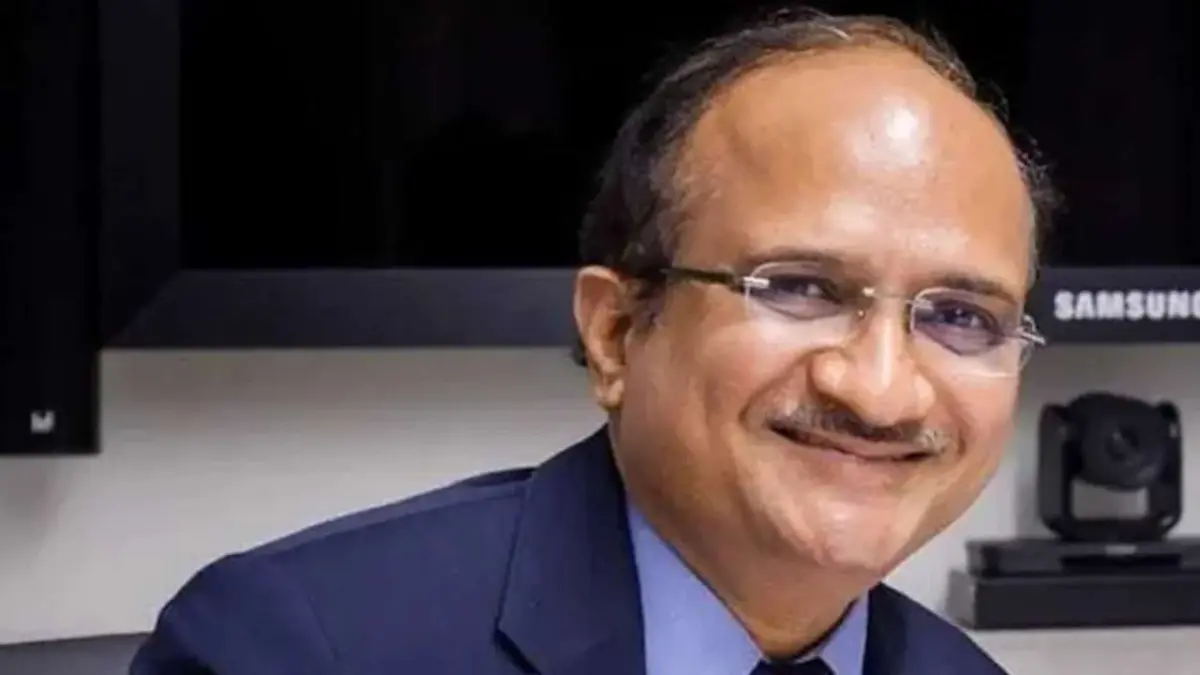
New Delhi, India – [Date of Publication] – In the wake of recent controversies and a growing acknowledgment of the diverse academic backgrounds of students entering India’s premier Indian Institutes of Technology (IITs), a prominent former director has put forth a radical proposal: extending the Bachelor of Technology (B.Tech) programs to five years. V. Ramgopal Rao, Group Vice-Chancellor of BITS Pilani Campuses and former Director of IIT Delhi, argues that the current "one-size-fits-all" approach is failing to adequately address the widening spectrum of student preparedness, a situation he believes is exacerbated by the intensive coaching culture prevalent in India.
Rao’s intervention comes at a sensitive time, marked by tragic incidents of student suicides within the IIT system and a public outcry over an alleged incident involving a professor at IIT Bombay. His proposal, while not directly linked to the suicides, implicitly addresses underlying systemic pressures that may contribute to student distress. He emphasizes that the issue is not about lowering standards but about providing a more flexible and supportive learning environment that caters to the individual needs of students from vastly different academic starting points.
The Widening Chasm: Heterogeneity in IIT Classrooms
At the heart of Rao’s argument lies the stark reality of the modern IIT classroom. He points to the intense competition for admission through the Joint Entrance Examination (JEE) Advanced, which results in students with vastly different levels of foundational knowledge being seated side-by-side. "Students now come from an intensive coaching ecosystem, with JEE Advanced ranks in the same classroom ranging from single digits to five digits," Rao stated in an interview.
He elaborated on this point with a concrete example from his tenure at IIT Delhi, citing the Computer Science and Engineering (CSE) program. "Students with such diverse ranks sit in the same class," he observed. This creates what he terms "highly heterogeneous classrooms across the IIT system." The challenge, he added, is further compounded by linguistic diversity, as students from various regional backgrounds might have different levels of proficiency in English, the primary medium of instruction.
)
The fundamental question, Rao posits, is whether the current pedagogical models in IITs are equipped to handle this inherent heterogeneity. "Can we expect every student to learn at the same pace?" he questioned. He firmly believes that while opening the doors of these prestigious institutions to students from diverse backgrounds is a positive step, the teaching-learning methodologies have not kept pace with this inclusivity.
The Pitfalls of a Uniform Pace
Rao articulated the inherent difficulty for faculty in addressing such a diverse cohort. "A faculty member cannot pitch every class at several levels at once," he explained. "Move too slowly, and some students lose interest. Move too quickly, and others are left behind." This delicate balancing act, he suggests, is often an insurmountable challenge, leading to disengagement and academic struggle for a significant portion of the student body.

He also drew upon his personal experience, recalling instances where students who had secured top JEE Advanced ranks struggled in his classes. This phenomenon, he believes, is a direct consequence of the coaching culture. "Coaching had prepared them to solve familiar types of questions quickly," Rao explained. "Many are lost when they see a question which they haven’t solved before." This highlights a critical disconnect between the rote learning often emphasized in coaching centers and the deeper conceptual understanding and problem-solving skills that IITs aim to foster.
Crucially, Rao emphasized that this difficulty is not confined to any particular admission category. "This is not a difficulty confined to any admission category," he asserted. "The move from coaching to independent learning can be hard for anyone." This underscores that the challenge is systemic, stemming from the transition from a highly structured, externally guided learning environment to the more autonomous and demanding academic landscape of an IIT.
)
The IIT Bombay Controversy and Professor Doola
Rao’s comments come in the context of a recent controversy involving IIT Bombay professor Suryanarayana Doola. While the specifics of the controversy remain under scrutiny, Rao expressed his concern over the public vilification of the professor. "I am disturbed to see Prof. Suryanarayana Doola being vilified over the recent controversy at IIT Bombay," he stated.
He described Doola as "one of the finest faculty members I have known in the IIT system, and a gentleman of the highest integrity." Rao called for a fair examination of any concerns raised, adding, "A public campaign against an individual serves no one." This stance, while defending the professor’s character, indirectly supports the idea that systemic issues might be at play, rather than solely individual failings.
)
The Proposed Five-Year B.Tech Solution
To address the multifaceted challenges of student heterogeneity, Rao proposed a shift to a five-year B.Tech program structure at IITs. This proposal is not about mandating a longer study period for all, but rather about creating a flexible framework.
"I feel we should consider moving our B.Tech programmes to five years in IITs," he announced. Under this proposed model, students who successfully fulfill the credit requirements could still graduate in the standard four years, or even in three-and-a-half years. However, those who require additional time and support would have the option to extend their coursework over five years.
)
This extended period would allow for more comprehensive academic assistance, including access to recorded lectures, supplementary online materials, and targeted language support where necessary. "The pace would be decided by performance within the IIT, not by a student’s admission category or entrance rank," Rao clarified. This is a significant departure from the current system, where performance is often judged against an implicit assumption of uniform starting points.
Psychological Benefits and Maintaining Standards
Beyond academic flexibility, Rao highlighted the significant psychological benefits of a designated five-year program. "Students who need more time would simply be following the programme as designed, while those who are ready could complete it sooner," he explained. "No one would be singled out for taking a fifth year." This de-stigmatization of requiring additional time is crucial for student well-being and can alleviate the immense pressure many students feel to keep pace with their peers.
)
Rao stressed that this proposal does not entail a compromise on academic standards. Instead, it emphasizes the responsibility of the educational system to ensure that all students are provided with the necessary time and support to meet those rigorous standards. "Giving them the time and support to meet those standards is a responsibility of the system," he asserted.
Supporting Data and Broader Implications
While the article does not present explicit statistical data on student performance differences based on admission ranks or coaching backgrounds, Rao’s extensive experience as a senior academic within the IIT system serves as anecdotal evidence. His observations are likely representative of the challenges faced by many faculty members across various IITs.
)
The implications of Rao’s proposal are far-reaching. If adopted, it could:
- Reduce Academic Stress: By allowing students to learn at their own pace, the pressure to keep up with a fast-moving curriculum would be alleviated, potentially reducing anxiety and improving mental well-being.
- Enhance Learning Outcomes: A more tailored approach to teaching and learning could lead to deeper conceptual understanding and better retention of knowledge for a larger proportion of students.
- Foster a More Inclusive Environment: The system would become more accommodating to students from diverse educational backgrounds, truly reflecting the spirit of inclusive education.
- Shift Focus from Rote Learning: The emphasis could move away from rapid question-solving techniques learned in coaching towards a more robust understanding of fundamental principles.
- Address Student Distress: While not a panacea, creating a more supportive academic environment could contribute to mitigating the factors that lead to student distress and, tragically, suicides.
Official Responses and the Path Forward
As of the time of reporting, there have been no official statements from the IIT Council or individual IIT administrations directly addressing V. Ramgopal Rao’s proposal. However, the increasing visibility of student mental health issues within the IITs and the ongoing discussions about pedagogical reforms suggest that such ideas are likely to be considered within academic circles.
)
The IIT system, renowned for its academic rigor and its role in shaping India’s technological future, faces a critical juncture. The challenge lies in balancing its tradition of excellence with the evolving realities of its student population. Rao’s proposal for a five-year B.Tech program offers a thought-provoking framework for reimagining how IITs can continue to nurture talent effectively and inclusively, ensuring that every student, regardless of their starting point, has the opportunity to thrive. The conversation initiated by Rao is likely to spark further debate and potentially lead to significant structural changes within India’s most prestigious engineering institutions.
