

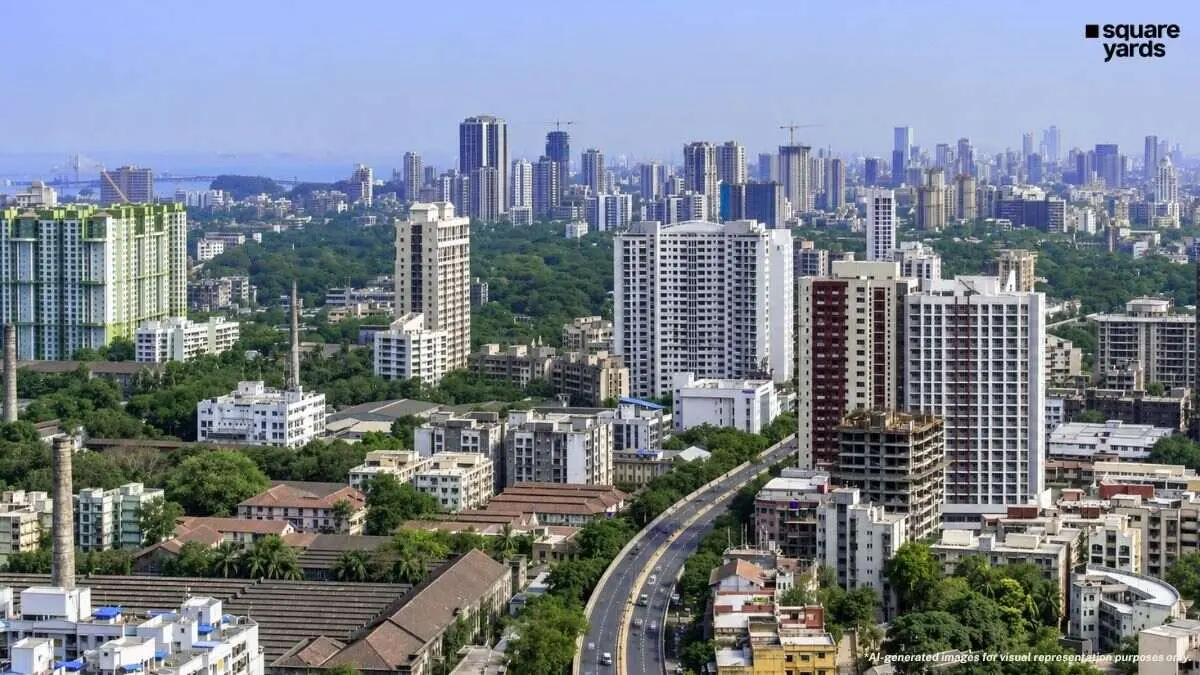
NEW DELHI – The Indian real estate sector has reached a watershed moment, shattering previous records to register its highest-ever quarterly investment. According to the latest comprehensive report by CBRE, the third quarter (Q3) of 2026 saw a staggering $9.5 billion in equity capital infused into the market. This surge brings the total investment for the first nine months of 2026 to an unprecedented $18.6 billion, signaling a robust institutional confidence in India’s structural growth story.
The record-breaking figures are underpinned by a dramatic pivot toward digital infrastructure, with data centers emerging as the primary magnet for capital. Simultaneously, aggressive land acquisitions in Tier-1 cities like Delhi-NCR, Mumbai, and Chennai are setting the stage for a massive pipeline of residential and commercial developments, fundamentally altering the urban landscape of the subcontinent.
Main Facts: A Landmark Quarter for Indian Equity
The Q3 2026 investment data represents more than just a numerical increase; it reflects a maturing market where institutional investors are diversifying away from traditional assets into specialized segments.
Key highlights from the period include:
- Total Equity Inflow: $9.5 billion in Q3 alone, marking a historic peak for the Indian property market.
- Dominant Segment: Data centers accounted for a lion’s share of the investment, capturing 57% of the total capital deployed.
- Combined Force: Data centers, built-up office spaces, and land/development sites collectively represented 91% of all investment activity.
- Regional Concentration: The trio of Mumbai, Delhi-NCR, and Chennai remained the preferred destinations, attracting 53% of the total quarterly investment.
- Leasing Momentum: Office leasing grew by 9% year-on-year (YoY), reaching 18.7 million square feet (msf) across the country.
Chronology: The Road to the $18.6 Billion Milestone
The trajectory of the Indian real estate market in 2026 has been one of consistent escalation. To understand the significance of the Q3 surge, one must look at the evolution of the market over the preceding eighteen months.
Late 2025: The Foundation
As 2025 drew to a close, the market began showing signs of a "flight to quality." Institutional investors started moving away from speculative residential bets toward income-generating commercial assets and the burgeoning "new economy" real estate, specifically data centers and industrial warehousing.
Q1 & Q2 2026: The Momentum Builds
The first half of 2026 saw steady growth, with approximately $9.1 billion invested across the first six months. This period was characterized by a resurgence in the office sector as Global Capability Centers (GCCs) expanded their footprint in Bengaluru and Hyderabad.
Q3 2026: The Record-Breaking Surge
The third quarter acted as a catalyst. The $9.5 billion infusion in these three months nearly equaled the total investment of the previous two quarters combined. This was driven by several "mega-deals" in the data center space and a frantic pace of land acquisitions by top-tier developers looking to replenish their inventory in a supply-constrained environment.
Supporting Data: Analyzing the Sectoral Drivers
The Data Center Revolution
Perhaps the most significant revelation of the CBRE report is the dominance of data centers. Accounting for 57% of the Q3 investment, this segment has transitioned from a niche alternative to a mainstream powerhouse.
The rapid digitization of the Indian economy, the rollout of advanced AI applications, and government mandates on data localization have created an insatiable demand for server space. According to estimates by Square Yards, this expansion has a massive "multiplier effect." It is projected that India’s data center boom could indirectly generate demand for up to 195 million square feet of housing by 2030.
While data centers themselves are not high-employment hubs on-site, they act as anchors for logistics, tech-support services, and specialized commercial zones. This creates a "5-15 km growth radius" where demand for residential, retail, and mixed-use projects spikes.
Office Markets: A Tale of Two Realities
While the national average for office leasing rose by 9% to 18.7 msf, the performance was highly localized.
- Delhi-NCR: The standout performer, leasing 3.3 msf in Q3 2026, more than doubling the 1.6 msf recorded in Q3 2025. This surge is attributed to a mix of domestic tech firms and international corporations setting up regional headquarters.
- Micro-Market Spotlight: On Gurugram’s Golf Course Road, office rents surged by 26% YoY to reach ₹100 per square foot (psf).
- The Divergence: In contrast to the North, markets like Mumbai, Pune, and Chennai saw slight declines in leasing activity during this specific quarter, suggesting a temporary saturation or a shift in corporate preference toward the NCR and Hyderabad.
Residential Resilience and Land Banking
The residential sector saw a 3% YoY increase in sales across the top seven cities. While modest compared to the office surge, the underlying value appreciation remains high. In Gurugram, average home prices reached ₹23,550 psf, a 10.2% increase from the previous quarter alone.
Strategic land acquisitions were a major theme of Q3. Approximately 72% of the capital deployed for land purchases was earmarked for residential, office, and data center developments. In Noida’s Sector 150, for instance, asking prices rose from ₹11,950 psf in late 2025 to ₹12,300 psf by mid-2026, reflecting the premium buyers are willing to pay for areas with strong infrastructure backing.
Official Responses and Market Sentiment
Industry leaders and analysts view these figures as a sign of the "institutionalization" of Indian real estate.
Anshuman Magazine, Chairman & CEO, India, South-East Asia, Middle East & Africa, CBRE, noted that the sustained capital flow is a testament to India’s resilience amidst global economic fluctuations. Analysts suggest that the shift toward equity-heavy deals indicates that investors are looking for long-term value creation rather than short-term debt returns.
Market Experts at Square Yards emphasize the interconnectedness of the sectors. "The rise in office rents and home prices in corridors like Golf Course Road demonstrates that commercial growth is the primary engine for residential value," a spokesperson stated. They further highlighted that the data center surge is creating new "shadow markets" in cities like Visakhapatnam and Pune, where infrastructure is being upgraded to support these massive digital warehouses.
However, officials also sound a note of caution regarding the "unsold inventory" levels. While new projects are being launched, the success of these investments will depend heavily on construction timelines and the ability of developers to offer flexible pricing in more competitive micro-markets.
Implications: What This Means for the Future
The record-breaking $9.5 billion investment in Q3 2026 has several long-term implications for stakeholders across the board.
For Homebuyers: Increased Choice and Potential Volatility
The massive land acquisitions by developers mean a significant increase in the housing pipeline over the next 24 to 36 months. For buyers, this translates to more choices, especially in integrated townships and high-growth corridors. However, the high cost of land acquisition may prevent prices from cooling significantly. Buyers should focus on "data center adjacent" or "commercial hub adjacent" properties for better long-term appreciation.
For Investors: The Shift to "Alternative" Assets
The 57% investment share in data centers suggests that the "smart money" is moving toward infrastructure-heavy real estate. Institutional investors are likely to continue favoring assets that offer ESG (Environmental, Social, and Governance) compliance and long-term yield stability, such as LEED-certified office parks and green data centers.
For Urban Development: The Decentralization of Cities
As data centers and new office hubs emerge in peripheral areas (like Noida’s extended sectors or Mumbai’s distant suburbs), we are likely to see a decentralization of the urban core. This will necessitate greater government spending on last-mile connectivity, such as metro expansions and high-speed road networks, to support the new residential clusters forming around these commercial anchors.
The Supply-Demand Equilibrium
With $18.6 billion already invested this year, the market is at risk of oversupply if execution does not match the pace of capital infusion. Developers will need to be strategic; while the demand for luxury housing and "Grade A" office space remains high, the middle-income housing segment requires careful price management to ensure absorption rates remain healthy.
Conclusion
The Q3 2026 CBRE report paints a picture of an Indian real estate market that is no longer just a domestic interest but a global investment priority. The $9.5 billion milestone is a clear indicator that the sector has moved beyond the recovery phase and is now in a period of structural expansion.
As data centers redefine the commercial landscape and strategic land banking prepares the ground for the next generation of Indian homes, the focus now shifts to execution. For the momentum to continue, the industry must balance its aggressive growth with sustainable development and infrastructure parity, ensuring that the record-breaking capital translates into livable, workable, and technologically advanced urban environments.
