

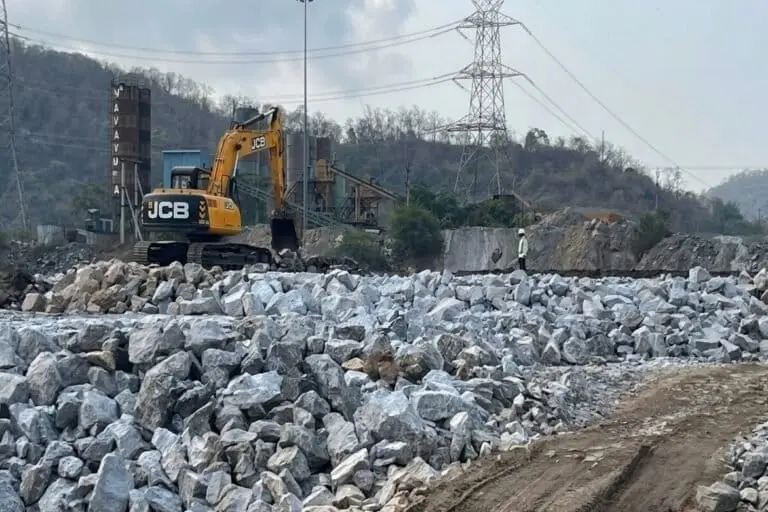
KONTA, CHHATTISGARH — Where the dense canopies of the Bastar forest meet the shimmering currents of the Sabari River, a quiet desperation has taken root. For Manglu Dorla, a farmer whose lineage has tilled the fertile soil of Sukma for generations, the river has always been a life-giver. Today, however, it represents an existential threat.
As the Polavaram Irrigation Project (PIP) nears its scheduled completion downstream in Andhra Pradesh, thousands of residents in the borderlands of Chhattisgarh and Odisha find themselves in a state of administrative limbo. Despite the project’s status as a "national priority," the families whose lives will be upended by its backwaters remain largely in the dark, caught between conflicting government reports and a lack of transparent mapping.
Main Facts: A Multi-State Engineering Marvel and Its Human Cost
The Polavaram Irrigation Project is one of India’s most ambitious and controversial infrastructure undertakings. Located on the Godavari River near Ramanayyapeta in Andhra Pradesh, the dam stands at an elevation of 45.72 meters (150 feet). It is designed as a multipurpose reservoir that promises to revolutionize the regional economy of Andhra Pradesh.
The Project’s Stated Goals:
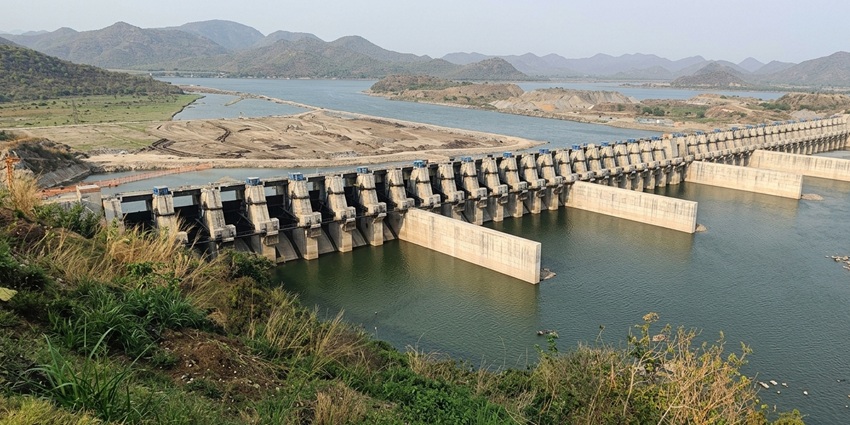
- Irrigation: Creation of irrigation potential for 2.91 lakh hectares of land.
- Power: Generation of 960 MW of hydropower.
- Drinking Water: Supplying clean water to 28.5 lakh people across 540 villages.
- Water Diversion: Diverting 80 TMC (Thousand Million Cubic feet) of Godavari water to the Krishna basin to alleviate water scarcity in southern regions.
However, the geographical reality of the project means that its impact extends far beyond the borders of Andhra Pradesh. The Sabari River, a major tributary of the Godavari, originates in Odisha and forms the natural boundary between Odisha and Chhattisgarh before joining the Godavari. When the Polavaram dam is filled, the "backwater effect"—where the dam’s reservoir pushes water back up into its tributaries—is expected to submerge vast tracts of land in the Konta block of Chhattisgarh and parts of Odisha.
The central conflict lies in the lack of consensus regarding the extent of this submergence. While the Union Government and the Andhra Pradesh government have historically downplayed the impact, local leaders and independent auditors warn of a much larger humanitarian crisis.
Chronology: Decades of Negotiation and Delay
The journey of the Polavaram project is a saga of interstate disputes and shifting political landscapes:
- 1941: The initial concept for a dam on the Godavari was first proposed during the British Raj.
- 1978–1980: Interstate agreements were signed between Andhra Pradesh, Madhya Pradesh (which then included Chhattisgarh), and Orissa (now Odisha) regarding water sharing and submergence limits.
- 2004: Construction officially began under the Andhra Pradesh government.
- 2005: Environmental clearance was granted, a move that would later become a focal point of legal battles.
- 2007–2011: Odisha and Chhattisgarh moved the Supreme Court of India, challenging the project’s clearances and raising concerns about the lack of public hearings in their respective states.
- 2011: The Ministry of Environment and Forests (MoEF) issued a "stop-work" order due to violations of clearance conditions. However, this order was repeatedly kept in "abeyance" (suspended), allowing construction to proceed.
- 2014: Under the Andhra Pradesh Reorganisation Act, Polavaram was declared a "National Project," shifting the funding responsibility to the Union Government.
- August 2024: The Union Cabinet approved approximately ₹30,436.95 crores to complete the first phase of the reservoir.
- August 2024: Andhra Pradesh Chief Minister N. Chandrababu Naidu pledged a completion deadline of 2027.
- March 2026: A performance audit by the Comptroller and Auditor General (CAG) was tabled, highlighting massive unresolved risks regarding interstate submergence.
Supporting Data: The Disappearing Villages
The most significant point of contention is the number of villages and people at risk. Data provided by various authorities over the last two decades shows a worrying lack of consistency:
- The 2006 Estimate: Early reports suggested that only four villages in Chhattisgarh would be affected, involving roughly 2,335 families.
- The 2013 Parliamentary Statement: The Union Government informed Parliament that eight villages in Chhattisgarh would face submergence.
- The 2020 State Assembly Report: Chhattisgarh’s Water Resources Minister identified nine villages at risk—Banjamgunda, Metaguda, Pedakisoli, Asirguda, Injaram, Fandiguda, Dhondra, Konta, and Venkatpuram—affecting approximately 18,510 residents.
- The 2026 CAG Audit: The most recent audit flags that without protective embankments, at least 12 villages across Chhattisgarh and Odisha are certain to be submerged, affecting 3,337 project-affected families (PAFs) by official counts—though local estimates are much higher.
- The 2026 Bastariya Raj Morcha (BRM) Claim: Local political and social organizations now claim that up to 18 villages will be impacted, demanding a new, transparent public survey.
The CAG report specifically noted that while protective embankments (totaling nearly 60 km across both states) were planned as far back as 1978 to prevent this submergence, construction has not even begun. This delay is attributed to the ongoing refusal of Odisha and Chhattisgarh to hold public hearings until the full impact and backwater levels are clarified.

Official Responses: A Game of Political Ping-Pong
The response from official channels reflects the complex federal-state dynamics of Indian water politics.
Andhra Pradesh’s Position:
The Andhra Pradesh government, led by CM N. Chandrababu Naidu, is pushing for rapid completion. Their defense, as stated to the CAG in late 2024, is that the project will be implemented in phases. They argue that Phase 1 (impounding water up to 41.15 meters) will not cause interstate submergence, providing a window to resolve disputes before the final height is reached.
Chhattisgarh’s Political Divide:
In Chhattisgarh, the narrative is split. Chief Minister Vishnu Deo Sai recently visited flood-affected areas in Sukma and acknowledged that the number of villages affected by PIP may exceed 18. However, opposition leaders, including Bastar Congress President Deepak Baij, have criticized the state government for failing to leverage its alignment with the Union Government to secure a better deal for the tribal population.
The Activist Critique:
Himanshu Thakkar, coordinator at the South Asia Network on Dams, Rivers & People (SANDRP), describes the project’s progress as a "complete violation of the law." Thakkar points out that the environmental clearance remains technically suspended and that the "backwater impact has never been scientifically assessed in a transparent manner." He further alleges violations of the Forest Rights Act (FRA), noting that the indigenous Koya and Dorla tribes are being marginalized in the planning process.
Administrative Silence:
Local administration remains cautious. Sukma’s District Collector, Amit Kumar, noted that the specifics of the dam’s impact fall outside the immediate jurisdiction of district-level departments, highlighting the gap between high-level engineering decisions and ground-level administrative readiness.

Implications: More Than Just Rising Water
The implications of the Polavaram project extend into the realms of sociology, ecology, and constitutional law.
1. Cultural Erosion of Indigenous Tribes:
For the Dorla and Koya communities, the land is not merely a commodity; it is the basis of their identity. Displacement means the loss of ancestral burial grounds, sacred groves, and a traditional way of life that depends on the unique ecology of the Sabari riverbank. The Bastariya Raj Morcha (BRM) has demanded that any resettlement must include education in local languages and the preservation of tribal customs—demands that are rarely met in large-scale dam rehabilitations.
2. The Precedent of "Abeyance":
The legal handling of Polavaram sets a concerning precedent for environmental law in India. By keeping "stop-work" orders in abeyance for over a decade, the central government has effectively allowed a project to become "too big to fail," rendering environmental and social impact assessments retrospective rather than preventative.
3. Federal Friction:
The deadlock between Andhra Pradesh, Odisha, and Chhattisgarh underscores the fragility of interstate river management. If protective embankments are not built, and the dam is filled to its 150-foot capacity, the resulting flash floods in upstream states could lead to a permanent breakdown in interstate cooperation.
4. The Economic Gamble:
While Andhra Pradesh stands to gain immense agricultural wealth, the cost is being borne by the poorest districts of Chhattisgarh and Odisha. Without "compensation before displacement" and "land-for-land" rehabilitation—key demands of the local delegation led by tribal leader Soyam Bhima—the project risks creating a new class of "development refugees."

As 2027 approaches, the residents of Konta continue to watch the Sabari River with a mix of reverence and fear. For Manglu Dorla, the lack of a map is the greatest cruelty. "If they tell us we must go, we will fight or we will mourn," he says. "But to not tell us at all—to leave us waiting for the water to decide—is to say we do not exist."
