

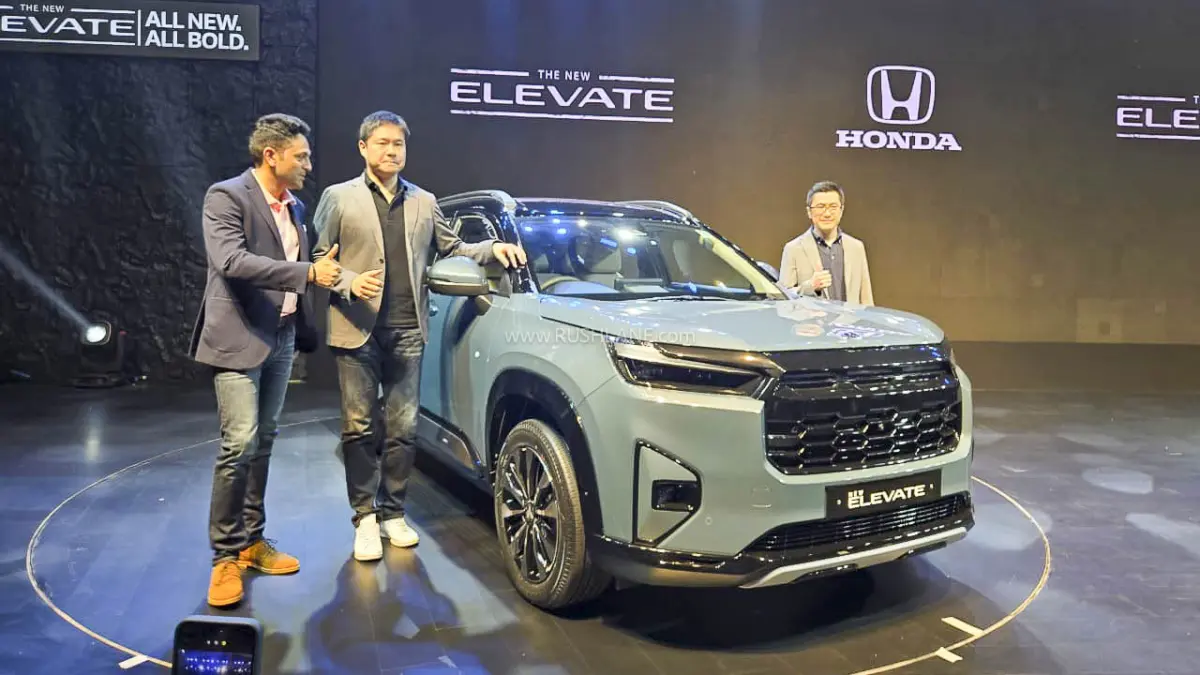
In a strategic move to solidify its presence in the fiercely contested midsize SUV segment, Honda Cars India has officially launched the facelifted version of the Honda Elevate. This update arrives just over a year after the vehicle’s global debut in September 2023, signaling Honda’s commitment to rapid product iteration based on consumer feedback. The updated Elevate is not merely a cosmetic exercise; it introduces significant upgrades in cabin comfort, technological integration, and mechanical refinement, aiming to bridge the gap between functional reliability and premium luxury.

With prices starting at Rs 11.80 lakh and reaching up to Rs 18.40 lakh (ex-showroom, Delhi), the Elevate facelift introduces a new flagship trim, the ZX+, and a stylish "Black" edition to cater to the evolving tastes of Indian car buyers.

The Core Announcement: Redefining the Midsize SUV Experience
The launch of the Honda Elevate facelift marks a pivotal moment for Honda Cars India. Since its inception, the Elevate has been praised for its robust build quality and class-leading ground clearance. However, the facelift addresses specific areas where the market demanded more—namely, high-end convenience features and improved cabin quietness.

The most striking additions to the lineup include segment-first rear ventilated seats, a 360-degree surround-view camera, and an enhanced suite of "Honda Sensing" Advanced Driver Assistance Systems (ADAS). By expanding the variant list to include the SV, V, VX, ZX, and the new range-topping ZX+, Honda is positioning the Elevate as a more versatile contender against stalwarts like the Hyundai Creta and Maruti Suzuki Grand Vitara.

Chronology of the Elevate: From Market Entry to Strategic Facelift
To understand the significance of this facelift, one must look at the Elevate’s timeline:

- September 2023: Honda enters the midsize SUV segment with the global launch of the Elevate in India. It was built on the Global Small Car platform, shared with the Honda City, and focused on "Urban Freestyler" aesthetics.
- Early 2024: The Elevate gains traction as a reliable, naturally aspirated alternative to turbocharged rivals, particularly appealing to families prioritizing space and safety.
- October 2026: (Projected Timeline/Context) Honda recognizes the need to match the feature-heavy offerings of its competitors. The facelift is fast-tracked to include "premium-essential" features like ventilated seats and powered adjustments.
- Launch Day: The facelifted Elevate arrives with a revised price structure and a more sophisticated design language inspired by Honda’s global performance concepts.
Aesthetic Overhaul: Drawing Inspiration from Global DNA
The exterior of the updated Elevate undergoes a transformation that aligns it with Honda’s more aggressive global design philosophy.

Exterior Enhancements and Lighting Signatures
The front fascia has been significantly reworked. It now features a larger, more intricate mesh grille that sits lower on the face, providing a more planted and assertive stance. This styling is a direct nod to the Honda WR-V TrailSport HRC Concept showcased at the Tokyo Auto Salon.

A new tri-bar LED lighting signature connects the headlamps across the top of the grille, while the Honda "H" badge has been repositioned to the leading edge of the bonnet for better visibility. The headlamp surrounds and the front bumper have been sharpened with gloss-black detailing and revised fog-lamp housings, giving the SUV a more contemporary, "tech-forward" look.

At the rear, the connected LED tail lamp design—a favorite among modern SUV buyers—is now standard from the VX trim onwards. The rear bumper and skid plates have also been touched up to complement the more aggressive front end.

A Palette of Modern Sophistication
Honda has introduced a new flagship color, Nordic Forest Pearl, which adds a touch of rugged elegance to the SUV. This joins the existing palette of Crystal Black Pearl, Obsidian Blue Pearl, Radiant Red Metallic, Meteoroid Gray Metallic, Lunar Silver Metallic, and Platinum White Pearl. For those seeking a more distinctive look, dual-tone options featuring a black roof are available with the Nordic Forest, Radiant Red, and Platinum White shades.

Interior Revolution: Segment-First Comfort and Premium Tactility
If the exterior is about presence, the interior is about the "Premium Experience." Honda has moved away from the previous faux-wood dashboard inserts, opting instead for a more modern ivory-and-black theme.

The ZX+ Trim and Rear Seat Ventilation
The introduction of the ZX+ trim is the highlight of the interior update. While front ventilated seats are now available on the ZX trim, the ZX+ introduces rear ventilated seats—a feature Honda claims is a segment-first. In the sweltering heat of the Indian subcontinent, this addition is a significant competitive advantage.

Furthermore, the driver now enjoys an eight-way power-adjustable seat, while the front passenger is treated to a four-way power-adjustable seat, ensuring ergonomic comfort for long-distance cruising. The use of soft-touch materials on the dashboard and door pads, combined with perforated ivory leatherette upholstery, elevates the cabin’s perceived quality to rival luxury-class vehicles.

ZX+ Black: The Dark Aesthetic Alternative
Recognizing the growing trend for "Black Editions" in India, Honda has launched the ZX+ Black. This variant features:

- 17-inch alloy wheels finished in high-gloss black.
- An all-black interior theme.
- Black leatherette upholstery.
- Dark-finished interior garnishes and control knobs.
- Standard Crystal Black Pearl exterior paint.
Advanced Technology and Safety: Strengthening the Honda Sensing Suite
Honda has always prioritized safety, and the facelifted Elevate doubles down on this reputation.

Honda Sensing Upgrades and Dynamic Safety
The "Honda Sensing" ADAS suite has been upgraded to include Low-Speed Follow functionality for the Adaptive Cruise Control (ACC) in CVT variants. This allows the vehicle to maintain a safe distance from the car ahead even in heavy stop-and-go traffic, significantly reducing driver fatigue.

Other safety features remain robust, including:

- Collision Mitigation Braking System (CMBS).
- Lane Keeping Assist System (LKAS).
- Road Departure Mitigation (RDM).
- Auto High-Beam.
- Lead Car Departure Notification.
For the first time, CVT variants from the V trim onwards receive rear disc brakes, an electric parking brake, and auto-brake hold, providing superior stopping power and convenience compared to the traditional drum-brake setup.

Infotainment and Connectivity
The 10.25-inch touchscreen remains the centerpiece of the dashboard, offering seamless wireless Apple CarPlay and Android Auto integration. The digital-analogue instrument cluster with its 7-inch TFT display provides clear, customizable data. New convenience features include a PM2.5 air-quality display with an automatic "Clean Air" function and an illuminated passenger-side vanity mirror.

Engineering Refinement: The Science of Silence
One of the most significant, yet invisible, changes in the facelift is the improvement in Noise, Vibration, and Harshness (NVH) levels. Honda engineers have implemented a multi-layered approach to cabin insulation:

- Thicker Insulation: The instrument panel ducts now feature thicker acoustic padding.
- High-Density Layers: New high-density acoustic layers have been added to the floor and bulkhead.
- Septum Layers: A new septum layer helps block engine frequency noise from entering the cabin.
- Fender Arch Treatment: Additional sound-deadening material has been placed around the wheel arches to reduce road and tire noise.
The result is a cabin that remains significantly quieter during high-speed cruising and under hard acceleration, addressing one of the few criticisms leveled at the original model.

Performance and Powertrain: Reliability Meets Modern Efficiency
Under the hood, the Elevate remains faithful to the 1.5-litre, four-cylinder, naturally aspirated i-VTEC petrol engine. While some enthusiasts hoped for the introduction of a Hybrid powertrain (e:HEV), Honda has chosen to stick with the tried-and-tested internal combustion engine to keep the entry price competitive.

- Power Output: 121 PS @ 6,600 rpm.
- Peak Torque: 145 Nm @ 4,300 rpm.
- Transmission Options: 6-speed Manual or a 7-step CVT with paddle shifters.
- Fuel Efficiency: 15.31 km/l (MT) and 16.61 km/l (CVT).
The engine is now fully E20 compatible and complies with the latest WLTP standards. The SUV also retains its impressive 220 mm ground clearance, ensuring it remains one of the most capable vehicles in its class for tackling rough Indian roads.

Market Data and Pricing Strategy
The pricing strategy for the facelifted Elevate reflects its move upmarket while maintaining a strong entry-level proposition.

| Variant | Manual Transmission (Ex-Showroom) | CVT (Ex-Showroom) |
|---|---|---|
| SV | Rs 11,80,000 | – |
| V | Rs 12,90,000 | Rs 13,79,000 |
| VX | Rs 14,30,000 | Rs 15,40,000 |
| ZX | Rs 15,80,000 | Rs 16,90,000 |
| ZX+ | Rs 16,80,000 | Rs 18,30,000 |
| ZX+ Black | Rs 16,90,000 | Rs 18,40,000 |
Note: Pearl and dual-tone colors attract an additional premium of Rs 8,000 to Rs 20,000 depending on the combination.

Honda offers a standard warranty of three years/unlimited kilometers, which can be extended to seven years. The "Anytime Warranty" program further extends this to 10 years or 1,20,000 km, providing industry-leading peace of mind.

Implications for the Indian Automotive Landscape
The launch of the Honda Elevate facelift is a clear indicator that the "feature war" in the SUV segment is far from over. By introducing rear ventilated seats and a 360-degree camera, Honda is directly targeting the premium buyer who might have previously overlooked the brand in favor of Korean rivals.

Furthermore, the focus on NVH levels and refinement suggests that Honda is doubling down on its core identity: engineering excellence. While the lack of a hybrid or a turbo-petrol engine might deter a small segment of "power users," the vast majority of family buyers will likely find the Elevate’s combination of space, safety, and newly added luxury features highly compelling.

As Honda continues to navigate the transition toward electrification (with an all-electric Elevate expected in the future), this facelift serves as a robust bridge, ensuring the brand remains relevant and competitive in India’s most important automotive segment.

Conclusion
The updated Honda Elevate is a more mature, refined, and feature-rich version of an already solid product. By listening to the market and introducing high-value features like powered seats, rear ventilation, and enhanced ADAS, Honda has transformed the Elevate from a sensible choice into a desirable one. With its competitive pricing and legendary reliability, the facelifted Elevate is poised to maintain its upward trajectory in the Indian market, offering a sophisticated alternative to the status quo.
