

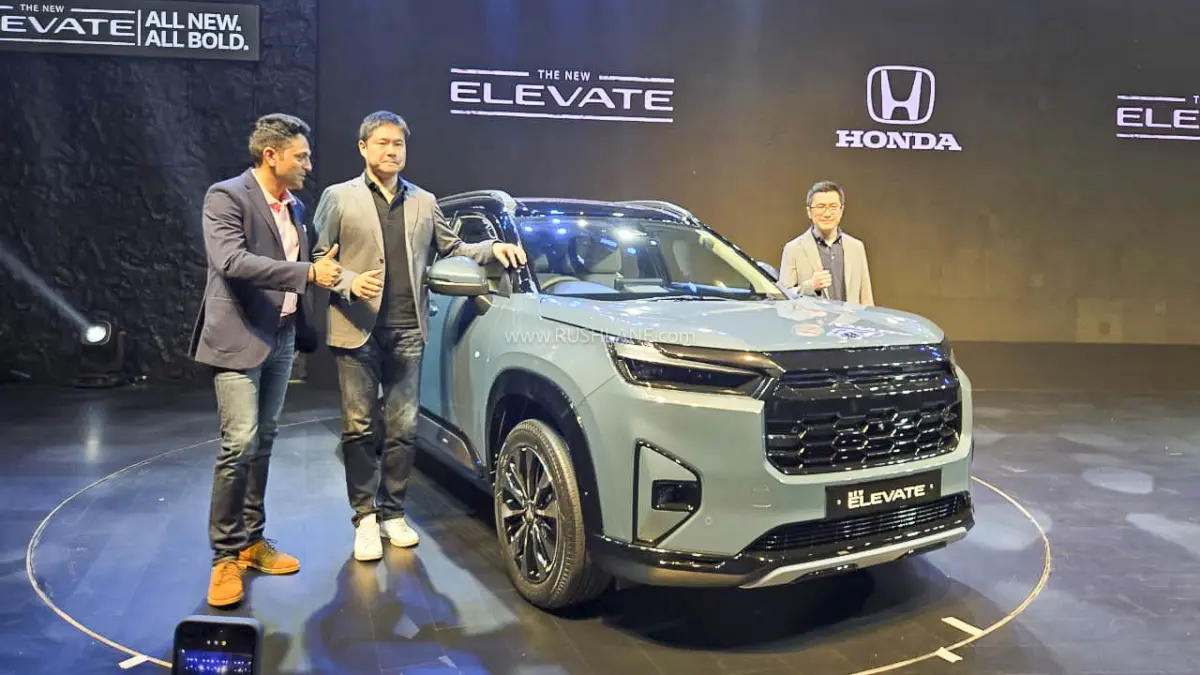
New Delhi, India – In a strategic move to solidify its position in the fiercely contested midsize SUV market, Honda Cars India has officially pulled the wraps off the highly anticipated Honda Elevate facelift. This mid-cycle refresh is far more than a cosmetic exercise; it introduces a suite of premium comfort features, a sophisticated technological overhaul, and a significant leap in cabin refinement. With prices starting at Rs 11.80 lakh and stretching to Rs 18.40 lakh (ex-showroom, Delhi), the updated Elevate aims to challenge the dominance of incumbents like the Hyundai Creta, Kia Seltos, and Maruti Suzuki Grand Vitara.

The 2026 Honda Elevate facelift arrives with a revised trim hierarchy, including the introduction of a new flagship ZX+ grade and a visually striking ZX+ Black edition. By addressing previous omissions—such as the lack of a 360-degree camera and power-adjustable seats—and introducing segment-first features like rear ventilated seats, Honda is signaling a clear shift toward a more premium brand identity in the Indian market.

I. Main Facts: A Substantial Leap in Value and Sophistication
The core of the Elevate facelift lies in its enhanced equipment list and aesthetic refinement. While the mechanical heart remains the reliable 1.5-litre i-VTEC petrol engine, the vehicle’s "packaging" has been significantly elevated.

Key Highlights at a Glance:
- Pricing: Rs 11.80 lakh to Rs 18.40 lakh (Ex-showroom, Delhi).
- New Variants: The lineup now consists of SV, V, VX, ZX, and the new range-topping ZX+.
- Segment-First Feature: Introduction of rear ventilated seats on the ZX+ trim.
- Safety Upgrades: Enhanced Honda Sensing (ADAS) with Low-Speed Follow for CVT variants; six airbags as standard across the range.
- Mechanical Enhancements: CVT variants from the ‘V’ trim onwards now receive rear disc brakes and an Electronic Parking Brake (EPB) with Auto Brake Hold.
- Refinement: Extensive work on NVH (Noise, Vibration, and Harshness) levels through thicker insulation and acoustic materials.
The facelift also sees the introduction of the Nordic Forest Pearl exterior color, a sophisticated shade that complements the SUV’s more aggressive front-end styling.

II. Chronology: The Evolution of the Elevate
The journey of the Honda Elevate began in September 2023, marking Honda’s long-awaited entry into the midsize SUV space in India. Built on the Global Small Car platform (shared with the Honda City), the Elevate was praised for its ride quality, high ground clearance (220mm), and spacious cabin, though some critics pointed out the lack of certain high-end features compared to its Korean rivals.

In January 2026, Honda showcased the WR-V TrailSport HRC Concept at the Tokyo Auto Salon. This concept served as the primary design inspiration for the Elevate facelift, moving away from the "upright and boxy" look toward a more technical and aggressive aesthetic.

The October 2026 launch of the facelift represents the culmination of three years of market feedback. Honda has prioritized interior comfort and driver-assist technologies, acknowledging that the modern Indian SUV buyer values "feature-richness" as much as mechanical reliability.

III. Supporting Data: Design, Cabin, and Performance
Aesthetic Refinement: The "TrailSport" Influence
The most immediate change is the redesigned front fascia. The previous large, vertical grille has been replaced by a more intricate mesh design.

- Lighting Signature: A new connected tri-bar LED DRL setup spans the width of the nose, with the Honda ‘H’ badge now sitting prominently on the leading edge of the bonnet.
- Gloss Detailing: The use of gloss-black finishes on the headlamp surrounds and the revised front bumper gives the vehicle a wider, more planted stance.
- Rear Profile: The connected theme continues at the rear with updated LED tail lamps and a redesigned skid plate that emphasizes the SUV’s rugged credentials.
The Premium Cabin Experience
Honda has overhauled the interior materials to move away from the faux-wood accents of the previous model.

- Color Palette: A sophisticated Ivory-and-Black theme now dominates the dashboard.
- Seating Comfort: The ZX trim features front ventilated seats, but the ZX+ goes a step further with rear ventilated seats. In a country like India, where chauffeur-driven usage is common even in this segment, this is a major competitive advantage.
- Power Adjustments: For the first time, the Elevate offers an 8-way power-adjustable driver’s seat and a 4-way power-adjustable front passenger seat.
- ZX+ Black Edition: Catered to the "Dark Edition" trend, this variant features 17-inch gloss-black alloys, an all-black interior, and Crystal Black Pearl paint.
Powertrain and Efficiency
Despite rumors of a hybrid powertrain, Honda has stuck with the tried-and-tested 1.5-litre four-cylinder i-VTEC engine.

- Output: 121 PS of power and 145 Nm of torque.
- Transmissions: A 6-speed manual and a 7-step CVT.
- Fuel Economy: The manual variant returns a claimed 15.31 km/l, while the CVT is slightly more efficient at 16.61 km/l.
- Compliance: The engine is E20 compatible and fully WLTP compliant, ensuring longevity in the face of evolving emission norms.
NVH (Noise, Vibration, and Harshness) Improvements
One of the most significant, yet invisible, updates is the work done on cabin quietness. Honda engineers implemented:

- Thicker instrument panel duct insulation to mute engine roar.
- Higher-density acoustic layers in the floor and dashboard.
- A new "septum" layer in the wheel arches to reduce road and tire noise.
- Additional sound-deadening material in the fender areas.
IV. Official Responses and Strategic Positioning
While official quotes from Honda leadership emphasize "Man Maximum, Machine Minimum" philosophy, the strategic positioning of the Elevate facelift reveals a two-pronged approach.

On Safety: Honda has made a bold statement by standardizing six airbags across all trims. By adding rear disc brakes to the CVT variants, they are addressing a common criticism of the previous model’s braking performance under heavy loads. The inclusion of Low-Speed Follow in the ADAS suite makes the Elevate one of the most capable "traffic-jam assistants" in its class.

On the Missing Hybrid: Industry analysts suggest that Honda’s decision to skip the "e:HEV" hybrid powertrain for the Elevate facelift is a cost-management strategy. By keeping the SUV petrol-only, Honda can maintain a price ceiling below Rs 19 lakh, whereas a hybrid system would likely have pushed the top-end price well past Rs 21 lakh, potentially alienating value-conscious buyers.

On Warranty: To reinforce the brand’s reputation for reliability, Honda offers a standard 3-year/unlimited km warranty. However, the "Anytime Warranty" program, which allows coverage up to 10 years or 1,20,000 km, remains a unique selling proposition that few competitors can match.

V. Implications: Impact on the Indian Automotive Market
The launch of the Honda Elevate facelift has several far-reaching implications for the midsize SUV segment:

1. The "Feature War" Intensifies
By introducing rear ventilated seats, Honda has set a new benchmark for rear-seat comfort in the sub-20 lakh SUV category. This will likely force competitors like Hyundai and Kia to consider similar updates in their upcoming model year refreshes.

2. The Shift Toward Active Safety
The democratization of ADAS (Honda Sensing) continues. With the addition of front parking sensors and a 360-degree camera (a feature previously missing and highly requested), Honda has removed the "tech-gap" that previously steered some buyers toward the MG Astor or Kia Seltos.

3. CVT as the Premium Choice
The decision to bundle rear disc brakes and the Electronic Parking Brake exclusively with the CVT variants (from the V trim up) suggests that Honda is positioning the automatic transmission as the "premium safety" choice. This aligns with the increasing urban preference for automatics.

4. Brand Loyalty vs. Innovation
The Elevate facelift is a "sensible" update. It doesn’t offer a panoramic sunroof (retaining the single-pane unit) or a turbo-petrol engine. Instead, it doubles down on Honda’s traditional strengths: ergonomic excellence, visibility, and a high-quality naturally aspirated engine. Whether this is enough to lure buyers away from the high-performance turbo-petrols of the Volkswagen Taigun or Skoda Kushaq remains to be seen.

Conclusion
The updated Honda Elevate is a more mature, refined, and honest contender in the Indian market. By fixing the "missing links" of the original 2023 launch and adding a layer of segment-first luxury, Honda has ensured that the Elevate remains a compelling choice for the family-oriented buyer who prioritizes safety and long-term peace of mind over raw performance. As the SUV wars continue, the Elevate facelift stands as a testament to Honda’s commitment to the Indian consumer’s evolving needs.
