

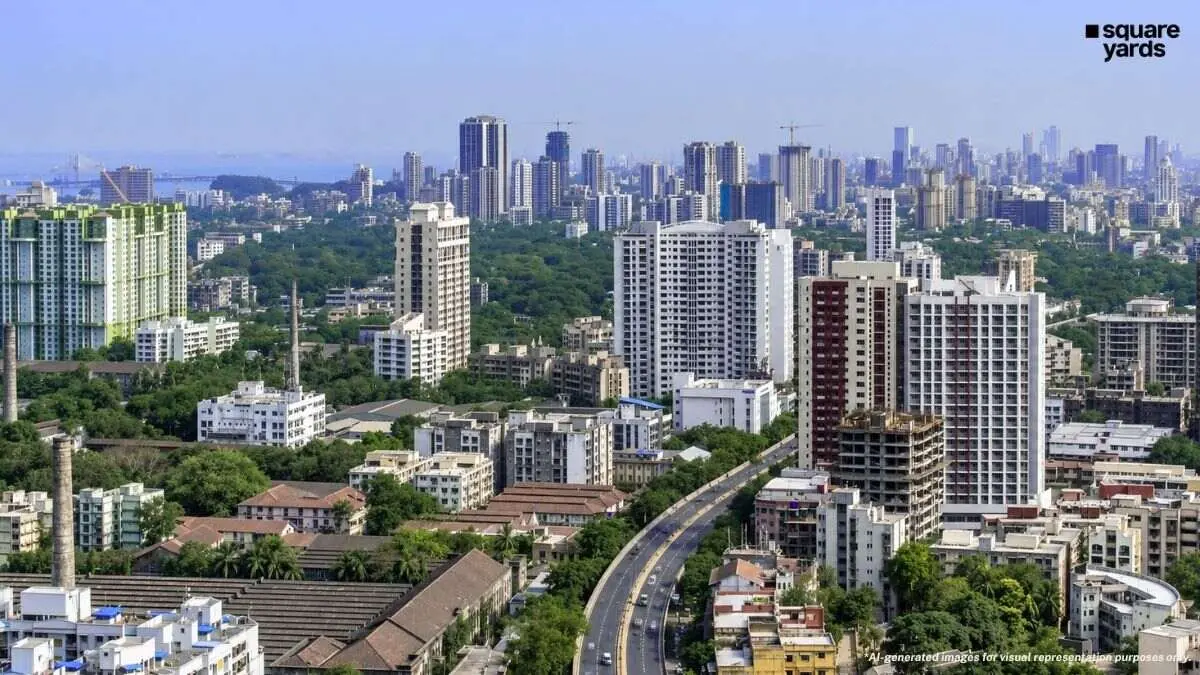
The Indian real estate landscape has reached an unprecedented pinnacle, marking a transformative era for institutional investment and infrastructure development. According to the latest comprehensive report by CBRE, the third quarter (Q3) of 2026 witnessed the highest-ever quarterly investment in the nation’s history, with equity capital inflows staggering at $9.5 billion. This surge is not merely a numerical milestone but a signal of deep-seated structural shifts within the economy, driven by the digital revolution, rapid urbanization, and a robust appetite for commercial expansion.
From the burgeoning skyscrapers of Delhi-NCR to the tech-driven corridors of Chennai and the financial heart of Mumbai, the influx of capital is reshaping how land is acquired, developed, and utilized. With a total of $18.6 billion invested in the first nine months of 2026 alone, the sector is on track to redefine India’s economic trajectory for the next decade.
1. Main Facts: A Record-Breaking Quarter
The Q3 2026 data reveals a market that is firing on all cylinders, though the distribution of capital shows a clear preference for specialized and high-yield assets.
- Total Investment Volume: The $9.5 billion recorded in Q3 represents a historic high, reflecting a significant jump in institutional confidence.
- The Data Center Dominance: For the first time, data centers emerged as the primary magnet for capital, accounting for a massive 57% of the total quarterly investment.
- Geographic Concentration: The "Big Three" markets—Mumbai, Delhi-NCR, and Chennai—captured 53% of the total investment share, cementing their status as the primary engines of Indian real estate.
- Office Market Resilience: Despite global economic fluctuations, domestic office leasing grew by 9% year-on-year, reaching 18.7 million square feet (msf).
- Land Acquisition Trends: Approximately 72% of capital deployed for land acquisitions was specifically earmarked for residential, office, and data center projects, ensuring a robust pipeline for 2027 and beyond.
2. Chronology of Growth: The Road to the 2026 Peak
The journey to this record-breaking quarter began with a post-pandemic recalibration of asset classes. In 2024 and 2025, the market saw a steady recovery in residential sales, but 2026 has been characterized by "Diversified Institutionalization."
Q1-Q2 2026: Setting the Stage
The first half of the year saw steady growth, with investors focusing on Grade-A office spaces and the "China Plus One" strategy driving industrial real estate. By mid-2026, the cumulative investment had already crossed the $9 billion mark, setting a fast pace for the remainder of the year.
Q3 2026: The Exponential Leap
As we entered the third quarter, several large-scale land deals and platform-level investments in the data center space reached fruition. The quarter saw a 3% year-on-year rise in housing sales across the top seven cities, while office leasing in specific pockets, like Delhi-NCR, witnessed a dramatic doubling of activity compared to the previous year.
October 2026: Current Status
As of October 1st, 2026, the market is absorbing this capital. Developers are transitioning from the "acquisition phase" to the "planning and execution phase," with a flurry of new project launches expected in the final quarter of the year.
3. Supporting Data: Analyzing the Sectoral Shift
To understand the magnitude of this $9.5 billion inflow, one must look at the granular data across the three pillars of the industry: Office, Residential, and Data Infrastructure.
The Office Sector: Delhi-NCR Leads the Charge
The office segment remains the backbone of commercial real estate. While the national growth stood at 9%, regional variations were stark:
- Delhi-NCR: A standout performer, leasing 3.3 msf in Q3 2026, compared to just 1.6 msf in Q3 2025. This 100%+ growth indicates a massive flight to quality and a centralization of corporate operations in the North.
- Rental Appreciation: In Gurugram’s premium Golf Course Road micro-market, office rents surged by 26% year-on-year, reaching ₹100 per square foot (psf).
- The Divergence: While Bengaluru and Hyderabad maintained positive momentum, Mumbai, Pune, and Chennai saw slight declines in office absorption, suggesting a temporary saturation or a shift in occupier preference toward more cost-effective or emerging hubs.
The Residential Market: Value vs. Volume
Residential real estate is benefiting from the "Commercial-Residential Linkage."
- Price Growth: In Noida’s Sector 150, average asking prices climbed from ₹11,950 psf in late 2025 to ₹12,300 psf by mid-2026.
- Luxury and Mid-Segment: Gurugram saw average home prices on Golf Course Road reach ₹23,550 psf, a 10.2% increase from the previous quarter alone.
- The Multiplier Effect: Research by Square Yards suggests that the expansion of data centers could generate demand for up to 195 msf of housing by 2030, as these facilities require a vast ecosystem of logistics, maintenance, and administrative support.
Data Centers: The New Gold Mine
Data centers have officially transitioned from a niche "alternative asset" to a mainstream investment powerhouse.
- Investment Share: 57% of all Q3 capital was directed here.
- The "Radius" Growth Model: Real estate experts have identified that areas within a 5-15 km radius of major data center hubs—particularly in Mumbai, Pune, Hyderabad, and Visakhapatnam—are becoming hotspots for mixed-use developments.
4. Official Responses and Industry Expert Insights
Industry leaders and analysts suggest that the current investment climate is a vote of confidence in India’s long-term macroeconomic stability.
The Institutional Perspective:
Analysts from CBRE highlight that the concentration of 91% of capital into built-up offices, land, and data centers shows a "strategic long-term play." Investors are no longer just looking for quick flips; they are building infrastructure that will support India’s digital economy.
The Developer Perspective:
Major developers in the Delhi-NCR and Mumbai regions have noted that the high volume of land acquisitions is a preemptive move to secure prime locations before prices become prohibitive. The 72% allocation of land-purchase capital toward office and residential projects indicates that developers are preparing for a "supply-heavy" 2027 to meet the projected demand from the growing white-collar workforce.
The Market Research Angle:
Square Yards’ research underscores the symbiotic relationship between different asset classes. Their data suggests that the rise in office rents (such as the 26% hike in Gurugram) acts as a leading indicator for residential price hikes. When companies pay more to be in a certain location, employees inevitably seek housing nearby, driving up both rental yields and capital values.
5. Implications for the Future of Indian Real Estate
The massive $9.5 billion infusion in Q3 2026 carries significant implications for various stakeholders in the ecosystem.
For Homebuyers: A Double-Edged Sword
The increase in land acquisitions means that a wider variety of housing projects will soon hit the market. For buyers, this provides more choices and potentially more competitive amenities. However, with capital flowing so freely into land, the cost of acquisition for developers is rising, which is being passed on to the consumer in the form of higher asking prices. The key for homebuyers will be to identify "growth corridors" near new data centers and commercial hubs before the infrastructure is fully realized.
For Investors: Shifting Yields
Traditional residential investments are being overshadowed by the high-yield potential of data centers and Grade-A office spaces. Institutional investors are increasingly looking at "Real Estate Investment Trusts" (REITs) as a way to participate in this $9.5 billion surge without the need for direct property management.
For Urban Development: The Rise of Peripheral Hubs
As core areas like Golf Course Road or South Mumbai become prohibitively expensive, the investment surge is pushing development toward the periphery. The focus on data centers in cities like Visakhapatnam and the outer reaches of Hyderabad suggests that India is moving toward a more decentralized urban model. This will require the government to keep pace with infrastructure, ensuring that connectivity—both digital and physical—supports these new real estate clusters.
For the Economy: Stability and Competition
The fact that $18.6 billion has been invested in just nine months suggests that the real estate sector remains one of the most reliable pillars of the Indian GDP. However, the high volume of unsold inventory in certain markets remains a concern. If the new supply generated by these land acquisitions does not meet actual demand, developers may be forced to offer flexible payment plans or price corrections to maintain liquidity.
Conclusion
The record-breaking Q3 of 2026 marks a watershed moment for India. The transition of data centers into the dominant asset class, coupled with the relentless growth of the office sector in Delhi-NCR, illustrates a market that is maturing and diversifying. While the "Big Three" cities continue to attract the lion’s share of capital, the ripple effects of this $9.5 billion investment will be felt across the country, from the rising property values in Noida to the emerging tech hubs of the South. As the industry moves into 2027, the focus will shift from the sheer volume of investment to the quality and speed of execution.
