The Indian two-wheeler landscape is witnessing a seismic shift as the scooter segment achieves unprecedented milestones. In September 2026, the domestic scooter market neared the elusive one-million-unit mark in a single month, driven by a potent combination of traditional internal combustion engine (ICE) reliability and a rapidly maturing electric vehicle (EV) ecosystem. Led by the perennial powerhouse, the Honda Activa, and bolstered by the meteoric rise of Hero MotoCorp’s Destini and Vida brands, the segment is currently outstripping the motorcycle category in domestic growth rates.
Main Facts: A Record-Breaking Month for Scooters
The data for September 2026 paints a picture of a robust, diversifying market. Total domestic scooter sales reached 9,95,576 units, marking a 34.07% year-on-year (YoY) increase compared to the 7,42,602 units sold in September 2025. This performance represents the highest-ever domestic monthly volume for scooters in India.
The "Top 10" scooter models continues to be the engine of this growth, accounting for 8,42,293 units, or approximately 84.6% of the total domestic volume. The growth within this elite group stood at 32.47%.
The Dominance of Honda Activa
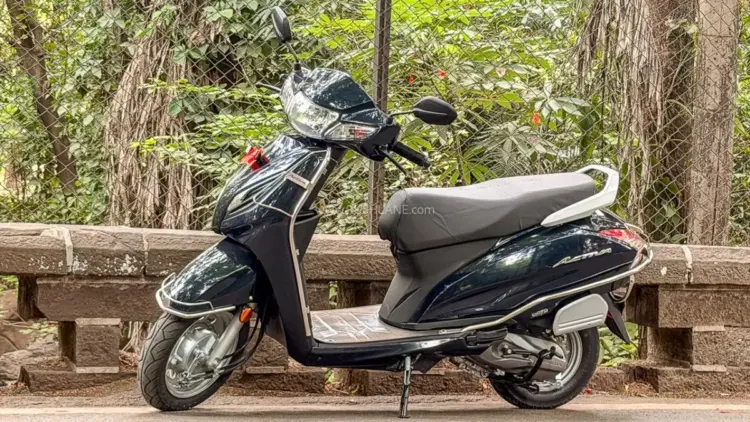
The Honda Activa remains the undisputed king of the Indian streets. In September 2026, it crossed the 3.5 lakh mark, recording 3,52,271 units. This reflects a massive 48.19% growth over the previous year’s 2,37,716 units. To put this into perspective, the Activa alone accounted for more than half of the net volume growth seen across the top 10 models. Its reliability and brand equity continue to withstand the onslaught of both new petrol competitors and the burgeoning EV sector.
The Rise of the Challengers
While Activa leads in volume, the title for the fastest growth belongs to Hero MotoCorp. The Hero Destini 125 registered a staggering 92.33% growth, nearly doubling its sales from 21,754 units in September 2025 to 41,839 units in 2026. Similarly, Hero’s electric foray, the Vida, saw an 88.28% jump, reaching 28,862 units.

The TVS Jupiter maintained its strong second-place position with 1,54,725 units, growing 8.87%. Together, the Activa and Jupiter control roughly 60% of the top 10 market share, illustrating a significant concentration of consumer trust in these two nameplates.
Chronology: The Road to September’s Peak
The surge in September 2026 is not an isolated event but the culmination of a steady upward trajectory throughout the third quarter (Q3) of the calendar year.
- July – August 2026: The market began showing signs of aggressive recovery and expansion. August 2025 saw domestic sales of 8,55,715 units. The jump to nearly 10 lakh units in September represents a 16.34% month-on-month (MoM) increase, largely attributed to inventory building ahead of the major Indian festive season.
- September 2025 vs. September 2026: A year ago, the market was still navigating post-subsidy adjustments in the EV sector and fluctuating rural demand. By September 2026, those hurdles appear cleared, with the total market (domestic + exports) expanding by 34.55% YoY.
- Quarterly Performance (Q3 2026): For the July-September period, domestic scooter sales reached 26,49,481 units, a 27.44% increase over the 20,79,054 units sold in Q3 2025. This sustained growth over three months indicates a structural shift in consumer preference toward scooters for urban and semi-urban mobility.
Supporting Data: Detailed Breakdown of the Top 10
The performance of individual models reveals a market that is rewarding both established "family" scooters and lifestyle-oriented "performance" or "electric" models.
| No | Top 10 Scooters | Sep-26 Sales | Sep-25 Sales | Growth (%) |
|---|---|---|---|---|
| 1 | Honda Activa | 3,52,271 | 2,37,716 | 48.19% |
| 2 | TVS Jupiter | 1,54,725 | 1,42,116 | 8.87% |
| 3 | Suzuki Access | 71,928 | 72,238 | -0.43% |
| 4 | TVS Ntorq | 47,955 | 33,246 | 44.24% |
| 5 | TVS iQube (EV) | 45,320 | 30,820 | 47.05% |
| 6 | Bajaj Chetak (EV) | 42,394 | 30,558 | 38.73% |
| 7 | Hero Destini 125 | 41,839 | 21,754 | 92.33% |
| 8 | Honda Dio | 29,160 | 23,829 | 22.37% |
| 9 | Hero Vida (EV) | 28,862 | 15,329 | 88.28% |
| 10 | Suzuki Burgman | 27,839 | 28,254 | -1.47% |
| Total | Top 10 | 8,42,293 | 6,35,860 | 32.47% |
The Electric Surge
A critical takeaway from the September data is the solidification of electric scooters within the mainstream. Three of the top 10 models are now fully electric: TVS iQube, Bajaj Chetak, and Hero Vida.
- Combined, these three EV models accounted for 1,16,576 units in September.
- The TVS iQube and Bajaj Chetak have now firmly established themselves as high-volume players, both crossing the 40,000-unit monthly mark.
- The presence of three EVs in the top 10 highlights that the "early adopter" phase is over; Indian consumers now view electric scooters as viable alternatives to 110cc and 125cc petrol models.
Export Dynamics
While the domestic market is the primary driver, exports are also on the rise. Scooter exports reached 76,370 units in September 2026, a 41.27% increase over the 54,061 units exported in September 2025. This suggests that Indian-made scooters are gaining traction in international markets, particularly in Southeast Asia and Latin America.

Official Responses and Industry Sentiment
While specific executive statements were not released alongside this data, the numbers reflect a clear industry strategy. Analysts from major brokerage firms suggest that the surge is a result of "Aggressive Product Lifecycle Management."
Honda Motorcycle & Scooter India (HMSI) has clearly benefited from its focus on the "Activa" brand, leveraging its reputation for durability. Industry insiders suggest that Honda’s ability to maintain supply chain efficiency during this high-demand period allowed them to capture nearly half of the market’s net growth.
Hero MotoCorp’s performance with the Destini 125 and Vida reflects a successful "dual-track" strategy. By refreshing the Destini to appeal to value-conscious buyers and scaling the Vida’s distribution network, Hero has successfully pivoted from being a motorcycle-centric manufacturer to a formidable force in the scooter segment.
TVS Motor Company continues to be the most diversified player. With the Jupiter (Family/Value), Ntorq (Youth/Performance), and iQube (Electric) all featuring prominently in the top 10, TVS has effectively hedged its bets across all sub-segments of the market.
Implications: Scooters vs. Motorcycles
Perhaps the most significant implication of the Q3 2026 data is the widening gap in growth rates between scooters and motorcycles.

Domestic Growth Disparity
During Q3 2026, domestic motorcycle sales grew by a modest 7.40%, reaching 36,19,853 units. In contrast, scooters grew at 27.44%. In absolute volume terms, scooters added 5,70,427 domestic units compared to the motorcycle segment’s increase of 2,49,358 units.
This suggests that for the Indian commuter, the scooter is increasingly becoming the preferred choice. Several factors contribute to this:
- Urbanization: As Indian cities become more congested, the "twist-and-go" convenience of a scooter outweighs the gear-shifting requirement of a motorcycle.
- Gender Neutrality: Scooters continue to appeal to a broader demographic, including women and elderly riders, more effectively than motorcycles.
- Storage and Utility: The under-seat storage and floorboard space make scooters more practical for daily errands and "last-mile" utility.
- EV Penetration: The transition to electric power has been significantly faster in the scooter segment than in motorcycles, where high-performance electric powertrains remain expensive.
The Export Fortress of Motorcycles
Despite the domestic surge of scooters, motorcycles remain the "export powerhouse" for India. Quarterly motorcycle exports reached over 14.3 lakh units, dwarfing the 2.17 lakh units of scooters exported. This indicates that while the domestic market is pivoting toward scooters, the global demand for Indian motorcycles (particularly in the 100cc-250cc range) remains the bedrock of the industry’s international trade.
Conclusion
The September 2026 sales figures mark a watershed moment for the Indian automotive industry. With domestic sales nearing 10 lakh units a month, the scooter is no longer just a "secondary" vehicle in the Indian household; it is a primary driver of mobility.
As we move into the final quarter of 2026, the industry will be watching to see if the Hero Destini can maintain its triple-digit growth trajectory and if the combined force of iQube, Chetak, and Vida can eventually challenge the volume dominance of the petrol-powered giants. For now, the Honda Activa remains the king, but the kingdom it rules is becoming more diverse, more electric, and faster-growing than ever before.