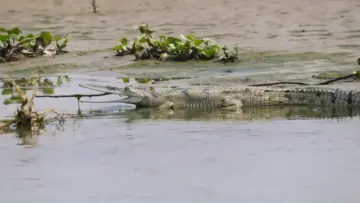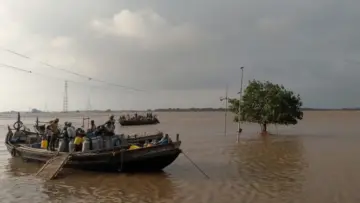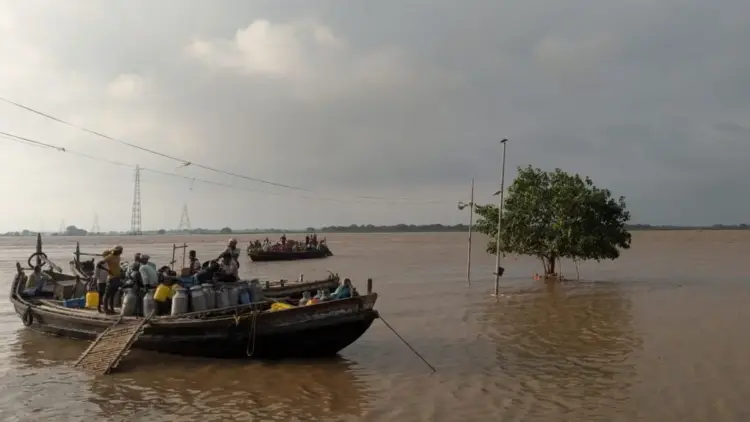
The Ganga River, a lifeline for over 400 million people, stands at the center of a brewing geopolitical and domestic storm. As the landmark 1996 Ganga Water-Sharing Treaty between India and Bangladesh approaches its 30-year expiration in 2026, the Indian state of Bihar has emerged as a vocal critic of the existing framework. Positioned as a middle-riparian entity, Bihar argues that it has borne the brunt of a bilateral agreement that prioritizes international diplomacy and downstream navigation over the state’s agricultural, ecological, and developmental survival.
With the renewal process looming, Bihar’s political leadership and environmental experts are demanding a fundamental shift in how the river is managed. They argue that the current treaty, centered on the Farakka Barrage in West Bengal, ignores the ground realities of siltation, shifting hydrology, and the rising water demands of a state whose population and economy are inextricably linked to the Ganga basin.
Main Facts: A State Caught in the Middle
The Ganga water-sharing treaty, signed in December 1996 by then-Indian Prime Minister H.D. Deve Gowda and Bangladeshi Prime Minister Sheikh Hasina, was designed to resolve decades of dispute over the flow of the river during the lean season (January to June). The treaty focuses on the distribution of water at the Farakka Barrage, located in West Bengal, just a few kilometers from the Bangladesh border.
However, Bihar’s grievance stems from its unique geographical position. While the treaty is a bilateral agreement between two sovereign nations, the water that reaches Farakka largely flows through Bihar. State officials contend that Bihar is forced to ensure a minimum flow to Farakka to meet India’s international obligations, often at the expense of its own water security.

The Sharing Formula
Under the 1996 accord, the sharing mechanism is strictly defined for the lean period:
- Below 70,000 cusecs: India and Bangladesh each receive 50%.
- 70,000 to 75,000 cusecs: Bangladesh is guaranteed 35,000 cusecs, with India receiving the remainder.
- Above 75,000 cusecs: India is guaranteed 40,000 cusecs, with Bangladesh receiving the remainder.
Special provisions exist for the month of April, a critical period for agriculture, where Bangladesh is guaranteed 35,000 cusecs during the first and last ten-day cycles. If the flow drops below 50,000 cusecs, the two national governments must enter emergency consultations.
Bihar’s political class, led by the ruling Janata Dal (United), argues that these numbers were calculated without a comprehensive assessment of the upstream requirements of Bihar, leading to a "water deficit" that hampers the state’s irrigation and industrial potential.
Chronology: From Construction to Conflict
The roots of the current tension date back more than half a century.

- 1961–1975: Construction of the Farakka Barrage. The primary objective was to divert 40,000 cusecs of water into the Bhagirathi-Hooghly river system to flush out silt and maintain the navigability of the Kolkata Port.
- 1994: The Second Bihar State Irrigation Commission report is prepared, highlighting that while Bihar holds only 16% of the Ganga’s catchment area, it contributes significantly to the flow via its tributaries.
- 1996: The Indo-Bangladesh Treaty is signed for a 30-year duration. Bihar immediately raises concerns regarding its share.
- 1997: The Bihar government formally demands that the central government ensure upstream states (Uttarakhand and Uttar Pradesh) share the burden of maintaining the Ganga’s flow.
- 2017: During the "Vision Ganga" program, Bihar’s then-Water Resources Minister Rajiv Ranjan Singh (now a Union Minister) highlights the disparity between water entering Bihar at Buxar and the amount required at Farakka.
- 2018: An IIT Kanpur study commissioned by Chief Minister Nitish Kumar reveals the staggering impact of siltation caused by the Farakka Barrage.
- 2022: Bihar launches the Ganga Water Supply Scheme to transport monsoon water to water-stressed regions like Gaya and Rajgir, highlighting the state’s desperate need for internal water management.
- August 2024: Sanjay Jha, JDU MP, raises the issue in the Rajya Sabha, urging the Center not to renew the treaty without addressing Bihar’s long-term water and sediment concerns.
Supporting Data: The Hydrological Imbalance
The core of Bihar’s argument is supported by a series of startling hydrological figures. Data from the Bihar State Pollution Control Board and the Water Resources Department suggest a "vanishing river" phenomenon during the lean months.
The Flow Disparity
When the Ganga enters Bihar at Chausa in the Buxar district, its flow during the lean period (February to April) has been recorded as low as 400 to 14,126 cusecs. However, to satisfy the treaty at Farakka, the river must carry significantly more water. Bihar effectively acts as a "collection point" where tributaries like the Kosi, Gandak, and Son add volume to the main stem.
The Bihar government argues it is burdened with a "national duty" to deliver a minimum of 52,972 cusecs at Farakka. This creates a scenario where Bihar cannot utilize its own tributary water for irrigation because that water is "earmarked" for downstream international delivery.
The Siltation Crisis
The Farakka Barrage has long been blamed for altering the river’s morphology. A study by Professor Rajiv Sinha of IIT Kanpur, which analyzed a 580-km stretch from Buxar to Farakka, found that the barrage acts as a massive sediment trap.

- 156 Million Tonnes (MT): The estimated annual sediment trapped upstream of the barrage.
- Result: This "backwater effect" causes silt to settle on the riverbed in Bihar, making the river shallow and prone to catastrophic flooding. When the riverbed rises, the same volume of water spreads wider, destroying farmland and displacing millions during the monsoon.
Catchment vs. Contribution
Bihar occupies only about 16% of the Ganga’s total catchment area, yet it is the primary contributor to the flow reaching the international border during the lean season. State officials argue that upstream states like Uttar Pradesh and Uttarakhand consume vast amounts of water for irrigation and hydropower, leaving Bihar to manage the "residual" flow while meeting the treaty’s strict requirements.
Official Responses and Political Stance
The political response from Bihar has been unified across party lines when it comes to the state’s "riparian rights."
The JDU’s Parliamentary Push
Sanjay Jha, a senior leader of the Janata Dal (United) and close confidant of CM Nitish Kumar, has been the most vocal proponent for reform. In his August 2024 Rajya Sabha address, Jha emphasized that renewing the treaty in its current form would be a "betrayal" of Bihar’s interests. He demanded that any new agreement must incorporate "water resource requirements for drinking water, industrial development, and long-term water security."
The Central Government’s Position
An internal committee set up by the Union Government to discuss the treaty’s renewal has reportedly recommended an allocation of 900 cusecs for Bihar’s drinking and industrial needs. However, the Bihar government had demanded 2,000 cusecs. This gap remains a point of contention in federal-state negotiations.

Expert Divergence
While politicians focus on water volume, some experts suggest the problem is more complex. Himanshu Thakkar, coordinator of the South Asia Network on Dams, Rivers and People (SANDRP), notes that Bihar lacks major storage facilities. "The question of Bihar holding back or releasing water doesn’t arise because they have no dams on the Ganga to store it," Thakkar argues. He suggests the state’s grievance is more about the consequences of the river’s flow (silt and floods) than the actual lack of liquid water for current use.
Implications: A Basin-Wide Management Approach
The upcoming renewal of the Ganga Water-Sharing Treaty is not merely a diplomatic formality; it is a test of India’s internal federalism and its environmental foresight.
1. The Necessity of Silt Management
Experts like Professor Rajiv Sinha argue that the new treaty must include a clause on silt management. If the treaty remains focused solely on cusecs of water, the ecological degradation of Bihar will continue. A "Silt Policy" would mandate the central government and downstream stakeholders to cooperate on dredging and sediment bypass mechanisms, reducing the flood risk in Bihar.
2. From Bilateral to Basin-Wide
The current treaty is bilateral (India-Bangladesh). There is a growing call to make it "basin-wide," involving all riparian states—Uttarakhand, Uttar Pradesh, Bihar, and West Bengal. This would ensure that the burden of maintaining the Ganga’s health and meeting international obligations is shared proportionately based on water usage and catchment contribution.

3. Diplomatic Constraints
India faces a delicate balancing act. Relations with Bangladesh are of strategic importance. Any move to significantly reduce the water flow to Bangladesh could trigger regional instability and push Dhaka closer to other regional powers. However, ignoring Bihar’s demands could lead to internal political unrest and a legal challenge to the treaty’s domestic implementation.
4. Future Water Security
By 2050, Bihar’s population and industrial needs are expected to peak. If the state is locked into a 30-year treaty that doesn’t account for this growth, it could face a permanent water crisis. The demand for an assured quantum of water during the lean period is, therefore, a move to "future-proof" the state’s economy.
Conclusion
The Ganga Water-Sharing Treaty of 1996 was a product of its time—a solution to a pressing diplomatic crisis. However, thirty years later, the "Bihar factor" can no longer be sidelined. The river is a dynamic system of water and silt, and any treaty that treats it as a mere plumbing problem is destined to fail. As 2026 approaches, the Indian government must decide whether to simply extend a legacy agreement or to craft a modern, inclusive, and ecologically sound framework that respects the rights of the people of Bihar while honoring its commitments to Bangladesh. The survival of the Ganga, and the millions who depend on it, hangs in the balance.