The Indian automotive landscape in late 2026 continues to be defined by the relentless surge of the SUV segment, with Mahindra & Mahindra (M&M) firmly at the helm of the lifestyle and rugged utility categories. According to the latest sales data for September 2026, Mahindra has demonstrated a complex yet resilient performance, characterized by the unwavering popularity of the Scorpio nameplate, a significant volume recovery for the Bolero, and a stabilizing presence in the dedicated electric vehicle (EV) market through its XEV and BE sub-brands.
While the overall industry faces fluctuating demand cycles, Mahindra’s strategic diversification—spanning internal combustion engines (ICE), Compressed Natural Gas (CNG), and Battery Electric Vehicles (BEVs)—has allowed the manufacturer to offset localized declines with high-growth niches.
Main Facts: The September 2026 Sales Landscape
Mahindra’s performance in September 2026 was anchored by its "Big Four" models: the Scorpio (Classic and N), XUV 3XO, Bolero, and XUV 7XO. Together, these models accounted for nearly 73% of the brand’s total monthly volume, underscoring a heavy reliance on established legacy brands even as the company pivots toward a digital-first, electric future.
The Scorpio brand remains the undisputed king of the Mahindra stable. Combining the sales of the Scorpio Classic and the Scorpio N, the nameplate recorded 17,313 units in September. This figure represents 27.01% of Mahindra’s total monthly sales. Although there was a marginal year-on-year (YoY) decline of 5.76% compared to September 2025 (18,372 units), the month-on-month (MoM) trajectory showed a robust recovery of 11.15% over August 2026’s 15,576 units.
The XUV 3XO emerged as the most significant mover in terms of sequential growth. Including its electric variants, the 3XO lineup found 10,823 buyers in September. This reflects a substantial 19.83% growth over the 9,032 units sold in the same month last year. More impressively, it registered a 30.37% increase over August 2026, adding 2,521 units to its tally—the largest MoM volume gain across the entire Mahindra portfolio.

The Resurgence of the Bolero and XUV 7XO
One of the most striking highlights of the report is the Bolero’s sharp recovery. After a period of relative stagnation, the Bolero (including the Classic and Neo) posted 9,344 units. This is a massive jump from the low base of 2,425 units recorded in September 2025. This recovery suggests a renewed demand in Tier-2 and Tier-3 markets, where the Bolero’s reputation for ruggedness remains unparalleled.
Meanwhile, the XUV 7XO—Mahindra’s premium flagship SUV—maintained steady momentum with 9,097 units. While this was a 6.83% decline YoY, the model saw a 6.51% increase compared to August 2026. The XUV 7XO continues to hold its ground against intensifying competition from both domestic rivals and global mid-size SUV entrants.
Chronology of Performance: From Q3 2025 to Q3 2026
To understand the current state of Mahindra’s market position, one must look at the quarterly progression. The third quarter (July–September) of 2026 tells a story of strategic consolidation.
- July–August 2026: The period was marked by a slight cooling of demand in the lifestyle segment, particularly for the Thar range, as consumers awaited festive season offers and new variant launches.
- September 2026: The onset of the festive period triggered a sharp MoM recovery for the Scorpio and XUV 3XO. The launch of the XUV 3XO ZNG (CNG variant) acted as a catalyst for renewed interest in the compact SUV space.
- Q3 Overall: The quarter ended with the Scorpio leading the charts at 48,898 units, a 16.54% growth over Q3 2025. The Bolero saw the most significant quarterly volume addition, growing 54.37% to 26,094 units.
Supporting Data: The Lifestyle and Electric Segments
The Thar Dynamics: ROXX vs. OG
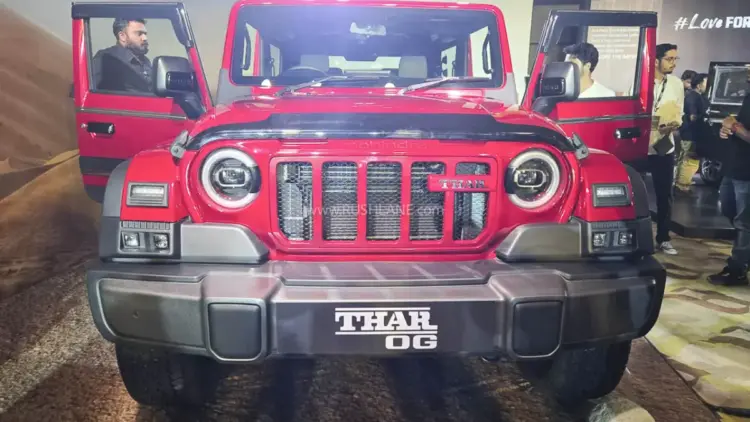
The "Thar" brand, once a niche off-roader, has now branched into two distinct identities: the Thar ROXX (the more practical, five-door iteration) and the Thar OG (the classic three-door).
- Thar ROXX: September sales stood at 5,625 units, a 29.45% decline from the previous year’s 7,973 units. It also saw a slight MoM dip of 3.30%.
- Thar OG: The classic model recorded 3,383 units, down 12.65% YoY and a steeper 27.20% MoM.
Combined, the Thar family contributed 9,008 units. Analysts suggest that the decline in Thar volumes may be attributed to market saturation or potential buyers waiting for the rumored "DaVinci suspension" update and the upcoming Thar EV (Vision T).

The Electric Evolution: XEV and BE
Mahindra’s "Born Electric" and XEV sub-brands are beginning to carve out a permanent slice of the sales pie.
- XEV 9S: This has become Mahindra’s premier electric offering, ranking sixth in overall sales for September with 4,636 units. It contributed over 7% of the total monthly volume and showed a steady 2.84% MoM growth.
- XEV 9e & BE 6: These models faced more headwinds. The XEV 9e saw 1,975 units (down 24.59% YoY), while the BE 6 recorded 1,517 units (down 10.82% YoY).
Despite the YoY declines in some electric models, the quarterly total for the XEV 9S (13,275 units) represents the largest year-on-year volume addition to Mahindra’s total tally, signaling that the premium EV segment is where the brand is finding its new footing.
Official Responses and Strategic Directives
While Mahindra & Mahindra has not issued a formal press release for this specific breakup, internal sources and recent executive briefings highlight three core pillars of their current strategy:
- Energy Neutrality: By launching the XUV 3XO ZNG (CNG), Mahindra is acknowledging that the transition to pure EVs will take time. The ZNG variant is designed to capture the "value-conscious" urban commuter who is not yet ready for an EV but finds diesel or petrol costs prohibitive.
- Technological Upgrades: The sighting of the "DaVinci suspension" on Thar ROXX test mules suggests an official response to feedback regarding ride quality. Mahindra is committed to refining the mechanical underpinnings of its lifestyle vehicles to make them more suitable for daily family use.
- EV Scaling: The success of the XEV 9S is being viewed internally as a validation of the company’s "Twin Peaks" strategy—maintaining ICE dominance while scaling the XEV and BE platforms.
Implications for the Indian Automotive Market
The September 2026 data carries several implications for the broader industry:
1. The Resilience of "Diesel-First" Heritage
Despite the global push toward electrification, the Scorpio’s dominance proves that in the Indian heartland, large-format, ladder-frame SUVs with strong diesel engines remain the aspirational gold standard. Mahindra’s ability to modernize these legacy brands (via the Scorpio N) has successfully insulated them from the volatility seen in the hatchback and sedan segments.

2. The Fragmentation of the SUV Market
The split between Thar ROXX and Thar OG sales indicates that the SUV market is fragmenting into "Lifestyle-Practical" and "Lifestyle-Purist" categories. Manufacturers can no longer rely on a single model to satisfy all buyers; sub-segmentation is now a necessity for maintaining volume.
3. The CNG Pivot
The introduction of the XUV 3XO ZNG marks a pivotal shift. For years, Mahindra was seen as a diesel specialist. By entering the factory-fitted CNG space with a premium compact SUV, they are directly challenging Maruti Suzuki and Tata Motors in a segment that is rapidly growing due to the expansion of city gas distribution networks.
4. The Future Pipeline: Vision T and Beyond
Looking ahead, Mahindra’s "Vision" series (Vision S and Vision T) represents the next frontier. The Vision T (Thar EV) is expected to do for the electric segment what the original Thar did for the 4×4 segment—democratize the "cool" factor of off-roading. Furthermore, the Scorpio Lifestyler pickup and the Scorpio N facelift are expected to sustain the brand’s momentum through 2027.
Conclusion
Mahindra’s September 2026 sales performance is a testament to a brand in transition. While legacy models like the Scorpio and Bolero continue to provide the volume and cash flow necessary for expansion, the XEV 9S and XUV 3XO are laying the groundwork for a more diversified future.
The challenges are evident—specifically the cooling demand for the three-door Thar and the decline in older EV models—but the solution seems to be a relentless product offensive. With new suspension tech, CNG variants, and a suite of "Born Electric" SUVs on the horizon, Mahindra appears well-positioned to maintain its status as India’s premier SUV manufacturer, regardless of the powertrain of choice.