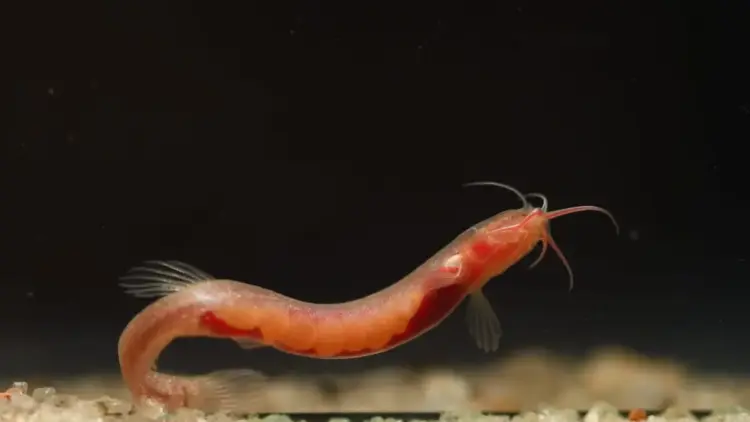
In the quiet residential neighborhoods of Assam’s Goalpara district, a biological mystery was hiding in plain sight for decades. What locals long dismissed as "pink worms" infesting their drinking water wells have recently been revealed as two distinct, scientifically significant species of subterranean fish. This discovery, the result of a decade-long observation by a local researcher turned scientist, has pulled back the curtain on a hidden world of "stygofauna"—animals that live entirely within the dark, oxygen-poor confines of underground aquifers.
The identification of Gitchak nakana, a two-centimeter blind loach, and Rakthamichthys anchi, a slender, blood-red swamp eel, represents a major breakthrough in ichthyology. Beyond the novelty of the species themselves, their presence in the alluvial deposits of the Brahmaputra basin challenges long-held scientific assumptions about where subterranean life can evolve and thrive.
Main Facts: A Tale of Two Transparent Travelers
The two species discovered in Goalpara are classified as phreatobitic organisms—creatures that spend their entire life cycles in subterranean groundwater environments, specifically within the water-filled spaces of aquifers.
Gitchak nakana: The "Blind Red Fish"
The first of the two discoveries, Gitchak nakana, is a miniature loach measuring only about two centimeters in length. Its most striking feature is its transparency; because it lacks surface pigment, its internal organs and circulating blood are visible through its skin, giving it a vivid, cherry-red appearance. Evolutionarily adapted to a life of total darkness, the fish is completely blind.

The name is deeply rooted in local culture and biology. "Gitchak" is a Garo word meaning "red," while "nakana" is a portmanteau of the Garo words "na·tok" (fish) and "kana" (blind). Perhaps most bizarrely, micro-CT scans revealed that G. nakana lacks a skull roof, leaving its brain protected only by a thin layer of skin—a rare anatomical trait even among specialized cave-dwelling species.
Rakthamichthys anchi: The Subterranean Eel
The second species, Rakthamichthys anchi, belongs to the family Synbranchidae, commonly known as swamp eels. Unlike the tiny loach, the holotype specimen of R. anchi measures approximately 310 mm (about 12 inches). It is a slender, eel-like fish that shares the blood-red coloration of the loach.
Its name is a linguistic tapestry: "An·chi" (Garo) and "Raktham" (Malayalam) both mean "blood," while "ichthys" is the Greek word for "fish." Despite its eel-like appearance, it is a percomorph fish, highly adapted to navigating the narrow, pressurized crevices of the deep earth.
Chronology: From Childhood Curiosity to Scientific Breakthrough
The path to discovery began not in a laboratory, but in the daily chores of a young girl in rural Assam. A decade ago, Wimarithy K. Marak, then a resident of Goalpara, frequently noticed small, pink, worm-like creatures while drawing water from her family’s well. At the time, she viewed them as mere pests or common invertebrates.

2021: The First Specimen
Marak’s perspective changed after she pursued a career in research. In March 2021, while drawing water once again, she recognized the "worms" of her childhood as something potentially much more significant. She captured a specimen and sent images to her supervisor. Upon bringing the creature to the lab, the team realized they were looking at a previously undescribed species of subterranean loach. This specimen would eventually be named Gitchak nakana.
2021–2023: The Search for More
Following the initial find, researchers conducted extensive explorations of neighboring wells. However, the elusive nature of groundwater species made them difficult to track. The team turned to the local community for help, requesting that residents alert Marak if they spotted anything unusual during routine well maintenance.
2024: The Eel Emerges
In May 2024, the patience of the researchers paid off. During the thorough cleaning of a well belonging to one of Marak’s relatives, the well was fully drained. At the bottom, they discovered a much larger, eel-like creature. This 31-centimeter specimen became the holotype for Rakthamichthys anchi.
Late 2024: International Collaboration and Publication
The Indian research team collaborated with experts in Germany, including lead author and ichthyologist Ralf Britz. Using advanced micro-CT scanning technology in German labs, the scientists were able to examine the internal bone structures of the fish without damaging the rare specimens. This led to the publication of two separate papers earlier this year, formally introducing both species to the global scientific community.

Supporting Data: The Geology of a Hidden Habitat
The discovery of these fish in Goalpara is geologically significant. Most subterranean fish are found in "karst" topography—limestone regions characterized by large caves and underground rivers. However, Goalpara sits on alluvial deposits, which consist of sand, silt, and clay.
The Brahmaputra Aquifer System
According to geologist Prerona Das of North-Eastern Hill University, the Brahmaputra floodplain is a complex hydrological environment. It hosts five to six multi-layered aquifers that extend to depths of 400 meters. These layers consist of medium to coarse-grained sand, which allows for high lateral connectivity.
Key data points regarding the habitat include:
- Depth: The wells where the fish were found are approximately 6.7 meters deep.
- Soil Composition: Highly oxidized dark brown to reddish-brown loamy sand.
- Cap Layer: A clay layer varying from 5 to 60 meters thick acts as a "lid" over the deeper aquifer systems.
- Connectivity: High lateral connectivity suggests these fish may travel vast distances underground, far beyond the single wells where they were captured.
Survival in the Extremes
Aquifers are considered extreme ecosystems. They are characterized by:

- Total Aphoticity: Zero light, meaning eyes are an evolutionary burden.
- Hypoxia: Limited oxygen levels compared to surface water.
- Nutrient Scarcity: Very little food reaches these depths, usually only through seepage or organic matter falling into wells.
To survive here, G. nakana and R. anchi have evolved extremely low metabolic rates. Experts believe that once these fish manage to find a meal, they can survive for several months without eating again.
Official Responses: Conservation and Scientific Caution
The researchers involved have expressed a mix of excitement and trepidation. A primary concern is the potential for "over-exploitation" or "scientific poaching."
Kangjam Velentia, a co-author of both studies, noted that the team has intentionally withheld the exact coordinates of the discovery sites. "We were afraid that the populations might be exploited," she explained, highlighting the vulnerability of rare, localized species to the exotic pet trade or curiosity seekers.
Rajeev Raghavan, a professor at the Kerala University of Fisheries and Ocean Studies (KUFOS), emphasized the need for community education. He pointed out that because these fish look like worms or small snakes, the "first reaction [of locals] is often to kill them." Raghavan’s team is working to reframe these fish as indicators of clean water rather than pests. Since the wells are used for drinking water, the presence of these fish suggests a healthy, oxygenated aquifer.

Ralf Britz, the German ichthyologist who led the studies, expressed surprise at the habitat. "The wells are situated in alluvial deposits, a quickly changing environment, in which it is difficult to imagine how a subterranean fauna evolved," he stated. His work with micro-CT scans has been pivotal in proving that these are not just surface fish that fell into a hole, but specialized organisms with unique skeletal structures adapted for life in the deep.
Implications: The "Canaries in the Coal Mine"
The discovery of Gitchak nakana and Rakthamichthys anchi has profound implications for both environmental conservation and our understanding of India’s biodiversity.
Indicators of Water Quality
Subterranean fish are highly sensitive to their environment. Professor Raghavan describes them as the first to sense changes in water quality. "If there’s a small change in water parameters such as pH or oxygen levels, it will definitely have an impact on the animals that live under the ground," he said. Their health is directly tied to the health of the groundwater that millions of people in the Brahmaputra basin rely on for survival.
The Role of Stygofauna
Aquatic ecologist Grant Hose from the University of Sydney notes that stygofauna play a crucial role in maintaining the "plumbing" of the earth. By grazing on bacteria within the aquifer, they prevent the tiny spaces between sand grains from becoming clogged, which ensures that water can continue to flow and recharge.

The Threat of the Unknown
The greatest threat to these species—and others yet to be discovered—is the rapid pace of unregulated groundwater extraction and pollution. In Assam, deeper groundwater systems (beyond 200 meters) remain largely unmapped. Urbanization, industrial runoff, and agricultural chemicals pose a "silent threat" to these hidden ecosystems.
As Prerona Das warned, inadequate sanitation and waste disposal could pollute these aquifers before we even know what lives in them. The discovery in Goalpara serves as a call to action for more comprehensive mapping and stricter regulation of India’s subterranean water resources.
Conclusion: A Frontier Beneath Our Feet
The discovery of these two red, blind residents of the Assam soil proves that the age of discovery is far from over. It suggests that every well in the Brahmaputra basin could potentially be a window into a vast, interconnected, and largely unknown biological frontier. As Ralf Britz concluded, "Habitats that have not been surveyed comprehensively will continue to yield surprising discoveries." The challenge now lies in ensuring that these "shadow" species are protected from the very world they have spent millions of years evolving to avoid.