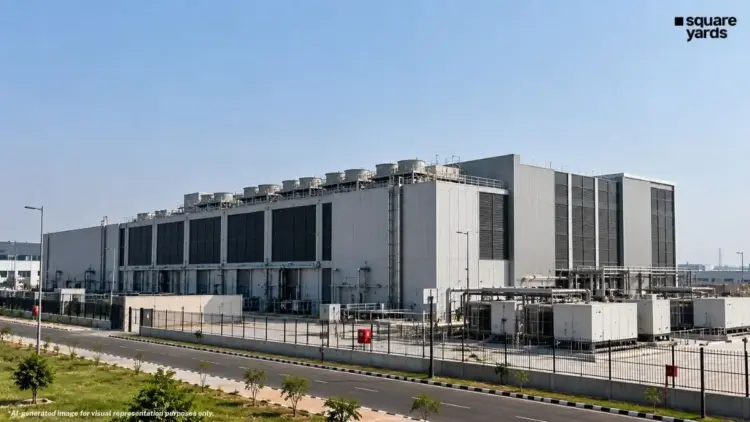
JHANSI — In a move that signals a decisive shift in the industrial geography of North India, the Uttar Pradesh government has officially received the Detailed Project Report (DPR) for a massive 1,000-acre data center and Information Technology (IT) hub. Proposed as a centerpiece of the burgeoning Bundelkhand Industrial Development Authority (BIDA), this project marks the state’s most ambitious attempt to replicate the "Noida model" of development in the historically agrarian and mineral-rich region of Bundelkhand.
As of October 19, 2026, the project has moved from the conceptual stage to the execution phase, with the state government already securing 810 acres of the required land. This development is expected to serve as a catalyst for a region-wide economic overhaul, positioning Jhansi as a new-age technology corridor.
Main Facts: The Blueprint for a Digital Fortress
The proposed IT hub is not a standalone venture but a strategic component of the larger BIDA master plan. BIDA is designed to be a sprawling industrial metropolis covering 56,662 acres across 33 villages in the vicinity of Jhansi. The 1,000-acre tech enclave is envisioned as a high-density zone dedicated to data storage, cloud computing, and software development.
Key Pillars of the Project:
- Scale and Scope: Out of the 56,662 acres earmarked for BIDA, the first phase involves the acquisition of 35,298 acres. The tech hub occupies a premium 1,000-acre slice of this initial phase.
- Land Readiness: The Uttar Pradesh government has demonstrated unprecedented speed in land pooling. Over 80% of the Phase 1 target—amounting to 28,874 acres—has already been acquired. For the IT hub specifically, 810 acres are already in the government’s possession.
- Multi-Sectoral Synergy: While the data center is the "anchor" project, BIDA is designed to house a diverse industrial mix, including automotive manufacturing, defense production (aligned with the UP Defense Industrial Corridor), healthcare, logistics, and Fast-Moving Consumer Goods (FMCG).
- Strategic Connectivity: The hub is positioned to leverage the Bundelkhand Expressway, the upcoming Gwalior-Jhansi-Khajuraho link, and a proposed dedicated airport and multimodal logistics park.
Chronology: From Vision to Detailed Project Report
The journey of BIDA and its IT hub reflects the Uttar Pradesh government’s broader strategy to achieve a $1 trillion state economy.
- September 2023: The UP Cabinet officially approved the formation of the Bundelkhand Industrial Development Authority (BIDA). This was the first time in 47 years that the state created a new industrial township on the scale of Noida (established in 1976).
- Early 2024: Land identification and survey work began across 33 villages near Jhansi. The government announced a compensation package for farmers designed to minimize resistance and accelerate acquisition.
- Late 2025: The state government refined its Data Center Policy, offering incentives such as capital subsidies, electricity duty exemptions, and stamp duty waivers to attract global tech giants to regions beyond the National Capital Region (NCR).
- Mid-2026: BIDA hit a milestone by acquiring over 25,000 acres of land. The focus shifted to specialized zones, leading to the commissioning of the DPR for the IT hub.
- October 2026: The DPR for the 1,000-acre data center and IT hub is submitted to the state government for final budgetary clearance and the commencement of the tendering process for infrastructure development.
Supporting Data: Measuring the Potential Impact
The scale of BIDA is nearly double that of the existing Noida development, and the data center segment is expected to be a primary revenue driver.
Land Acquisition Progress (as of October 2026):
| Phase | Target Acreage | Acquired Acreage | Percentage Complete |
|---|---|---|---|
| Phase 1 | 35,298 | 28,874 | 81.8% |
| Phase 2 | 21,364 | Under Survey | TBD |
| IT/Data Hub | 1,000 | 810 | 81.0% |
Economic Projections:
Industry analysts suggest that a 1,000-acre data center hub could attract investments exceeding ₹25,000 crore over the next decade. Data centers are capital-intensive; while they require fewer employees than traditional manufacturing, they demand high-skilled engineering talent and massive power infrastructure.
The proximity to the UP Defense Industrial Corridor (Jhansi Node) provides a unique advantage. Data centers in this hub could specifically cater to the secure data storage needs of defense contractors and aerospace firms operating in the corridor, creating a "security-tech" ecosystem.
Official Responses: A Strategic Pivot to Bundelkhand
Senior officials within the Uttar Pradesh Industrial Development Department have emphasized that the submission of the DPR is a "point of no return" for the project.
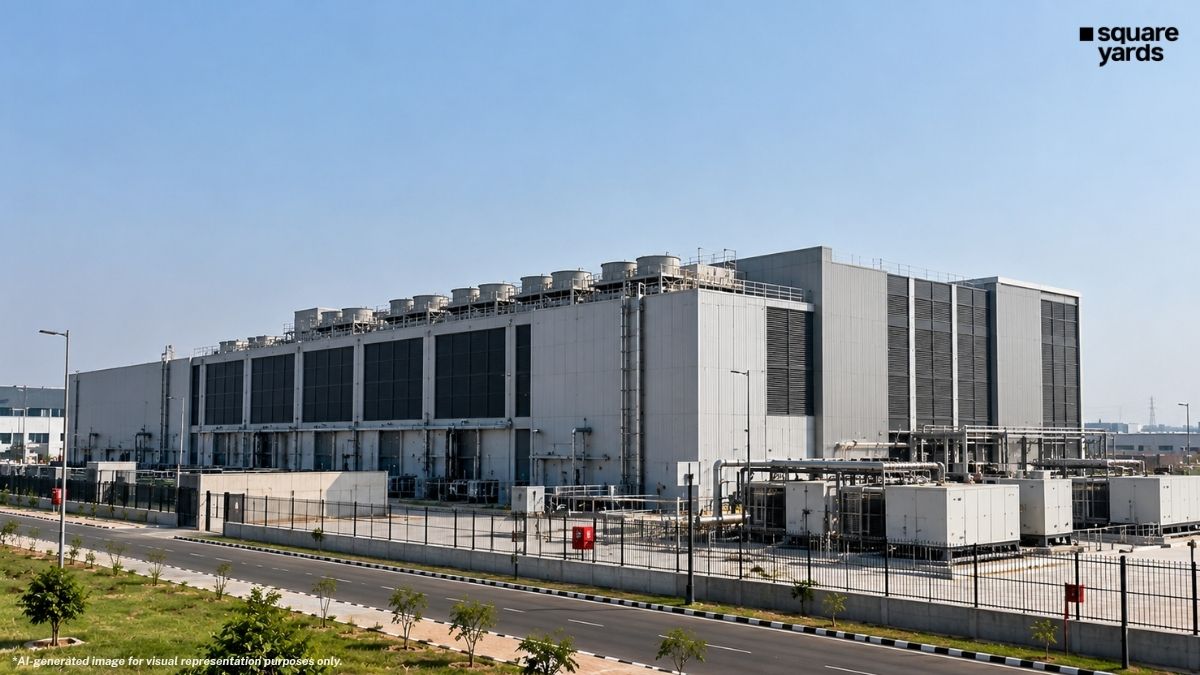
"Bundelkhand is no longer the ‘backward’ region it was once labeled," stated a senior official involved in the BIDA planning. "With the submission of the DPR, we are moving into the implementation of specialized infrastructure. We aren’t just building roads; we are building a digital backbone. The 1,000-acre IT hub is designed to accommodate Tier-4 data centers, which require the highest levels of uptime and security."
The Chief Minister’s office has reportedly directed BIDA officials to ensure that the "Ease of Doing Business" protocols in Jhansi match or exceed those in Noida. This includes a single-window clearance system for environmental permits and power connections, which are critical for data center operations.
Furthermore, officials have noted that the project is being developed with "green" credentials. Given Bundelkhand’s high solar insolation, the state plans to power a significant portion of the IT hub through dedicated solar farms, making it an attractive destination for multinational corporations with strict ESG (Environmental, Social, and Governance) mandates.
Implications: Real Estate, Jobs, and Regional Growth
The submission of the DPR has sent ripples through the regional economy, with the real estate sector being the first to react. However, experts urge a nuanced view of the market.
1. The Real Estate Ripple Effect
- Industrial and Commercial Land: This segment is the immediate beneficiary. The demand for specialized industrial plots—those with high-tension power lines and fiber-optic connectivity—is expected to surge. Speculative interest in land surrounding the 33 BIDA villages has already seen prices rise, though the government’s large-scale acquisition acts as a price stabilizer.
- Residential Demand: Unlike manufacturing hubs, IT and data center hubs attract a high-income workforce. However, the demand for housing will be a "lagging indicator." It will only materialize once the first few "anchor" companies break ground. In the long term, Jhansi is expected to see a demand for gated communities, serviced apartments, and modern retail spaces that cater to tech professionals.
2. Infrastructure as a Growth Multiplier
The proposed airport within the BIDA area is perhaps the most critical piece of the puzzle. For global IT firms, air connectivity is a non-negotiable requirement. Combined with the Bundelkhand Expressway, this infrastructure will reduce the "tyranny of distance," making Jhansi a viable alternative to Hyderabad or Bengaluru for back-end operations and data warehousing.
3. Solving the Migration Problem
Historically, Bundelkhand has suffered from high rates of out-migration due to the lack of industrial jobs. The BIDA project, and the IT hub in particular, offers a path to "reverse migration." By creating jobs in logistics, security, facility management, and high-tech engineering, the project could retain the local youth who currently flee to Delhi or Mumbai for employment.
4. Technical Requirements and Challenges
While the outlook is positive, the project faces technical hurdles. Data centers require immense quantities of water for cooling and an uninterrupted, high-voltage power supply. The government will need to ensure that the water-scarce region of Bundelkhand can support these needs through recycled water systems and robust reservoir management.
Conclusion: The Road Ahead
The submission of the DPR for the 1,000-acre data center and IT hub is a landmark moment for Uttar Pradesh. It represents a transition from traditional industrialization to a digital-first economic strategy. If BIDA can successfully integrate its massive land bank with world-class digital infrastructure and reliable power, the Jhansi-Bundelkhand region could become the "Silicon Valley of Central India."
For investors and stakeholders, the message is clear: the first impact will be felt in industrial land and infrastructure services. The broader transformation of the residential and commercial landscape will depend on the speed at which the government can convert this DPR into a living, breathing tech ecosystem. As of late 2026, the foundation has been laid; the world now watches to see how quickly the "Digital Bundelkhand" vision rises from the ground.