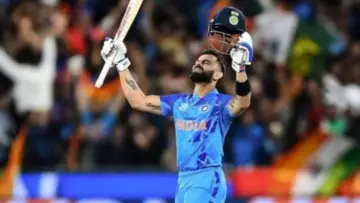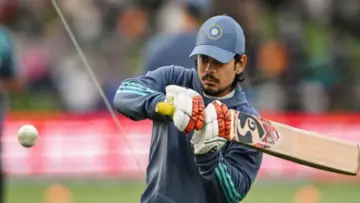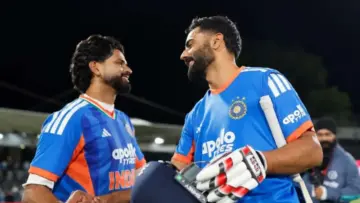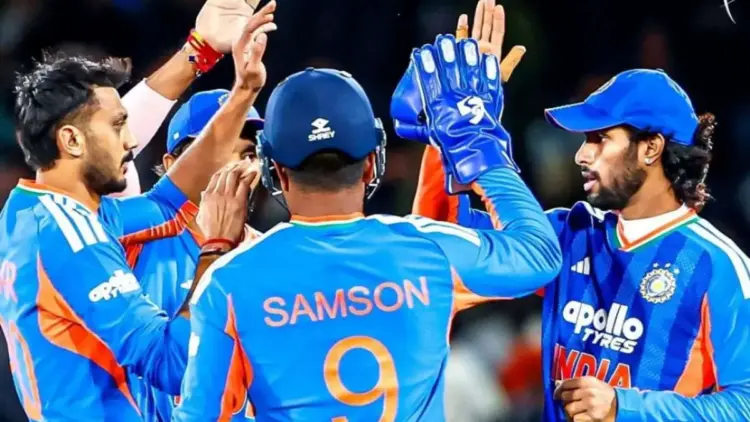
Christchurch, New Zealand – October 23, 2026 – Following a breathtaking opening encounter that saw India clinch a dramatic victory, the stage is now set for a pivotal second T20 International between India and New Zealand. Captained by the dynamic Shreyas Iyer, the Indian contingent, fresh off a remarkable 226-run chase, aims to consolidate their dominance and extend their series lead to an imposing 2-0. Standing in their way is Mitchell Santner’s New Zealand squad, determined to rebound and level the series on home soil. The Hagley Oval in Christchurch, having witnessed the spectacular fireworks of the first match, is poised to host another high-octane clash this Saturday, October 24th.
This fixture carries immense weight for both sides. For India, a victory would not only secure a commanding series advantage but also reinforce their aggressive T20 batting philosophy and adaptability under pressure. For the Blackcaps, a win is imperative to prevent an insurmountable deficit, restore confidence, and demonstrate their prowess against a formidable Indian unit. Cricket enthusiasts globally are bracing themselves for what promises to be an enthralling contest, filled with strategic battles, individual brilliance, and potentially, another record-breaking run-fest.
Main Facts: The Setting for a Showdown
The second T20I between India and New Zealand is scheduled for Saturday, October 24, 2026. The match will be played at the Hagley Oval in Christchurch, the same venue that hosted the thrilling series opener. The first ball is expected to be bowled at 12:30 PM IST (Indian Standard Time), translating to a late afternoon start in New Zealand. India currently holds a crucial 1-0 lead in the three-match series, courtesy of their astonishing 226-run pursuit on Thursday.
The primary narrative surrounding this match revolves around India’s ambition to double their lead and New Zealand’s urgent need to respond. The previous game underscored both teams’ batting firepower but also highlighted significant concerns regarding bowling consistency and fielding efficiency. A key development for India will be the absence of opening batsman Ishan Kishan due to injury, potentially paving the way for Vaibhav Sooryavanshi to make his mark, with anticipated reshuffles in the batting order. The Blackcaps, despite posting their highest T20I total at home against India, will be meticulously reviewing their bowling and fielding strategies to prevent a repeat of Thursday’s collapse.
Chronology: A Thrilling Series Opener and the Road Ahead
The first T20I on Thursday set an incredibly high bar for the series, serving up a veritable feast of T20 cricket. New Zealand, batting first, exhibited exceptional prowess across their lineup, with every batsman contributing to a monumental total of 225 runs. This score not only marked their highest T20I total at home but also equaled their highest ever against India in the shortest format. The innings was characterized by aggressive stroke play and a relentless assault on the Indian bowlers, who struggled to contain the flow of runs on a seemingly placid Hagley Oval pitch.
However, the drama truly unfolded in India’s chase. The visiting side commenced their pursuit with blistering intent, their opening partnership laying a robust foundation of 93 runs from a mere 35 deliveries. This explosive start put New Zealand on the back foot, showcasing India’s aggressive approach and their ability to dismantle bowling attacks from the outset. Despite this phenomenal start, India encountered a significant wobble in the middle overs, losing four consecutive wickets rapidly. This collapse was partly attributed to strategic batting order modifications, including Ishan Kishan’s repositioning to No. 5 and Tilak Varma’s promotion to No. 3, neither of whom found their rhythm.

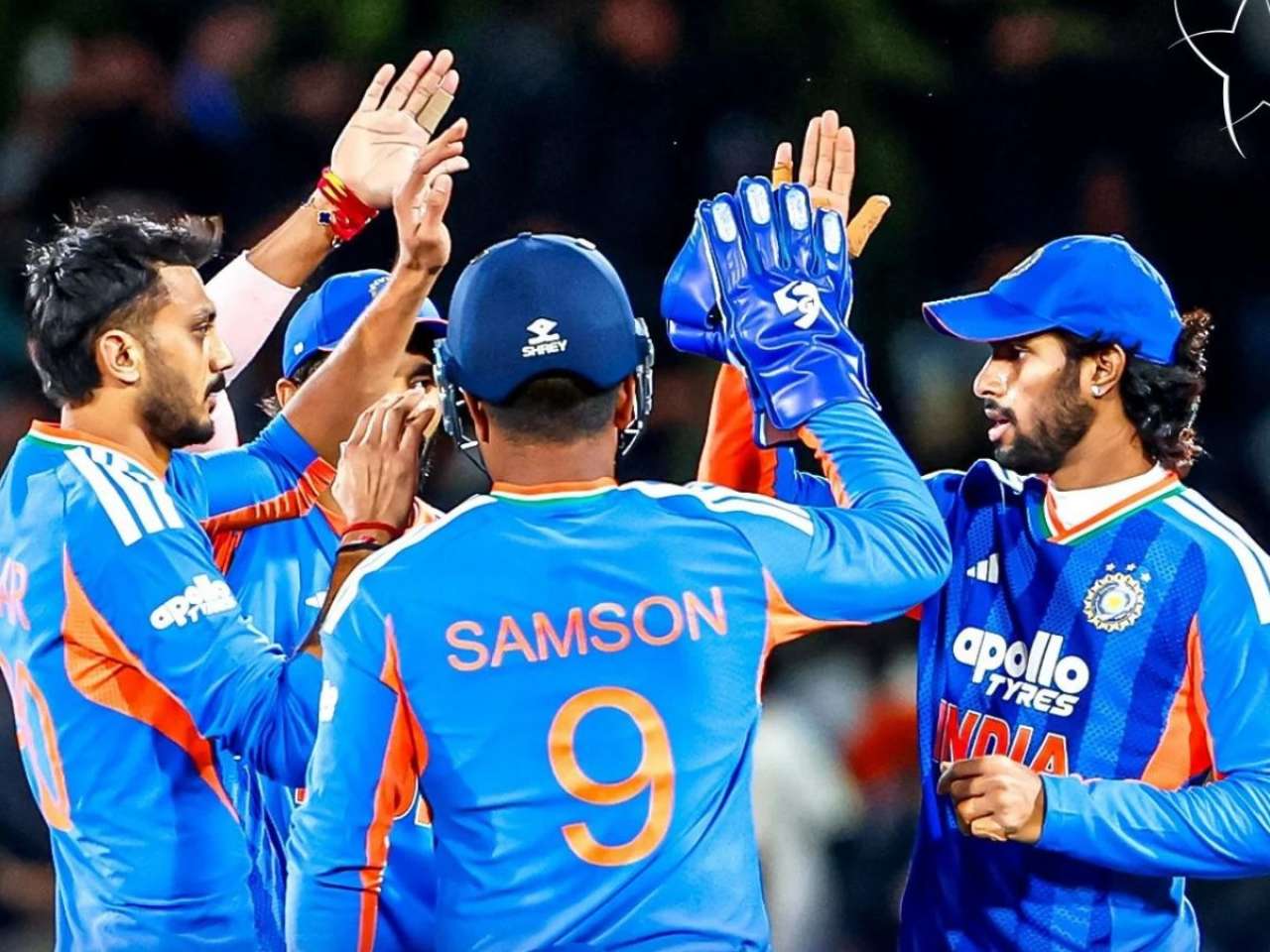
Just when New Zealand sensed an opportunity to claw their way back, the resilient lower-middle order for India stepped up. Contributions from Axar Patel, captain Shreyas Iyer, and Naman Dhir provided the crucial impetus, steering India back on track. Their composure under immense pressure, coupled with intelligent shot selection, ultimately enabled India to complete a stunning chase of 226 runs, securing a memorable 1-0 lead. The victory was a testament to India’s deep batting lineup and their never-say-die attitude, leaving New Zealand to ponder what went wrong after setting such a formidable target.
The aftermath of the first match has undoubtedly involved intense strategy sessions for both camps. India will be keen to replicate their batting aggression while addressing the middle-order fragility witnessed. New Zealand, on the other hand, must find answers to their bowling woes, particularly in the powerplay and death overs, and tighten their fielding, which proved costly in the opener. The short turnaround between matches means tactical adjustments and player fitness will be paramount as both teams prepare for the next chapter of this enthralling series.

Supporting Data: Deep Dive into Team Dynamics and Venue Insights
The first T20I offered a wealth of data points, illuminating both the strengths and vulnerabilities of India and New Zealand.
New Zealand’s Performance Analysis:
The Blackcaps’ batting display was exemplary. Their ability to accumulate 225 runs with contributions from across the board speaks volumes about their depth and collective aggression. However, their Achilles’ heel proved to be their bowling and fielding. Conceding 94 runs in the powerplay against India’s openers effectively negated their strong batting performance. Furthermore, their inability to maintain pressure in the middle overs, allowing India’s lower-middle order to regain momentum after four quick dismissals, was a critical flaw. Fielding lapses, including dropped catches and misfields, exacerbated their problems, granting the visiting team extra lives and opportunities to score freely. Captain Mitchell Santner will be under pressure to rally his bowlers and instill greater discipline, especially in critical phases of the game. The likes of Matt Henry, Lockie Ferguson, and Ish Sodhi will need to step up significantly.

India’s Performance Analysis:
India’s chase was a masterclass in aggressive T20 batting, particularly the explosive start provided by their openers. Their 93-run stand in just 35 balls set a relentless pace. However, the subsequent rapid wicket losses highlighted potential vulnerabilities in their middle order, particularly concerning the tactical decision to alter the batting lineup. Ishan Kishan, typically an opener, struggled at No. 5, and Tilak Varma, promoted to No. 3, also failed to make a significant impact. These adjustments, while perhaps intended to test depth, nearly backfired. The resilience shown by Axar Patel, Shreyas Iyer, and Naman Dhir in navigating the team out of a precarious situation underscores the depth of talent, but also the need for a more settled and consistent middle-order strategy.
Venue Dynamics – Hagley Oval, Christchurch:
Hagley Oval has quickly established itself as a high-scoring venue, particularly in the T20 format. The pitch typically offers good bounce and carry, encouraging batsmen to play through the line. The relatively small boundaries, coupled with fast outfields, mean that even mis-hits can often find the ropes, leading to inflated scores. The first T20I, with a combined total of 451 runs, perfectly illustrated this characteristic. Expect another flat track, conducive to aggressive batting, which could once again put bowlers under immense pressure. The evening conditions might offer some assistance to swing bowlers initially, but generally, it’s a batsman’s paradise. Teams winning the toss might still prefer to chase, given the successful pursuit in the first match and the clear targets it provides.

Squads and Predicted Playing XIs:
New Zealand Squad: Finn Allen, Tim Seifert, Daryl Mitchell, Glenn Phillips, Bevon Jacobs, Michael Bracewell, Mitchell Santner, Nathan Smith, Adam Milne, Matt Henry, Lockie Ferguson, Devon Conway, Kyle Jamieson, Josh Clarkson, Jacob Duffy, Blair Tickner

India Squad: Shreyas Iyer (c), Tilak Varma (vc), Sanju Samson (wk), Ishan Kishan, Abhishek Sharma, Shivam Dube, Nitish Kumar Reddy, Axar Patel, Varun Chakaravarthy, Arshdeep Singh, Bhuvneshwar Kumar, Kuldeep Yadav, Mayank Yadav, Naman Dhir, Prince Yadav, Vaibhav Sooryavanshi
Predicted Playing XIs (2nd T20I):

New Zealand: Tim Robinson, Devon Conway (wk), Rachin Ravindra, Daryl Mitchell, Glenn Phillips, Mark Chapman, James Neesham, Mitchell Santner (c), Matt Henry, Ish Sodhi, Jacob Duffy
- Analysis: New Zealand might look to bolster their batting with more experienced campaigners like Conway and Ravindra at the top, potentially shifting others down. The bowling attack is likely to remain largely consistent, but greater emphasis will be placed on execution and tactical variations. James Neesham’s all-round capabilities could be crucial.
India: Abhishek Sharma, Vaibhav Sooryavanshi, Sanju Samson(w), Shreyas Iyer(c), Tilak Varma, Nitish Kumar Reddy, Naman Dhir, Axar Patel, Bhuvneshwar Kumar, Arshdeep Singh, Mayank Yadav

- Analysis: With Ishan Kishan sidelined, Vaibhav Sooryavanshi is strongly tipped to open alongside Abhishek Sharma. This change will be closely watched. Sanju Samson, a natural top-order batsman, is expected to bat at No. 3, providing stability. The middle order will likely see Shreyas Iyer, Tilak Varma, Nitish Kumar Reddy, and Naman Dhir forming a powerful unit. The bowling attack, featuring Bhuvneshwar Kumar, Arshdeep Singh, and the pace of Mayank Yadav, supported by the spin of Axar Patel, will be challenged to find breakthroughs on a batting-friendly surface.
Key Players to Watch:
- Devon Conway (NZ): After missing the first T20I, his return could provide much-needed stability and experience at the top of New Zealand’s batting order. His ability to anchor an innings while scoring freely will be vital.
- Mitchell Santner (NZ): As captain, he needs to lead by example with both bat and ball. His left-arm spin will be crucial in the middle overs, and his tactical decisions will be under scrutiny.
- Glenn Phillips (NZ): A proven T20 match-winner, Phillips’ explosive hitting and exceptional fielding make him a constant threat. His ability to turn the tide of a game with a quickfire innings is well-documented.
- Abhishek Sharma (IND): Following his blistering start in the first match, Abhishek will be keen to convert it into a substantial score. His aggressive intent sets the tone for India’s innings.
- Vaibhav Sooryavanshi (IND): All eyes will be on this potential debutant. His performance, if he opens, could dictate the early momentum for India. Gautam Gambhir’s hinted support has amplified expectations around his inclusion.
- Shreyas Iyer (IND): The captain’s calm presence and ability to accelerate make him a pivotal figure in India’s middle order. His leadership in navigating difficult situations will be key.
- Axar Patel (IND): His all-round contribution, especially with the bat in the crucial stages of the first T20I, highlights his value. His tight left-arm spin will also be vital in stemming the flow of runs.
Official Responses and Team Strategies
While no direct official statements from team management or captains were available immediately after the first match, the implications of their performances speak volumes about their likely strategies.

India’s Approach:
Shreyas Iyer’s captaincy will likely focus on maintaining the aggressive batting template that brought success in the first match. The team will aim for another explosive start, and with Ishan Kishan out, the spotlight will be on the new opening pair. The conversation around Vaibhav Sooryavanshi’s inclusion has been fueled by insights, including a potential hint from former cricketer Gautam Gambhir, suggesting a strong possibility of his debut. This would reflect a willingness to back young talent and perhaps simplify the batting order, allowing Sanju Samson to slot into his more natural No. 3 position. From a bowling perspective, the team will be working on rectifying the inconsistencies, perhaps focusing on varying pace and lengths more effectively on a flat track. Mayank Yadav’s raw pace will be a key weapon, and the spinners will need to be intelligent in their lines and lengths.
New Zealand’s Counter-Strategy:
Mitchell Santner and the New Zealand coaching staff will be dissecting their bowling and fielding lapses from the first T20I with urgency. The primary objective will be to find ways to contain India’s explosive batting, particularly in the powerplay. This might involve strategic changes in bowling personnel or a stricter adherence to pre-planned lines and lengths. Expect more emphasis on fielding drills and taking crucial catches. With the bat, New Zealand demonstrated their capability, but they will need to ensure that their strong batting performances are not undermined by porous bowling. The return of experienced players like Devon Conway could provide a calming influence and strengthen their top order, ensuring they can set or chase imposing totals more consistently.

Implications: Series Decider or Level Playing Field?
The outcome of the second T20I holds significant implications for the remainder of the series and potentially for the broader T20 aspirations of both teams.
Series Deciding Impact:
If India manages to secure a victory on Saturday, they will take an unassailable 2-0 lead in the three-match series. Such a dominant performance would be a powerful statement, highlighting their depth, adaptability, and aggressive brand of cricket. It would also allow them to experiment further with their squad in the final match, potentially giving opportunities to players who haven’t featured yet. For New Zealand, a 0-2 deficit would be a major blow to their morale and home-series pride.

Conversely, if New Zealand can stage a comeback and win the second T20I, the series will be leveled at 1-1, setting up a thrilling decider. This would be a massive confidence booster for the Blackcaps, proving their resilience and ability to bounce back against a top-ranked team. It would also intensify the pressure on India, turning the final match into a true winner-takes-all contest.
Player and Team Strategy Evolution:
The performance of new or reshuffled players will have long-term implications. For India, Vaibhav Sooryavanshi’s potential debut and Sanju Samson’s role at No. 3 will be keenly observed. Strong performances could solidify their positions, while struggles might force further strategic reconsiderations. For New Zealand, how their bowlers respond to the challenge will be crucial. Improved discipline and wicket-taking ability will be vital for their future T20 campaigns.

Road to the T20 World Cup:
While this is a bilateral series, every T20 international provides valuable data and experience for teams gearing up for future ICC tournaments, especially the next T20 World Cup. Both teams will be using these matches to fine-tune their combinations, test out strategies, and identify their core group of players. The ability to perform under pressure, chase big totals, and defend them effectively will be key takeaways from this series.
The Hagley Oval is poised for another captivating chapter in this enthralling series. With India looking to extend their lead and New Zealand desperate to draw level, spectators can anticipate a fiercely contested battle where every run, every wicket, and every fielding effort could prove decisive. The stage is set for a Saturday spectacle that promises to keep cricket fans on the edge of their seats.

Live Streaming Details
- When will the New Zealand vs India 2nd T20I match take place?
The second T20I match between New Zealand and India will be played on Saturday, October 24. - What will be the venue for the New Zealand vs India 2nd T20I match on Saturday?
Hagley Oval in Christchurch will host the second T20I match between New Zealand and India. - What time will the New Zealand vs India 2nd T20I match begin?
The New Zealand vs India 2nd T20I match will begin at 12:30 pm IST. - Where to watch the live telecast of the New Zealand vs India 2nd T20I match in India?
The live telecast of the New Zealand vs India 2nd T20I will be available on Sony Sports Network in India. - Where to watch the live streaming of the New Zealand vs India 2nd T20I match in India?
SonyLIV, through its app and website, will live-stream the second T20I match between New Zealand and India in India.
Find your daily dose of All Latest News including Sports News, Entertainment News, Lifestyle News, explainers & more. Stay updated, Stay informed- Follow DNA on WhatsApp.