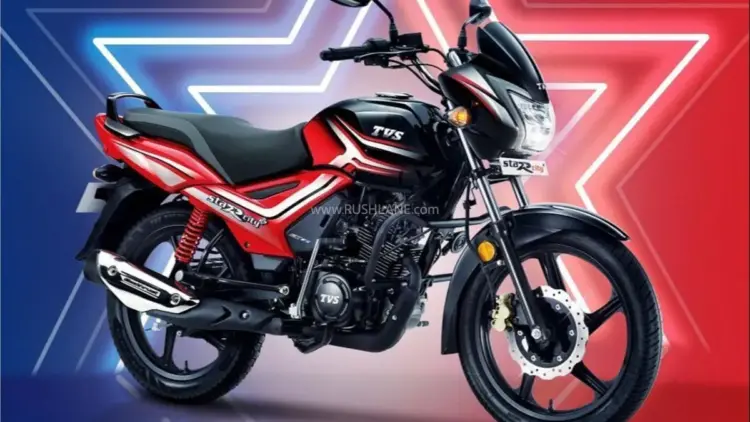
In the fast-paced and hyper-competitive landscape of the Indian two-wheeler market, product lifecycles are often dictated by a ruthless combination of consumer preference, regulatory evolution, and internal portfolio rationalization. In a significant move that signals the end of a decade-long journey, TVS Motor Company appears to have pulled the curtains on one of its most recognizable commuter brands: the TVS Star City Plus.
The motorcycle, which once stood as a pillar of TVS’s mass-market aspirations, has been officially de-listed from the company’s website. This move reduces the manufacturer’s 110cc commuter lineup from a trio to a duo, leaving the TVS Sport and the TVS Radeon to carry the mantle in the entry-level segment. As the dust settles on this quiet departure, industry analysts are looking closely at the data to understand why a brand that once defined "affordable premium" in the commuter space eventually lost its spark.
Main Facts: The De-listing of a Commuter Stalwart
The disappearance of the TVS Star City Plus from the official digital storefront of TVS Motor Company marks a definitive shift in the company’s retail strategy. For years, TVS maintained a three-pronged attack in the 110cc category:
- TVS Sport: The entry-level, mileage-focused "budget" option.
- TVS Radeon: The rugged, "car-like" commuter designed for durability and comfort, particularly in semi-urban and rural markets.
- TVS Star City Plus: The "aspirational" 110cc bike, featuring better aesthetics, premium features like LED headlamps, and a sportier stance.
As of late 2026, the official TVS portal only showcases the Sport and the Radeon (specifically the pre-update and updated versions of the Radeon). The absence of the Star City Plus suggests that production has likely ceased, and the company is clearing remaining dealer stock without looking toward a future refresh for this specific model.
The decision comes at a time when the 110cc segment is under immense pressure from two sides: the rising popularity of feature-rich 125cc motorcycles (like TVS’s own Raider 125) and the increasing affordability of electric scooters.
Chronology: The Rise and Plateau of the "Star" Brand
To understand the significance of this discontinuation, one must look back at the lineage of the "Star" brand, which has been central to TVS’s identity since its transition away from the Suzuki partnership.
- 2004–2012: The Foundation: TVS launched the original "Star" and subsequent "Star City" models to compete directly with the Hero Honda Splendor. It was a period of establishing reliability and fuel efficiency.
- 2014: The Birth of the "Plus": TVS launched the Star City Plus, a significant overhaul of the platform. It introduced the 110cc Ecothrust engine, better ergonomics, and a more modern design language intended to appeal to young professionals.
- 2020: The BS6 Transition: Like all Indian manufacturers, TVS updated the Star City Plus to meet Bharat Stage VI (BS6) emission norms. This update introduced ET-Fi (Ecothrust Fuel Injection) technology, which improved fuel efficiency by a claimed 15% and enhanced cold-start reliability.
- March 2021: The Final Major Update: In a bid to stay relevant against the Honda Livo and Hero Passion, TVS equipped the Star City Plus with a "Roto Petal" disc brake—a first-in-segment safety feature at the time. It also featured an LED headlamp and a USB mobile charging port.
- 2023–2025: The Stagnation Period: While the TVS Raider 125 became a runaway success and the Radeon received periodic "Refresh" editions, the Star City Plus saw no significant aesthetic or mechanical changes. It remained largely the same bike it was in 2021.
- Late 2026: The De-listing: Following months of near-zero sales, the model was removed from the official lineup.
Supporting Data: The Numbers Behind the Exit
The most compelling evidence for the discontinuation lies in the sales performance throughout the 2026 calendar year. In the world of high-volume commuters, a product requires thousands of units in monthly sales to justify the complexities of the supply chain and assembly line space. The Star City Plus, unfortunately, saw its numbers dwindle to negligible levels.
Monthly Sales Breakdown (2026):
- January: 40 units
- February: 3 units
- March: 5 units
- April: 1 unit
- May – September: 0 units
When contrasted with its stablemates, the disparity is stark. During the same period, the TVS Radeon and TVS Sport continued to move thousands of units monthly. The Radeon, in particular, has found a loyal customer base that appreciates its "big bike" feel and robust suspension, effectively cannibalizing the Star City Plus’s target audience.
Furthermore, the internal competition from the TVS Raider 125 cannot be overstated. As consumer aspirations in India shift, many buyers who would have previously opted for a "premium 110cc" bike like the Star City Plus are now stretching their budgets slightly to enter the 125cc segment, which offers significantly more power, modern styling, and tech-heavy consoles (TFT displays, Bluetooth connectivity).

Official Context and Market Positioning
While TVS Motor Company has not issued a formal "obituary" for the Star City Plus, the move is consistent with industry-wide portfolio rationalization. Manufacturers are increasingly moving away from "middle-child" products that lack a clear USP (Unique Selling Proposition).
The Role of the Radeon:
The TVS Radeon was updated as recently as October 2026. By positioning the Radeon as the flagship of their 110cc range, TVS has streamlined its marketing efforts. The Radeon offers a similar (if not better) value proposition than the Star City Plus, with a more distinct "rugged-classic" identity that resonates better with rural buyers—the primary demographic for 110cc motorcycles today.
The Shift to 125cc:
TVS’s strategic focus has clearly shifted toward the 125cc and premium segments. With the success of the Apache series and the Raider, the company is seeing higher margins and better brand engagement in these categories. Maintaining the Star City Plus—a model that required separate marketing and spare parts management for almost zero sales—became an operational liability.
Implications: What This Means for the Consumer and the Segment
The discontinuation of the Star City Plus is a microcosm of a larger trend in the Indian automotive industry: the "Premiumization" of the commuter.
1. The Shrinking 110cc Market
The 110cc segment, once the undisputed king of the Indian roads, is being squeezed. Entry-level buyers are sticking to ultra-budget models like the TVS Sport or Hero HF Deluxe for pure utility. Meanwhile, those looking for "style" are bypassing the 110cc "premium" sub-segment entirely in favor of 125cc bikes. The exit of the Star City Plus suggests that the "premium 110cc" niche may soon be a thing of the past.
2. Used Market and Spare Parts
For existing owners of the TVS Star City Plus, the discontinuation is not an immediate cause for alarm. Indian regulations mandate that manufacturers provide spare parts support for a several years after a model is discontinued. Given that the Star City Plus shares many mechanical components (engine internals, brakes, electricals) with the Sport and Radeon, sourcing parts should remain relatively easy for the next decade.
3. Resale Value
The discontinuation may lead to a slight dip in the resale value of the Star City Plus in the short term, as "discontinued" models are often perceived as obsolete by used-bike dealers. However, its reputation for fuel efficiency and the reliability of the Ecothrust engine will likely maintain its demand in the secondary market for rural areas.
Technical Legacy: A Solid Foundation
Despite its exit, the TVS Star City Plus leaves behind a legacy of engineering excellence in the commuter space. It was powered by a 109.7cc, single-cylinder, air-cooled engine that was a masterpiece of efficiency.
- Performance: 8.2 bhp at 7,350 rpm and 8.7 Nm of torque at 4,500 rpm.
- Transmission: A smooth 4-speed constant mesh gearbox.
- Fuel Economy: Real-world figures often hovered around 65-70 kmpl, making it one of the most economical bikes in its class.
- Innovation: It was one of the earliest adopters of LED technology in the budget segment, proving that "commuter" didn’t have to mean "basic."
Conclusion
The retirement of the TVS Star City Plus is a pragmatic business decision by TVS Motor Company. It reflects a brand that is looking forward, focusing its resources on high-growth segments like electric mobility (iQube) and performance commuters (Raider/Apache).
While the "Star" nameplate has been a household name for nearly twenty years, the "Plus" has finally run its course. For the Indian consumer, this marks another step toward a market where 125cc is the new baseline for style, and 110cc is reserved for the purest expressions of utility and economy. The Star City Plus served its purpose as a bridge between these two worlds, but in the evolving landscape of 2026, that bridge is no longer required.