CHENNAI – The convergence of anthropogenic climate change and the naturally occurring El Niño Southern Oscillation (ENSO) is pushing the southern Indian state of Tamil Nadu toward an unprecedented water crisis. As global baseline temperatures continue to climb, the traditional weather patterns that have sustained the Indian peninsula for millennia are becoming increasingly erratic, leaving millions of farmers and urban residents in a state of precarious uncertainty.
Recent data from the Indian National Centre for Ocean Information Services (INCOIS) has sent shockwaves through the region’s agricultural and administrative sectors. The agency confirmed an 80-100% probability that the current persistent El Niño phase will extend through April 2027. For a state like Tamil Nadu, which already operates on a knife-edge of climate vulnerability, this extended cycle acts as a "threat multiplier," exacerbating existing water scarcities and threatening food security across the region.
I. Main Facts: A State Under Atmospheric Siege
Tamil Nadu’s geography makes it uniquely dependent on two distinct monsoon cycles: the Southwest Monsoon (June to September) and the Northeast Monsoon (October to December). Unlike much of northern India, which relies heavily on the Southwest Monsoon, Tamil Nadu looks to the Northeast rains for nearly half of its annual precipitation and the bulk of its water security.
However, the current El Niño event—characterized by the warming of surface waters in the central and eastern Pacific Ocean—has disrupted these cycles. While El Niño is often associated with a deficit in the Southwest Monsoon across India, its impact on the Northeast Monsoon is more complex, often leading to "variable distribution"—a polite meteorological term for a chaotic mix of localized deluges and widespread interior droughts.

The Key Pillars of the Crisis:
- The 2027 Horizon: The INCOIS projection suggests that the state will not see a "neutral" or "La Niña" cooling phase for several years, meaning the heat-trapping effects of El Niño will continue to bake the landscape.
- Rainfall Deficit: The 2026 Southwest Monsoon concluded on September 30 with a 12.6% deficiency, the most severe since the drought year of 2015.
- The Western Ghats Factor: Deficiencies in the catchment areas of the Western Ghats have significantly reduced the inflow into the state’s primary reservoirs, leaving the agricultural heartlands dry before the secondary monsoon even began.
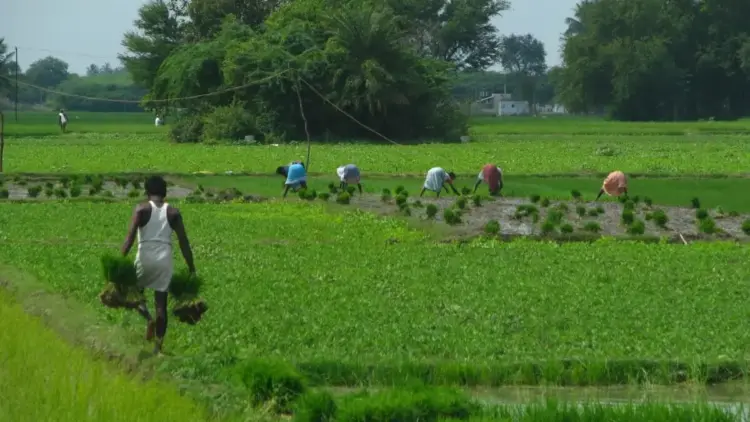
- The Agricultural Vulnerability: Districts such as Ariyalur, Perambalur, and Tiruchirappalli have been flagged as high-risk zones, where the lack of irrigation water is already impacting yields of paddy, sugarcane, and pulses.
II. Chronology: A History of Recurrent Stress (1951–2026)
To understand the gravity of the current situation, one must look at the historical frequency of these events. India has navigated 16 El Niño events between 1951 and 2025. Typically, these cycles last between nine and 18 months; however, the current projection of a multi-year phase represents a significant departure from historical norms, likely fueled by rising global sea surface temperatures.
A Timeline of Impact:
- 1982 & 1987: Major drought years that redefined India’s approach to food reserves.
- 2002: A catastrophic year where the Southwest Monsoon deficiency hit 19.2%, leading to widespread crop failure in Tamil Nadu’s interior.
- 2009: A 21.8% deficiency recorded, further depleting the state’s already over-stressed groundwater tables.
- 2015: A year of extremes. While the Southwest Monsoon was 14.3% deficient, the El Niño conditions eventually contributed to the catastrophic Chennai floods in December, illustrating the "deluge or drought" paradox.
- July 2026: The Tamil Nadu government, recognizing the severity of the upcoming cycle, constituted an expert committee under the Disaster Management Act to draft a mitigation roadmap.
- October 15, 2026: The Northeast Monsoon officially commenced, but with early indicators suggesting uneven distribution, particularly favoring coastal regions while neglecting the interior.
III. Supporting Data: The Granular Reality of Water Stress
The crisis in Tamil Nadu is not merely a matter of "less rain"; it is a systemic failure of water storage and recharge mechanisms. A 52-year climate study (1971–2022) published in the International Journal of Climatology confirms that the south peninsular region is locked in a long-term trend toward increased drought risk.
Groundwater Depletion
Groundwater serves as the final safety net for Tamil Nadu’s farmers. However, the Central Ground Water Board’s 2025 assessment paints a grim picture. Out of 313 groundwater assessment units in the state, 103 are now classified as "over-exploited."
In an El Niño year, even when rain does fall, it often comes in short, violent bursts. Experts note that this "intense precipitation" is counter-productive for groundwater recharge. Instead of percolating slowly into the soil to refill aquifers, the water moves as rapid surface runoff, leading to localized flooding and soil erosion while leaving the underground reserves empty.

The Salinity Threat
With the second-longest coastline in India (1,076 km), Tamil Nadu faces a secondary threat: seawater intrusion. As groundwater levels drop due to over-extraction and lack of recharge, the pressure balance shifts, allowing salt water to seep into coastal aquifers. This renders the water undrinkable and useless for agriculture in 14 coastal districts, further shrinking the available land for traditional crops.
District-Level Vulnerability
The Indian Council for Agricultural Research (ICAR) has categorized several districts in western and central Tamil Nadu as "highly vulnerable." The list includes:
- Northern/Central Hubs: Vellore, Ranipettai, Kanchipuram, and Tiruvannamalai.
- Agriculture-Intensive Zones: Cuddalore, Villupuram, and Pudukkottai.
In these regions, the dependence on inflows from the upstream Karnataka region (via the Cauvery River) means that a weak monsoon in the Western Ghats creates a ripple effect that can collapse local economies.
IV. Official Responses: Policy vs. Implementation
In response to the looming threat, the Tamil Nadu government has moved to institutionalize its climate response. The expert committee formed in mid-2026 has provided a comprehensive framework for the Tamil Nadu Disaster Risk Reduction Agency (TNDRRA).
Nambi Appadurai, Director of Climate Resilience Practice at World Resources Institute (WRI) India and a member of the committee, emphasizes a paradigm shift. "Adapting to this erratic cycle demands a shift from reactive relief to proactive preparedness," Appadurai states. He advocates for localized early warning systems and a complete modification of agricultural practices to manage impending risks.

The Recommendation Framework:
- Short-Term (Immediate): Massive desilting of traditional water bodies (tanks and lakes), livestock management protocols, and wildfire risk assessments.
- Medium-Term (By 2027): Expansion of Heat Action Plans to protect outdoor workers and the promotion of drought-tolerant landscaping.
- Long-Term (3-5 Years): Establishing India Meteorological Department (IMD) observatories in every taluk (administrative block) and institutionalizing state-wide aquifer management.
However, the response from civil society remains critical. G. Sundarrajan, coordinator of the environmental organization Poovulagin Nanbargal, argues that while the recommendations are sound, the pace of implementation is lagging. He insists that restoring the state’s ancient network of irrigation tanks must be done on a "war footing," as these are the only viable buffers against the erratic nature of modern monsoons.
V. Implications: The Socio-Economic Cost of Inaction
The implications of a prolonged El Niño phase extending into 2027 are profound. Beyond the immediate statistics of rainfall millimetres lies the human cost of a changing climate.
Food Security and Economics
Tamil Nadu is a major producer of paddy, pulses, and oilseeds. An uneven monsoon distribution doesn’t just reduce yield; it increases the cost of cultivation as farmers are forced to spend more on diesel for pumping groundwater or on purchasing water from private tankers. This leads to a cycle of rural debt that can take years to break. Furthermore, livestock—often the only liquid asset for small-scale farmers—face acute fodder shortages during prolonged dry spells.
The Urban-Rural Divide
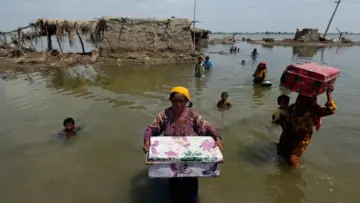
While coastal districts like Chennai might receive "normal" rainfall due to El Niño’s influence on the Northeast Monsoon, the interior districts face a different reality. This creates a dual challenge for the state government: managing flood risks in urban coastal centers while simultaneously deploying drought relief to the interior.

The Call for Climate-Resilient Agriculture
The ICAR District-wise Contingency Plan of 2026 suggests that the only way forward is a total overhaul of the farming calendar. This includes:
- Switching to short-duration, drought-tolerant crop varieties.
- Adopting micro-irrigation (drip and sprinkler) to maximize every drop of water.
- Strengthening "conjunctive use"—the planned, simultaneous use of both surface and groundwater.
Conclusion: A Tough Climate Test
As the El Niño cycle strengthens in the coming months, Tamil Nadu finds itself at a crossroads. The state is no longer dealing with a simple weather cycle but a transformed climate reality where the "baseline" has shifted.
The success of the state’s response will depend on its ability to move beyond high-level committee reports and into the fields and taluks where the water is managed. With the INCOIS warning of a persistent phase until April 2027, the time for "reactive relief" has passed. Tamil Nadu’s ability to weather this storm—or lack thereof—will serve as a crucial case study for how tropical regions globally must adapt to the "new normal" of an El Niño-charged world.
As senior research scientist Akshay Deoras notes, the priority must now be the safeguarding of drinking water and the strategic planning of every remaining reservoir. For the farmers in Tiruvallur and the residents of Chennai alike, the next 18 months will be a definitive test of resilience in the face of an unpredictable atmosphere.