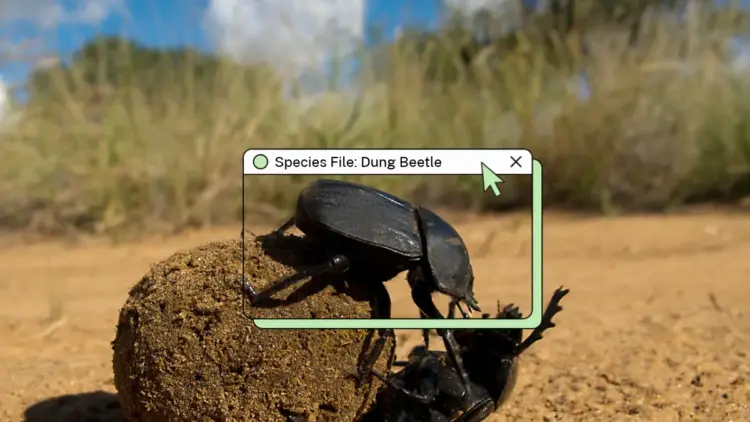
In the humid, salt-tinged air of Kerala’s Vypin-Kadamakkudy barrier island system, a silent army of ecological engineers is at work. While the world focuses on charismatic megafauna, a recent comprehensive study has illuminated the staggering presence of the dung beetle—a creature often overlooked but vital to the health of our planet. Researchers documenting this urbanizing landscape were met with a revelation: despite the encroachment of concrete and the fragmentation of natural habitats, the region supports a thriving population of 20,927 dung beetles across 29 distinct species.
This discovery, part of India’s "Species File" initiative, underscores a critical narrative in conservation biology: the resilience of specialized insects in the face of rapid anthropogenic change. However, it also serves as a stark warning about the fragile state of the biodiversity that underpins our agricultural and ecological stability.
Main Facts: The Strength and Diversity of the Scarabaeinae
Dung beetles belong to the family Scarabaeidae, specifically within the subfamily Scarabaeinae. These are not merely scavengers; they are specialized recyclers that feed, breed, and nest within animal waste. Their biological design is a marvel of evolutionary engineering, characterized by a robust, hard exoskeleton and physical prowess that defies their diminutive size.
The most famous among them, the male horned dung beetle (Onthophagus taurus), has earned the title of the world’s strongest insect. It is capable of pulling 1,141 times its own body weight. To put this in a human context, it is the equivalent of an average adult lifting six double-decker buses—a feat of strength necessitated by the intense competition for resources and the physical demands of moving dense organic matter.
While they are found on every continent except Antarctica, their presence in India is particularly significant. Globally, there are over 6,000 recognized species; India is home to approximately 400 to 500 of these. The Kerala study highlights that even in "disturbed" or urbanizing zones like the Vypin-Kadamakkudy islands, these beetles manage to persist, provided their basic dietary needs are met.
Chronology: From Ancient Symbols to Modern Ecological Indicators
The history of the dung beetle is intertwined with human civilization. In Ancient Egypt, the scarab was a symbol of the sun and rebirth, modeled after the beetle’s habit of rolling dung across the sand like the sun across the sky. In the modern era, however, the focus has shifted from mythology to methodology.
The recent study in Kerala represents a pivotal moment in the timeline of Indian entomological research. For years, the Vypin-Kadamakkudy island system was viewed primarily through the lens of urban development and aquaculture. However, starting in the early 2020s, researchers began to suspect that the mosaic of mangroves, coconut groves, and small-scale livestock holdings might harbor more biodiversity than previously recorded.
The culmination of this research, published and highlighted in May 2026, utilized systematic trapping and identification methods to census the beetle population. This study follows a decade of increasing concern regarding "insect armageddon"—the global decline of insect biomass. The Kerala findings provide a nuanced counter-narrative, suggesting that certain landscapes can act as "unlikely refuges" if specific ecological niches remain intact.
Supporting Data: Classification and Behavioral Dynamics
The diversity of dung beetles is categorized not just by their genetics, but by their "functional guilds"—the specific ways they interact with dung. Understanding these roles is essential for grasping their ecological impact.
1. The Rollers (Telecoprid)
Species such as those in the Gymnopleurus genus are the most iconic. They shape dung into spherical balls and roll them away from the source. This behavior is a defensive strategy to avoid competition at the main dung pile. They often use celestial cues, including the Milky Way, to navigate in a straight line, ensuring they move as far as possible in the shortest time.
2. The Tunnellers (Paracoprid)
Tunnellers, including the Onitis species, are perhaps the most beneficial for soil health. They dig deep chambers directly beneath the dung pat and drag the material underground. This process aerates the soil and facilitates the direct transfer of nutrients to the root zones of plants.
3. The Dwellers (Endocoprid)
Dwellers, such as the Oniticellus species, take a more sedentary approach. They live and breed directly within the dung pat itself. While they do not move the dung as far as rollers or tunnellers, they are instrumental in the rapid decomposition of waste.
Dietary Specialization
The data from Kerala also highlights the dietary divide among beetles. While many are "generalists," surviving on the waste of various mammals, some are "specialists." A prime example is Heliocopris dominus, a massive beetle that relies exclusively on the dung of wild elephants. As elephant corridors are blocked and populations dwindle, these specialist beetles face an immediate risk of extinction, regardless of their own physical resilience.

Official Responses: Expert Insights on Growing Threats
Despite the high numbers recorded in the Kerala study, experts warn that the beetles are under unprecedented pressure. K.V. Vinod, a prominent researcher at the Department of Zoology at Nirmala College, has been vocal about the looming threats.
“Key threats include habitat loss and fragmentation due to rapid urban expansion,” Vinod noted in his assessment of the barrier island system. He emphasized that the beetles are facing a "triple threat" of physical, chemical, and environmental changes.
The Chemical Threat: Ivermectin
One of the most insidious threats identified by researchers is the use of veterinary drugs, specifically Ivermectin. Used to treat parasites in livestock, the drug passes through the animal’s system and remains active in the dung. For dung beetles, this "toxic dung" can be lethal, killing larvae or disrupting the reproductive cycles of adults. This creates a "sink" effect where beetles are attracted to a food source that ultimately destroys their population.
The Environmental Threat: Salinity and Flooding
In the specific context of Kerala’s islands, climate change is playing a direct role. Rising sea levels and frequent flooding lead to salinity intrusion. As the soil becomes more saline and waterlogged, the burrowing capabilities of tunnellers are compromised, and the delicate microbial balance of the dung they rely on is altered.
Implications: Why Dung Beetles Matter to Our Future
The presence or absence of dung beetles has profound implications for global ecology and human health. Their roles as "ecological engineers" provide services that would cost billions of dollars to replicate mechanically.
Methane Reduction and Climate Change
Dung left on the surface of a pasture undergoes anaerobic decomposition, which releases significant amounts of methane—a greenhouse gas far more potent than carbon dioxide. By breaking up the dung and burying it, beetles introduce oxygen, shifting the decomposition to an aerobic process and significantly reducing methane emissions.
Soil Health and Agriculture
By tunneling and burying waste, these beetles facilitate nutrient cycling. They return nitrogen, phosphorous, and potassium to the earth, reducing the need for chemical fertilizers. Furthermore, their tunnels increase the soil’s water-holding capacity and reduce runoff, which is critical in flood-prone regions like Kerala.
Pest and Disease Control
Dung is a breeding ground for flies and parasites that carry diseases affecting both livestock and humans. By rapidly removing and burying dung, beetles deny these pests a habitat, naturally suppressing populations of disease-carrying insects.
Secondary Seed Dispersal
Many herbivores consume fruits and seeds, which are then excreted. Dung beetles, by moving and burying dung, inadvertently plant these seeds in nutrient-rich "compost" underground. This makes them essential for forest regeneration and the maintenance of plant diversity.
Conclusion: A Call for Conservation Priority
The findings from the Vypin-Kadamakkudy barrier island system are a testament to the hidden biodiversity of India. However, the fact remains that most Indian dung beetle species have yet to be assessed by the IUCN Red List. This lack of data creates a "conservation blind spot" where species could vanish before we even realize they are endangered.
The survival of these beetles is intrinsically linked to how we manage our urban expansion and our agricultural practices. Protecting dung beetles requires more than just preserving green space; it requires a holistic approach that includes the regulation of veterinary chemicals, the protection of large herbivore corridors, and the recognition that even the smallest creatures play a monumental role in the survival of the planet.
As Kerala continues to urbanize, the 20,927 beetles recorded in this study serve as a reminder that we share our world with an ancient, tireless workforce. Ensuring their future is not just an act of environmental altruism—it is a necessity for a sustainable human future.