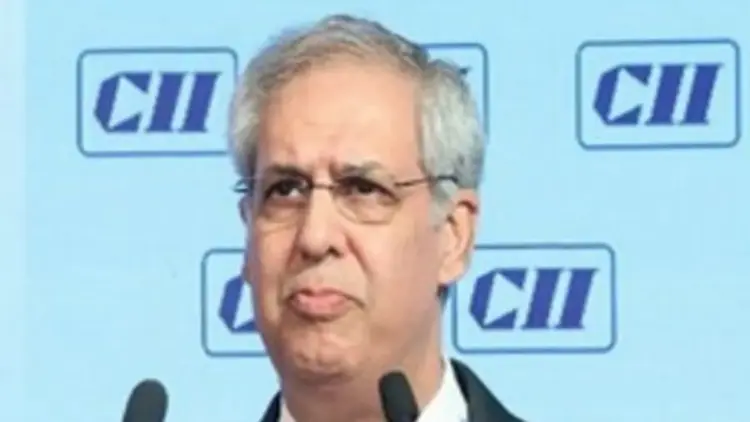
Mumbai, India – In a corporate saga that transcends mere financial mechanics, Noel Tata, Chairman of Tata Trusts, has emerged as a staunch defender of the Tata Group’s deeply ingrained philanthropic ethos, vehemently opposing the proposed public listing of Tata Sons, the conglomerate’s unlisted holding company. His resistance, articulated with conviction, stems from a profound concern that introducing thousands of public shareholders could fundamentally reshape the group’s priorities, shifting its venerable focus from public welfare to pure profit maximisation, thereby irrevocably altering the "Tata Way" of doing business.
This isn’t merely a debate about financial instruments or market capitalisation; it’s a profound examination of identity, legacy, and the very soul of an institution that has, for over 150 years, intertwined its commercial success with nation-building and social responsibility. At stake, according to Noel Tata, is the unique ownership model where "charity precedes commerce," a principle that has defined the Tata Group since its inception.
Main Facts: A Clash of Ideologies
The crux of Noel Tata’s opposition lies in his belief that a public listing would subject Tata Sons to the relentless pressures of quarterly earnings, shareholder demands, and a singular focus on financial returns, potentially at the expense of its long-standing commitment to philanthropy and long-term, nation-building projects. His primary arguments are:
- Philanthropy over Profit: Noel Tata fears that public shareholders would prioritise immediate profits and shareholder returns, thereby diluting the group’s core philanthropic mission, which is funded by the dividends flowing from Tata Sons.
- Preserving the "Tata Way": He warns that this shift would fundamentally alter the "Tata Way" of working, a philosophy characterised by patient capital, long-term vision, and social responsibility.
- The "Backstop" Function: A listed Tata Sons, he argues, might lose its crucial ability to act as a financial "backstop" for struggling group companies, as public investors would question investments not promising immediate high returns.
- Continuity of Ownership: The existing structure, with Tata Trusts holding a majority stake, ensures an institutional, immortal owner that cannot be bought or retire, providing unparalleled continuity and stability.
- Questioning the Need for Change: Tata challenges the rationale behind altering a model that has successfully delivered immense value and societal impact for over a century and a half.
These concerns were voiced at the HT Leadership Summit, setting the stage for a high-stakes internal debate within one of India’s most revered business houses.
Chronology: A Regulatory Mandate Ignites Internal Conflict
The current contention over Tata Sons’ listing is not a sudden development but the culmination of regulatory actions and long-standing internal dynamics.
- September 2022: RBI’s NBFC Classification: The Reserve Bank of India (RBI) classified Tata Sons as an Upper Layer Non-Banking Financial Company (NBFC). This classification came with a mandatory requirement for public listing within three years of the notification, i.e., by September 2025. This move aimed to bring systemically important NBFCs under stricter regulatory scrutiny, aligning them with banking sector norms for transparency and governance.
- Initial Avoidance Strategy: Faced with the listing mandate, Tata Sons initially explored avenues to de-register itself as an NBFC. The company applied to the RBI to surrender its Certificate of Registration, seeking to shed the regulatory tag that necessitated public listing. This was seen as an attempt to preserve its private, unlisted status and the unique operational flexibility it afforded.
- RBI’s Rejection (Late 2023/Early 2024): The RBI, after reviewing Tata Sons’ application, rejected its request to surrender the NBFC registration. This decision effectively closed the door on the company’s primary route to avoid listing, making a public float a near-certainty unless a new, equally complex alternative could be found and approved.
- September 2024: Board Meeting and Dissent: Following the RBI’s firm stance, the Tata Sons board convened a crucial meeting. Among the significant decisions taken was the approval of a fresh five-year term for executive chairman N Chandrasekaran. More pertinently, the board decided to proceed with the public listing of Tata Sons, acknowledging the regulatory imperative rather than challenging the RBI’s directive further. It was at this meeting that Noel Tata, a director on the board and the chairman of the majority-owning Tata Trusts, reportedly cast the sole dissenting vote against the decision to list.
- Public Articulation of Opposition (October/November 2024): Subsequently, Noel Tata publicly articulated his deep-seated concerns at the HT Leadership Summit. His statements provided an unprecedented glimpse into the internal deliberations and the philosophical struggle at the heart of the Tata Group, highlighting the chasm between commercial expediency and the preservation of a cherished institutional identity.
- The Shapoorji Pallonji Factor: Throughout this period, the Shapoorji Pallonji Group, which holds an 18.38% stake in Tata Sons, has consistently advocated for a public listing. For them, a listing would unlock significant value, provide liquidity for their substantial stake, and potentially resolve long-standing valuation disputes that have periodically surfaced between the two groups. Their persistent demand for listing adds another layer of complexity to the internal debate.
This chronological sequence reveals a clear trajectory: from regulatory pressure, through attempts to circumvent it, to an eventual acceptance of the inevitable by the board, all set against a backdrop of differing visions for the group’s future, with Noel Tata emerging as the most vocal proponent of maintaining its traditional structure and values.

Supporting Data: The Enduring Legacy of the "Tata Way"
To fully grasp Noel Tata’s concerns, one must delve into the unique ownership structure and operating philosophy that has characterised the Tata Group for over 150 years. This "Tata Way" is not merely a slogan but a deeply embedded principle that distinguishes it from almost any other major global conglomerate.
The Ownership Structure: Charity as the Apex
At the heart of the Tata Group’s distinctiveness is its ownership structure. Tata Trusts, a collection of philanthropic entities established by the Tata family, hold approximately 66% of Tata Sons, the principal holding company. This means that the ultimate beneficiaries of the group’s vast commercial empire are not private individuals or corporate shareholders, but a range of charitable causes.

Noel Tata encapsulates this elegantly: "Charity precedes commerce. Charity owns commerce. It’s not the other way around." This inverted pyramid of ownership ensures that the primary purpose of the commercial ventures, while generating profits, is ultimately to serve the public good. Dividends from listed Tata companies flow into Tata Sons, and from there, a significant portion is channelled through the Trusts. These funds are then deployed into a myriad of philanthropic initiatives:
- Healthcare: Establishing and supporting world-class medical institutions like the Tata Memorial Hospital, a leading cancer treatment and research centre.
- Education: Founding and funding pioneering educational institutions such as the Indian Institute of Science (IISc) in Bengaluru, a premier research university, and supporting numerous scholarships and educational programs.
- Research and Innovation: Investing in fundamental research and scientific advancements, often with long-term societal benefits rather than immediate commercial returns.
- Disaster Relief and Community Development: Providing critical aid during national calamities, supporting rural development projects, and empowering disadvantaged communities across India.
- Arts and Culture: Promoting Indian art, literature, and heritage through various grants and institutions.
This model allows the Tata Group to adopt a long-term perspective, making investments that might take decades to yield returns but are strategically vital for national development, such as building basic industries like steel and power in nascent independent India.

The "Backstop" Function and Patient Capital
A critical aspect of the unlisted Tata Sons, highlighted by Noel Tata, is its role as a "backstop" for group companies facing financial difficulties. In its private form, Tata Sons has historically been able to provide patient capital and financial support to struggling ventures, understanding that some businesses require time to mature or navigate economic downturns.
For instance, during challenging periods, Tata Sons has injected capital into companies like Tata Motors, supporting its transformation and product development, even when immediate returns were uncertain. Similarly, the acquisition and turnaround of global businesses like Corus (now Tata Steel Europe) or Jaguar Land Rover required significant, sustained investment and a willingness to absorb initial losses, a strategy that would be difficult to justify to a diverse public shareholder base demanding quick profits.

Noel Tata articulated this by stating, "Tata Sons remains the backstop for all or any Tata companies that ever gets into trouble. And that is an important glue which keeps the entire group together." This ability to provide unconditional support is a cornerstone of the group’s stability and cohesion. Public shareholders, focused on quarterly results and maximised shareholder value, would likely question the rationale behind diverting capital to struggling entities, preferring that funds be allocated to the most profitable ventures, potentially leading to divestments or a more fragmented group structure.
Institutional Ownership: Continuity and Vision
The fact that Tata Trusts are the majority owners ensures an institutional form of ownership that is fundamentally different from individual or corporate ownership. As Noel Tata put it, "The owner cannot die. The owner cannot be bought. And the owner cannot retire. So there is a continuity in the Tata way."

This perpetual ownership allows for an enduring vision, transcending individual leaders or market cycles. It enables the group to embark on ambitious, often high-risk, long-gestation projects that align with national priorities but might not appeal to typical private equity or public market investors. The semiconductor project, electric vehicle battery plants, and mobile phone assembly operations for exports, which Noel Tata acknowledges as strategically important, are prime examples of such ventures that demand patient capital and a long-term commitment.
The "Tata Way" is thus a confluence of unique ownership, a philanthropic mandate, and a commitment to patient capital, all underpinned by a belief that business must serve a larger societal purpose. It is this intricate, time-tested model that Noel Tata seeks to protect from the perceived short-termism of public markets.

Official Responses: Navigating Dissent and Compliance
The debate surrounding Tata Sons’ listing reveals a complex interplay of internal governance, regulatory compliance, and philosophical differences.
Noel Tata’s Stance: A Principled Opposition
Noel Tata’s statements at the HT Leadership Summit represent the most significant official response from his perspective, articulating a principled opposition to the listing. He has made it clear that his concerns are not about the overall strategic direction of the Tata Group, which he acknowledges is focused on "Philanthropy on one hand, nation building on the other hand." Instead, his dissent is rooted in the perceived threat to the "how" – the operational model and core values.

He has stressed that his concerns are "embedded in the DNA of the group," suggesting that his opposition is not personal but institutional, aimed at preserving the foundational identity of Tata. While supporting the group’s ambitious new ventures like semiconductors and EV batteries, he has raised questions about "the delivery of what we’re doing," highlighting the need for stronger execution discipline and careful capital allocation for large projects with long gestation periods. This nuanced position indicates a desire for both progress and preservation, challenging the leadership to find a way to reconcile ambition with tradition. He has also indicated that Tata Trusts will "engage constructively with regulators and other stakeholders" to find solutions that safeguard the existing model, suggesting an openness to dialogue even amidst his strong objections.
The Tata Sons Board’s Decision: Regulatory Compliance and Executive Vision
In contrast to Noel Tata’s dissent, the Tata Sons board’s decision to proceed with the listing signifies a collective acceptance of regulatory realities. The RBI’s classification of Tata Sons as an upper-layer NBFC and its subsequent rejection of the de-registration request left the board with limited options. Compliance with regulatory directives became paramount, underscoring the legal imperative facing the conglomerate.

The board’s decision to reappoint N Chandrasekaran for another five-year term, despite Noel Tata’s reported dissenting vote, also signals a commitment to the current executive leadership’s vision for growth and transformation. Chandrasekaran’s tenure has been marked by strategic consolidations, digital transformations, and aggressive investments in future-oriented sectors. The decision to list, from the board’s perspective, likely aligns with a broader strategy to unlock value, improve governance transparency, and potentially provide a clearer pathway for future capital raising, even if it introduces new challenges.
The Shapoorji Pallonji Group’s Position: Liquidity and Valuation
While not directly part of Tata Sons’ "official" internal responses, the Shapoorji Pallonji (SP) Group’s consistent advocacy for listing represents another significant stakeholder voice. Holding an 18.38% stake, the SP Group has long sought a mechanism to unlock the value of its investment, which is currently illiquid due to Tata Sons being unlisted. A public listing would provide a clear market valuation for their shares and offer a pathway for partial or full divestment, if desired, addressing a long-standing point of contention between the two groups. Their position is primarily driven by financial and liquidity considerations, a direct counterpoint to Noel Tata’s philanthropic and legacy-driven arguments.

This divergence in official and stakeholder responses highlights the multifaceted pressures on Tata Sons: the external mandate from regulators, the internal commitment to a growth-oriented executive vision, and the historical claims of minority shareholders, all clashing with the traditionalist view championed by Noel Tata.
Implications: Reshaping a Legacy, Redefining Governance
The potential public listing of Tata Sons carries profound implications, not just for the conglomerate itself but for India’s corporate landscape and the very definition of corporate purpose in a developing economy.

1. Transformation of Corporate Governance and Culture:
- Increased Scrutiny and Transparency: A listed Tata Sons would face intense scrutiny from public shareholders, analysts, and media. This would necessitate greater transparency in financial reporting, strategic decisions, and corporate governance practices. While the Tata Group already adheres to high governance standards, a public listing would elevate the level of external oversight.
- Shift in Decision-Making: The board of Tata Sons would likely experience a shift in its decision-making calculus. While the Tata Trusts would retain majority control, the presence of public shareholders would introduce a stronger emphasis on quarterly performance, shareholder returns (e.g., dividend policies, share buybacks), and market valuation. This could potentially constrain the group’s ability to make long-term, patient capital investments in projects that do not promise immediate financial returns but are strategically important for national development.
- Erosion of "Tata Way" Ideals: This is Noel Tata’s central fear. The pressure to maximise shareholder value could lead to a dilution of the group’s philanthropic objectives and its commitment to social responsibility. The "backstop" function for struggling group companies might be challenged by public shareholders who would prefer capital allocation to only the most profitable ventures, potentially weakening the synergistic "glue" that holds the diverse conglomerate together.
2. Financial and Strategic Ramifications:

- Valuation and Capital Raising: A public listing would unlock significant value for Tata Sons, providing a clear market valuation for its underlying assets and stakes in various listed and unlisted entities. It could also provide a powerful platform for future capital raising, enabling the group to fund its ambitious expansion plans in new-age sectors like semiconductors, electric vehicles, and renewable energy.
- Liquidity for Stakeholders: For minority shareholders like the Shapoorji Pallonji Group, listing would provide much-needed liquidity for their substantial stake, potentially resolving long-standing valuation disputes.
- Impact on Group Companies: The increased financial discipline and focus on returns at the holding company level could trickle down to group companies. While this might lead to greater efficiency, it could also make it harder for the group to support nascent or struggling businesses with patient capital, potentially altering the very composition and strategic focus of the conglomerate over time.
- Market Dynamics: A Tata Sons IPO would be one of the largest in Indian corporate history, attracting significant domestic and international investor interest. Its listing would have a substantial impact on the Indian equity market, potentially altering indices and setting new benchmarks for corporate governance and valuation.
3. Redefining Corporate Purpose in India:
- The Philanthropic Model at Crossroads: The debate around Tata Sons’ listing forces a national conversation about the role of large conglomerates in a developing economy. The Tata model, where commercial success directly fuels philanthropic endeavours, is unique globally. Its transformation could lead to questions about whether such a model can sustainably coexist with the demands of modern public markets.
- Balancing Profit with Purpose: The outcome will serve as a case study for how Indian businesses navigate the tension between generating profits for shareholders and fulfilling broader societal objectives. It will test whether a company can maintain a deep commitment to nation-building and philanthropy while being accountable to a diverse public shareholder base.
- Precedent for Other Family-Owned Businesses: Many large Indian conglomerates remain family-owned or closely held. The Tata Sons listing, and the challenges it presents, could set a precedent for how these groups approach their own governance, succession planning, and public market engagement in the future.
In essence, the listing of Tata Sons is more than a financial event; it is an existential challenge for an institution that has long embodied a unique blend of commerce and conscience. While regulatory compliance dictates a path towards public ownership, Noel Tata’s impassioned opposition serves as a powerful reminder of the values that have historically defined the Tata Group, forcing a crucial reflection on whether the "Tata Way" can truly endure in the unforgiving glare of the public market. The journey ahead will undoubtedly be a delicate balancing act, charting a course between preserving a cherished legacy and embracing the evolving demands of the 21st-century global economy.