In a landmark decision that underscores the escalating tensions between legacy European automakers and surging Chinese electric vehicle (EV) manufacturers, the District Court of The Hague has issued a preliminary injunction against BYD’s Ti7 SUV. The ruling, delivered on November 20, 2026, marks a significant victory for Tata Motors-owned Jaguar Land Rover (JLR) in its ongoing effort to protect the iconic design of the Land Rover Defender.
The court’s decision effectively freezes the commercial prospects of the BYD Ti7 within the European Union, citing clear infringements on JLR’s registered community designs. This legal maneuver comes at a critical juncture as BYD, the world’s leading manufacturer of electrified vehicles, seeks to solidify its manufacturing and sales footprint across the European continent.
Main Facts: The Scope of the Injunction
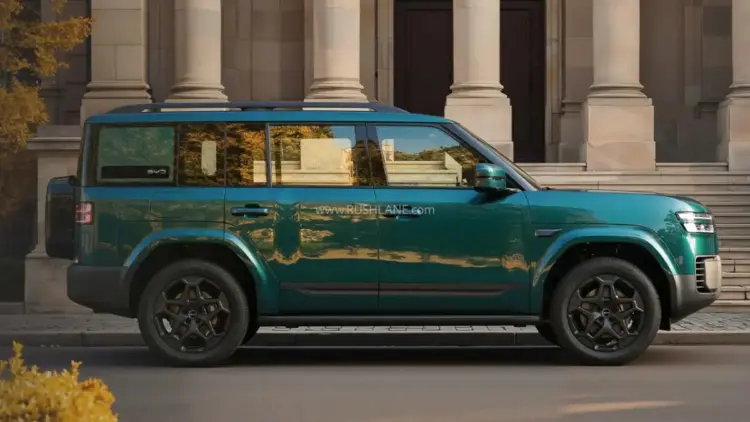
The District Court of The Hague ruled that the BYD Ti7—known in the Chinese market as the Fang Cheng Bao Leopard 7 (or Tai 7)—bears a resemblance to the Land Rover Defender that exceeds the threshold of permissible inspiration. The injunction is comprehensive, targeting several key pillars of BYD’s European strategy.
Geographic and Operational Restrictions
The ruling prohibits BYD from several specific activities within the European Union:
Manufacturing: This includes production at BYD’s state-of-the-art facility in Hungary, which was intended to be a cornerstone of the company’s "Made in Europe" strategy.
Sales and Distribution: The company is barred from offering the Ti7 for sale, selling, or supplying the vehicle to any EU member state.
Logistics: The injunction covers the importation and storage of the vehicle within EU borders.
Compliance Timeline
The court has mandated that BYD comply with these restrictions within one week of the judgment being formally served. While the ruling is "preliminary"—meaning it serves as a temporary measure while the broader, more complex legal dispute is litigated—it represents a formidable barrier to BYD’s immediate ambitions.
The UK Exception
Crucially, the Dutch court declined to exercise jurisdiction over BYD’s United Kingdom affiliate. Because the UK is no longer part of the EU’s unified legal framework for community designs post-Brexit, the Ti7 remains on track for its scheduled British launch in January 2027.
Chronology: A Tale of Two Legal Rulings
The November 20 injunction is the latest chapter in a rapidly evolving legal saga between the two automotive giants. The timeline reveals a high-stakes "legal tennis match" where momentum has shifted between the plaintiff and the defendant within a matter of days.
September 2025: BYD launches the SUV in China under the Fang Cheng Bao brand (Leopard 7), positioned as a rugged, high-tech plug-in hybrid.
August 2026: JLR initiates legal proceedings and successfully petitions for a "saisie-contrefaçon" (seizure of records) at BYD’s Dutch offices in Schiedam and Hoofddorp, seeking evidence of design infringement and market entry strategies.
November 11, 2026: In a setback for JLR, the District Court of The Hague orders the British automaker to arrange for the destruction of the records seized in August, ruling that the seizure had exceeded its legal justification.
November 20, 2026: Only nine days after the records ruling, the same court delivers the preliminary injunction against the vehicle itself, finding that the visual evidence of design similarity was sufficient to warrant a ban, regardless of the previously seized documents.
Supporting Data: Design Analysis and Market Comparison
The core of JLR’s argument rests on the "overall impression" the Ti7 leaves on an informed user. The court’s assessment delved into specific architectural and aesthetic elements that define the Land Rover Defender’s DNA.
The "Copycat" Contention
The court identified several "characteristic and distinctive" elements of the Defender that were mirrored in the Ti7:
Silhouette and Proportions: The uncompromisingly boxy, upright stance that has defined the Defender for decades.
Wheel Arches: The specific flare and integration of the wheel arches into the bodywork.
Window Treatment: The geometry of the glasshouse and its relationship to the roofline.
The Signature C-Pillar: Perhaps the most contentious element is the body-colored panel located behind the rear passenger door, a hallmark of the modern Defender 110.
BYD argued that various minor differences in lighting signatures, grille patterns, and interior tech created a distinct identity. However, the court concluded these were "insufficient to create a significantly different overall impression."
Competitive Positioning: The Price Gap
The legal battle is fueled by the Ti7’s aggressive pricing, which threatens to undercut JLR’s premium positioning.
Feature
BYD Ti7 Excellence (UK Spec)
Land Rover Defender 110 P300e
Powertrain
1.5L Turbo + Dual Electric Motors
2.0L Turbo + Electric Motor
Total Power
300 kW (approx. 402 hp)
221 kW (approx. 296 hp)
0–100 km/h
4.8 Seconds
5.6 Seconds
EV Range (WLTP)
119 km
51 km
Price (approx.)
£47,995 (Rs 58.17 Lakh)
£71,840 (Rs 87.07 Lakh)
The Ti7 offers significantly higher electric range and faster acceleration for approximately £23,845 (Rs 28.90 Lakh) less than the equivalent Defender. This price-to-performance ratio makes the Ti7 a potent threat to JLR’s market share, particularly among buyers who value the "rugged aesthetic" but are price-sensitive.
Official Responses: Defending Heritage vs. Claiming Innovation
The rhetoric from both boardrooms reflects the gravity of the situation.
Jaguar Land Rover’s Stance
A spokesperson for JLR emphasized the company’s commitment to protecting its intellectual property (IP), stating:
"Jaguar Land Rover is committed to protecting its intellectual property and takes legal action when necessary to safeguard our iconic designs and the investment we make in innovation. We welcome the court’s decision to uphold our registered design rights."
JLR has a history of aggressive IP litigation. In 2019, they famously won a case in China against Jiangling Motor Corp for the Landwind X7, which was a near-exact clone of the Range Rover Evoque. This current case suggests JLR is applying that same vigilance to the European theater.
BYD’s Rebuttal
BYD has remained defiant, signaling that it will not concede the European market without a fight. In an official statement, the company noted:
"BYD strongly disagrees with the court’s preliminary finding. The Ti7 is the result of independent design work by our global team of world-class designers. We believe the vehicle stands on its own merits and does not infringe on any valid third-party rights. We will pursue all legal avenues to challenge this decision and protect our right to bring our advanced technology to European consumers."
Implications: A Shifting Landscape for Global Auto Trade
The ruling in The Hague ripples far beyond the fenders of the Ti7. It sets a precedent for how "visual plagiarism" will be handled in the era of the EV transition.
1. The "Hungary Factor" and EU Local Production
BYD’s factory in Hungary is a vital part of its strategy to bypass potential EU tariffs on Chinese-made EVs. By banning the production of the Ti7 in Hungary, the court has shown that "localizing" a product does not immunize it from IP infringement claims. This may force Chinese manufacturers to rethink their design philosophies if they intend to manufacture on European soil.
2. The UK as a Regulatory Island
The fact that the Ti7 can still launch in the UK highlights the regulatory divergence between the UK and the EU. This creates a "gray market" potential where UK-spec Ti7s could theoretically be seen on European roads via private imports, though the ruling would likely prevent any commercial resale of such vehicles within the EU.
3. Design "Inspiration" vs. Infringement
For years, Chinese brands were criticized for cloning European designs. Recently, brands like BYD, NIO, and Zeekr have moved toward original, avant-garde aesthetics. The Ti7 case serves as a warning: even as Chinese brands innovate technically (e.g., BYD’s Blade Battery and high-range PHEV systems), reverting to "heritage-inspired" silhouettes could trigger massive legal liabilities.
4. Impact on JLR’s Strategy
For JLR, this is a defensive victory. The Defender is currently their most profitable nameplate. Allowing a "budget Defender" with superior EV range to flood the EU market would be catastrophic for JLR’s margins as they pivot toward their own "Reimagine" electrification strategy.
Conclusion: The Road Ahead
While BYD has no immediate plans to launch the Ti7 in the EU, the injunction acts as a preemptive "Keep Out" sign. The wider legal dispute remains unresolved, and the preliminary nature of this injunction means it could be overturned in a full trial if BYD can prove substantial design divergence.
For now, the battle lines are drawn. The automotive world will be watching the UK launch in January 2027 with intense interest. If the Ti7 proves to be a runaway success in Britain, it will only increase JLR’s resolve to keep the "Defender clone" on the other side of the English Channel. For BYD, the challenge is clear: to conquer Europe, they must not only out-engineer the incumbents but also out-design them in a way that satisfies the strict eyes of the European judiciary.