By [Your Publication Name] National Desk
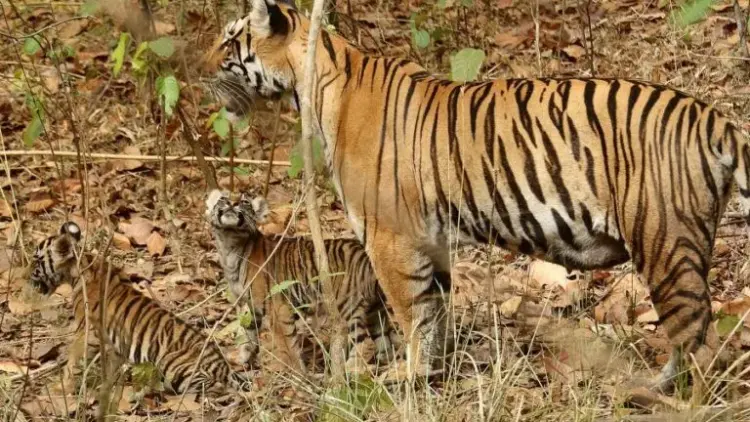
The reintroduction of apex predators into landscapes where they have long been extinct is often hailed as a triumph of modern conservation science. However, the recent translocation of T138, a three-year-old tigress affectionately named "Dooars Rani," from Bihar’s Valmiki Tiger Reserve to West Bengal’s Buxa Tiger Reserve (BTR), has turned into a cautionary tale of bureaucratic haste, physiological trauma, and a potential breach of scientific protocol.
What began as a high-profile attempt to revive a tiger population that had been absent for decades ended in a series of tragedies: a miscarriage of three foetuses, multiple debilitating physical injuries, and a controversial escape from a supposedly secure enclosure. As the National Tiger Conservation Authority (NTCA) and the Wildlife Institute of India (WII) face growing scrutiny, the case of T138 has sparked a fierce debate among conservationists regarding whether political optics are being prioritized over animal welfare and ecological readiness.
I. Chronology of a Botched Reintroduction
The timeline of T138’s ordeal reveals a sequence of events that critics argue were rushed to meet political milestones rather than biological ones.

- September 29–30: T138 is captured in the Valmiki Tiger Reserve, Bihar. She is transported over 760 kilometers via road and air to the Buxa Tiger Reserve in West Bengal. During this 17-hour journey, the tigress reportedly sustains significant physical trauma while confined in a transport cage.
- October 2: National media and high-ranking officials, including Union Environment Minister Bhupender Yadav and West Bengal political leaders, celebrate the relocation on social media, coinciding with Gandhi Jayanti.
- October 4: Despite visible injuries, T138 is released into the wild within Buxa.
- October 15: An internal NTCA review meeting reportedly raises concerns regarding the haste of the release, noting that the tigress had not been given adequate time to recover from injuries sustained during transit.
- October 23: Driven perhaps by a lack of adequate prey or the instinctual urge to return to her home range, T138 migrates out of Buxa. She travels over 100 kilometers into Assam’s Raimona National Park, where she enters human settlements near Hatigarh village and kills livestock.
- Early November: A massive joint operation involving forest teams from West Bengal and Assam is launched. T138 is immobilized for the third time in just over a month using tranquilizers, elephants, and heavy machinery.
- November 7: Following her recapture and return to an acclimatization enclosure in Buxa, officials report that the tigress has miscarried three foetuses, estimated to be approximately two months old.
- November 8: Within 24 hours of the miscarriage, T138 escapes her 2.2-hectare enclosure. Forest officials claim she "tunneled" under the fence, a claim met with skepticism by tiger biologists.
II. Supporting Data: Physical Toll and Veterinary Concerns
The physical condition of T138 upon arrival at Buxa was, by several accounts, precarious. According to reports cited by the Indian Express and internal reviews, the tigress arrived with abrasions on both front paw pads, an injury near her nostril, a chipped lower canine, and severely worn foreclaws. These injuries were likely the result of the animal frantically scratching against the metal bars of her transport cage during the 760-km journey.
The Impact of Injuries on Survival
Y.V. Jhala, a senior scientist and former dean of the WII, emphasized that for an apex predator, claws and teeth are not merely "cosmetic" features; they are essential tools for survival. "Injuries to the paw pads and claws compromise a tiger’s ability to hunt," Jhala noted. "A tiger that cannot hunt wild prey is a tiger that will inevitably turn to livestock or come into conflict with humans out of desperation."
While some scientists, such as retired WII expert Qamar Qureshi, argued that worn nails are not permanent and would heal, the immediate release of an injured animal into a new, unfamiliar environment is widely considered a violation of standard practice.
The Question of Pregnancy
The most distressing outcome of the translocation was the miscarriage of three foetuses. Forest officials claimed they were unaware the tigress was pregnant at the time of capture. However, conservationists point out a fundamental biological reality: an adult tigress in a healthy population is almost always either pregnant or nursing cubs.

Veterinary experts explain that while early-stage pregnancy (15–20 days) is difficult to detect via external observation or even standard ultrasound, the stress of translocation is a known "abortifacient" in wild felines. T138 underwent three separate immobilizations (tranquilization) within five weeks. While the drugs themselves are generally safe when dosed correctly, the cumulative physiological stress of capture, transport, injury, and relocation is believed to be the primary cause of the miscarriage.
III. Official Responses and Institutional Accountability
The response from official quarters has been a mixture of celebration and silence. On October 2, as T138 was being prepared for release, Union Minister Bhupender Yadav took to X (formerly Twitter) to laud the move as a "milestone" for tiger conservation. This public framing, activists allege, created a "political deadline" that pressured forest officials to release the injured animal before she was medically fit.
NTCA Protocols Under the Scanner
The NTCA’s Standard Operating Procedure (SOP) for tiger reintroduction is a rigorous document. it requires:
- Genetic Mapping: Sourcing tigers from populations genetically similar to the native stock.
- Health Screening: Comprehensive checks for pathogens and physical fitness.
- Community Consent: Ensuring local populations support the reintroduction.
Critics argue that several of these protocols were bypassed or poorly executed. For instance, the choice of Valmiki (760 km away) over Manas National Park in Assam (less than 100 km away) remains a point of contention. While Qureshi suggested Valmiki was chosen because it had a "surplus" of tigers, data from the 2022 All India Tiger Estimation shows that Manas (58 tigers) and Valmiki (54 tigers) have similar populations. The decision to transport an animal across state lines over a much longer distance significantly increased the stress levels and injury risks for T138.

Furthermore, the NTCA and WII have remained largely silent following the news of the miscarriage and the escape, failing to provide a formal explanation for why the tigress was released while visibly injured.
IV. Ecological and Social Implications
The failure of the initial phase of the Buxa reintroduction has broader implications for tiger conservation in India.
The Prey Base Deficit
One of the most damning pieces of evidence regarding the readiness of Buxa is a 2024 NTCA assessment, which identified a "low prey abundance" in the reserve. The report explicitly stated that BTR needed more time for habitat restoration and prey augmentation before tigers could be safely reintroduced. T138’s 100-km trek into Assam and her subsequent predation on village pigs suggest that the natural prey in Buxa (such as chital and sambar) was insufficient to sustain her, especially in her injured and stressed state.
The "Tunnel" Controversy
The report that T138 escaped her enclosure by "digging a tunnel" has been met with derision by many in the scientific community. Tigers are not fossorial animals; they do not possess the instinct or the anatomical structure to dig deep tunnels like porcupines or hyenas.

"Tigers may exploit a gap under a fence or lift a poorly secured wire mesh, but they don’t dig tunnels," explained Jhala. This discrepancy has led to concerns that the acclimatization enclosure—reportedly a modified deer pen—was fundamentally unfit for a large carnivore, further highlighting a lack of preparation.
Community Backlash
Conservation does not happen in a vacuum. In Buxa, local forest-dwelling communities have already begun protesting against tourism restrictions and the lack of consultation regarding the tiger release. The memory of the failed Satkosia reintroduction in Odisha—where community opposition and the death of a translocated tiger in a poacher’s snare led to the program’s collapse—hangs heavy over the Buxa project. If the local population perceives the tiger as a threat to their livestock and a cause for economic restriction, the chances of successful long-term reintroduction are slim.
V. Conclusion: A Path Forward or a Pattern of Failure?
The story of Dooars Rani is not just about one tigress; it is about the ethics of "spectacle conservation." While the desire to see tigers return to Buxa is noble, the execution of the T138 translocation suggests a system where political timelines may have overridden ecological safety nets.
For future translocations to succeed, the lessons of Buxa must be internalized:

- Biology over Birthdays: Release dates should be determined by veterinary clearance, not national holidays.
- Proximity Matters: Sourcing animals from the nearest viable population reduces transit trauma.
- Habitat First: A reserve must have a proven, stable prey base before the predator arrives.
- Transparency: Independent audits of reintroduction programs are necessary to ensure that SOPs are not being treated as optional suggestions.
As T138 remains in the forests of Buxa, her future is uncertain. She has lost her offspring, suffered significant physical trauma, and is now navigating a landscape that may not yet be ready to feed her. The success of the Buxa Tiger Reserve will now depend not on social media posts, but on the quiet, rigorous scientific work of habitat restoration and the rebuilding of trust with the local communities. Without these, the tragedy of Dooars Rani may become the epitaph of the Buxa reintroduction project.